When Apple continues to sell iPhones with 128 GB storage, many people still have the same question: is this amount enough in 2026? On paper, it seems like it’s not. Photos have gotten heavier, videos are shot in high quality, apps keep growing, and messengers and social networks have long turned into separate warehouses of cache and media files. But if you look not at abstract reasoning but at a real iPhone 16 Plus with 128 GB of storage, the picture turns out to be much more interesting.
128 GB might be enough in 2026, but there are nuances. Image: idownloadblog.com
How Much Free Storage Remains on a 128 GB iPhone
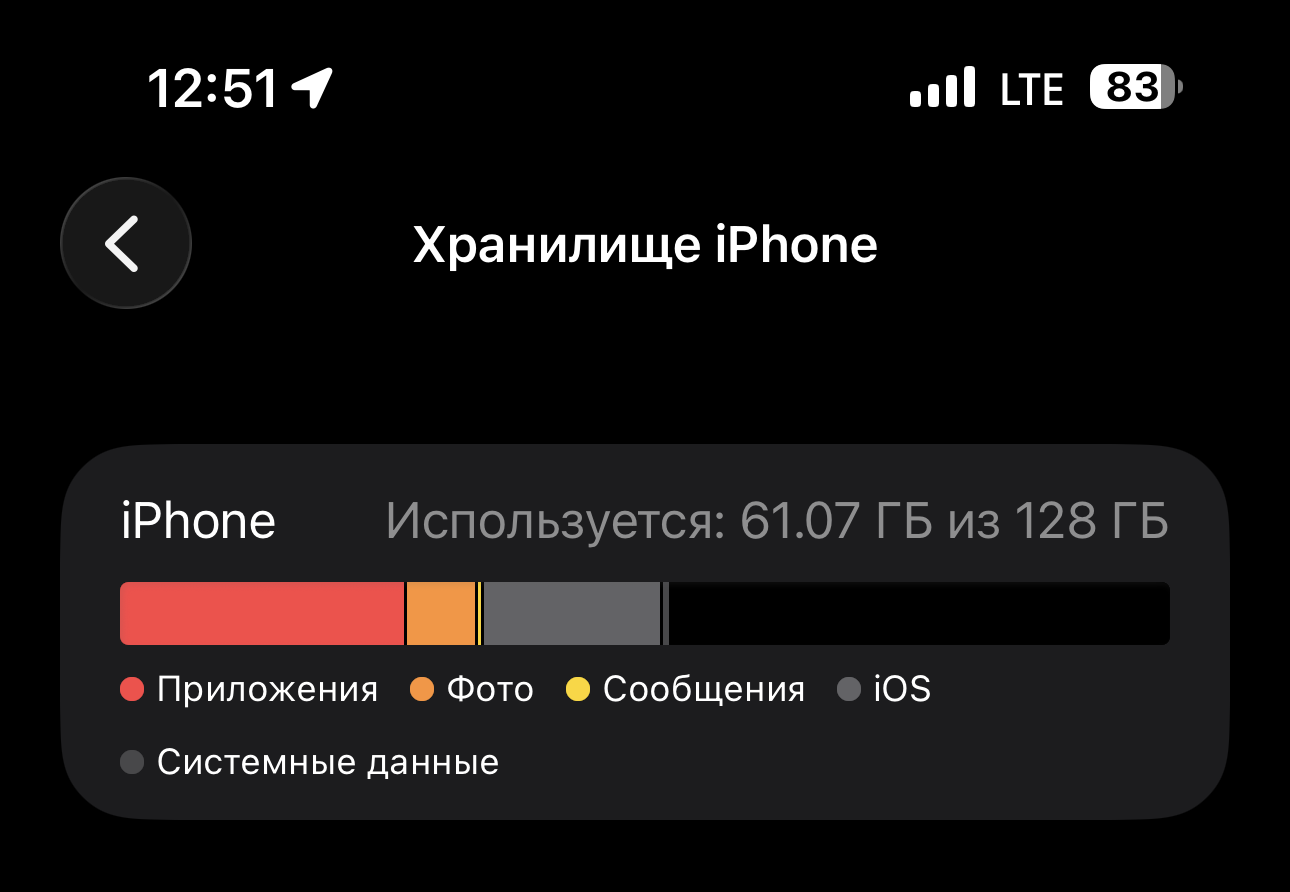
If you look at the raw numbers, the conclusion comes fairly quickly. Even with active use, only about half the storage is occupied. For 2026, this is an important signal, because many people are used to thinking that 128 GB in a modern iPhone runs out almost immediately. In practice, that’s not the case — at least if you don’t record everything in maximum quality and don’t store massive video libraries locally.
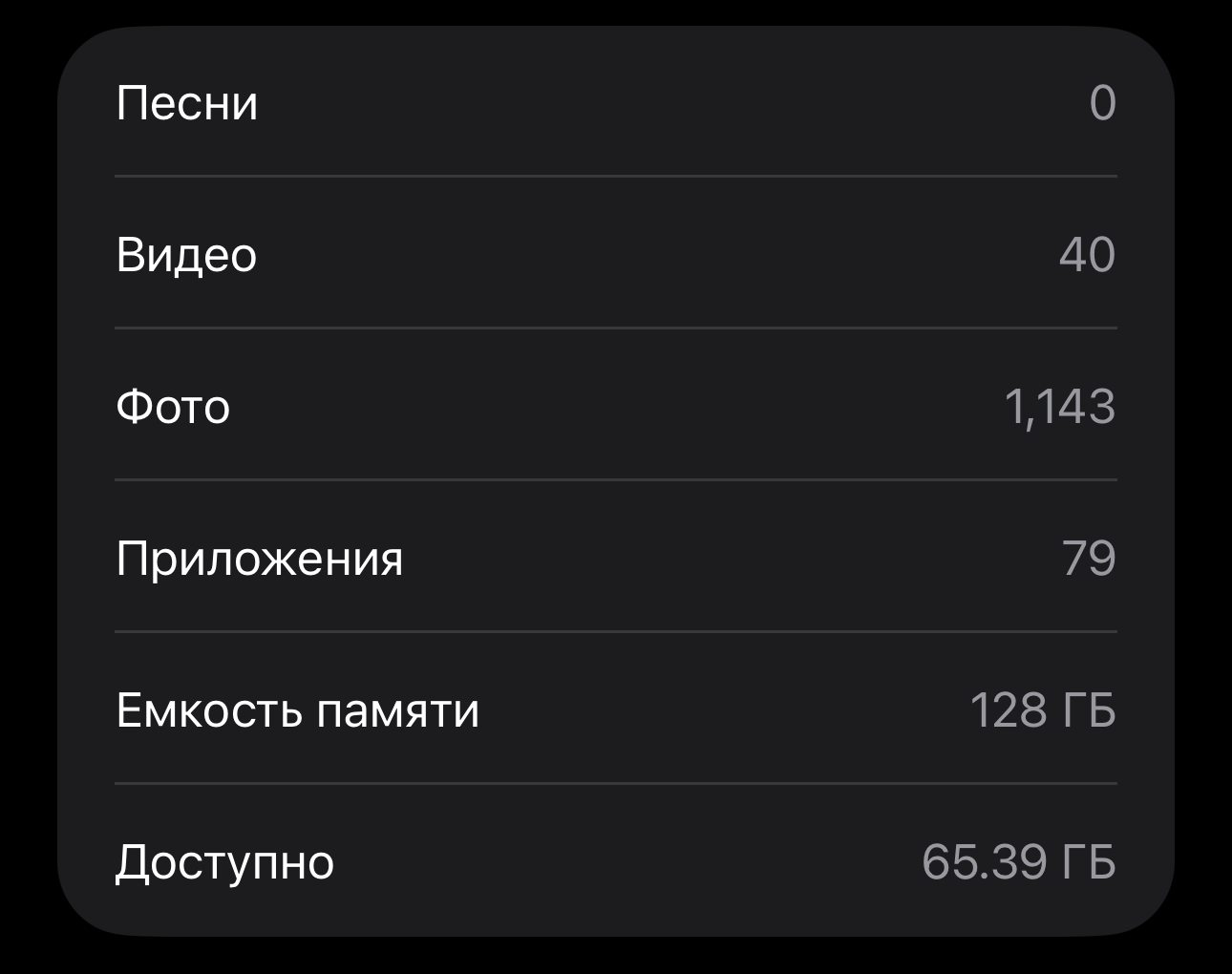
Bought iPhone 16 Plus in May 2025 and have been gradually filling up its storage since then
Separately, you can see that some storage immediately goes to the system. On the storage diagram, iOS and system data are visible, and that’s normal. The user doesn’t get “clean” 128 GB for their files, but even accounting for this, there’s still a solid reserve on the device. In this specific case, more than 65 GB is free, which means there’s definitely no reason to talk about a critical shortage of storage.
Which Apps Take Up the Most Storage on iPhone
The most storage-hungry section here, as expected, is Photos. The library takes up 8.67 GB. For 1,143 photos and 40 videos, this doesn’t look scary at all. On the contrary, this figure clearly shows that the main hit to storage comes not only from photos but also from apps with accumulated cache.
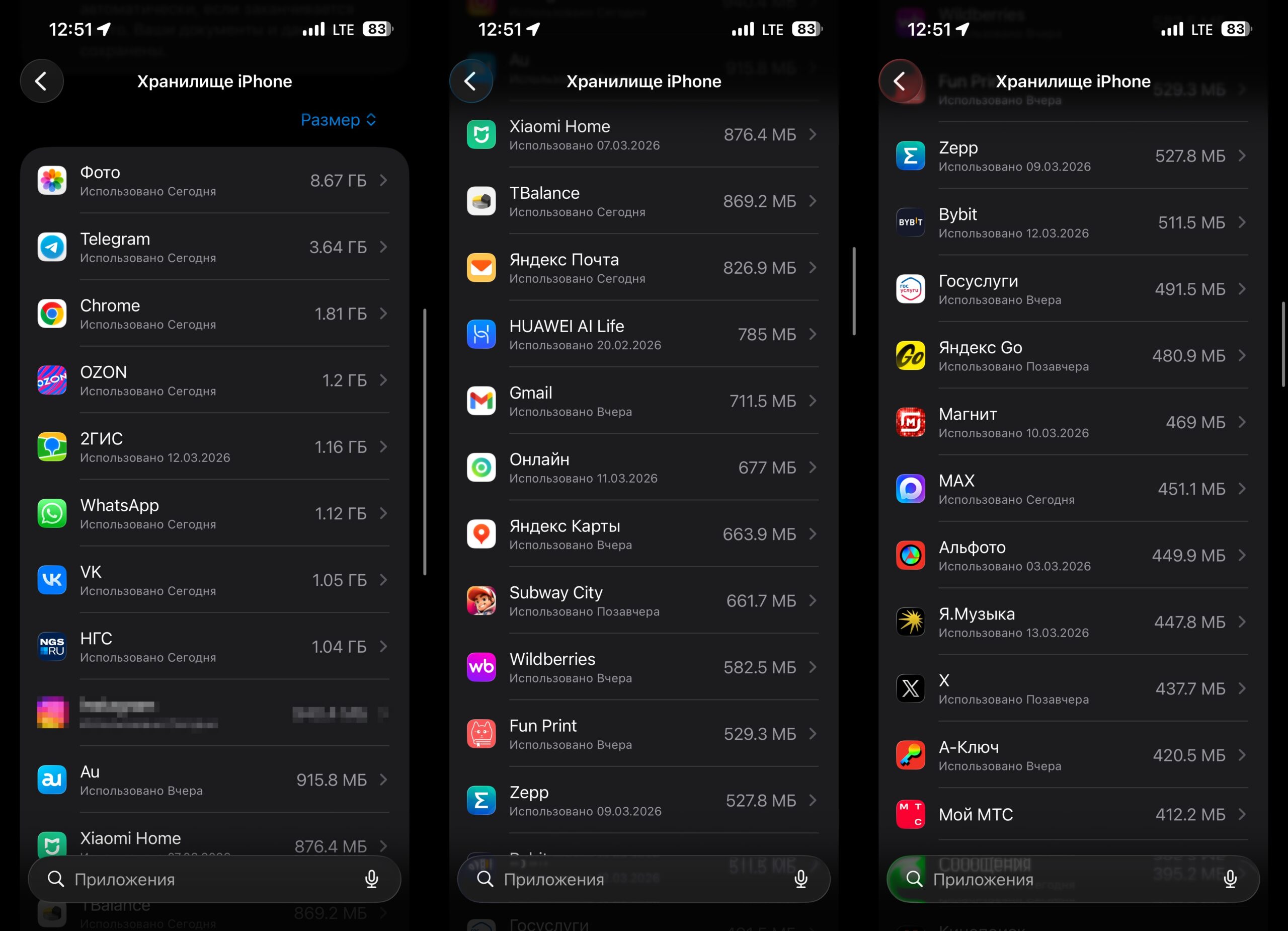
Main storage consumers on my iPhone
In second place is Telegram at 3.64 GB, and that’s already very telling. Next comes Chrome at 1.81 GB, OZON at 1.2 GB, 2GIS at 1.16 GB, WhatsApp at 1.12 GB, VK at 1.05 GB, and even individual apps like news clients and Xiaomi Home, which also approach a gigabyte. So in 2026, iPhone storage is very often consumed not by photos, as many people think, but specifically by everyday apps that accumulate data inside themselves for months.
Is 128 GB Enough for an iPhone?
Based on this example, 128 GB in an iPhone in 2026 can be enough for an average user. And not “just barely,” but sometimes even with room to spare. The device isn’t used in a sterile mode. It has dozens of apps, lots of photos, some videos, messengers, a browser, maps, and marketplaces. And even with this setup, only half the storage is occupied.
This is a good benchmark for those who use their smartphone like most people do. Taking photos every day, occasionally shooting video, using Telegram, social networks, having banking apps, stores, navigation, smart home, and work services installed. For this scenario, 128 GB still remains a viable and sensible option. Paying extra for more storage “just in case” doesn’t always make sense.
Who Shouldn’t Get a 128 GB iPhone
At the same time, pretending that 128 GB suits everyone without exception would also be wrong. There are scenarios where this amount will start feeling tight fairly quickly. First and foremost, this applies to those who shoot a lot of video, especially when it comes to clips in high resolution, frequent recording of kids, travel, events, or work content. Video fills up storage noticeably faster than photos.
The second category is users who fundamentally store everything locally. If you download movies, keep large offline maps on your phone, never clean Telegram for years, save documents, TV series, music, and also actively play games, then 128 GB can start to become frustrating. In that case, it’s better to look toward 256 GB so you don’t live in a constant cleanup mode.
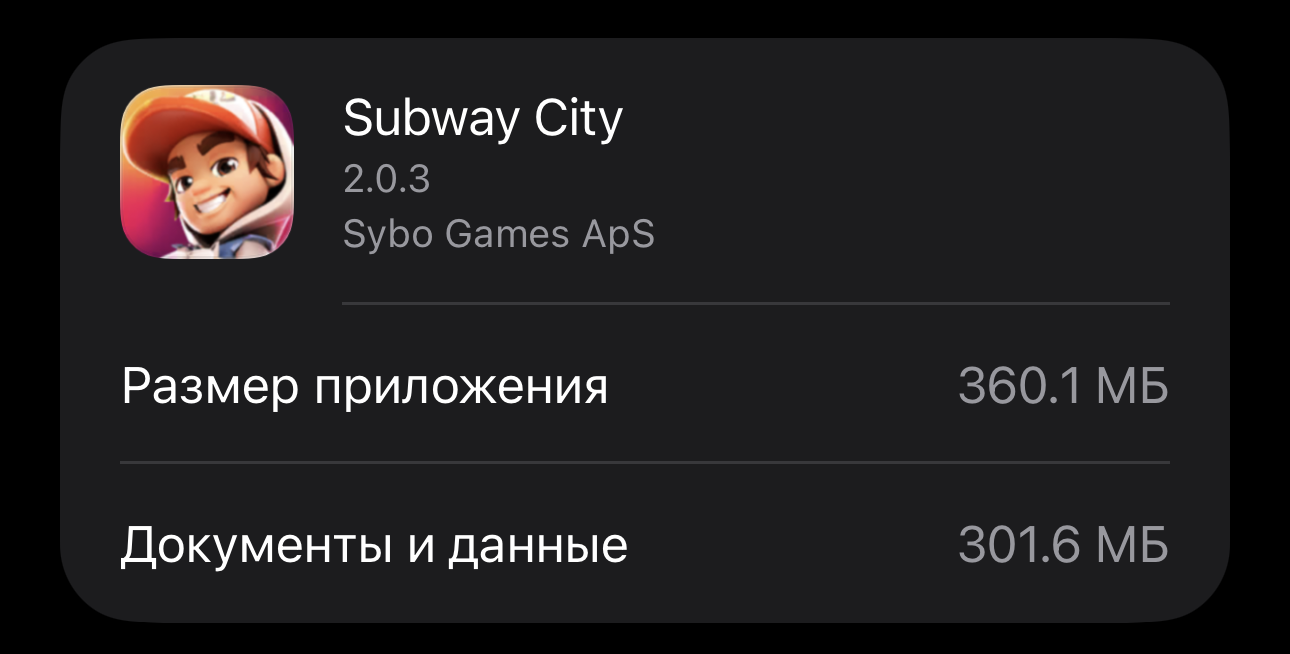
Even a fairly simple game like Subway Surfers City takes up more than 600 MB, let alone heavy games
Also, the 128 GB version won’t suit gamers. Some titles take up 40–60 GB after downloading all data, and the minimum storage definitely won’t cut it. Sometimes even 256 GB isn’t enough in such situations, and it’s better to look at smartphones with 512 GB or more storage.
What’s the Minimum Storage an iPhone Needs in 2026
A 128 GB iPhone will be enough for many, but you’ll have to constantly monitor this
The most interesting thing about this example is that it fairly honestly shows the modern reality. Yes, apps have bloated. Yes, Telegram and other services easily take up gigabytes. Yes, the system also takes its share. But at the same time, the iPhone 16 Plus with 128 GB doesn’t look like a device suffocating from lack of storage. On the contrary, it still has plenty of free space remaining.
That’s exactly why in 2026, 128 GB for an iPhone can’t be called a bad option. But you need to understand that this is no longer a “room to grow” amount — it’s an option where everything needs to be carefully calculated. To avoid worrying, it’s better to look at smartphones with 256 GB. Especially since in the iPhone 17 lineup, that’s now the base.