
Both of these beverages reduce the risk of dementia, but it’s not that simple. Image: Filizhanka
Many of us are used to thinking of our morning cup of coffee or tea as a simple pleasure. But it turns out this habit may have a much more significant impact on brain health. A large-scale study involving more than 131,000 people yielded quite interesting results. It showed that regular consumption of caffeinated beverages is associated with a reduced risk of developing dementia and Alzheimer’s disease. Sounds like good news, but don’t rush to dip your tea bag into a cup of coffee just yet. As they say, there are nuances you need to know about.
How Caffeine Affects Dementia
Scientists from Harvard, MIT, and Mass General Brigham analyzed data from two long-term cohort studies. The observations were conducted from 1976 to 2023. Participants were followed for up to 43 years, and the final sample comprised 131,821 people.
To rule out the influence of confounding factors — age, smoking, body mass index, physical activity, family history of dementia, and so on — the researchers applied the Cox statistical model, which allows comparing people with identical characteristics who differ only in caffeine consumption.
The results were convincing. Those who drank the most coffee had an 18% lower risk of dementia compared to those who drank the least. For tea lovers, which also contains caffeine, the risk was reduced by 14%. At the maximum total caffeine intake from all sources, the reduction in dementia risk was 22%. At the same time, consumption of decaffeinated coffee showed no association with reduced dementia risk, directly pointing to caffeine as the key protective agent.
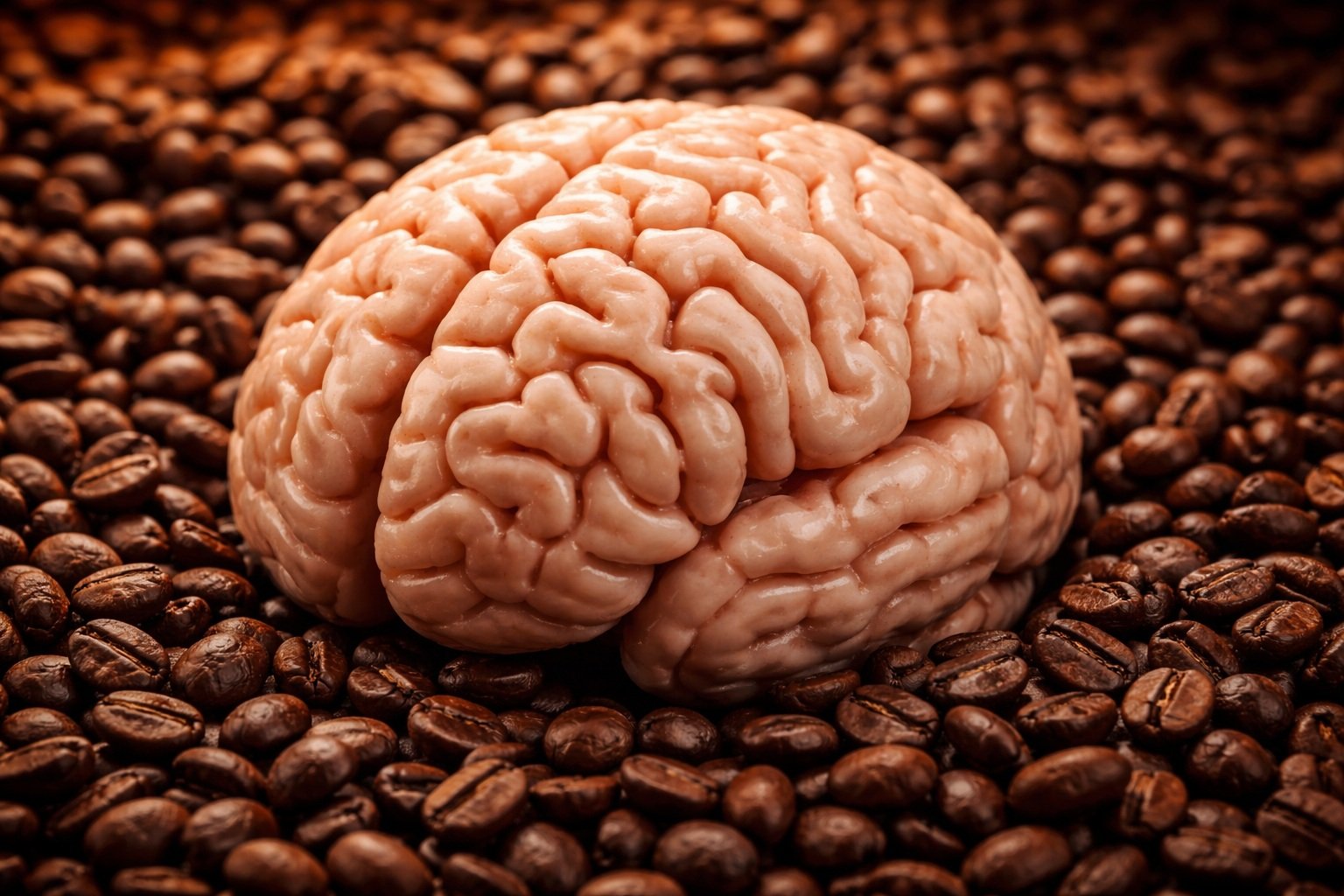
Where there’s caffeine, there are also its drawbacks.
Importantly, we’re not talking about liters of coffee per day. The optimal effect was observed with moderate consumption — 2–3 cups of coffee or 1–2 cups of tea per day, which corresponds to approximately 300 mg of caffeine. Exceeding this dose did not provide additional protection.
Why Caffeine Protects the Brain
The researchers proposed several biological mechanisms to explain this effect. Caffeine blocks adenosine receptors, enhancing synaptic transmission and possibly suppressing the production of beta-amyloid — a protein that forms the characteristic plaques in Alzheimer’s disease. In addition, caffeine helps reduce levels of inflammatory cytokines, improves vascular function, and increases insulin sensitivity, lowering the risk of type 2 diabetes — all of these factors directly affect brain health.
In tea, polyphenols and L-theanine make an additional contribution — substances that protect against oxidative stress and support cerebrovascular function. This is why tea, despite its lower caffeine content compared to coffee, shows comparable protective effects.
Is Caffeine Harmful to Health
The study is observational rather than causal in nature — meaning it demonstrates an association but not direct causation. Furthermore, excessively high doses of caffeine are associated with sleep disturbances, cardiovascular strain, and gastrointestinal problems. The researchers emphasize that the results are encouraging, but it’s important to remember that the effect size is modest, and there are many other effective ways to protect cognitive function with age.

Drink coffee, but don’t bet on it as a vaccine against dementia. Image source: kinopoisk.ru
Nevertheless, this work fits well into the growing body of evidence on the benefits of moderate caffeine consumption: other studies have linked it to improved memory, reduced risk of atrial fibrillation, and even a decreased likelihood of developing head and neck cancer. Two to three cups of coffee or one to two cups of tea per day — it’s not a cure, but a very real and enjoyable contribution to long-term brain health. Of course, provided you have no other health issues and these beverages are not contraindicated for you.