You bought a flagship phone for 80 thousand rubles, then went to a marketplace and ordered a cable for 200 rubles — braided, with lighting, beautiful. Sounds reasonable: why overpay for such a simple accessory? But it’s the cable that determines whether your phone gets fast charging, whether the battery overheats, and whether something happens overnight that causes people to lose their smartphones prematurely. Let’s break down what you’re really risking.
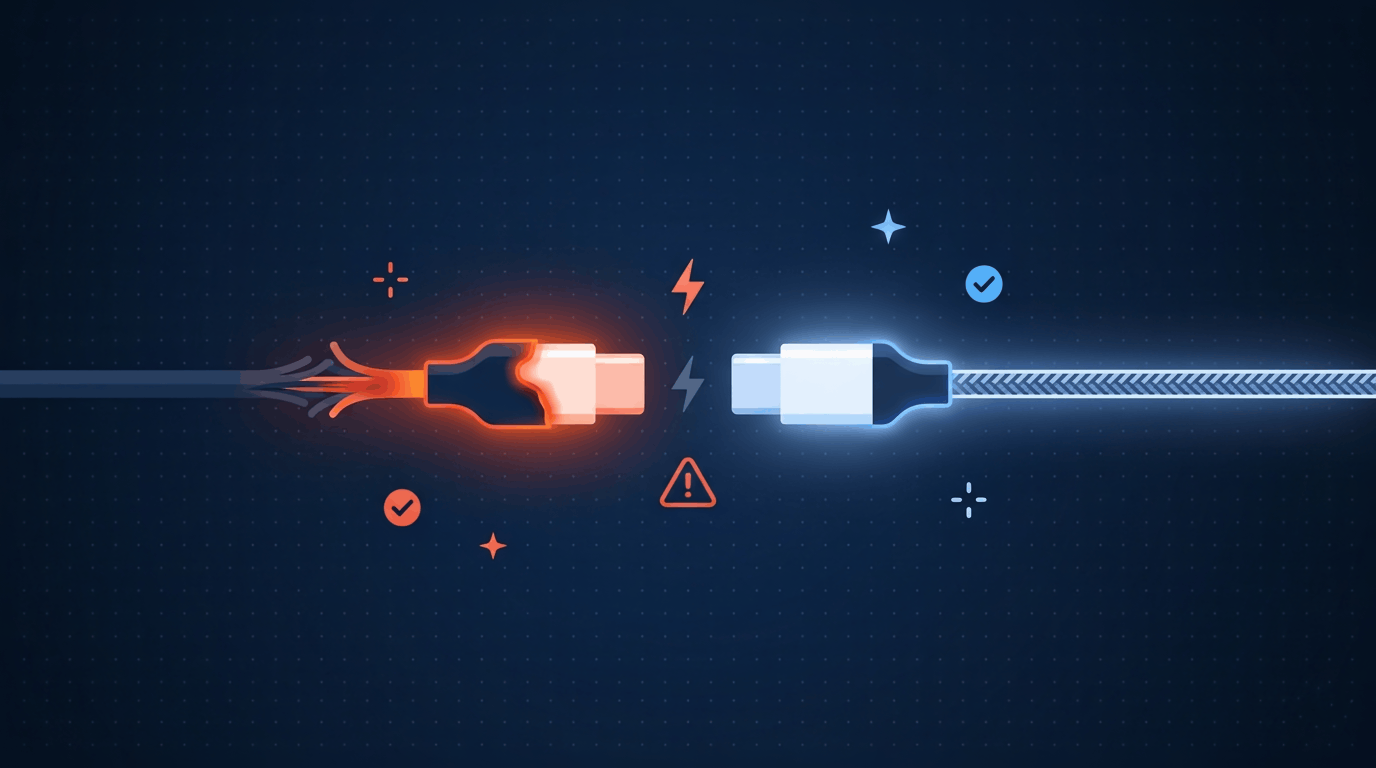
Beautiful but dangerous: what you risk by buying a cheap charging cable for an expensive flagship
Marketplaces are full of cables for 150–200 rubles. They often look better than the originals — braided, with attractive connectors and bright colors. But looks are deceiving: whether your phone charges quickly, for a long time, and safely is determined by the internals, not the exterior.
Why Fast Charging Doesn’t Work on Your Phone
Any modern smartphone — Samsung, Xiaomi, Google Pixel — during fast charging doesn’t just “pull” current from the outlet. The charger and the phone negotiate with each other: how many watts to deliver, at what voltage, how to adjust the supply. This requires a mediator — a cable that can transmit this data.
Quality USB Type-C cables have a small chip inside the connector for this purpose — an E-Marker (electronic marker). It tells the charging device what current the cable can actually handle: 3 amps or 5 amps. Without an E-Marker, the cable is limited to 3A by default — which usually means no more than 60W, and for charging at 100–240W, the chip is strictly mandatory.
A cheap cable for 200 rubles almost never has this chip. What happens in practice: you plug your phone into a 65W charger, but the smartphone “doesn’t see” the cable’s capabilities and charges in slow mode — as if you plugged it into an old five-watt charger. Instead of forty minutes — the whole night.
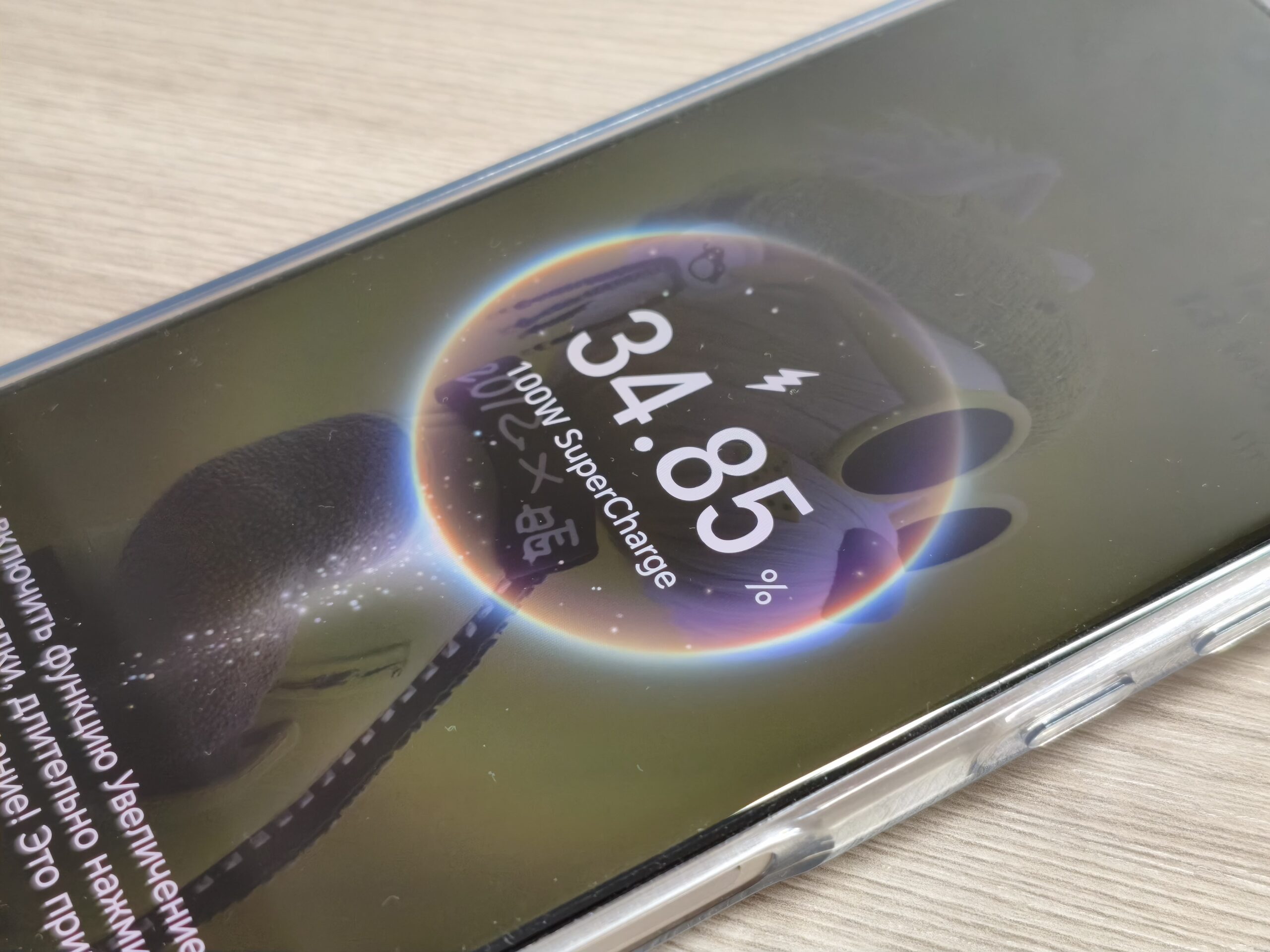
If the cable is fine, a corresponding notification will appear on the display
Moreover, some brands claim 100W or even 240W power on the packaging, but without an E-Marker chip, the device simply won’t recognize the cable as high-power — and there will be no fast smartphone charging.
In other words, a marketplace seller can write anything: “100W,” “fast charging,” “Power Delivery support.” But the smartphone will check everything itself — and simply refuse to work in the advertised mode.
This isn’t fraud in the traditional sense — it’s a structural deception. The cable physically connects, current flows, the phone charges. Just slowly and without the feature you paid for when buying a flagship with 65–120W charging support. Yes, it can physically handle 100W of power, but only briefly and with specific current parameters that aren’t used in smartphones.
Why Cheap Cables Are Dangerous for Your Smartphone
This is where things get truly unpleasant. Slow charging is annoying but tolerable. But phone damage or a fire — that’s a different story.
Cheap cables often lack the necessary components for stable voltage and current regulation. This can shorten battery life, cause cable overheating, potential short circuits, or damage to the charging port and internal board of the device.
To put it simply: cheap cables are often made from thin wires with poor insulation. Under prolonged load — for example, when the phone charges overnight — the cable heats up. Low-quality cables that overheat and melt over time are especially dangerous: broken wires, bends, or exposed conductors can cause malfunctions, heating, and in the worst case — fire.
The worst part is that this doesn’t happen immediately. The cable works for a week, a month, three months — and then one night the insulation can’t withstand the heat. That’s precisely why charging fires more often occur not on the first day of using a new cable.
How a Cheap Cable Kills Your Smartphone Battery
Even if there’s no fire, regularly charging through a low-quality cable gradually damages the battery. Unstable current delivery — when voltage spikes and drops — creates additional stress on the battery.
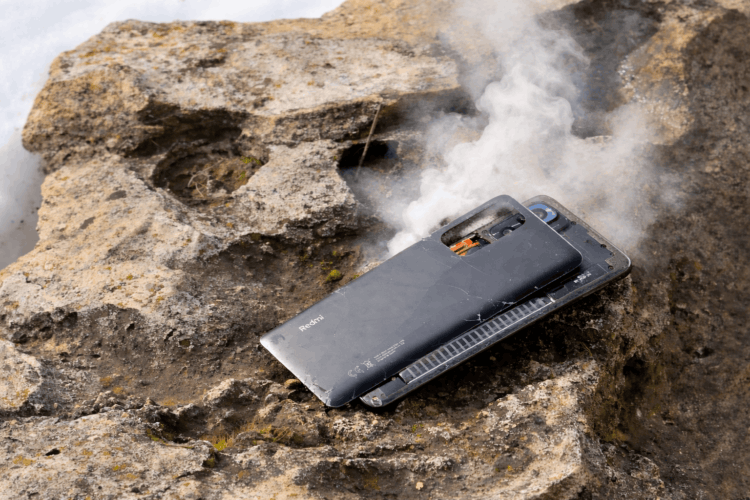
Unstable current kills the battery slowly but surely. And then it leads to fire
When charging conditions are violated, metallic dendrites form on the lithium anode — microscopic growths that over time puncture the insulating layer between electrodes, causing an internal short circuit, sudden heating, and ignition. It sounds scary — but in practice, this most often simply means that your phone’s battery will hold 20–30% less charge after a year than it should. And that’s the best-case scenario.
How to Choose a Good Charging Cable for Your Smartphone: What to Look For
Finding and buying a proper cable for charging an Android smartphone isn’t difficult if you follow these guidelines:
- E-Marker presence. For cables rated above 60W, this is a mandatory component. Some manufacturers honestly mention it on the packaging. If it’s not mentioned — most likely, it’s not there.
- Wire gauge. For delivering 3A current, wire gauge of 20–21 AWG for power conductors is sufficient. If the cable is very thin and light — that’s a reason to be cautious. A good cable is noticeably denser than a cheap one.
- USB-IF certification. Look for the USB-IF logo on the packaging — this indicates the cable has passed official testing. Without it, it’s just the seller’s promises.
- Price. A quality cable with an E-Marker and proper wire gauge can’t cost 150–200 rubles. The real price of a good cable starts at 500–800 rubles. That’s not expensive compared to the cost of repairing a charging port, which costs at least 3–5 thousand rubles at a service center.
- Trusted brands. Anker, Baseus, Ugreen, Vention — these manufacturers make cables with proper components and offer warranties. Basic models are reasonably priced, and if you don’t trust them — go with cables from the smartphone manufacturers themselves.
Where You Can Use a Cheap Smartphone Cable
If you just need to connect your phone to a computer, transfer a file, or charge a device from a charger rated at up to 18W — a cheap cable without a chip will do the job. An E-Marker isn’t needed for this: the current is low, the voltage is standard, and the risks are minimal.
But if you have a smartphone with 45, 65, or 120W fast charging — and that includes almost all modern flagships from Samsung, Xiaomi, and OnePlus — then skimping on a cable isn’t worth it. You simply won’t get what you paid for. And in the worst case, you’ll pay again — this time for repairs.