Apple has been granted a patent for a breath sensor built into devices, capable of detecting signs of diabetes, high cholesterol, and other diseases. The technology is described for iPhone, Apple Watch, and even automotive systems. For now, it’s just a patent, not a finished product, but the direction speaks volumes.
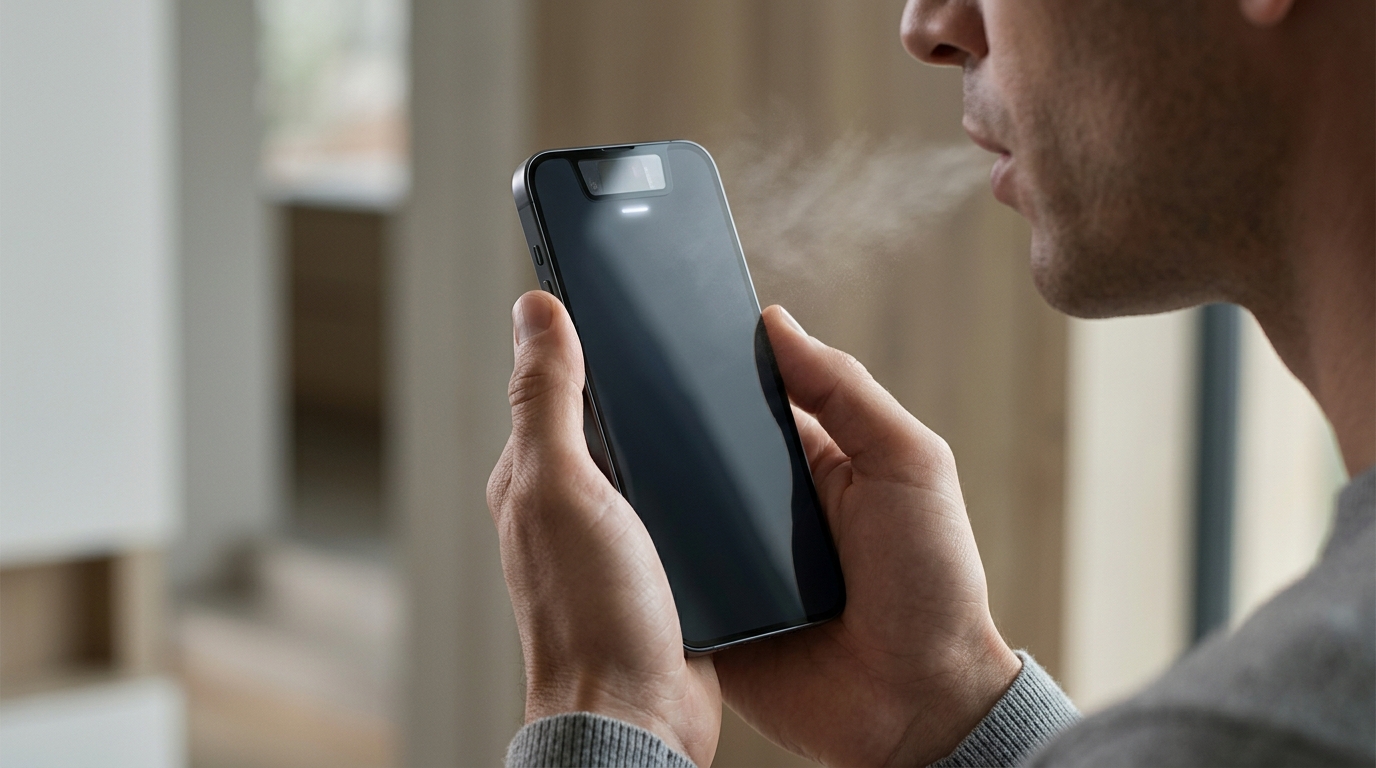
Future iPhones could get a sensor to check cholesterol levels right in your pocket
What Health Sensor Apple Wants to Add to iPhone
The patent is called “Electronic devices with breath sensing systems”. Essentially, it describes a next-generation built-in breathalyzer, but instead of alcohol, it looks for biomarker molecules associated with specific diseases.
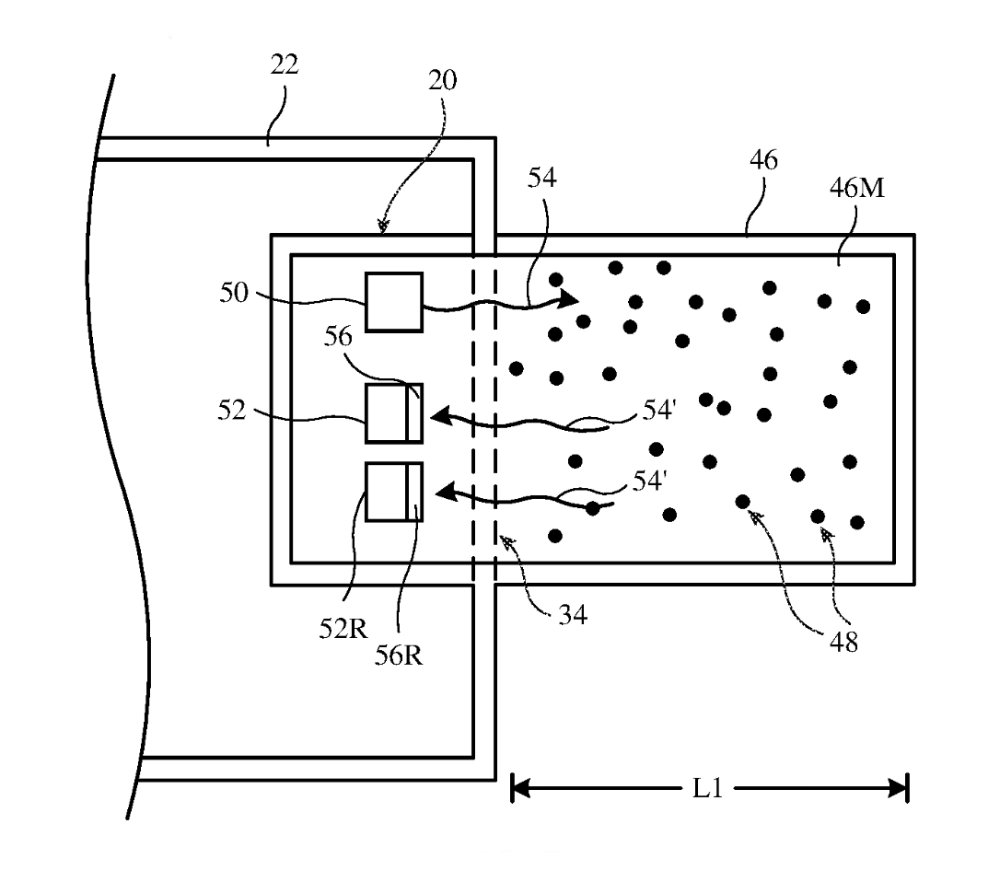
Here’s what the patent itself looks like. The sensors capture exhaled air. Image: appleinsider.com
Here’s how it works: a special window with an infrared sensor appears in the device’s housing. When you bring the iPhone to your face and breathe normally, an infrared beam passes through the exhaled air and detects certain gas molecules. This data is compared against a medical database, after which the device can warn you about potential health issues.
An important detail: no mouthpiece is needed. Apple emphasizes that the analysis works with normal breathing, without any additional accessories. You simply need to pick up the phone.
What Diseases iPhone Could Detect Through Breathing
According to the patent, the technology is capable of identifying biomarkers for several conditions:
- Diabetes
- High cholesterol
- Other diseases (specifics are not disclosed in the patent)
In terms of how it works, this is similar to how Apple Watch can already track heart rhythm and notify about irregular heartbeats. Only here, instead of pulse, the chemical composition of breath is being analyzed. Presumably, when abnormalities are detected, the device will recommend consulting a doctor — just as Apple Watch currently does when atrial fibrillation is suspected.
How iPhone Will Use Face ID and Camera for Breath Analysis
A particularly interesting aspect — Apple plans to leverage existing iPhone sensors to improve analysis accuracy. The patent describes using the regular camera and the infrared depth camera (the same one responsible for Face ID) to determine the distance between the user’s face and the sensor.
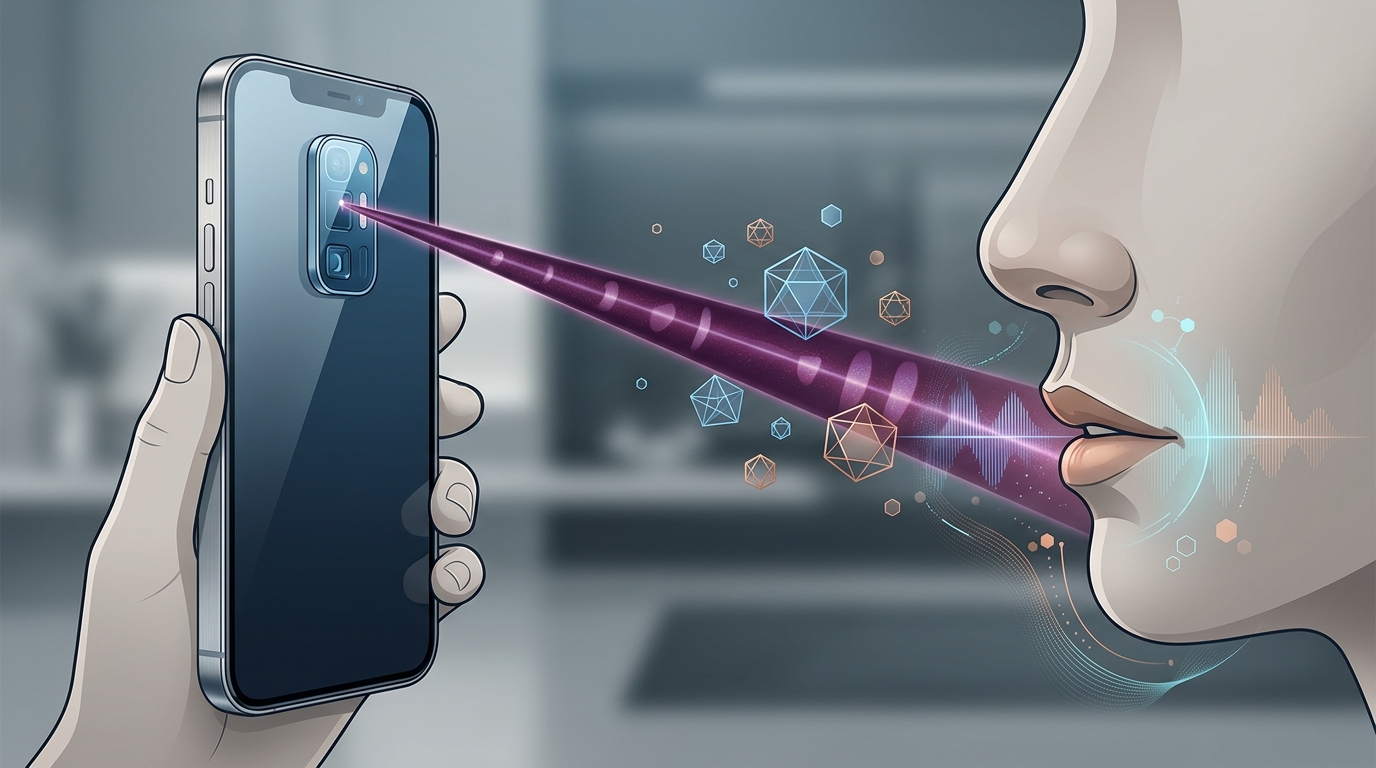
Diagram of sensor operation: an infrared beam passes through exhaled air
Why is this needed? If the face is too far away, the analysis may be inaccurate. In that case, the device will either ask you to bring the phone closer or automatically adjust the direction of the infrared beam. Apple describes a special mechanism that directs the beam precisely toward the user’s mouth area.
This means the Face ID camera, LiDAR scanner, and the new breath sensor could work as a unified diagnostic system. This fundamentally distinguishes iPhone from standalone medical devices — the smartphone already “knows” who is in front of it and at what distance.
What Health Features Already Exist in iPhone and Apple Watch
Apple has been consistently and deliberately moving toward medical technologies for a long time. Apple Watch measures heart rate, blood oxygen levels, takes ECGs, and tracks sleep. iPhone already participates in medical research through the Apple Health app.
But breath analysis is an entirely different level. Today, to check cholesterol, you need to have blood drawn at a laboratory. Even home rapid tests require a finger prick. If the technology from this patent ever becomes reality, testing would take just a few seconds without any discomfort.
Tim Cook said back in 2019: “If you look back from the future, Apple’s greatest contribution to humanity will be health.” This current patent is another step in that direction.
Should We Expect a Breath Sensor in Upcoming iPhones
A sober assessment is needed here. This is a patent, not a product announcement. Apple receives hundreds of patents every year, and far from all of them turn into real devices. Years can pass between a patent and a finished feature, and some developments never leave the paper stage.
There are also practical questions:
- Medical certification — for a device to claim disease diagnostics, lengthy clinical trials and regulatory approval are required
- Accuracy — breath analysis in laboratory conditions versus real life (outdoors, in the subway, after coffee) can yield completely different results
- Additional opening in the housing — Apple has spent years striving for a sealed design, yet this requires a window for air to pass through

According to Apple’s concept, breath analysis would occur during normal phone use
The patent describes the technology not only for iPhone but also for Apple Watch, automotive systems, and even information kiosks. Such broad coverage is typical of patent applications — companies try to claim as many possible applications as they can.
The bottom line: this is an interesting and potentially useful technology, but it may be quite some time before it appears in a real device. If you’re waiting for iPhone 18 or 19, you definitely shouldn’t count on a built-in breath analyzer. But as a direction, this is perhaps the most practical thing Apple has patented in the health field recently. It’s definitely worth following the development of this story — especially for those for whom regular cholesterol or blood sugar monitoring is truly important.