Paying $1,999 for the foldable iPhone Duo instead of $1,299 for the iPhone 18 Pro Max does not simply buy you more. According to the source, the extra $700 mainly pays for a large screen and a new form factor, and the Duo drops several Pro Max capabilities along the way. The lack of Face ID and a dedicated telephoto camera is already well known. The source identifies seven more gaps: off-center MagSafe accessories, no Action button, no variable aperture, no manual camera mode, no ProRAW or ProRes, no Apple Log, and no spatial capture. The source author argues that most buyers will notice only one or two of them.
What you need to know
- The iPhone Duo costs $1,999, $700 more than the $1,299 iPhone 18 Pro Max, according to the source.
- The Duo’s hinge and two-part body leave less room on the back, so standard MagSafe accessories such as wallets can hang over the bottom edge.
- The Duo has no Action button, no variable aperture, no manual mode in the Camera app, and no ProRAW, ProRes or Apple Log.
- Only the Pro Max can capture spatial photos and videos for Apple Vision Pro. The Duo has no LiDAR, and its lenses are not arranged for stereo capture.
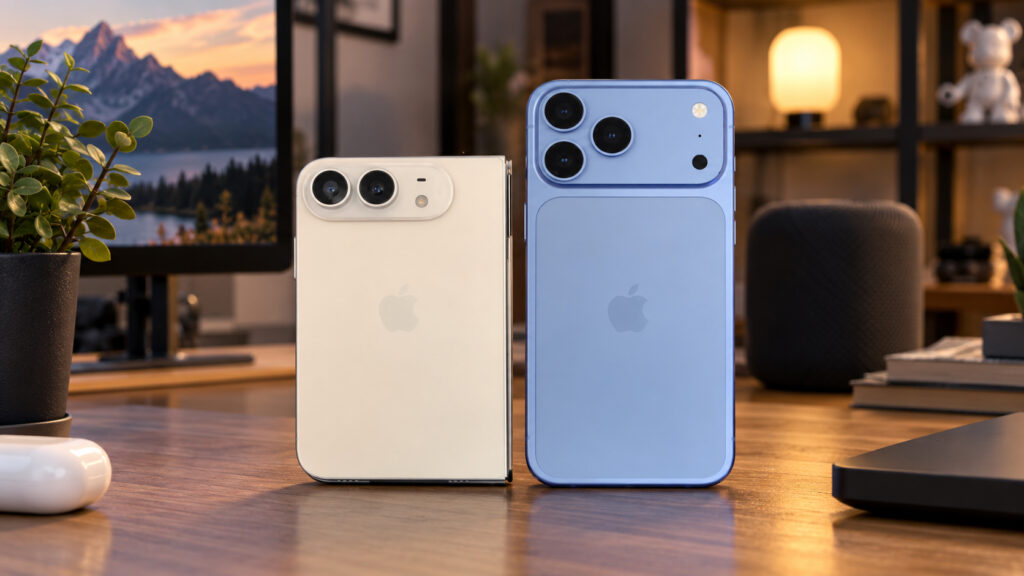
iPhone Duo next to the iPhone 18 Pro Max
1. MagSafe works on the Duo, but accessories sit off-center
The source says this is the difference buyers are least likely to spot at first. On the iPhone 18 Pro Max, the magnetic ring sits in the exact center of the back, so accessories line up neatly with the phone.
The iPhone Duo also has a magnet. The problem is the design. The hinge and the two halves of the body forced Apple to move internal components, which left less space on the rear panel. As a result, standard MagSafe accessories do not fit entirely on the Duo’s back.
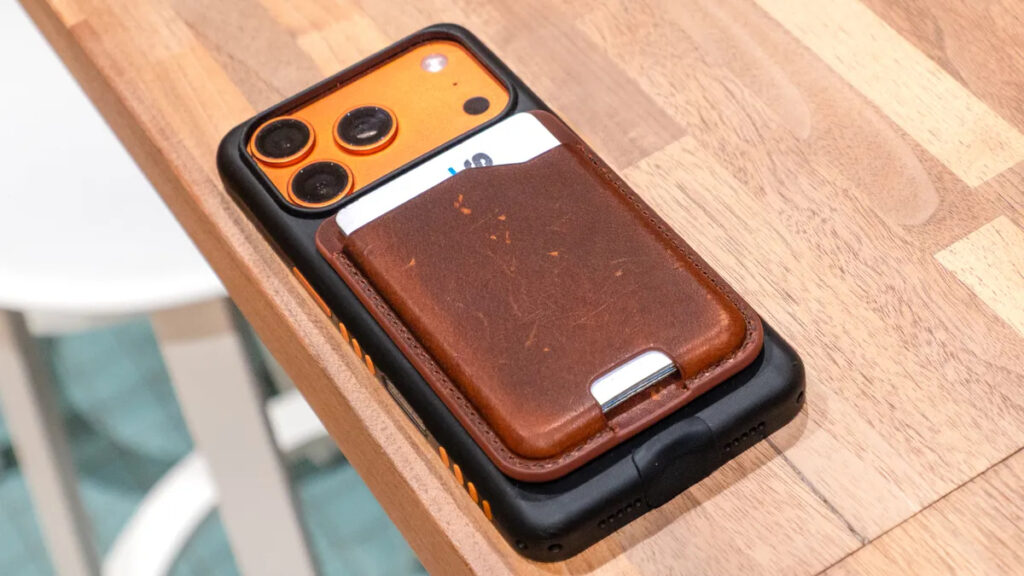
A MagSafe wallet on the back of an iPhone
Magnetic wallets show the problem most clearly. On the foldable, a wallet will hang over the bottom edge of the body. The source expects it will probably still hold, but the tidy fit that draws many people to MagSafe is lost. The source leaves open how stands and car mounts designed around a centered magnet will behave.
Owners of a large collection of magnetic accessories may need to replace some of it. If you are buying accessories for the Duo, the source recommends checking their dimensions first so they do not stick out past the edge.
2. No Action button on the foldable
The source calls this omission odd. A foldable might be expected to have more hardware controls, not fewer, especially since the source reports that Apple built a special version of iOS 27 for the Duo and reworked almost the entire interface.
On the iPhone 18 Pro Max, the Action button remains one of the most useful parts of the body. You can keep the default setting or assign it to the flashlight, a specific camera mode, voice recording or a favorite shortcut. Because it is a physical button, you can find it by touch, even in a pocket or while wearing gloves.
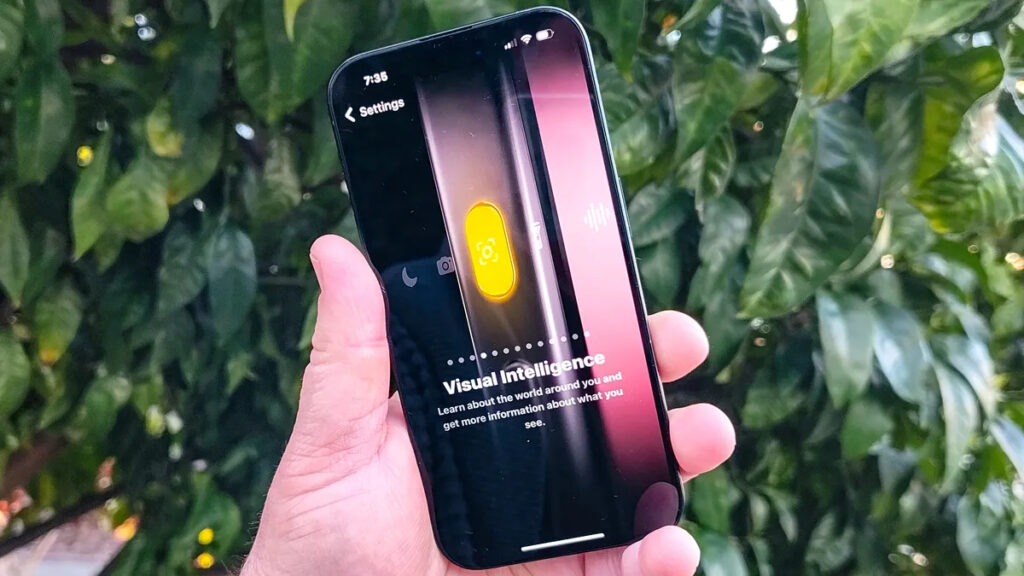
The Action button on an iPhone
The iPhone Duo has no Action button. The source author sees this as a missed opportunity. The foldable is built for multitasking, and a single press of a programmable button could have opened two apps side by side on the large screen. On the Duo, you have to use the screen, Control Center and gestures instead. People who never set up the Action button will not miss it. Those who have relied on it for the past couple of years may keep reaching for the left edge at first.
3. Only the Pro Max has a true variable aperture
According to the source, the headline camera upgrade on this year’s iPhone 18 Pro Max is a variable aperture. The Duo has its own exclusive camera features, but mechanically controlled aperture blades are not among them.
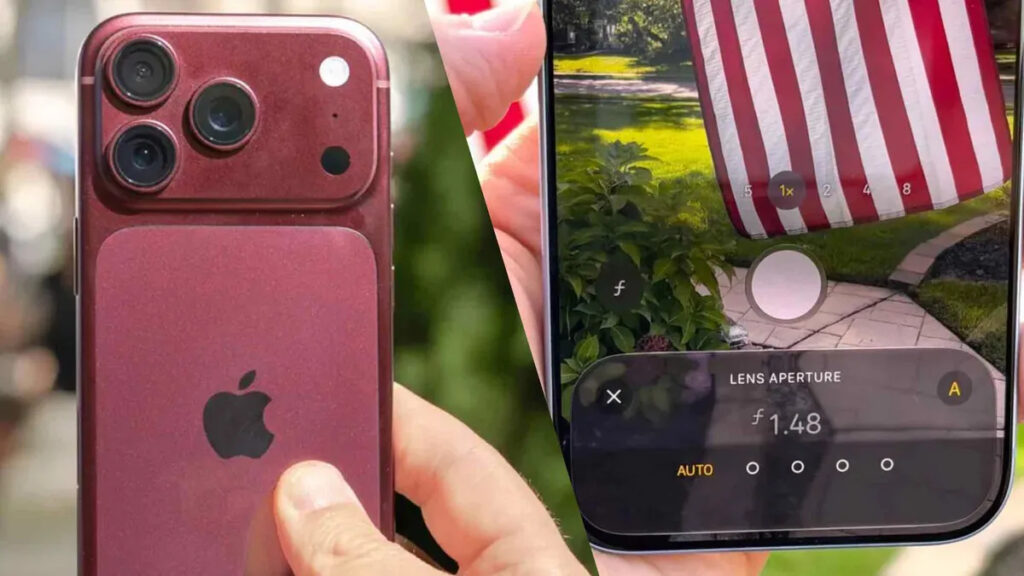
Variable aperture on the iPhone 18 Pro Max
On the Pro Max, the blades over the main camera physically open and close. Stopping down the aperture produces a landscape that is sharp from the foreground to the horizon. Opening it fully produces a portrait with genuine optical background blur, rather than a mask added by the processor.
The iPhone Duo relies on processing alone and calculates depth of field in software. The source notes that on difficult subjects such as hair or glass, the artifacts are still visible. A variable aperture also helps in other situations, such as deliberately blurring a moving subject to convey motion. The source says people who mostly photograph people and food for social media stories will see little difference, while landscape and portrait photographers will miss the feature right away.
4. No manual mode in the Duo’s Camera app
The iPhone Duo does have the Camera Control button. It sits on the right edge below the side button, which houses Touch ID. It launches the camera and opens a new Siri mode inside the camera. However, the foldable does not get one of the Pro Max’s main camera additions.
According to the source, the iPhone 18 Pro is the first iPhone to include a manual control mode in the built-in Camera app. It is aimed at people who want to decide how a shot is captured rather than leave everything to automatic settings. Previously, that required third-party apps such as Halide or Blackmagic Camera.
The iPhone Duo does not have this mode. Its camera is designed for quick, convenient shots. It has plenty of software features, but Apple has kept full manual control for the Pro line. Third-party apps remain an option, but the source points out that switching between them and the stock camera is awkward, especially when you need to catch a moment quickly.
If you shoot on automatic and like the results, you will not notice the difference. If you prefer to adjust settings yourself, the Pro Max offers more control out of the box.
5. ProRAW and ProRes remain Pro-only
This difference matters mostly to people who edit their photos and videos. The iPhone 18 Pro Max can shoot Apple ProRAW. The source describes these files as uncompressed and using a full sensor readout. In an editor, you can recover blown-out skies, lift shadows and correct white balance without losing quality.
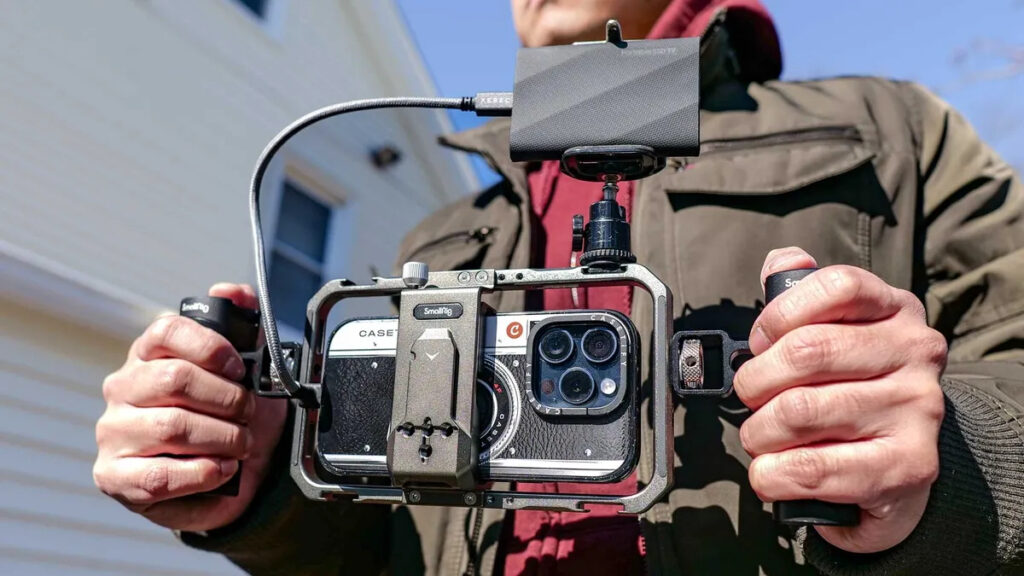
An iPhone in a professional filming rig
Video works the same way. ProRes keeps 10-bit color and uses very little compression, so footage scrubs smoothly in editing software and colors hold up during correction. The source says this lets the Pro Max serve as the main camera on a shoot when professional equipment is not available.
The iPhone Duo offers only standard HEIF and JPEG for photos and noticeably compressed video. That is more than enough for social media, but these files leave less room for post-processing, and you cannot recover as much from them as you can from RAW. The source author notes that people who have never opened Lightroom or looked for the ProRAW setting will not notice the loss. Those who edit every day should weigh it carefully.
6. No Apple Log video on the iPhone Duo
The foldable also lacks Apple Log. On the iPhone 18 Pro Max, the source says, this profile noticeably improves results, even though it does not look that way at first.
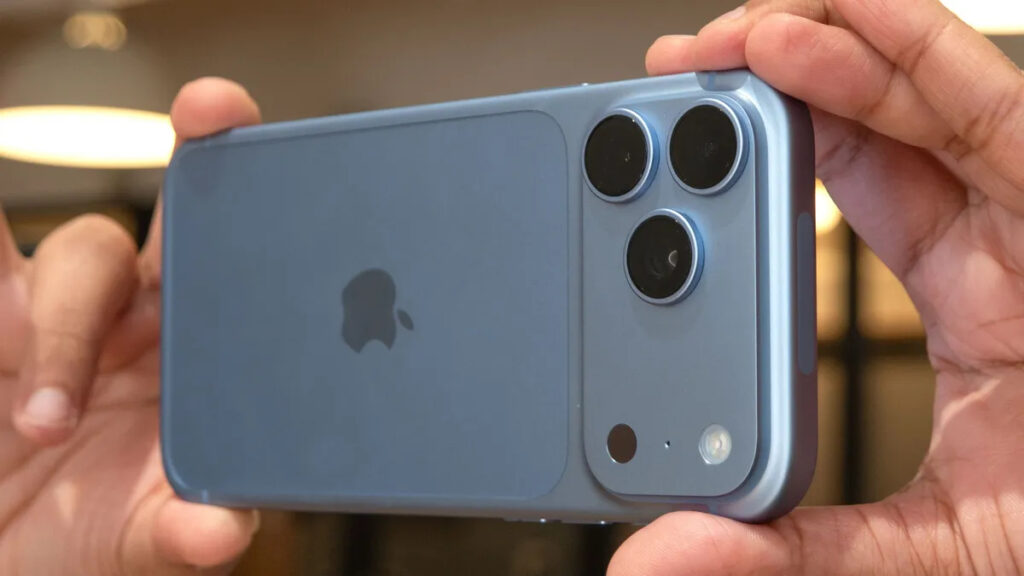
Shooting video on the iPhone 18 Pro Max
Log footage looks flat and gray straight out of the camera, which can be off-putting the first time. However, the profile preserves maximum dynamic range in highlights and shadows, which gives you much more freedom during color grading. According to the source, this matters most when you need to match iPhone footage to video from a mirrorless camera so the clips blend together in the edit.
Log is not available on the iPhone Duo, so you get the color and contrast Apple bakes in. That is fine for short social media clips. If you use your phone as a second camera on shoots, the source says the lack of Log makes the foldable a harder choice.
7. Only the Pro Max captures spatial photos and video
The source expects many people will not notice this gap, because spatial capture is not yet an everyday feature. The iPhone 18 Pro Max’s cameras are calibrated to record stereoscopic photos and videos for viewing on Apple Vision Pro. You can also see the parallax effect in the Photos app without the headset.

Spatial videos for Apple Vision Pro
The iPhone Duo has no LiDAR, and its lenses are not positioned for stereo capture, so spatial shots are not available. You can add depth with AI through Reframe, but the source says true stereo capture looks noticeably more lifelike, especially in still shots.
Which one should you choose?
The source concludes that the iPhone Duo suits people who want a large screen for work, reading and video and are willing to pay $700 more for the new form factor. The iPhone 18 Pro Max makes more sense for people who shoot and edit a lot, use MagSafe accessories and rely on the Action button.
The source author also notes that most users will likely notice only the missing Action button and possibly the MagSafe wallet fit. The other differences mainly affect professionals and a smaller group of people who shoot extensively with their iPhones.