Apple’s $1,999 foldable iPhone Duo has no dedicated telephoto lens, and on paper its camera system looks more modest than the iPhone 18 Pro’s. Six photos Apple published on October 1 suggest the phone’s two 48MP rear cameras are capable. The source author describes their color, detail and dynamic range as on par with recent iPhones. Long-range zoom remains the clear weakness. The images were commissioned from professional photographers, and Apple has not said which camera took each shot or whether the photos were edited.
What you need to know
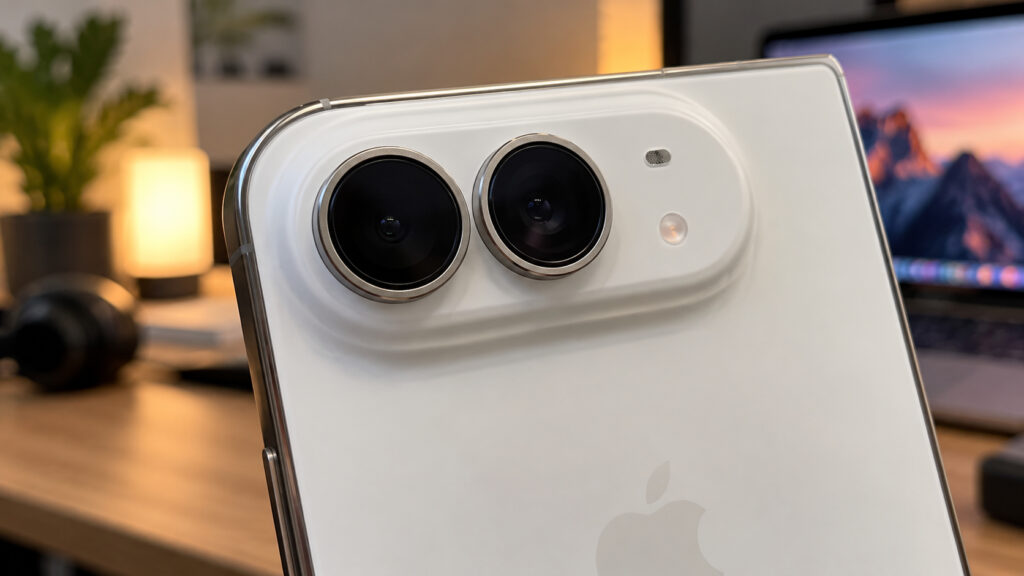
- The iPhone Duo has two 48MP rear cameras: a main Fusion camera (f/1.6, sensor-shift) and an ultra-wide Fusion camera (13 mm, f/2.2, 120°). There is also a front camera in each display.
- There is no telephoto lens. The 2x zoom is a 12MP crop from the main sensor, which Apple calls “optical quality.” Anything beyond 2x is digital zoom.
- Apple’s six sample photos were shot by professional photographers Jake Michaels and Jason Nocito. Apple did not say which lens was used or whether the images were processed.
- Pre-orders open October 16 and sales begin October 23, with prices starting at $1,999 for the 256GB model.
The iPhone Duo camera
Which cameras the foldable iPhone has
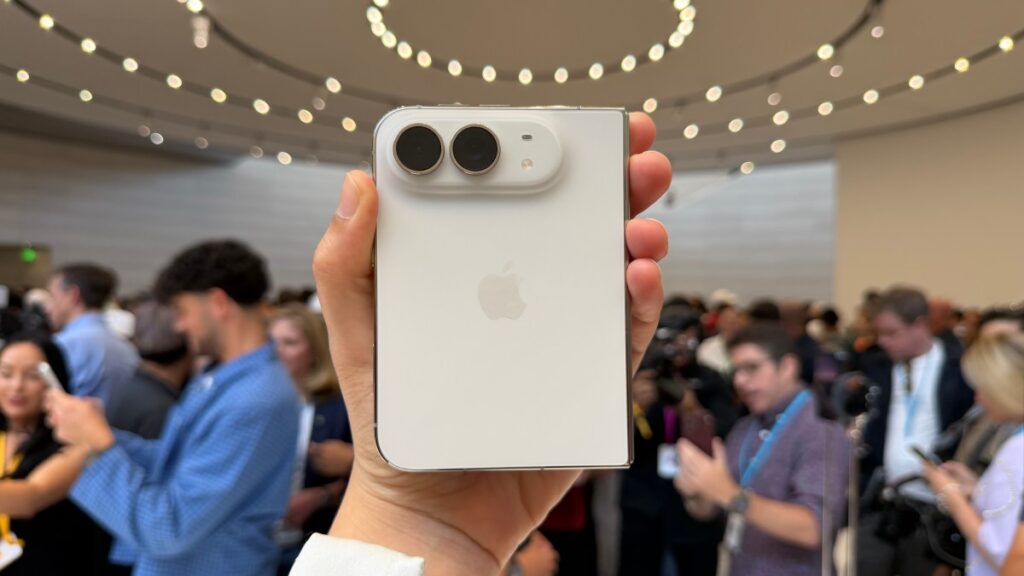
The iPhone Duo has four cameras, but only two of them take most of the photos. On the back are a main camera and an ultra-wide camera, both 48MP. There is also a front-facing camera in the outer display and another in the inner display.
The iPhone Duo in hand
| Camera | Specifications | Capabilities |
|---|---|---|
| Main Fusion | 48MP, f/1.6, sensor-shift | 24MP and 48MP photos; 2x crop at 12MP (52 mm) |
| Ultra-wide Fusion | 48MP, 13 mm, f/2.2, 120° field of view | Macro photography; 48MP photos |
| Front (outer display) | 12MP, f/2.2, Center Stage | Automatic frame rotation; 4K Dolby Vision at up to 60 fps |
| Front (inner display) | Hidden under the display | Hands-free video calls |
By default, the main camera shoots at 24MP. That setting balances detail against file size, and Apple adopted it several generations ago. Users can switch to full 48MP with no shutter lag. According to Apple, the ultra-wide camera is identical to the one in the iPhone 18 Pro. The source therefore expects no difference from the flagship in landscape and architecture shots.
The video specs are also strong. The main camera records 4K at 120 frames per second in Dolby Vision. Time-lapses are captured in 4K Dolby Vision HDR. Audio Mix separates voices from background noise and music.
Where Apple cut corners
The main drawback has been known since the announcement: the iPhone Duo has no dedicated telephoto lens. Apple produces 2x zoom by cropping the main sensor and calls the result “optical quality.” The iPhone 18 Pro, and even last year’s iPhone 17 Pro, have a full telephoto camera with zoom of up to 8x.
In practice, 2x portraits should look good. Photographing a bird on a branch or a concert from the back rows will be noticeably harder. Anything beyond 2x is digital zoom, with the quality loss that brings.
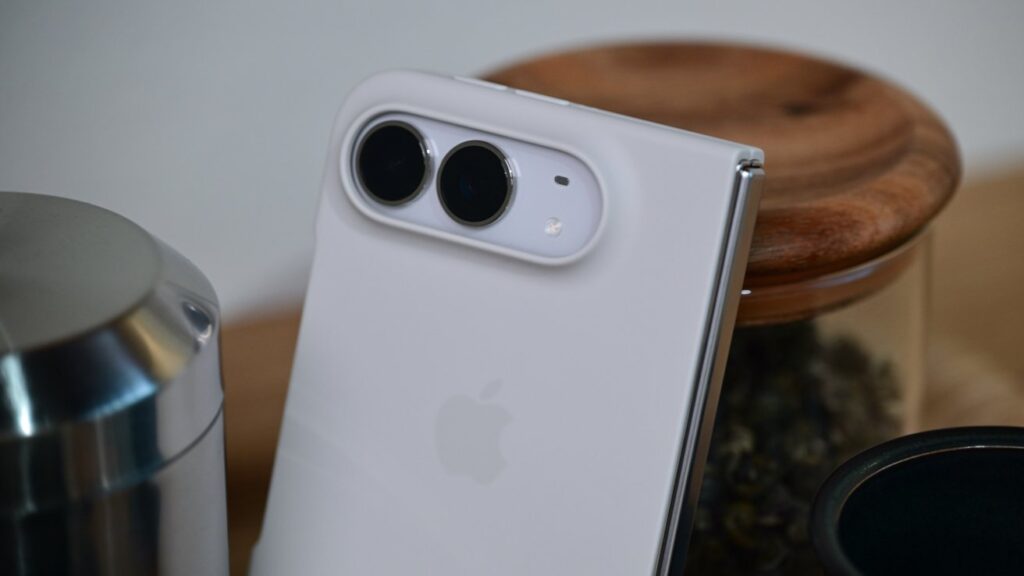
The iPhone Duo in a protective case
Apple has not explained why the telephoto lens was left out. The source author suggests a periscope lens may not have fit inside one thin half of the foldable body. The author presents this as personal speculation, not confirmed information.
Camera features exclusive to the foldable iPhone
The folding design also enables features that regular iPhones lack. Apple officially presented the following:
- Main-camera selfies: take selfies with the 48MP main camera while viewing the frame on the outer display.
- Duo Preview: while you photograph someone, they can see themselves on the outer display and adjust their pose.
- Smart Take: the phone analyzes the scene and takes the shot when the people in the frame hold still. The phone can be placed half-folded on a table, so you do not need to run back and forth with a timer.
- Kid Cue: animations featuring Peanuts characters appear on the outer display to encourage a child to look at the lens.
- New Photographic Styles: new settings for texture and grain.
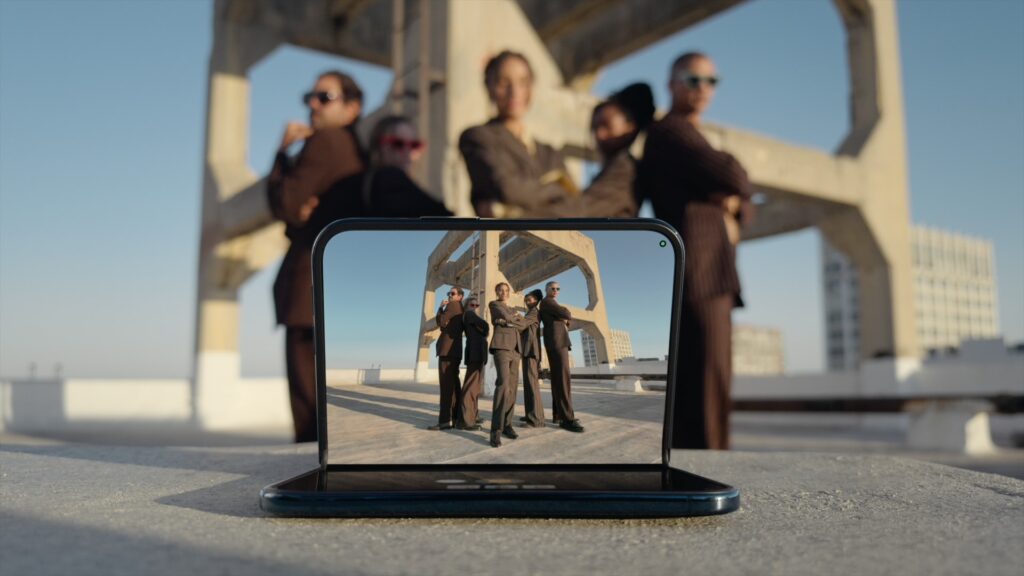
Smart Take mode activated on the iPhone Duo
Individually these sound like small additions, but the source argues they change how people shoot. With a regular iPhone, you either photograph yourself with the weaker front camera or photograph others with the better rear camera. On the iPhone Duo, that boundary disappears.
The photos Apple shot on the iPhone Duo
On October 1, Apple posted six images shot on the iPhone Duo to its social media accounts. Apple commissioned professional photographers Jake Michaels and Jason Nocito to take them. Apple did not specify which camera captured each image or whether the photos were edited. Every comment below about which lens was used is the source author’s own observation, not official information.
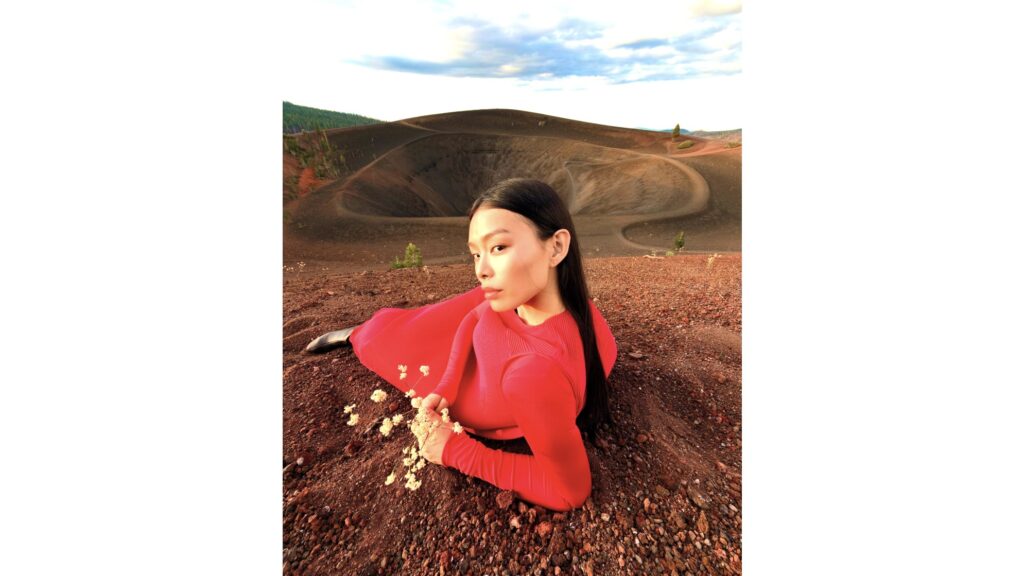
A woman in red lying on the ground
Volcanic landscape
Jake Michaels took the first photo. A woman in bright red lies on volcanic rock, with a huge crater stretching behind her. Judging by the perspective and how much fits in the frame, the source author believes the ultra-wide camera was used. The author points out that the clouds are not blown out and the foreground rocks keep their texture.
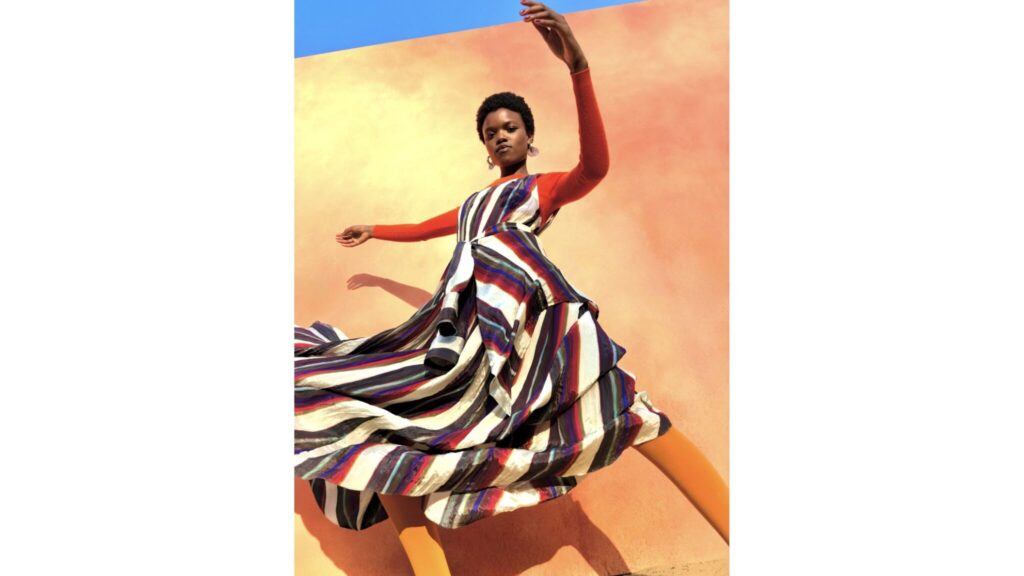
A model in a striped dress against an orange wall
Motion in bright sunlight
The remaining images are by Jason Nocito. In the second, a model in a striped dress spins in front of an orange wall. The fabric is frozen mid-motion without blur, and the shot was taken from a low angle in bright sun. The source author notes that a foldable makes this angle easy: you can hold the phone near the ground and look down at the screen.
A spiral staircase seen from above
Architecture and dynamic range
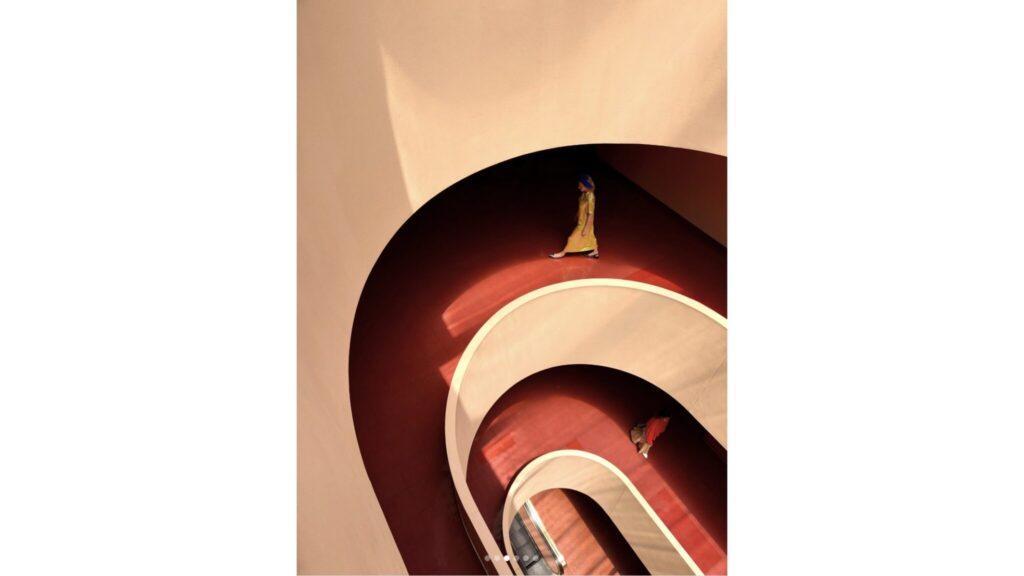
The third image shows architecture. A spiral staircase is photographed from above, two people are walking on it, and patches of sunlight fall through the openings. According to the source author, the photo shows good dynamic range handling. The bright walls are not overexposed, and the shadows stay deep without turning muddy gray.

A woman with red hair reaching toward the camera
A possible rear-camera selfie
The source author says the fourth image most resembles the new selfie feature. A woman with red hair reaches toward the lens, and the edges of the frame are visibly stretched, as happens with a wide angle at close range. The author thinks it looks like a selfie taken with the rear cameras using the outer-display preview, though Apple has not confirmed this. The author also notes that the red does not collapse into a solid blob: folds and seams remain visible on the jacket.
A man in a hat against a red-orange wall
A 2x fashion portrait
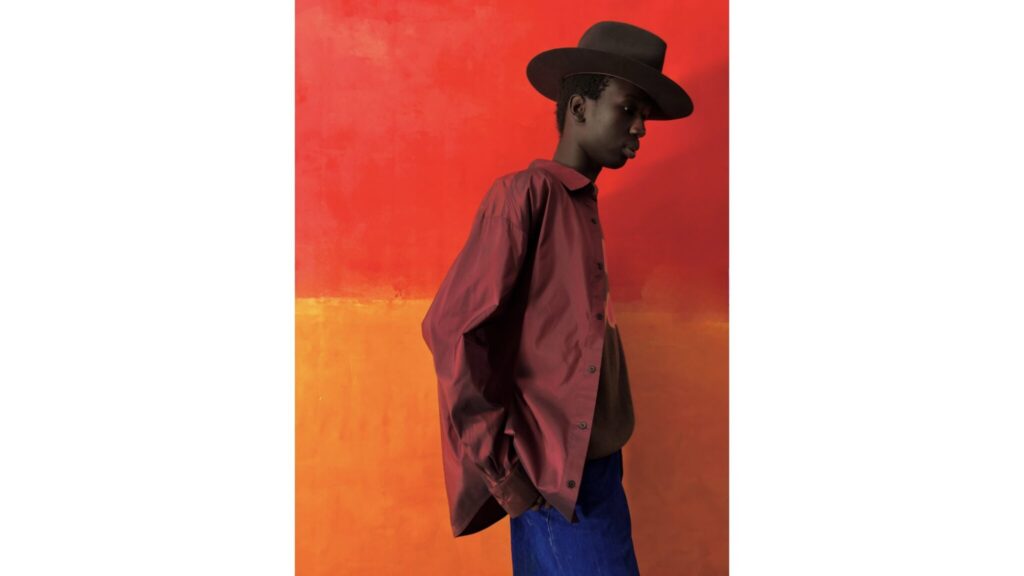
In the fifth image, a man in a hat stands half-turned in front of a red-orange wall. It is a classic fashion portrait, and the source author believes it was shot at 2x. In the author’s view, this is a case where the missing telephoto lens makes no difference.

A woman looking at a goldfish through aquarium glass
The aquarium shot
The source author found the final image the most surprising. The camera appears to be inside an aquarium or pressed against its glass. A blurred goldfish swims in the foreground, while a smiling woman behind the glass is in focus. The camera combined water, glass, bubbles and a face in one frame without strong glare. The author notes that such a shot is not easy to reproduce on an iPhone and recommends keeping the phone still if you try.
Is the foldable iPhone worth buying for its camera?
The source author cautions that professional photos commissioned by Apple are not a fair test. They involve experienced photographers, good lighting, models and possibly post-processing. Even so, the author concludes that the iPhone Duo’s two 48MP cameras cannot be called weak. In the author’s assessment, color, detail and dynamic range match recent iPhones.
The source’s verdict depends on what you shoot. For people, travel, architecture and frequent selfies, the author expects the iPhone Duo’s cameras to be more than enough, and the folding design adds new ways to shoot. If concerts, sports and long-range zoom matter to you, the author recommends the iPhone 18 Pro or iPhone 18 Pro Max instead.
Pre-orders for the iPhone Duo open on October 16, and sales begin on October 23. Pricing starts at $1,999 for the 256GB model.