Your dinner and commute are heating the planet: real carbon footprint numbers.
We rarely see the carbon dioxide we produce. It has no smell, doesn’t color the air, and leaves no stains on the pavement. But almost every action — from commuting to work to having dinner — has a measurable carbon footprint. And when you add up the small things, the numbers become surprisingly large. The good news is that this footprint can be controlled — without radical sacrifices.
Carbon Footprint of Transportation: How Much CO₂ Does a Car, Plane, and Train Emit
Transportation is one of the largest sources of emissions.
- A gasoline-powered passenger car emits an average of 120–180 g CO₂ per kilometer. A 20 km trip already amounts to about 3 kg of CO₂.
- Air travel is even more significant: approximately 90–150 g CO₂ per passenger per kilometer. A 2,000 km flight can produce up to 300 kg of CO₂ per person.
- For comparison: a train in Europe produces about 10–30 g CO₂ per kilometer per passenger.
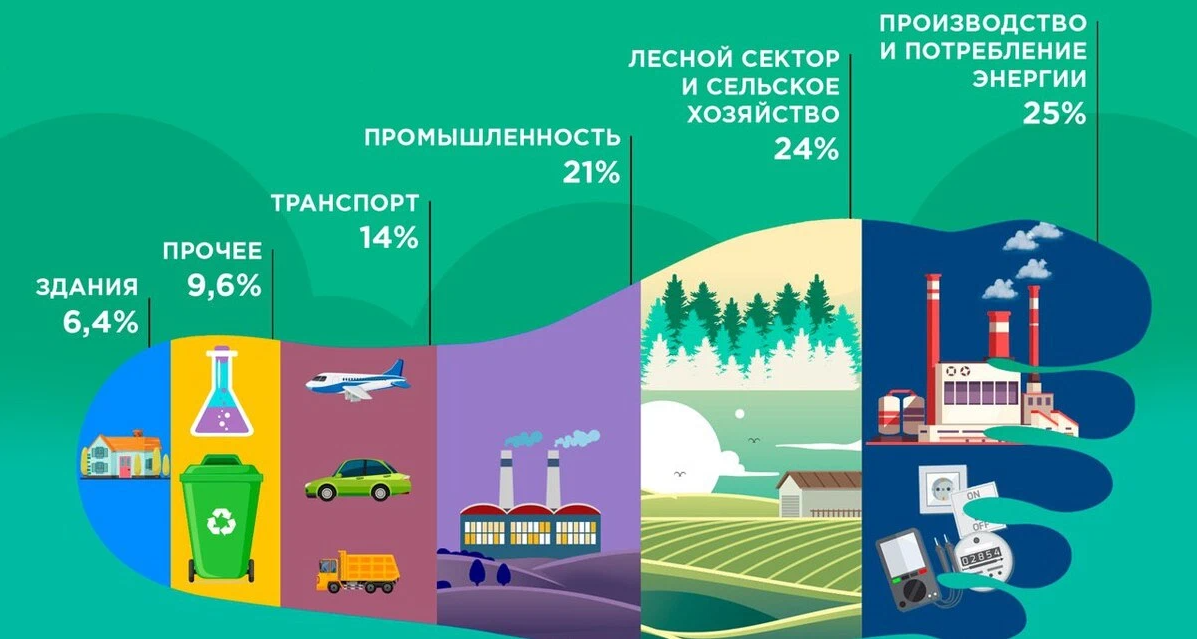
Carbon footprint of the planet. Image source: dzen.ru
A little-known fact: during takeoff, an airplane burns up to 25% of its fuel in just a few minutes. That’s why short flights are the “dirtiest” in terms of emissions per distance.
What you can do: choose trains more often, share rides (carpooling), and combine errands into a single trip.
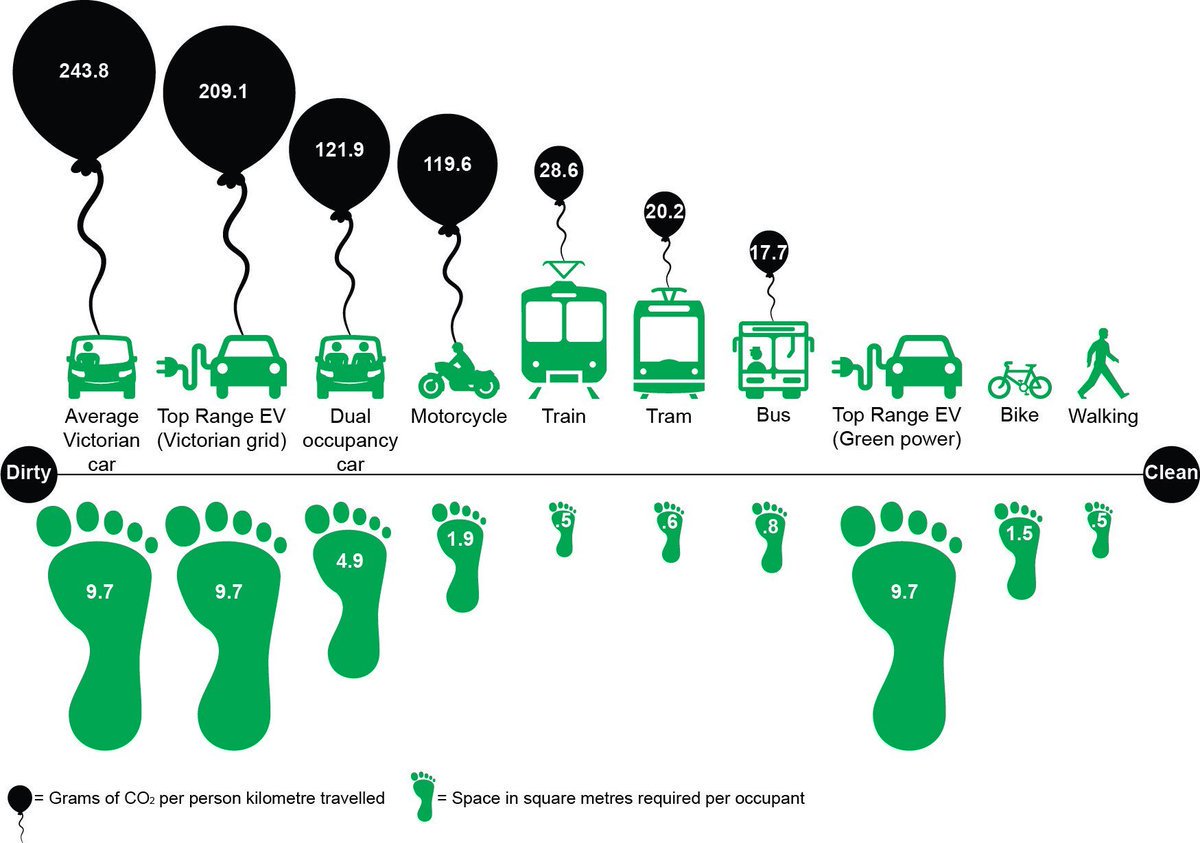
Carbon footprint from our daily commutes. Image source: benzinazero.wordpress.com
Carbon Footprint of Food: Which Products Cause the Most CO₂ Emissions
Our diet accounts for up to 20–30% of our personal carbon footprint.
- 1 kg of beef produces an average of 25–60 kg of CO₂ equivalent.
- 1 kg of chicken — about 6 kg of CO₂.
- 1 kg of legumes — less than 2 kg of CO₂.
The reason is methane from cattle and the resource-intensive production of animal feed. An interesting fact: if you replace one meat dinner per week with a plant-based one, you can reduce emissions by approximately 200–300 kg of CO₂ per year.
Practical tip: reduce the proportion of red meat, and choose local and seasonal products — transportation also adds emissions.
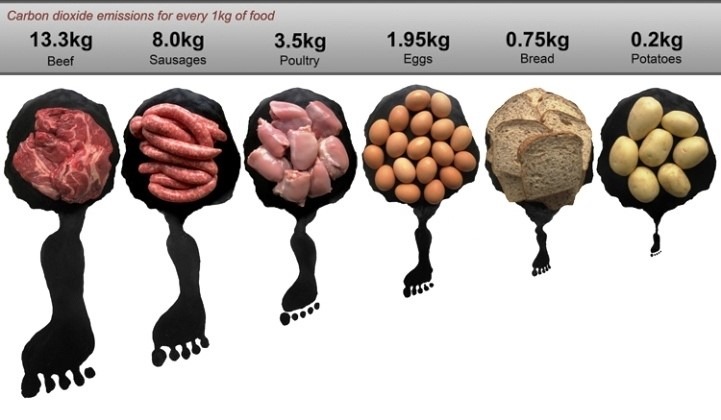
Carbon footprint of food products. Image source: winstein.org
Carbon Footprint of Everyday Purchases and Electricity: How Things and Energy Affect the Climate
Manufacturing a smartphone creates 50–80 kg of CO₂ before you even turn it on. Fast fashion is one of the largest sources of industrial emissions: the textile industry accounts for up to 8–10% of global emissions.
Electricity also has a “carbon price.” If energy comes from coal, 1 kWh can mean up to 800–1,000 g of CO₂.
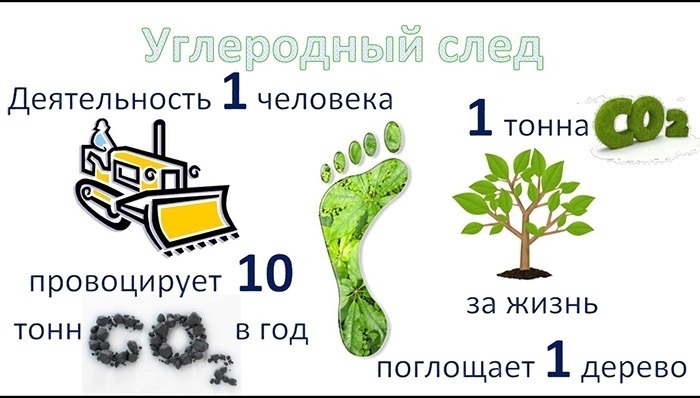
Carbon footprint from human activity. Image source: rostmoskva.ru
What works: use your devices longer, choose energy-efficient appliances, and turn off unnecessary devices.
The main takeaway is simple: your carbon footprint is not an abstraction but the sum of everyday decisions. It is made up of kilometers, kilograms, and kilowatts. And it is precisely in these small details that the most realistic way to reduce it lies.