At the MWC 2026 presentation in Barcelona, Infinix showed something nobody really expected: a true flagship. Not a budget flagship, not a “flagship for the money” — but a phone with a design by Italian studio Pininfarina, which usually designs for Ferrari and Maserati. The new device features a 200-megapixel camera, satellite connectivity, and a 7000 mAh battery. It truly looks like the future — but there’s one thing that spoils the picture. We’ll tell you about it at the end.
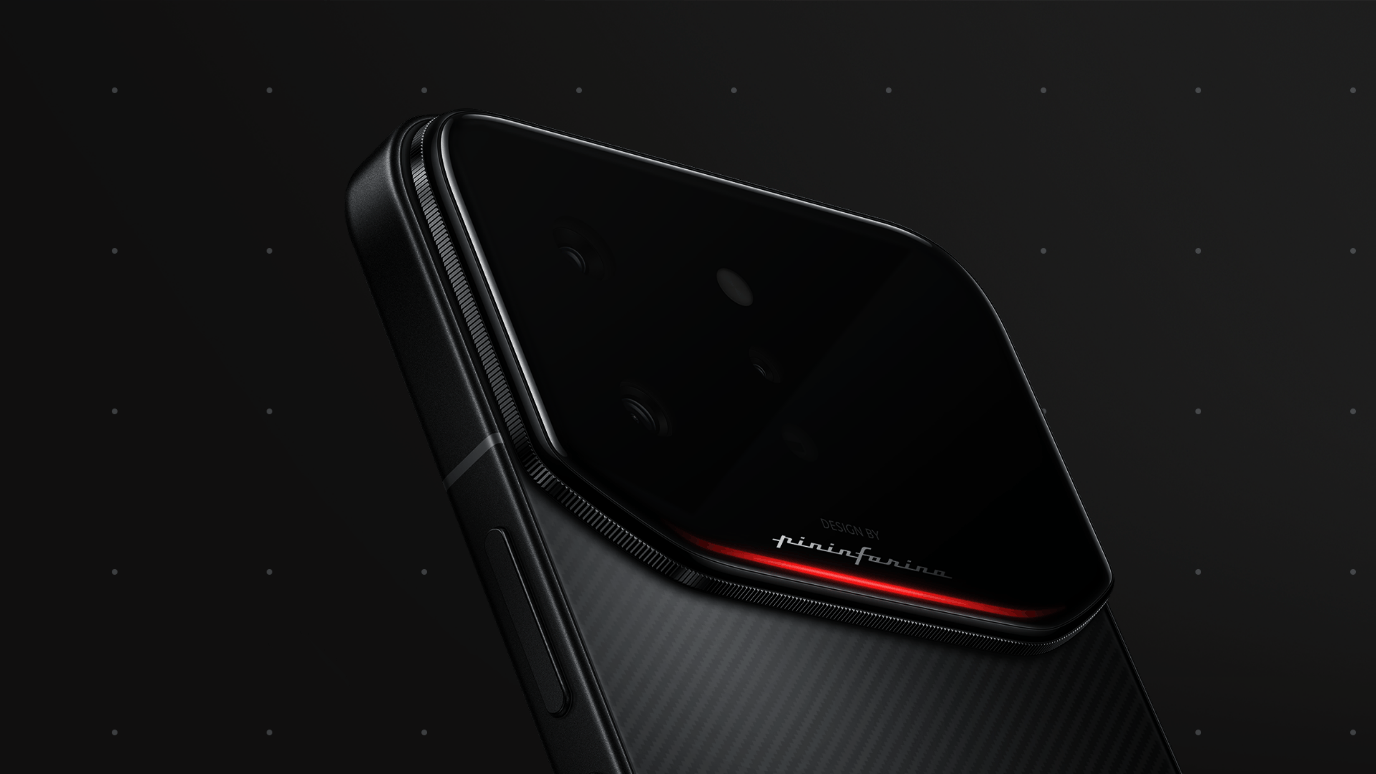
A very stylish smartphone with its pros and cons. Image: Infinix
What Is Pininfarina Doing in Infinix
The most noticeable thing about the Infinix Note 60 Ultra is the rear panel. No protruding camera “hump.” Instead — a single piece of Corning Gorilla Glass Victus, beneath which all three cameras and a small secondary display are hidden. Infinix calls this the Uni-Chassis Cam Module and says it’s the world’s first solution of this kind.
It really does look different — smooth, monolithic, like a sports car body. Plus, there’s a brake-light design feature: an LED strip along the edge of the rear panel that lights up when turned on, like a greeting from a racing car.
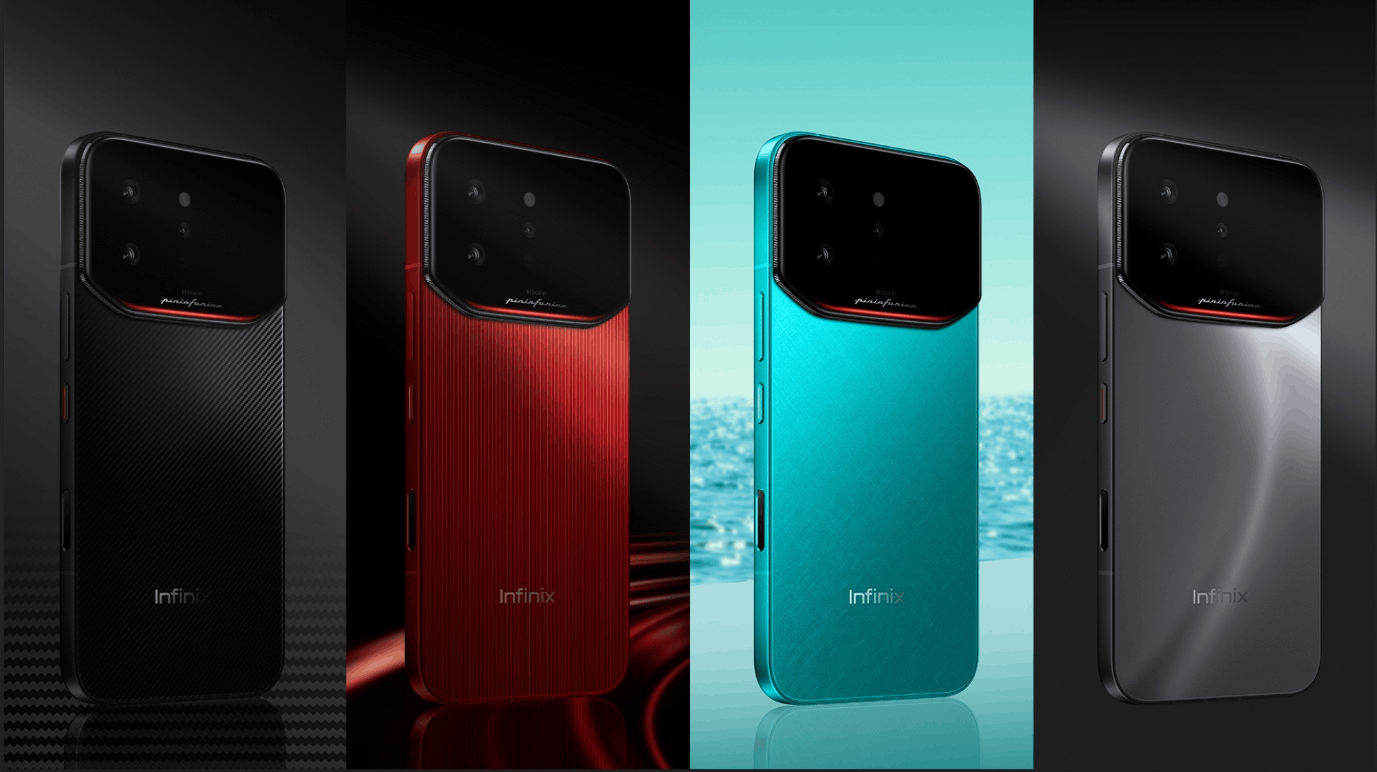
The colors are unusual and vibrant. Image: Infinix
Four colors are available: Torino Black, Monza Red, Amalfi Blue, and Roma Silver — all referencing Italian motorsport. And the Pininfarina logo is placed in two spots, so you definitely won’t forget. That said, this smartphone design is an acquired taste. The same can be said about the Realme 16 Pro+, which has a tactilely pleasant back but with Japanese aesthetics.
How Does the Infinix Note 60 Ultra Shoot
The main camera of the Infinix Note 60 Ultra is a 200 MP module with a Samsung ISOCELL HPE sensor measuring 1/1.4 inches and f/1.7 optics with optical stabilization. This is no longer a budget affair: the sensor is large, and the aperture is good.
The zoom module uses a 50 MP sensor. It’s a periscope with 3.5x optical zoom that magnifies images up to 7x without loss and up to 100x with digital crop. Its sensor is 1/2.76 inches, and the aperture is f/2.9. This is a bit more modest than you’d want for a flagship.
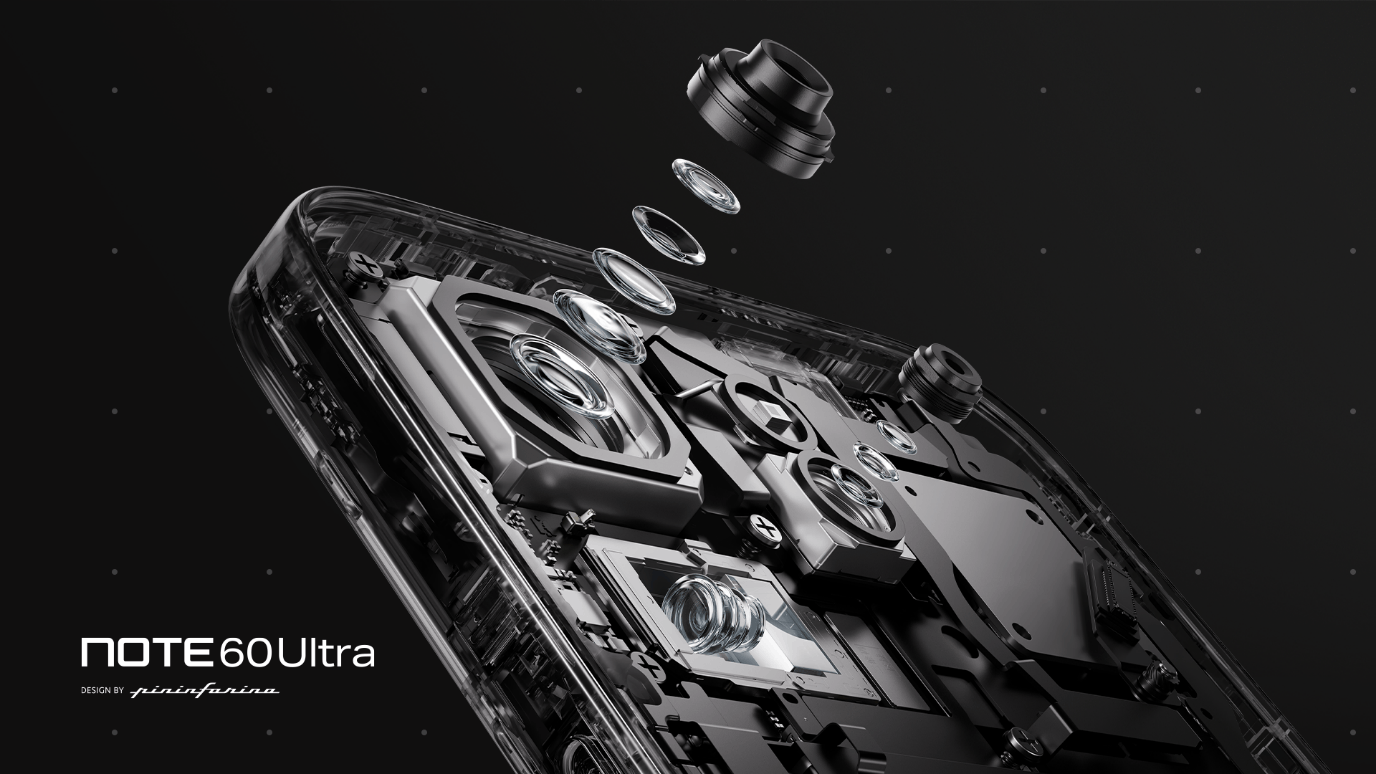
The main camera should impress with its quality. Image: Infinix
The ultra-wide is 8 MP. This is the weakest point in the camera system: 8 megapixels in 2026 is critically insufficient. For comparison, most competitors in this price range have a 12–16 MP ultra-wide, while flagships go up to 50 MP.
The front camera is 32 MP (compared to 13 MP on the Note 60 Pro), which is a noticeable leap. And there’s a cool feature — support for the Ultra HDR Capture standard with a proprietary image processing chip. It should work well in scenes with bright light and shadows.
What Processor Is in the Infinix Note 60 Ultra
Under the hood is a MediaTek Dimensity 8400 Ultimate chip. It’s not the absolute top tier, but a very fast octa-core processor with Mali-G720 graphics. According to benchmarks, it delivers performance on par with last year’s Snapdragon 8 Gen 2 flagships. For most tasks, it’s more than enough, and it won’t disappoint in gaming either.
There’s 12 GB of RAM and 256 GB of storage. Only one version is promised, so there’s no 512 GB option.
What’s the Secret Behind the Infinix Note 60 Ultra’s Battery
The device is powered by a 7000 mAh battery based on silicon-carbon technology. This is one of the main selling points of the new device. It charges fully in 48 minutes via cable (100 W). There’s also 50 W wireless charging.
Infinix also added an unusual feature — Battery Self-Healing Technology. They claim that the battery self-restores up to 1% of capacity every 200 charge cycles. Sounds great, but it’s impossible to verify with real data yet — we’ll need to wait for long-term tests.
A Battery That Heals Itself — How Does That Even Work
Sounds like marketing, but the idea is simple. Any battery degrades over time — everyone who’s used a smartphone for more than two years knows this. Here’s why it happens and what Infinix has to do with it:
- Each time the battery charges, it expands slightly, and when it discharges, it contracts
- Over time, micro-cracks appear inside — like cracks in a wall from constant temperature changes
- Because of this, the battery holds charge progressively worse
Infinix says it taught the battery to heal itself: a weak current periodically “seals” these cracks from the inside. In numbers, it looks like this:
- A regular phone loses about 20% capacity after 800 charges — 7000 mAh becomes 5600 mAh
- With the Note 60 Ultra, the battery partially restores itself over the same period and retains about 5880 mAh
The difference is roughly an hour of screen time. Not a superhero, but nice to have.
Because of all this, the phone is slightly thicker (7.9 mm) and heavier (220 g) compared to the Note 60 Pro. Tolerable, but it’s no longer the lightest gadget among its classmates.
Sound Quality of the Infinix Note 60 Ultra
Let’s start with the fact that it has a 6.78-inch AMOLED display with a resolution of 2644×1208, 144 Hz refresh rate support, and 4500 nits peak brightness. The backlight operates at 2304 Hz — good for the eyes during extended use.
And here’s the main feature — the sound. The smartphone has stereo speakers tuned by JBL. This isn’t just stereo, but a partnership with a brand that knows acoustics. In short, it’s the case where they didn’t have enough partners left for camera collaborations.
Another feature is a small Active Matrix Display on the rear panel under the glass. It shows notifications, icons, and can display a virtual companion in pixel art style. Sounds like a gadget for the sake of a gadget, but we’ll see how useful it is in real life.
Where Does Thuraya Satellite Connectivity Work
The Infinix Note 60 Ultra is the first mass-produced smartphone with support for two-way satellite calls and messages via the Thuraya network, which covers dozens of countries including Russia. Here you get not just emergency messages like Apple offers, but full-fledged calls where there are no cell towers.
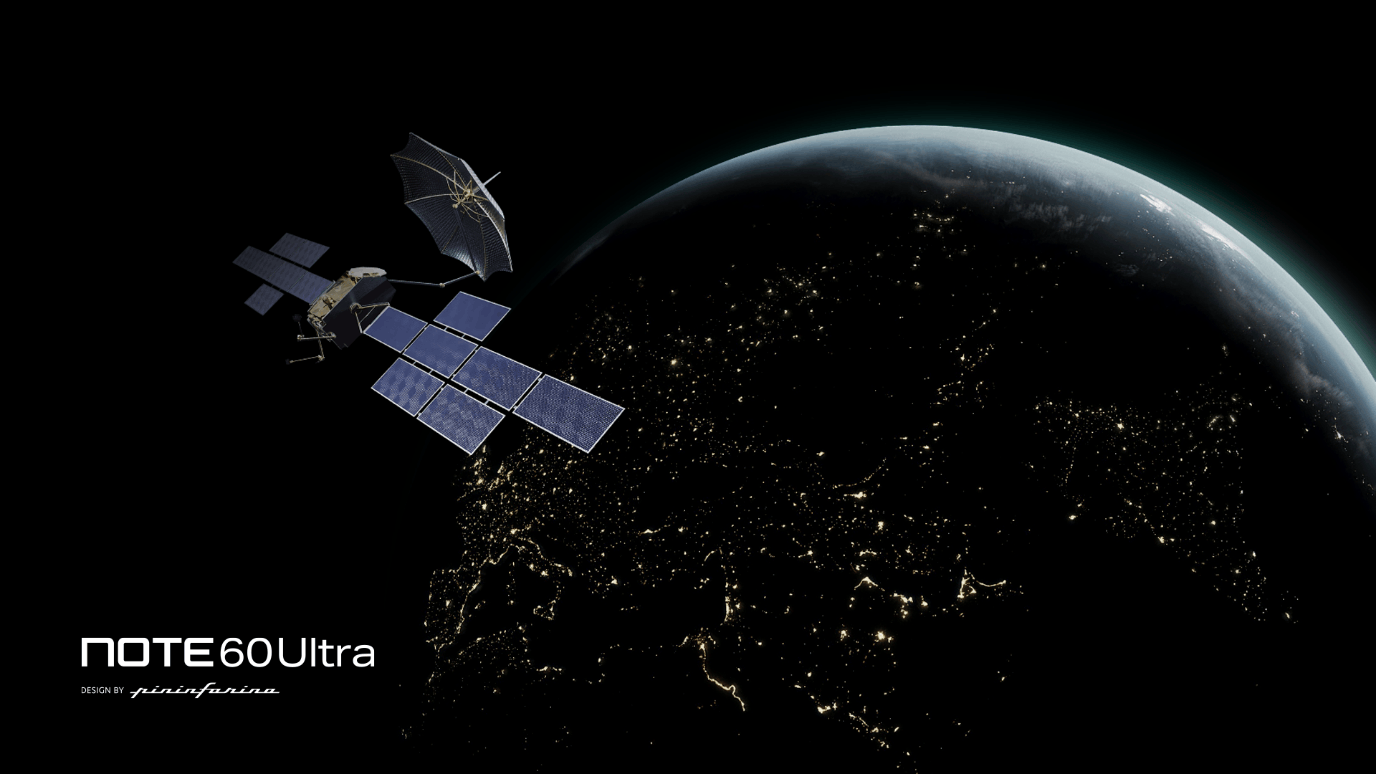
Satellite connectivity will likely work even in Russia. Image: Infinix
For travelers, tourists, and those who live in areas with poor coverage — this is a genuinely valuable feature.
Downsides of the Infinix Note 60 Ultra
Here’s the very thing we warned about at the beginning: pricing and sale dates for the Infinix Note 60 Ultra have not been announced. No markets, no dates, no pricing.
This is a strange situation. The phone was showcased at MWC, everything was discussed — except the most important thing. For Infinix, which historically sells smartphones in Africa, Asia, and developing markets, a flagship at roughly 60–70 thousand rubles is a completely different story than budget phones at 15–20 thousand. Whether people will like it is a big question.
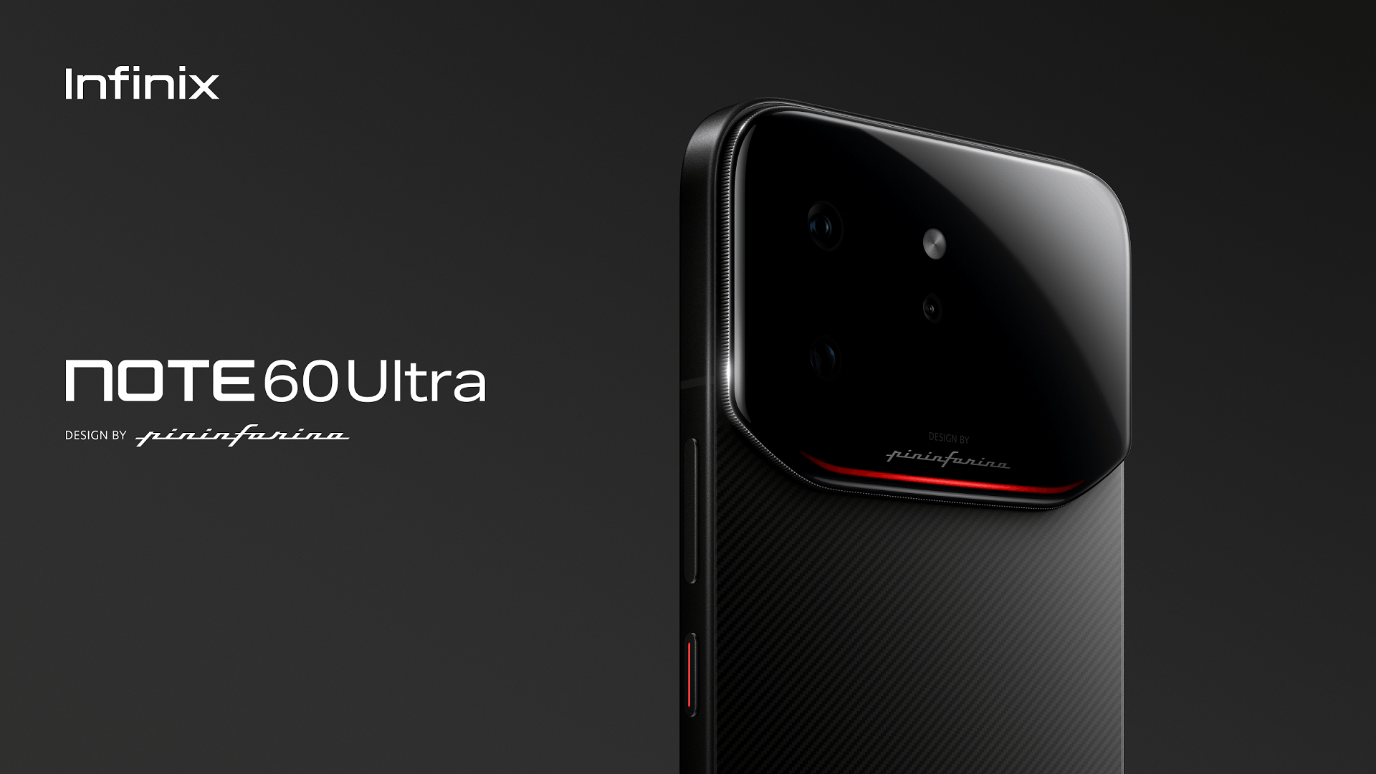
But the design is truly outstanding. Image: Infinix
Second point: an 8 MP ultra-wide in 2026 on a flagship is weak. The other cameras are good, but this module is clearly there just to check a box, and you simply won’t want to shoot with it.
And third — the smartphone has dust and splash protection from any direction with an IP64 rating. This is the most basic protection that doesn’t even guarantee the smartphone will survive a short walk in heavy rain. So you’ll need to keep the device away from moisture and dirt, unlike new flagships that can survive being submerged in boiling water thanks to IP69K certification.
Key Specifications of the Infinix Note 60 Ultra
| Display | 6.78″, AMOLED, 2644×1208, 144 Hz, 4500 nits |
| Chipset | MediaTek Dimensity 8400 Ultimate, 4 nm |
| Memory | 12/256 GB |
| Main camera | 200 MP, f/1.7, 1/1.4″ sensor |
| Telephoto | 50 MP, 3.5× optical zoom, periscope |
| Ultra-wide | 8 MP |
| Front camera | 32 MP |