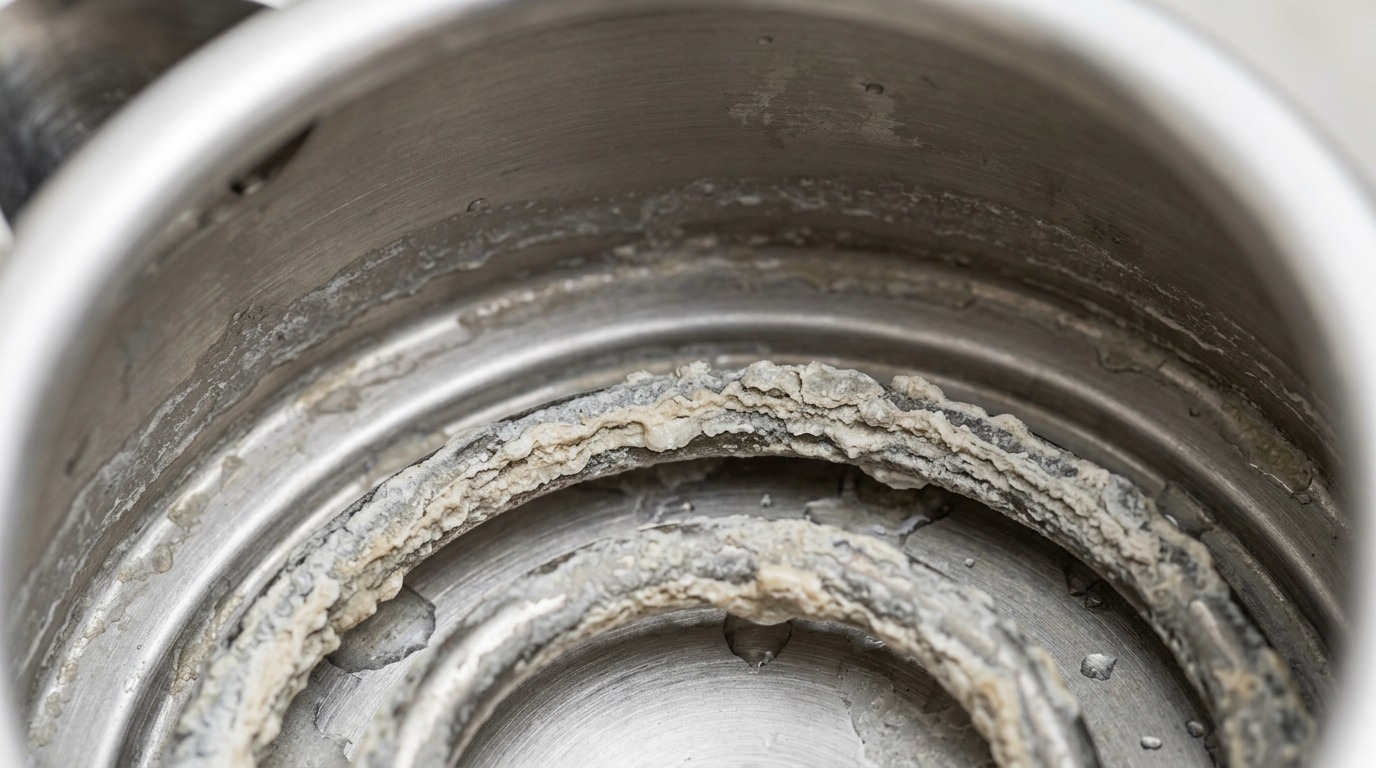
Thick layer of limescale on the heating element of an electric kettle
Anyone who has ever looked inside an old kettle has seen that white coating on the walls and heating element. This is limescale — hard deposits of calcium and magnesium salts that precipitate from water during boiling and firmly stick to the metal. The harder the water in your region, the faster your kettle gets covered with this crust. I decided to test in practice which folk methods for removing limescale actually work and which are a waste of time. The results were interesting, because although limescale doesn’t harm your health, it has another negative effect.
Why Limescale Forms in a Kettle
Before rushing to clean the kettle of limescale, it’s worth understanding what we’re dealing with. Tap water contains dissolved salts, mainly calcium and magnesium carbonates. While the water is cold, these salts quietly remain in solution. But as soon as you heat it to boiling, the minerals transition to a solid phase — forming crystals that settle on the walls and bottom of the kettle.
Essentially, limescale is the same as limestone, just in miniature. That’s why simply rinsing the kettle with water is useless: you wouldn’t wash away a rock with a stream from the tap, would you? Neither could I. To dissolve these deposits, you need an acidic environment, and that’s when I remembered the folk remedies.
Citric Acid Against Limescale
The first method I tried was citric acid. This is probably the most popular tip on the internet, and for good reason. The recipe is extremely simple: I poured two tablespoons of citric acid (approximately 25–30 grams) into a full kettle of water, brought it to a boil, and left it to cool for 30–40 minutes.
The result was impressive. Limescale that had been accumulating for a couple of months almost completely came off the walls. Some dissolved right in the water, some peeled off in large flakes that were easily rinsed away. After two rinses with clean water, the kettle looked brand new, with no residual odor whatsoever.
Citric acid turned out to be the most convenient and effective remedy of all those I tested. It has no smell, costs pennies, and gets the job done in a single boil. For heavy, old limescale, you can repeat the procedure twice.
Vinegar and Baking Soda Against Limescale
The next experiment was vinegar. I filled the kettle about two-thirds with water, added a glass of white vinegar (9%), and boiled it. Vinegar handled the limescale well — the deposits dissolved about as effectively as with citric acid. But there’s a serious downside: the smell. The kitchen instantly filled with a sharp sour odor, and I had to rinse the kettle about five times before the water stopped smelling of vinegar.
With baking soda, it was a different story. I added two tablespoons of baking soda to the water, boiled it, waited — and honestly, I didn’t notice much effect. Baking soda creates an alkaline environment, but dissolving limestone deposits requires an acidic one. It might soften a light coating, but it can’t handle real limescale.
People often recommend combining baking soda and vinegar — supposedly the vigorous foaming reaction will “eat through” everything. In practice, the effect is more spectacular than useful: baking soda and vinegar neutralize each other, and you end up with a weak solution of sodium acetate that cleans worse than either component on its own.
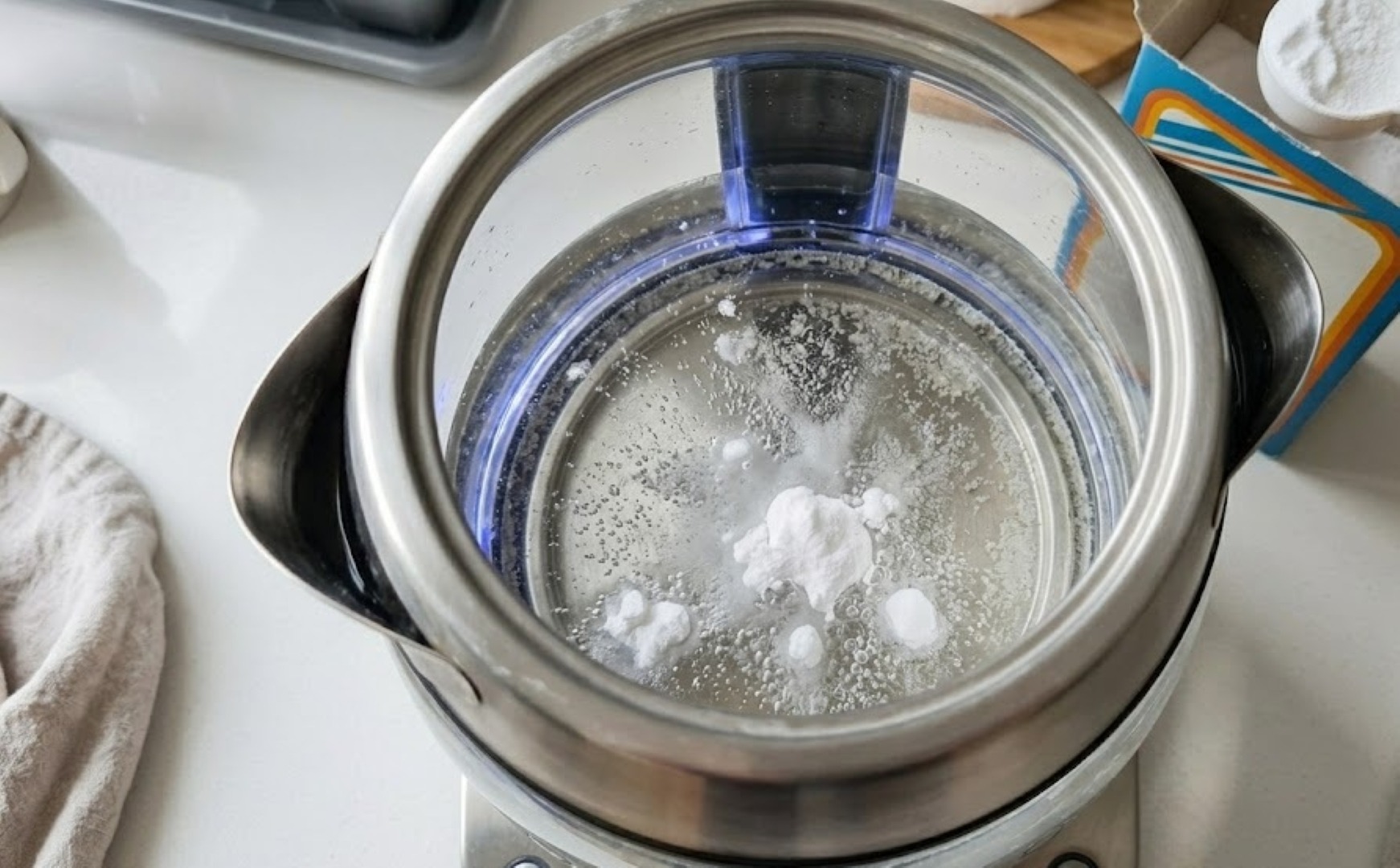
Baking soda handled limescale worse than citric acid
Which Limescale Removal Methods Definitely Don’t Work
Besides the methods that work, I came across tips that are either useless or harmful:
- Sand and abrasive sponges. Yes, you can mechanically scrape off limescale. But along with it, you’ll scrape off the kettle’s protective coating, leaving scratches where limescale will accumulate even faster. For electric kettles, this is a sure path to breaking them. So I didn’t even consider this method.
- Boiling plain water “many times in a row.” I honestly tried this and boiled water five times, draining and refilling each time. The limescale didn’t budge. The logic is simple: if deposits formed because of boiling, re-boiling clean water won’t dissolve anything.
- Coca-Cola and other sodas. This tip has been circulating the internet for years. The phosphoric acid in Coke can theoretically dissolve limescale, but its concentration is too low, and the sugar and colorants leave their own residue. Not the best choice.
How to Prevent Limescale from Forming in Your Kettle
The most effective way to fight limescale is to prevent it from forming in the first place. Here’s what actually helps:
- A water filter. A pitcher filter or an under-sink system reduces water hardness, meaning there are fewer salts that can turn into limescale. It doesn’t completely solve the problem, but you’ll need to clean the kettle far less often.
- Don’t reboil water. If you boil the same water two or three times, the salt concentration increases, and limescale forms faster. It’s better to fill fresh water each time.
- Regular maintenance. It’s easier to boil the kettle with a spoonful of citric acid once every two to three weeks than to later soak off a thick layer of deposits.
Some modern electric kettles are equipped with anti-calcium filters on the spout that catch limescale flakes and prevent them from getting into your cup. This is convenient, but it doesn’t solve the problem of deposits on the heating element itself — you still need to clean it.
What Actually Helps Remove Limescale from a Kettle
After all my experiments, my personal ranking looks like this: citric acid is the clear winner. It’s effective, odorless, safe for the kettle, and costs literally pennies per packet. Vinegar works just as well, but the smell is a real ordeal. Baking soda is more of a supplementary remedy for light buildup, nothing more. And abrasives and repeated water boiling are methods not worth the time spent.
If the limescale is old and thick, it makes sense to turn to specialized descaling products — they’re available at any household goods store. But for regular maintenance, home remedies are perfectly sufficient. The main thing is to clean your kettle at least once a month, and the problem simply won’t have time to become serious.