When the national messenger MAX first appeared, I immediately decided: no way. Without any reservations. A messenger created under federal law, promoted through blocking competitors — this is not a product I’m willing to support with my audience. Last year I talked about why I don’t recommend MAX and don’t use it myself. My attitude toward the messenger hasn’t changed, but life made its adjustments. I had to install the app despite all my negative feelings about it, and I came up with a plan to stay true to my conscience and keep my data safe.
I figured out what I’m going to do with the MAX app
Why the MAX Messenger Is Dangerous
Let me start with the main point, so it’s clear what exactly I’m trying to protect myself from. Installing MAX on your phone isn’t scary by itself. Every app on Android runs in a “sandbox” and by default doesn’t have access to data on the device. Nothing bad happens at the moment of installation. Problems start later, when you begin using the app and granting it permissions.
Surveillance through MAX in the literal sense hasn’t been confirmed. The camera and microphone access indicator on Android only lights up during actual use of these functions, and in the background MAX behaves quietly. But that doesn’t mean everything is fine. The main vulnerability is different: in MAX’s privacy policy it’s explicitly stated that the company can share user information with third parties. It simply can, and it doesn’t shy away from it.
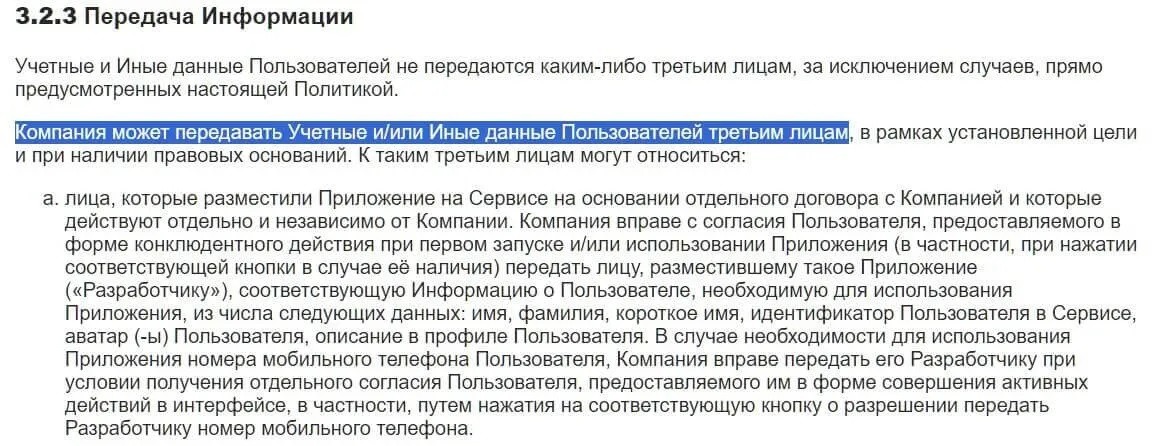
The MAX messenger shares data with third parties. Source: legal.max.ru
The danger of MAX is that conversations are stored on Russian servers and are theoretically accessible. For example, WhatsApp (owned by Meta, recognized as extremist and banned in Russia) only knows your phone number. But in MAX, conversations can be read — not necessarily by real people right now, but the technical capability exists. Add to that the integration with Gosuslugi (Government Services), which gives the messenger access to a massive array of personal data, and the picture becomes unpleasant. Who and under what circumstances can read your messages in MAX, you can find out in a separate article.
Scammers in MAX are another problem. The app has gathered an audience that is least prepared for social engineering schemes: elderly people, children in school chats, people who simply didn’t know about alternatives. This is an ideal environment for bad actors, and they take advantage of it.
What Happens If You Install MAX
When MAX was just gaining popularity, I installed it on a second smartphone — a work phone, for testing. I needed to write about this app and understand what was going on inside it. I installed it, registered, played around with the features, and then warned about what happens to your phone after installing MAX. However, I didn’t install the messenger on my main smartphone for a long time. Deliberately. I didn’t want an app with that kind of privacy policy to have access to my contacts, files, and messages. It was a matter of principle.
I really didn’t want to install it on my main smartphone
Then Telegram got blocked. First calls, then everything else. People started massively moving to MAX, explaining it simply: “Telegram won’t load.” School chats moved. Work groups moved. Relatives moved. And at some point it became obvious: without MAX on my main phone, I’d be left out of some important conversations. I installed it. Without joy, but I installed it.
Why People Use MAX
The honest answer: because many have no choice, though they don’t realize it themselves, blaming all of Telegram’s problems on the messenger itself and its team.
People install MAX without much enthusiasm
People see that Telegram works poorly. They see that MAX works fine, and conclude that the former is “broken” and the latter is “better.” The advertising slogan “works even in a parking garage” did its job. The real reason for MAX’s popularity looks different:
- calls on Telegram and WhatsApp (owned by Meta, recognized as extremist and banned in Russia) have been blocked by carriers since August 2025;
- Telegram itself has been working unstably since late 2025 due to deliberate throttling;
- school and work chats are being moved to MAX by administrative decision;
- some people genuinely don’t understand what’s happening and simply go where they’re told.
MAX’s security doesn’t particularly concern anyone. “I have nothing to hide” is the favorite argument. Although the question isn’t about what you have to hide, but about who will read your messages and why, and what they’ll do with your personal data. Especially considering how regularly Russian companies’ databases leak, and how often people complain about their MAX account being hacked.
Should You Install MAX
It depends on the situation. Whether to install MAX is a question that everyone will answer differently. Should you switch from Telegram to MAX as your primary messenger? No, you shouldn’t, if there’s any alternative at all. But completely ignoring MAX in 2026 is no longer possible.
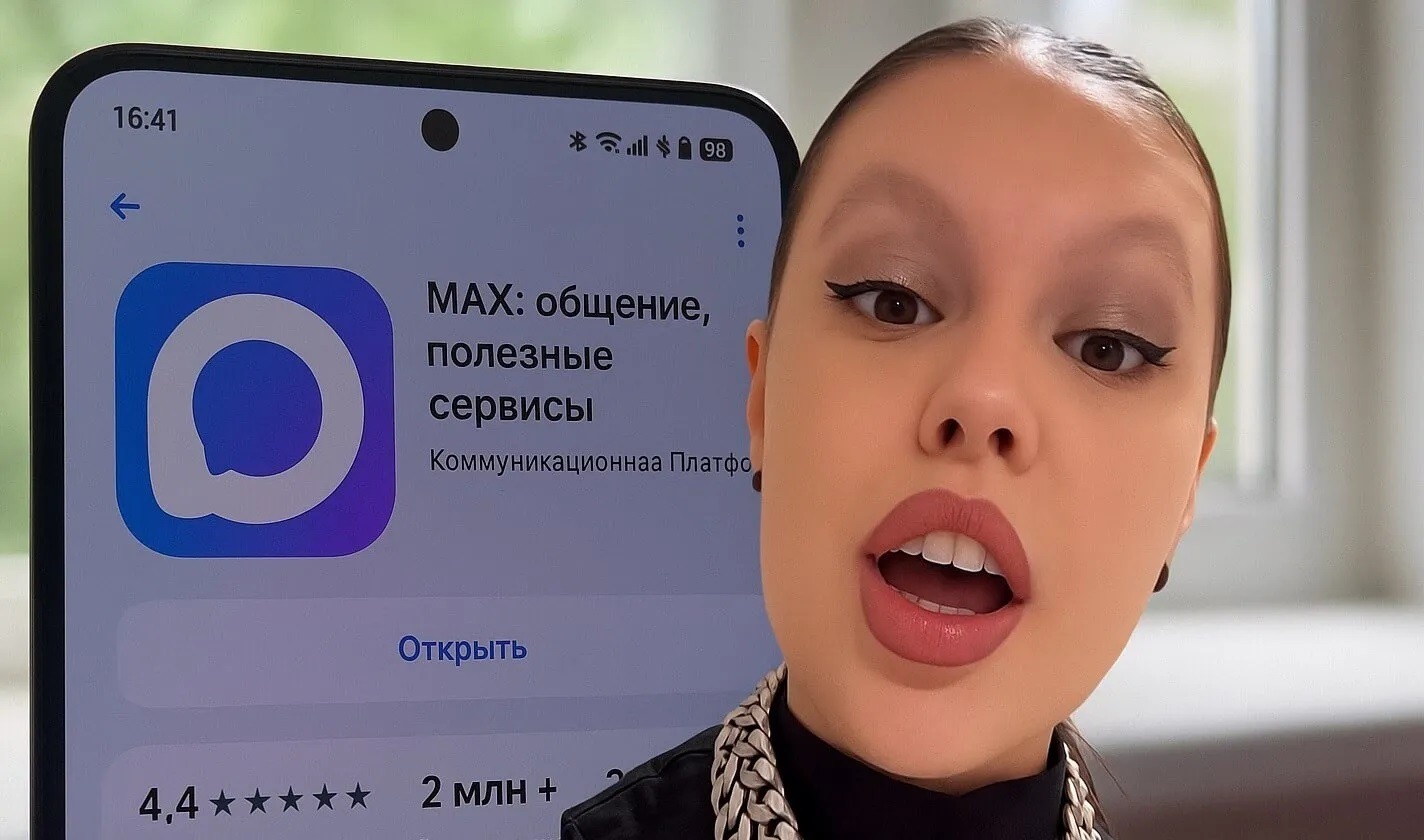
Yeah, just try ignoring it…
My plan is this. MAX stays on my main smartphone, but operates in a maximally restricted mode:
- notification access: allowed;
- contact access: denied;
- file access: selective (Android allows opening only