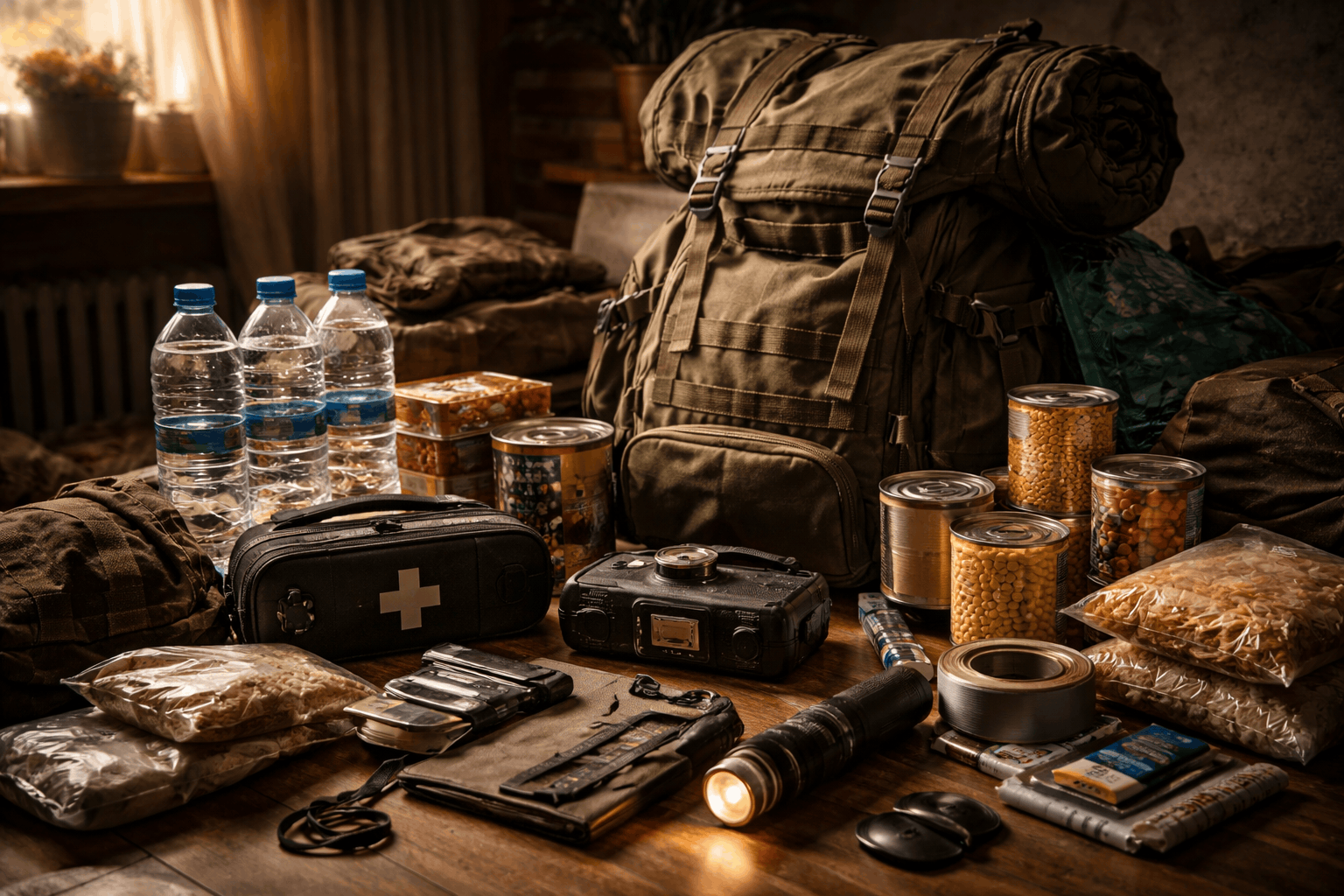
What an ordinary person should do if war breaks out: preparation and strategically important actions.
Talk of a major war periodically returns to the news, and each time the same questions arise: what to do during a nuclear explosion and how an ordinary person should behave if a global conflict actually begins. Most people either ignore the topic or perceive it through radiation myths, even though many countries already have official instructions for war, disasters, and man-made accidents. Even basic knowledge dramatically increases your chances of surviving the first days, which are considered the most dangerous. Below is a simple guide based on recommendations from civil defense services, rescuers, and survival specialists.
What to Do in the First Hours of World War III
The most common mistake is trying to urgently drive somewhere. In reality, during the first hours roads become overloaded, communication works unreliably, and there is almost no information.
Basic rules provided by security services of various countries:
- Don’t panic and don’t leave home unless necessary
- Follow official announcements, not rumors
- Stay away from strategic targets (military bases, large factories, power plants, communication hubs)
- Have a water supply for at least 2–3 days
- Keep documents in one place
In most scenarios, the first 24 hours are the most dangerous, when people make chaotic decisions.
Interesting fact: in cases of disasters like Hurricane Katrina or the Fukushima accident, people who stayed home and followed instructions survived more often than those who tried to urgently evacuate.
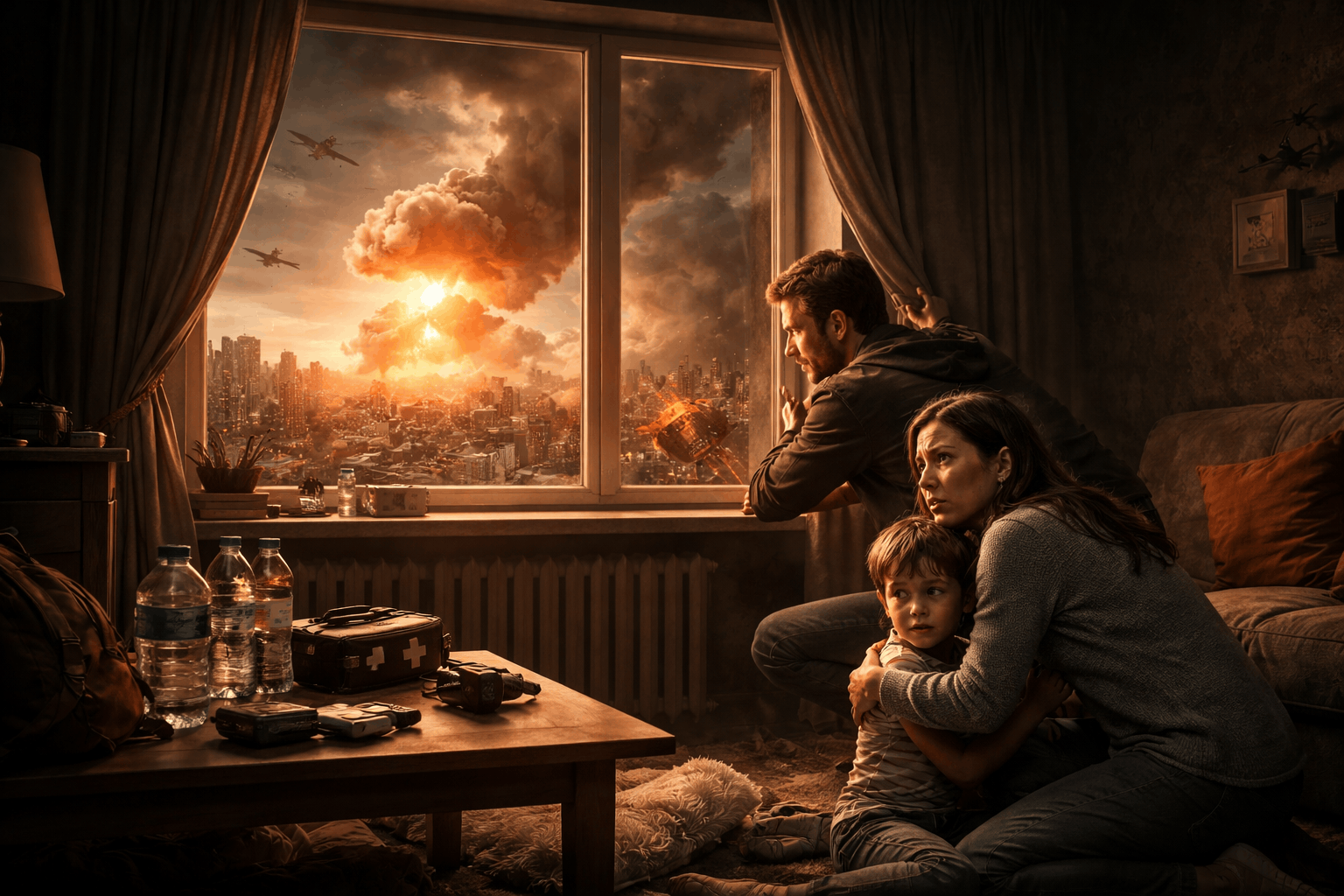
Many countries already have official instructions for war, disasters, and man-made accidents.
72-Hour Survival Kit — What You Need to Have at Home in Case of War
The EU officially recommends having supplies for 72 hours of autonomous living. This is not preparation for the apocalypse, but a standard of civil safety.
What should be at home:
- water — at least 3–4 liters per person per day
- food supply that doesn’t require refrigeration and products with the longest shelf life
- flashlight and batteries
- first aid kit
- power bank
- radio receiver or offline communication device
- cash
- copies of documents
- warm clothing
- matches or a lighter
- knife or multitool
- bags and tape
- basic hygiene supplies
Why exactly 72 hours? Because in any major disaster, during the first three days services are busy dealing with the aftermath and cannot quickly help everyone.
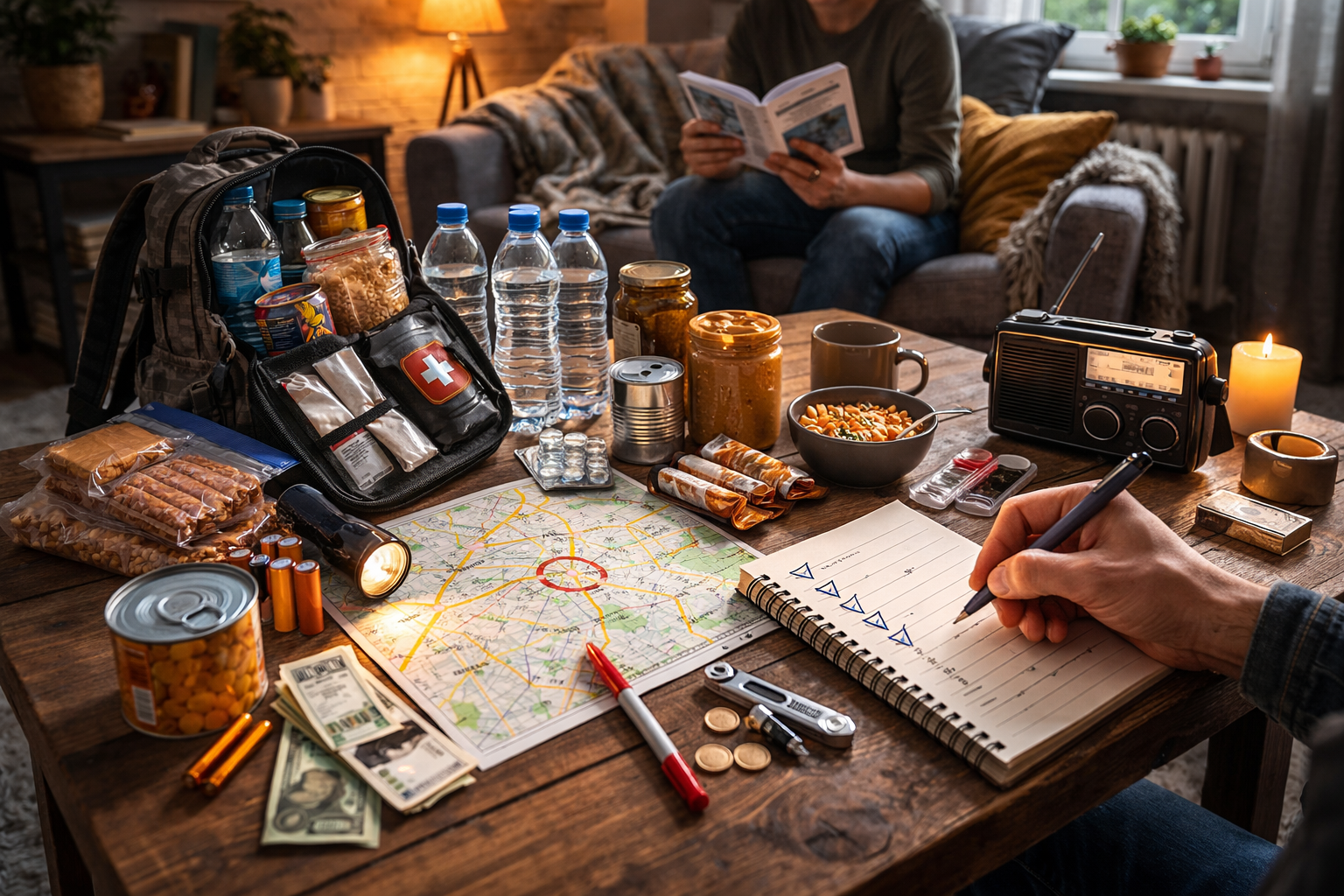
Finland, Sweden, Norway and EU countries directly recommend that citizens have a supply of food, water, and a clear action plan.
How to Protect Yourself at Home During a Nuclear Attack or War
If a strike, explosion, or radiation accident occurs, the main goal is not to run, but to minimize exposure to dangerous factors.
Recommendations that are consistent across instructions from different countries:
- stay in the center of the building, away from windows
- close windows and doors
- seal gaps with tape or cloth
- fill all available containers with water
- turn off ventilation if possible
- do not go outside unless necessary for at least 24–48 hours
During radioactive releases, the danger level drops sharply after the first 24 hours, which is why sheltering is often safer than evacuation.
Where Is the Safest Place to Live in Case of World War III
Civil defense experts agree on one thing: major cities and strategic centers face the greatest risk.
Risk factors:
- military facilities
- large industrial enterprises
- nuclear power plants
- transportation hubs
- megacities
Safety factors:
- small towns
- rural areas
- distance from borders and military bases
- absence of large factories and ports
- availability of fresh water
Statistics from various countries show that in crisis scenarios, the highest chances of survival belong to residents of small towns and suburbs, not those living in megacities. At the same time, experts emphasize: preparation matters more than location.
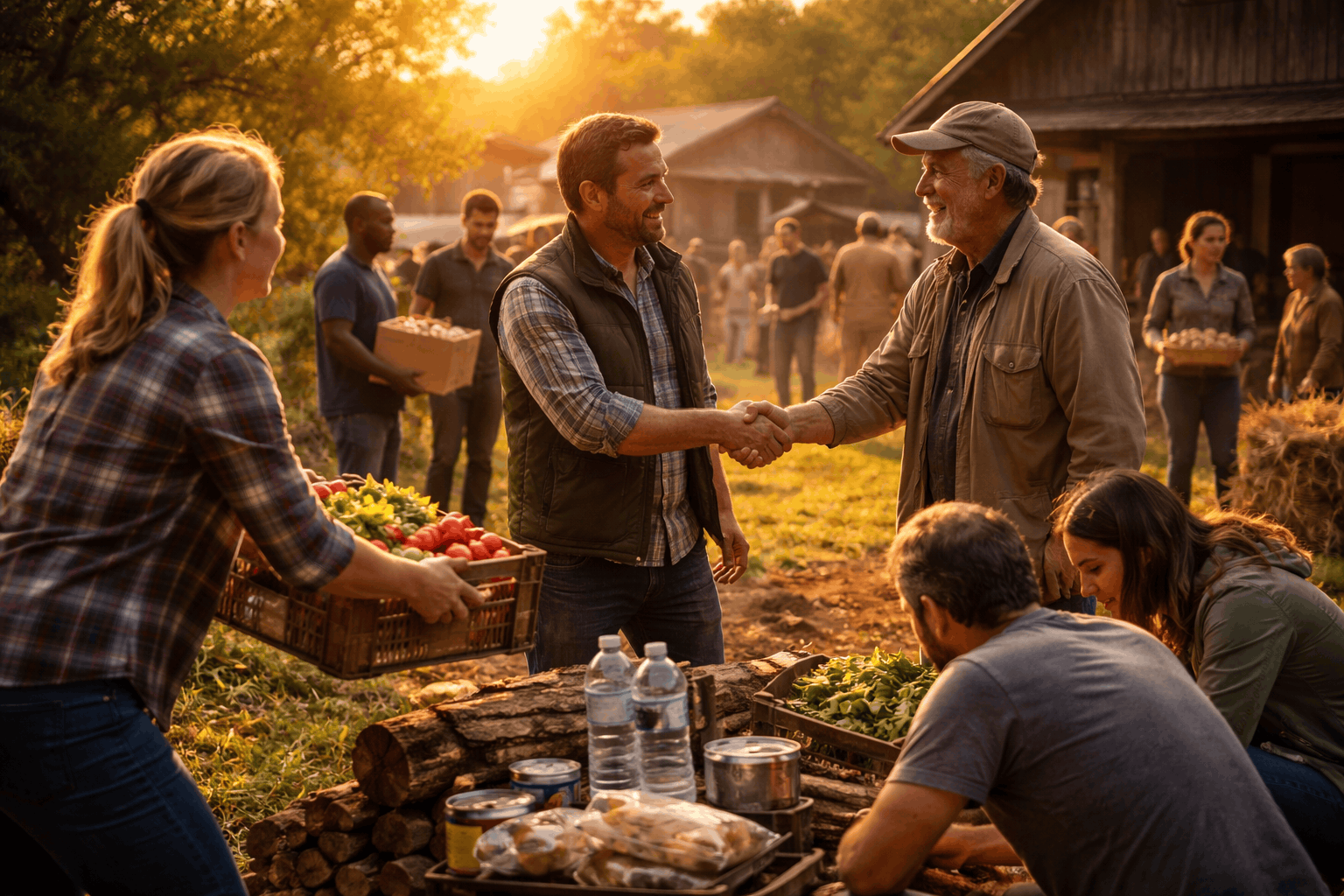
The good news is that surviving an emergency is not about luck, but about preparation.
How to Increase Your Chances of Surviving a War
Disaster research reveals something unexpected: the best survivors are not the strongest, but those who have connections with other people.
After earthquakes, hurricanes, and accidents, those who had better chances were people who:
- knew their neighbors
- knew how to negotiate
- shared resources
- had first aid skills
- knew how to grow food or repair things
In real crises, loners survive worse than people with a community, because eventually the question becomes not just about supplies, but also about how to rebuild civilization after an apocalypse.
Therefore, the main conclusion of all survival guides sounds surprisingly simple: prepare in advance, don’t panic, and don’t stay alone — this is more important than any bunker.