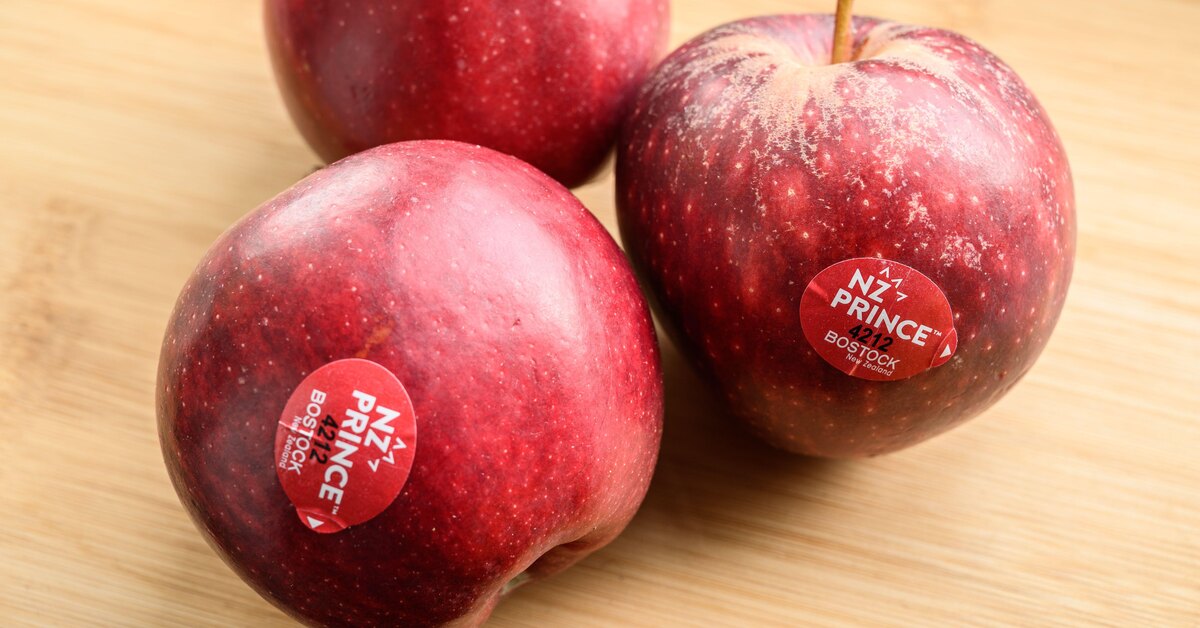
PLU code on an apple in a supermarket, a small sticker with big information. Image source: mashed.com
Tiny stickers on imported fruits and vegetables contain a digital code that can tell you more about the product than the price tag. These numbers can help you understand whether the fruit was grown with pesticides, whether it’s organic, and even whether it was irradiated. Let’s break down how to read these codes and what they actually mean.
Why Are There Stickers on Fruits and Vegetables
The small sticker on a banana or apple is called a PLU code — from the English Price Look Up. PLU codes are used for fresh fruits and vegetables. The recommendation to label fruits and vegetables with special stickers was formulated by the International Federation for Produce Standards (IFPS). This is merely a recommendation, not a requirement, so using stickers for export sales is still not mandatory.
The system was originally designed for the convenience of cashiers and retail workers. The codes contain data about the product’s origin, growing and transportation conditions, as well as the variety and price of the fruit. But regular shoppers can also learn some useful information from them, right in the store, without any special apps.
The code numbers are fixed. This means that regardless of which country a fruit or vegetable was grown in or sold in, it is always assigned the same number. This makes it easier for the system to identify products. For example, any bananas from anywhere in the world are shipped with the code 4011. In total, there are about 1,400 unique codes.
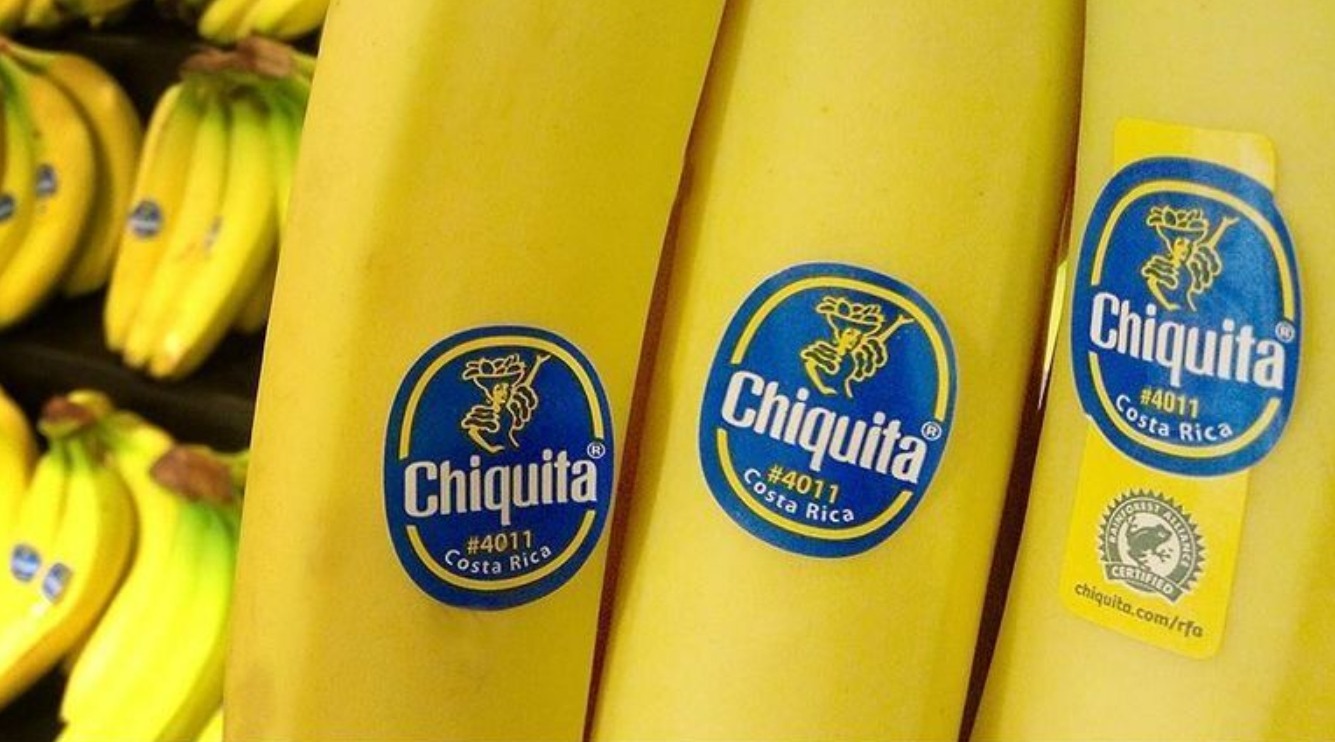
PLU code 4011 designates bananas. Image source: earthrights.org
Decoding PLU Codes on Products
The main thing to pay attention to is the number of digits in the code and the first digit. Here’s a simple guide you can memorize before your next trip to the store:
- Four digits, code starts with 3 or 4 — fruits or vegetables were grown conventionally, meaning fertilizers and pesticides were used during cultivation to increase yield and eliminate seasonality. This is the most common option found on most imported fruits;
- Five digits, code starts with 9 — fruits and vegetables with a five-digit sticker starting with 9 were grown using natural methods. In short, this is an organic product.
- Five digits, code starts with 3 — the product was treated with ionizing radiation. This is usually done to combat certain microorganisms that settle on fruits. The treatment extends the product’s shelf life and prepares it for transportation.
Simply put, if you want to buy organic fruits — look for a five-digit code starting with 9. For example, an organic banana will have the code 94011, while a regular one will be 4011.
Old GMO Product Labeling
On the internet, you often read that a five-digit code starting with the number 8 indicates a GMO product. This information was once relevant but is now outdated. Although the prefix “8” was once reserved for GMOs, it was never actually used in retail. In 2015, the IFPS officially changed this rule.
Today, the 83000 and 84000 code series are simply used to create additional numbers for conventionally grown products, since the 3000 and 4000 series are gradually running out. The IFPS decided to redistribute them due to the emergence of many new products. Codes starting with 83 will designate new conventional products. Codes starting with 84 will be applied to new organic products. This means that labeling with the number 8 will no longer be associated solely with genetically modified fruits.
So if you see a code starting with 8 — don’t rush to put the fruit back. Most likely, you’re looking at a regular product with a new number from the expanded database.
What to Do If You Ate a Fruit with the Sticker On
One of the most common questions from shoppers is what happens if you accidentally eat a sticker along with an apple. According to international regulations, stickers on products must be edible. They pose no threat to health, even though they consist of adhesive, paper, ink, and plastic film. This is stated on Food.ru.
If you didn’t notice and accidentally ate a sticker from an apple — don’t worry. These stickers are considered edible and will simply pass through your digestive system. They are regulated by health authorities in different countries and will not harm your health. However, remember: while you can swallow them, you shouldn’t make a habit of it.
That said, “edible” doesn’t mean “tasty” or “healthy.” It rather means “safe if accidentally swallowed.” The adhesive used for attaching the labels is considered food-grade. But this doesn’t mean you should eat them along with the skin — it’s better to remove the sticker before eating. To easily peel off the sticker, simply hold the fruit under running water, and the sticker will come off on its own.
Decoding Barcodes on Products
In addition to PLU codes, you can sometimes see a barcode or QR code on stickers. These are different things. PLU is an identification system specifically for fresh fruits and vegetables, while a barcode on product packaging is needed for retail automation in general.
If a barcode starts with 590 — the product is supplied from Poland, 400–440 — from Germany, 00–09 — from the USA, and 690 and 691 — from China. However, this data isn’t entirely accurate, since these numbers may indicate the country of origin of the distributor, not the place where the product was grown. So it’s not always possible to determine the actual country of production from the barcode alone.
Some stickers feature a QR code with encrypted information about the fruit or vegetable. A seller can scan it, and a mobile app that decodes such codes can help you learn everything about the product. QR codes on food products are appearing more frequently and over time may become more informative than classic PLU stickers.
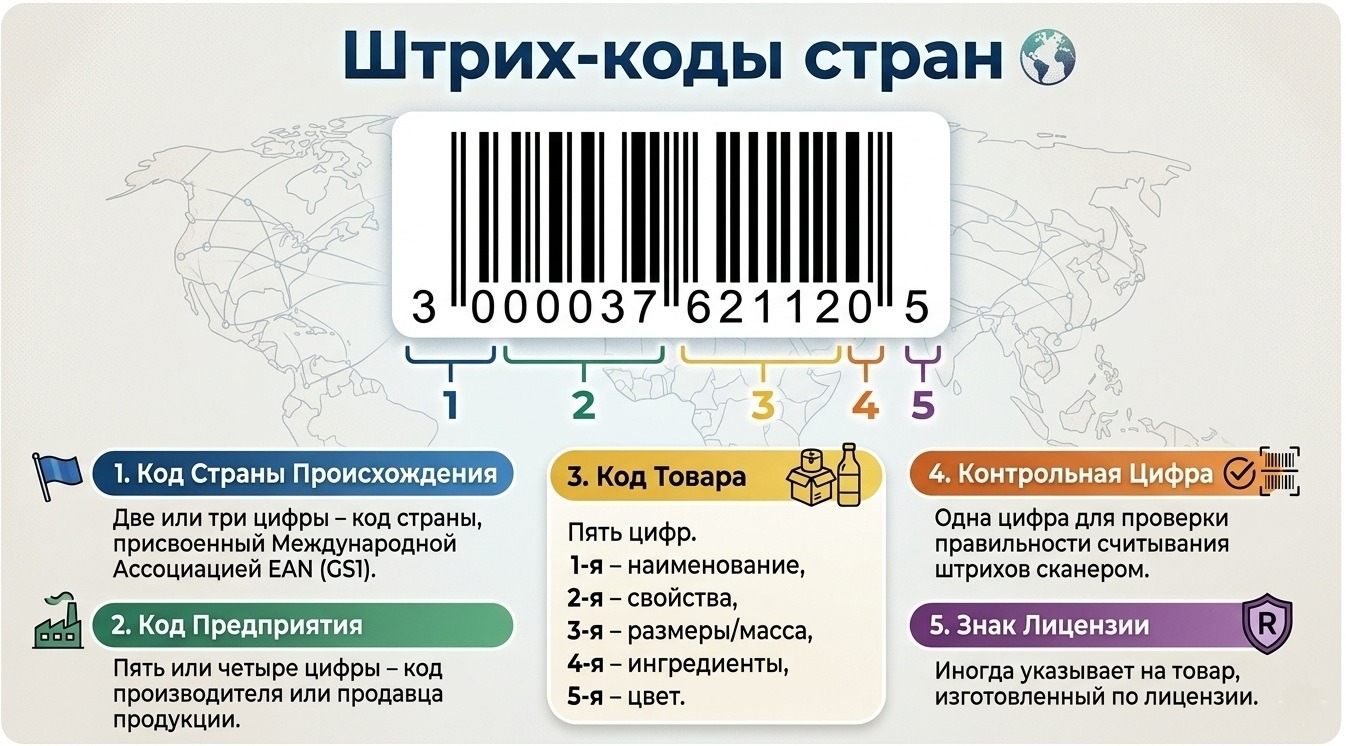
How to read a barcode on a product
How to Check a PLU Code on a Fruit
If you want to find out details about a specific fruit or vegetable, you can do it online. You can check the sticker yourself on the website of the International Federation for Produce Standards (IFPS). The PLU database allows you to search for any PLU code. The website is ifpsglobal.com.
Quick reference guide for your trip to the store:
- 4 digits, starts with 3 or 4 → conventional growing with fertilizers
- 5 digits, starts with 9 → organic product
- 5 digits, starts with 3 → possible irradiation treatment
- 5 digits, starts with 8 → expanded numbering, does not mean GMO
- No sticker → you won’t be able to determine the growing method from the code
A PLU code is not a quality guarantee or a safety certificate. It is a voluntary labeling system that helps you navigate, but does not replace a thorough product inspection. Nevertheless, knowing the simple decoding rules turns the incomprehensible numbers on a sticker into a useful tool — and it takes just a couple of seconds at the counter.