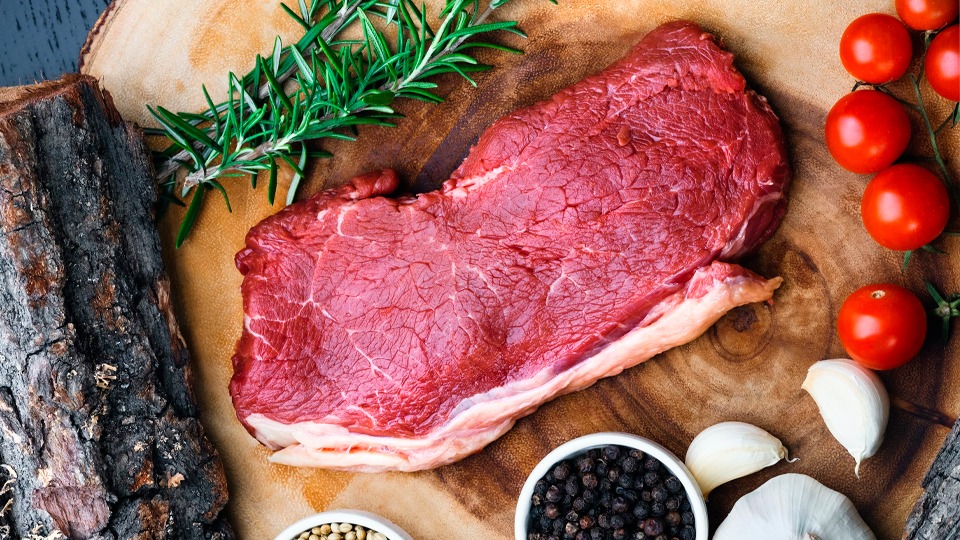
Meat left on the counter at room temperature — the riskiest way to defrost
Forgot to take the meat out of the freezer ahead of time and don’t have a microwave handy? Almost everyone has been in this situation. The good news is that you can safely defrost meat without a microwave, and some methods even preserve the taste and texture of the product better. The key is not to rush the defrosting process so you don’t ruin dinner before you even turn on the stove.
Why You Shouldn’t Defrost Meat at Room Temperature
The most common “grandma’s advice” is to simply leave the meat on the counter. It seems logical: it will thaw on its own in a couple of hours. But this is exactly the method that food safety experts consider the most dangerous.
Here’s the thing: while the inside of the piece is still frozen, the outer layer is already warming up to room temperature. And in the range of +5 to +60 degrees Celsius, bacteria feel perfectly at home and begin to multiply rapidly. Among them, for example, is Clostridium perfringens — one of the most common causes of food poisoning.
Besides bacteria, there’s a second problem. When the outer layers of meat quickly thaw and warm up, juices leak out — and that means moisture, protein, and flavor. The result: a tough, dry texture and a dish that’s hard to save even with a good marinade. That’s why the key rule of any defrosting is: the process should be controlled and at a low temperature.
Defrosting Meat in the Refrigerator — The Safest Method
If you have time to spare, this method is ideal. All you need to do is move the meat from the freezer to the bottom shelf of a regular refrigerator, where the temperature stays around +1…+4 degrees Celsius. Under these conditions, bacteria barely multiply, and the meat thaws evenly and gently.
Here’s how to do it properly:
- Take the meat out of the freezer without removing the packaging. If there’s no vacuum packaging, place the piece in a deep ceramic dish and cover it with a plate — this way it won’t absorb foreign odors;
- Place the container on the bottom shelf of the refrigerator;
- Estimate the time: for every 2–3 kg of meat, you need about 24 hours. Small steaks and ground meat thaw faster — in 8–12 hours.
An important bonus: meat defrosted in the refrigerator can be stored for another 3–5 days (beef and pork), while ground meat and poultry — 1–2 days. If plans change, it’s even acceptable to refreeze it, although the texture will suffer slightly. No other defrosting method allows this.
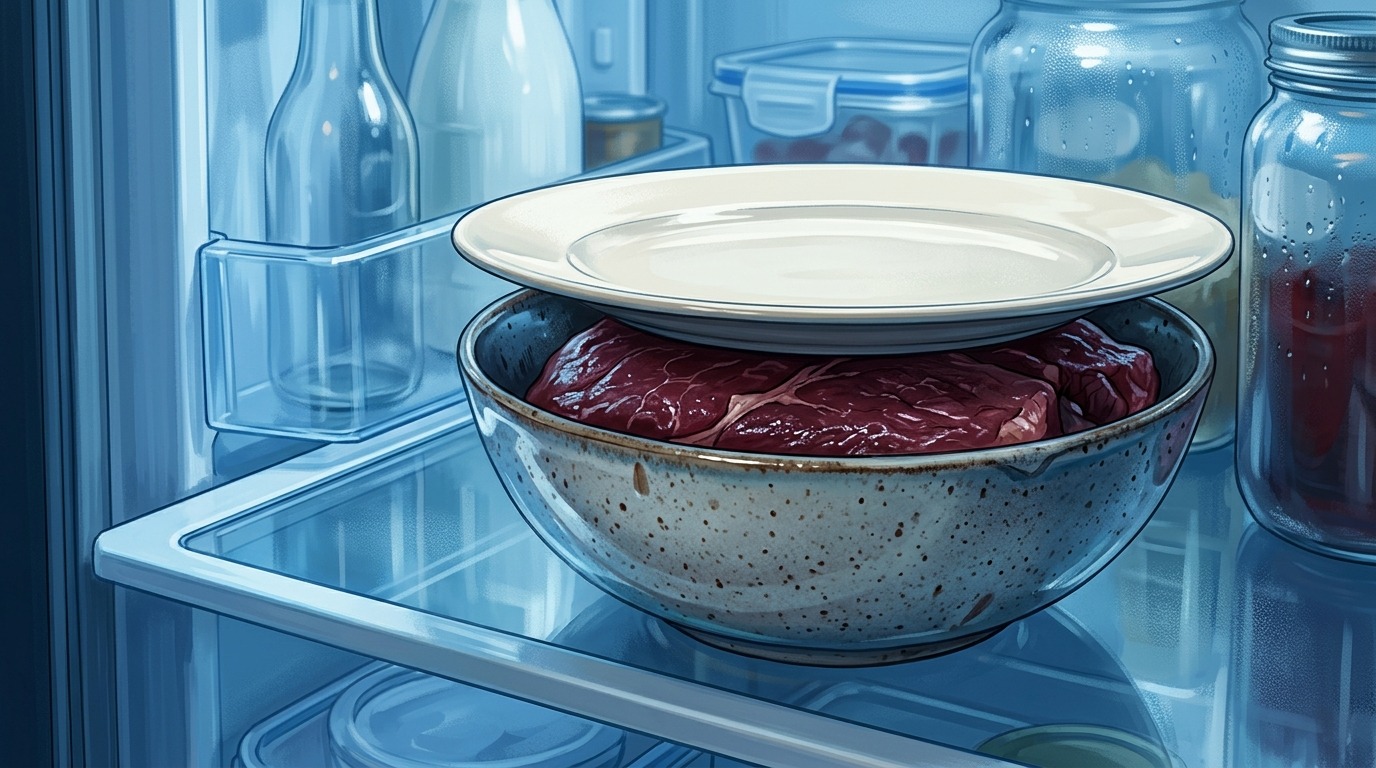
Meat defrosting in the refrigerator in a deep dish
How to Defrost Meat in Cold Water
Forgot to move the meat the night before? Cold water is your best friend. This method is significantly faster than the refrigerator but remains safe because the water temperature doesn’t let bacteria run wild.
Step-by-step instructions:
- Place the meat in a sealed plastic bag (with a zip-lock or tightly tied). This is critically important: water must not get inside, otherwise it will break down the fiber structure and wash out the flavor;
- Submerge the bag in a large container of cold tap water. The piece must be completely covered;
- Change the water every 30 minutes — this prevents it from warming up to a dangerous temperature.
As for timing: small pieces (up to 500 g) thaw in about an hour, large cuts of beef — in 2–3 hours. After this type of defrosting, the meat must be cooked immediately; it can no longer be stored in the refrigerator.
You must not use hot water — this is a common mistake. The outer layer of the meat will start to “cook” while the center remains frozen. As a result, you’ll get an unevenly defrosted piece with bacteria already growing on the surface.
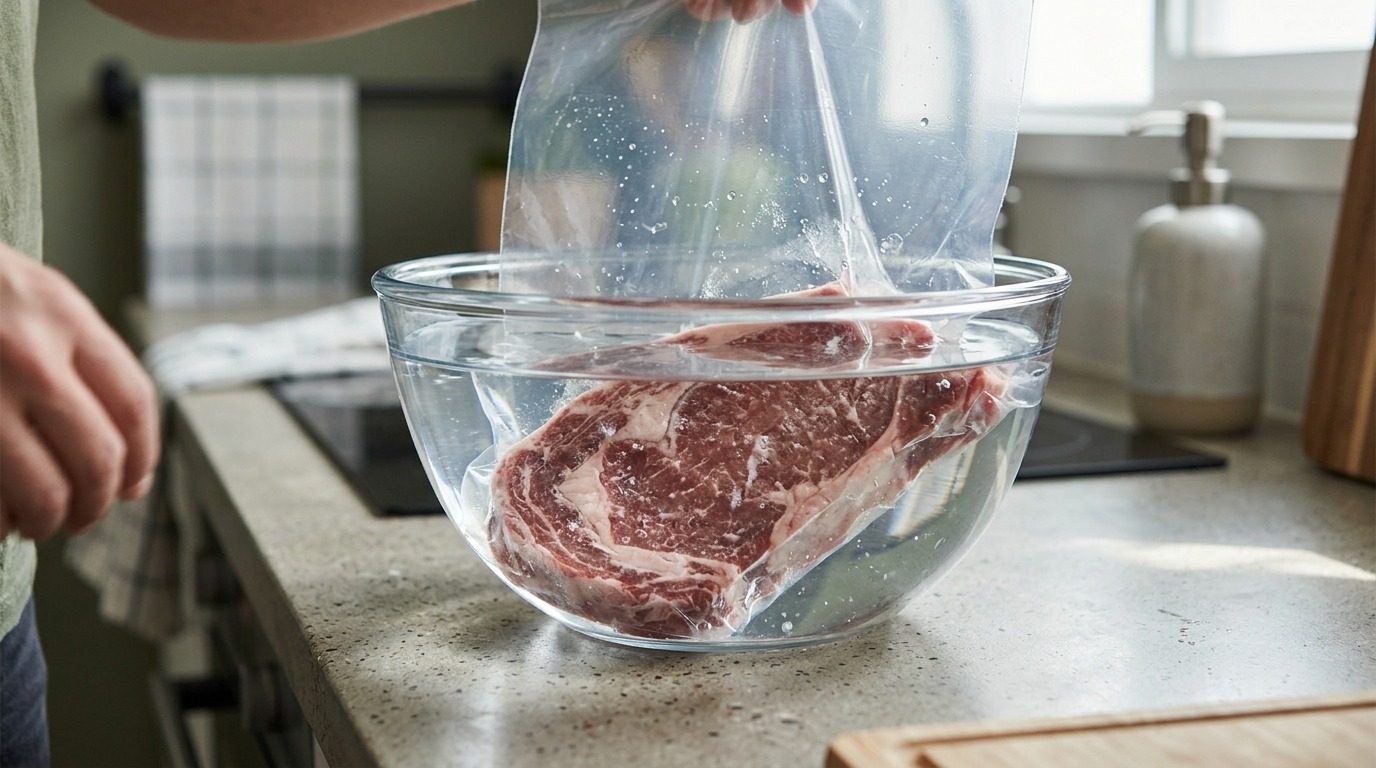
Meat in a sealed bag defrosting in cold water
Defrosting Meat in the Oven at Low Temperature
If there’s no microwave and you don’t want to deal with water, you can use the oven. But not the way many people are used to — just tossing a frozen piece into a preheated oven. The key condition is a temperature no higher than 30–50 degrees Celsius. At higher values, the jump from −18 to +100 degrees will turn the meat into an ice block with a baked crust on the outside.
How to do it:
- Wrap the meat in foil or place it in an oven bag — this will protect the product from drying out;
- Place it on a deep baking tray so that thawed liquid doesn’t drip onto the bottom of the oven;
- Set the minimum temperature — ideally 30–50 degrees Celsius. In gas ovens, the minimum temperature is often too high, so this method works better for electric models with precise temperature control;
- The process will take about 40 minutes for a medium-sized piece.
This method is great for those cases when you need dinner in an hour, not three. But remember that after the oven, the meat must be cooked immediately.
How to Defrost Meat in a Microwave
Although this article is primarily about alternative methods, the microwave remains a popular solution — and with the right approach, it works just fine. Here are the main rules to help you avoid turning a steak into a shoe sole on one side and an ice block on the other.
The principle is simple: an alternating electromagnetic field causes water molecules in the meat fibers to oscillate, friction occurs between them — and heat is generated. The problem is that heating is uneven: thin and protruding parts warm up faster, while the center remains frozen.
To avoid problems:
- Use the “defrost” mode or set the minimum power (30–40%);
- Defrost in intervals of 2–5 minutes, flipping the piece each time;
- If you cut the meat into pieces about 3 cm thick before loading — it will thaw faster and more evenly;
- Remove the packaging before placing the meat in the microwave — not all plastic wrap is designed for heating;
- If protruding parts start to cook, stop the process and begin cooking immediately.
Time depends on the type of meat. A kilogram of veal in portions — about 15 minutes. Pork — a bit longer, about 20 minutes per kg, because it contains less water. With chicken, extra caution is needed: it has a looser structure, so intervals are shortened to 3 minutes, and monitoring should be constant.
After the microwave, the meat must be cooked immediately because some fibers have already started warming up, and storing such a product is unsafe.
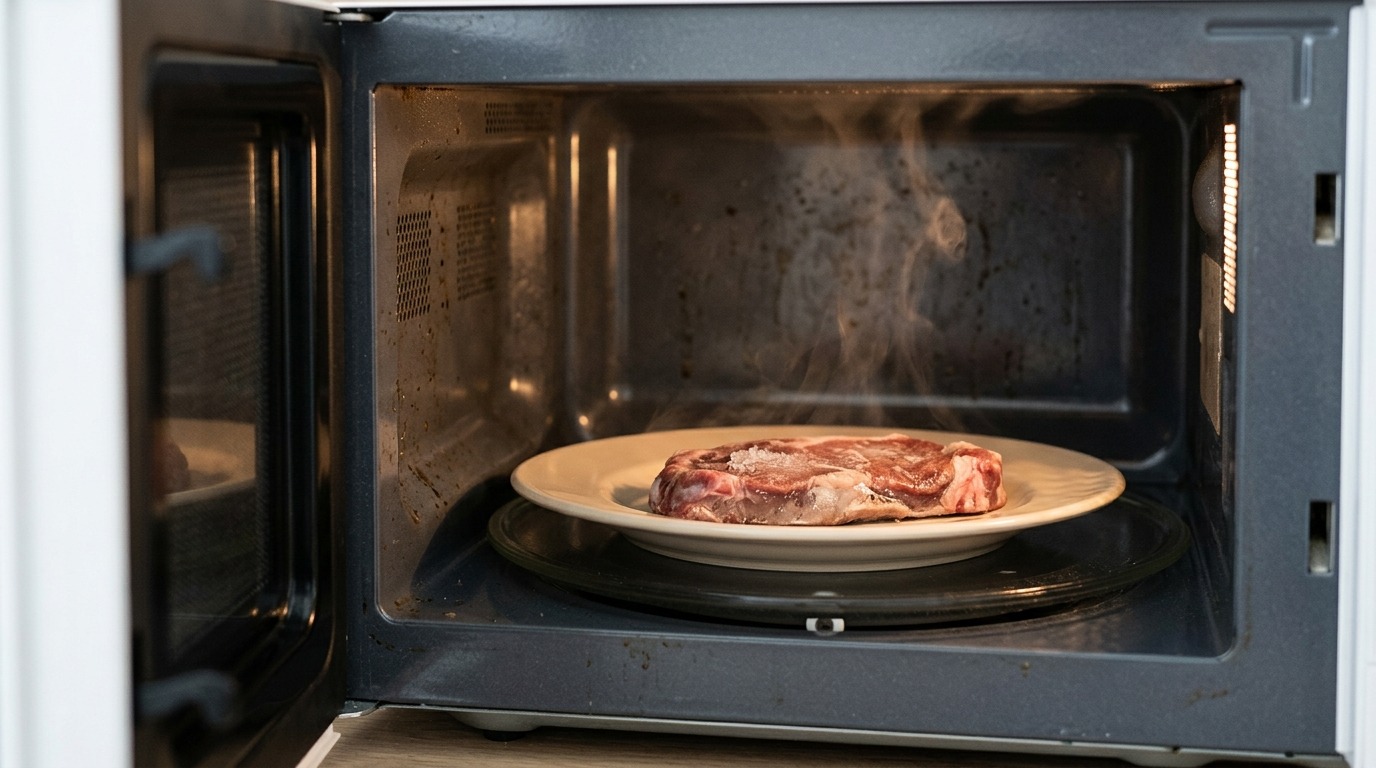
Meat in the microwave should be flipped every 2–3 minutes
Which Meat Defrosting Method to Choose
Let’s summarize — here’s how the main methods compare:
- In the refrigerator — the safest and gentlest, but slow (8–24 hours). The best option if you plan your cooking ahead;
- In cold water — fast and safe (1–3 hours). Ideal when time is short and there’s no microwave;
- In the oven at 30–50 degrees — fast (about 40 minutes), but requires precise temperature control;
- In the microwave — the fastest (5–20 minutes), but may heat the product unevenly.
Chefs and food safety experts agree on one thing: it’s better to plan defrosting ahead and use the refrigerator. But if time is pressing — cold water remains an excellent compromise.