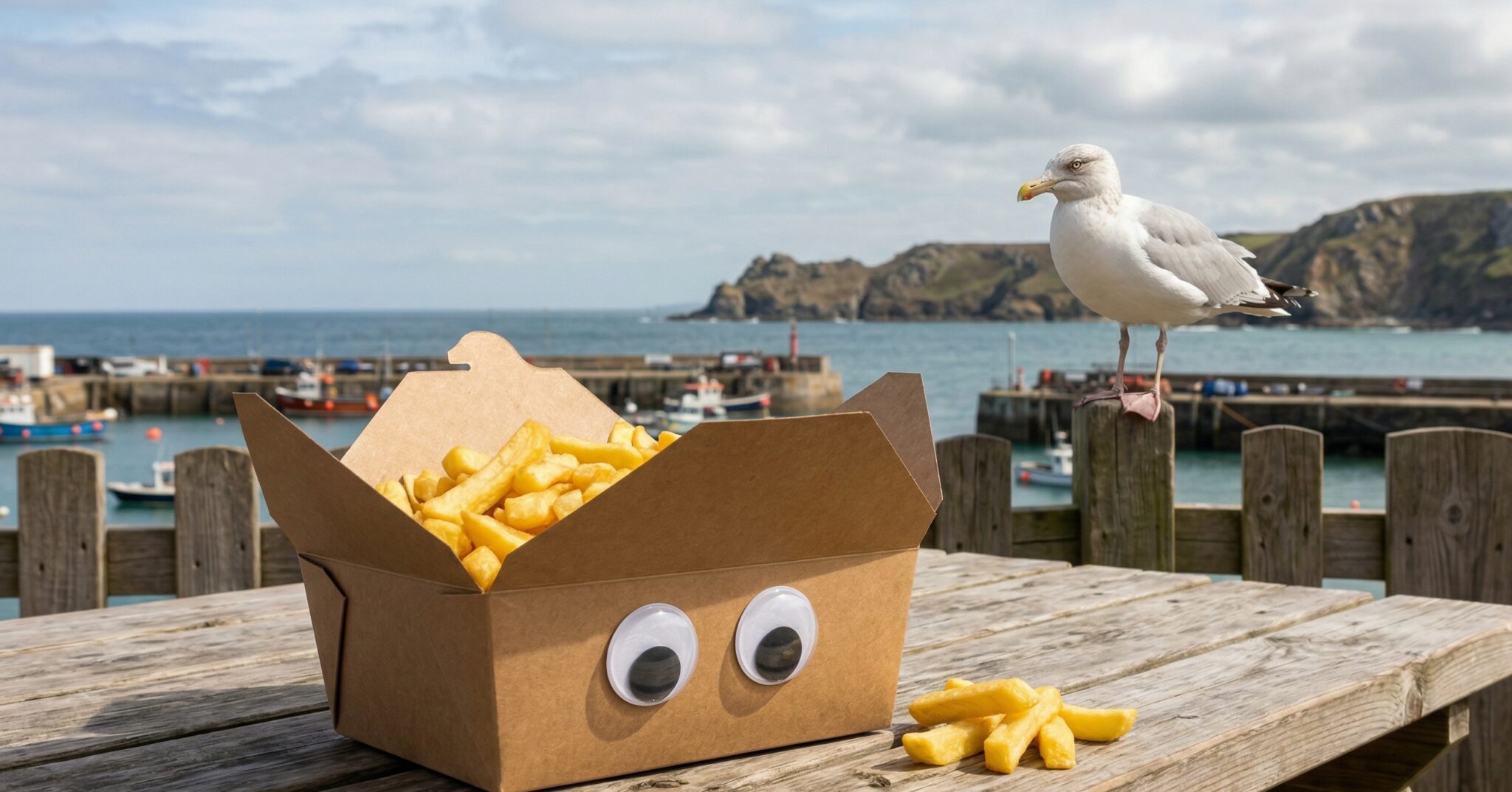
A seagull waiting for the right moment to attack a tourist’s food. Image source: zmescience.com
If you’ve ever eaten fish and chips on a seaside boardwalk, you know: seagulls are the most brazen birds on the planet. They dive-bomb your plate without hesitation, snatch burgers right out of your hands, and rummage through unattended bags. Even if you haven’t experienced it yourself, you’ve surely seen funny videos of them lurking and then grabbing food straight from people’s hands. Scientists from the United Kingdom have found a surprisingly simple way to make seagulls reconsider stealing. Yes, scientists actually study this kind of thing.
Why Seagulls Steal Food From People
Herring gulls in the UK and across Europe are increasingly moving into cities and becoming true experts at stealing food from people dining outdoors. These birds practice so-called kleptoparasitism — a strategy of obtaining food at the expense of others. And humans are their ideal target.
Stealing food from people is a low-risk, high-reward strategy for urban gulls. Most theft attempts are observed between noon and 1 PM — when people are having lunch. These birds have literally learned the schedule of your snack breaks. And it’s not just a feeling: seagulls turned out to be smarter than previously thought, so they are excellent at exploiting human habits to their advantage.
In seaside towns, they’re accused of stealing food from children, dive-bombing pedestrians, and teenagers have even invented an “extreme sport” — who can run the farthest with a box of french fries without falling into a seagull “ambush.” In short, the problem is real — and people want to solve it without having to hide in their car with a sandwich.
How to Scare Off Seagulls With Painted Eyes
Scientists from the United Kingdom found a simple way to make seagulls reconsider stealing — the idea sounds absurd, but there’s serious biology behind it. A new study showed that a pair of painted eyes on a food container can stop seagulls from stealing. The work builds on an earlier discovery: herring gulls approach food noticeably slower when a person looks directly at them rather than looking away.
The scientists conducted an experiment in seaside towns. They stuck a pair of large eyes on takeaway food boxes and offered gulls a choice: two boxes placed two meters apart, one with eyes and the other plain. The gulls hesitated noticeably longer before the box with eyes and pecked at it less often. It’s not surprising that such a trick works at all: for many species, a gaze is a full-fledged signal, and even dogs and wolves communicate with their eyes.
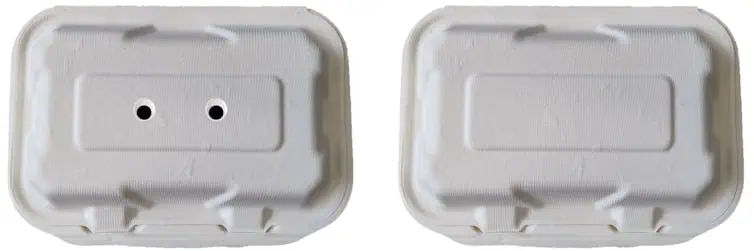
Food boxes in the experiment — with “eyes” and without
To test how persistent the effect was, the researchers repeated the experiment three times for each of 30 gulls. The result was interesting: roughly half the birds never dared to peck the box with eyes, while the other half approached quickly and pecked, paying no attention to the eyes.
So the method works on about half of seagulls — which doesn’t sound perfect, but in practice it’s already a big step. The researchers plan to test the idea in real-world conditions by asking cafés and fast-food outlets to use packaging with printed eyes.
Why Animals Fear Images of Eyes
Behind the eye trick lies a deep evolutionary mechanism. For most animals, a direct gaze is a danger signal. If something is looking at you, it means you’ve been spotted. And if you’ve been spotted, you might be attacked. This reaction is most likely instinctive: dodging a predator needs to happen in a split second, and the brain doesn’t waste time checking whether the eyes are real.
This is precisely why so-called eyespots are found in numerous animals in nature — in butterflies, fish, and amphibians. They serve to scare off predators or to redirect an attack to a less vital body part. Essentially, nature has been “painting eyes” on wings and tails for millions of years, and now scientists are suggesting humans do the same — only with a marker on a box.
Similar “eye” tricks are already being used in practice: eye-shaped markings deter starlings from crops, seabirds from fishing nets, and birds of prey from airports.
Painted Eyes Protect Animals From Predators
The most impressive example of using fake eyes is an experiment in Botswana. Out of 683 cows with eyes painted on their rumps, not a single one was killed by predators over four years of research. Meanwhile, 15 unprotected cows were killed, and four of those marked with crosses died.
The logic is simple: lions and leopards are ambush predators that rely on surprise. If they feel the prey sees them, they often abandon the attack. Painted eyes create the illusion that the cow is “looking” backward and the predator has already been detected.
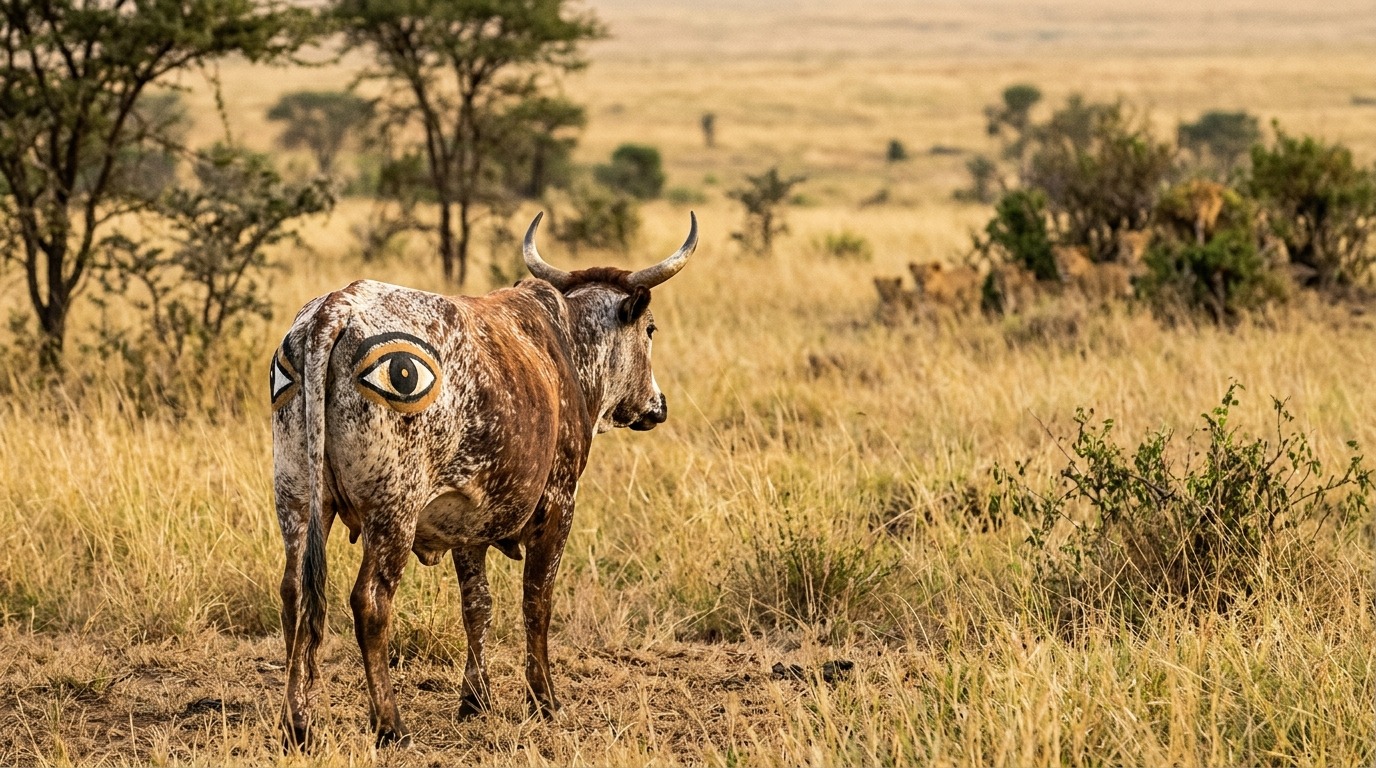
A cow with eyes painted on its rump in the African savanna
According to the researchers, this was the first case where eyespots were proven to deter large mammalian predators. However, there’s a caveat: there were always unprotected cows in the herd, and it’s unclear whether the method would work if all cows were “eye-marked.”
How to Protect Your Food From Seagulls at a Picnic: Practical Tips
So what should an ordinary person do who’s tired of bird raids? Here are some recommendations based on actual research:
- Draw a pair of large eyes on your food box or bag — a regular marker will do. It’s not a guarantee, but it genuinely deters about half of seagulls.
- Don’t look away from seagulls. It’s been proven that direct eye contact makes them approach food more slowly. Though this won’t work if a gull is silently hovering above you.
- Yell at seagulls — scientists note that shouting combined with visual signals enhances the deterrent effect. That is, if you’re not afraid of looking crazy.
- Don’t leave food unattended — seagulls act instantly and prefer unguarded targets.
Of course, none of these tricks provides 100% protection. But combined, they significantly reduce the chances of losing your lunch.
Why Images of Eyes Influence the Behavior of Both People and Animals
The most fascinating part is that eyes affect not only birds and lions — but us too. Scientists from Newcastle University discovered that posters with images of eyes hung above bicycle parking areas reduced bike thefts by 62%. In another experiment, people put nearly three times more money into an “honesty box” for tea when a poster with eyes was on the wall instead of one with flowers.
Images of eyes promote honest behavior in people and even increase charitable donations — all because the brain automatically responds to the signal “you’re being watched,” even if it’s just a picture.
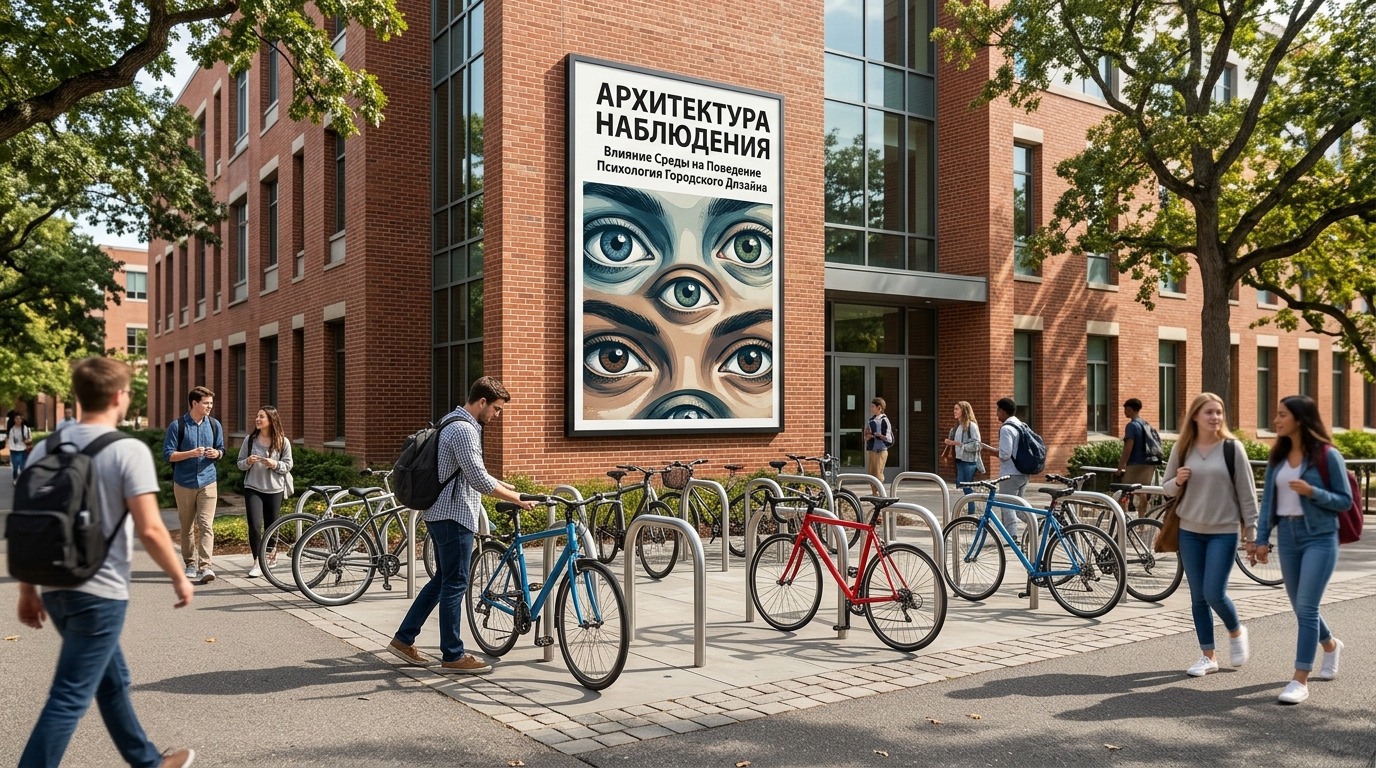
A poster with eyes above a bike parking area to prevent theft
However, as with seagulls, the effect on people is inconsistent: images of eyes nudge better behavior in certain situations, but don’t work on everyone. Nevertheless, the cheapness and simplicity of the method make it an extremely attractive supplement to actual security measures.
The next step for researchers is to understand why some animals and people don’t react to fake eyes at all. But it’s already clear that painted eyes are an extremely accessible and simple tool for resolving a wide variety of conflicts between humans and nature. So when heading to the seaside for a picnic, grab a marker — it might come in just as handy as napkins.