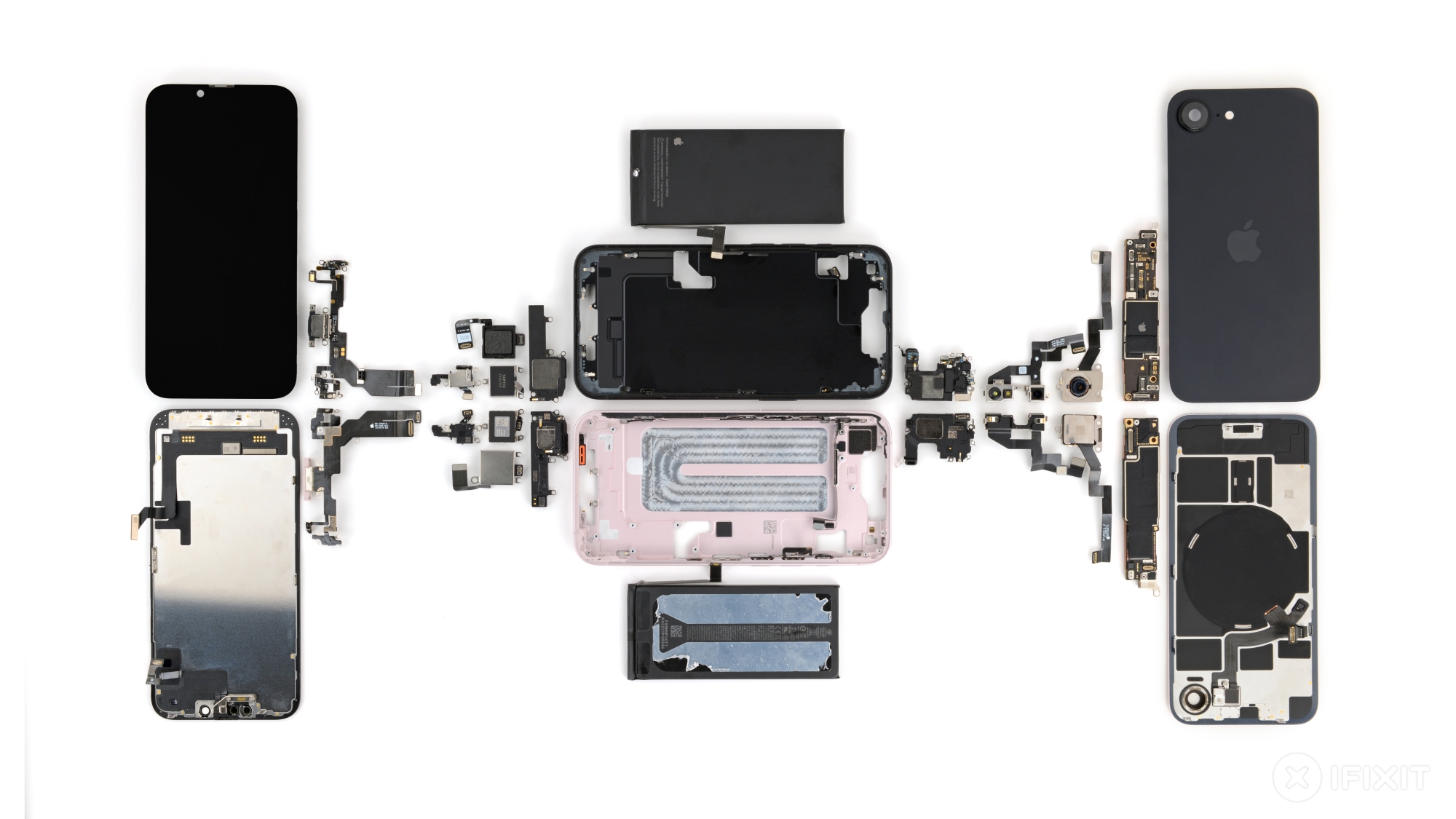
iFixit teardowns often reveal things that Apple doesn’t mention on stage or highlight on its product pages. This time, specialists completely tore down the iPhone 17e and found one very curious detail. Just when we thought all the differences between iPhone 17e and iPhone 16e were already known, it turned out that the 17e’s back panel with MagSafe support is compatible with the 16e — meaning owners of last year’s model theoretically now have a way to add magnetic charging where it wasn’t originally available.
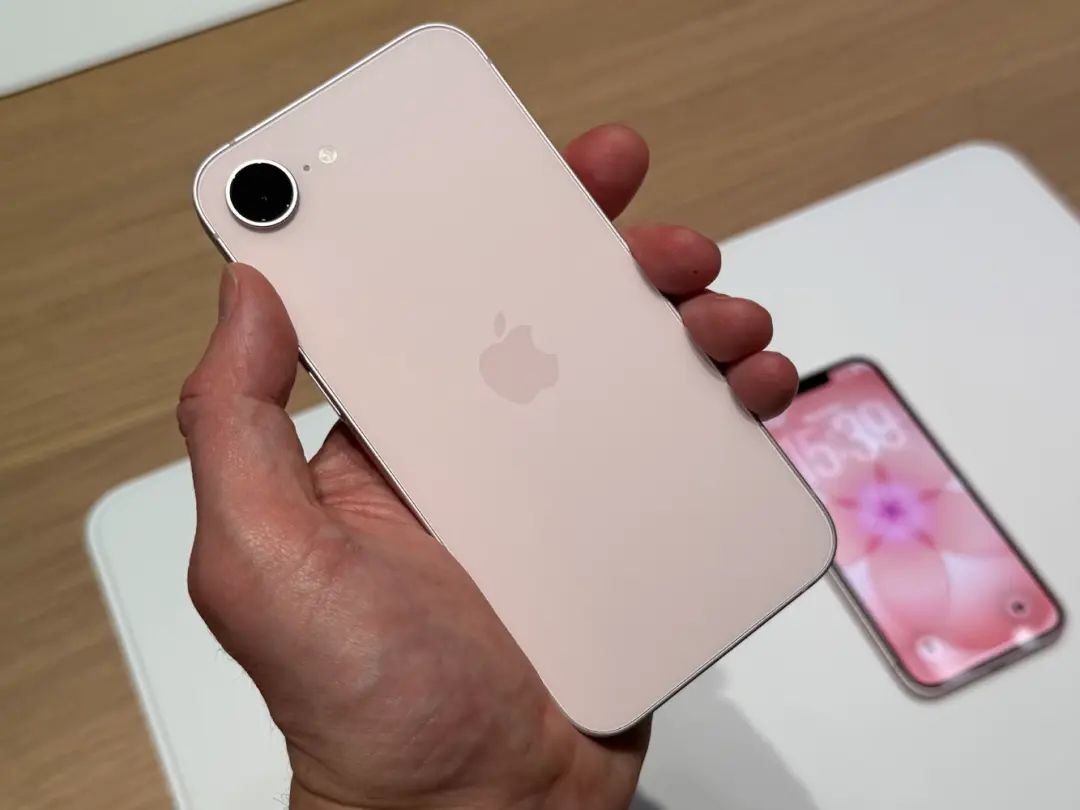
A large number of parts from iPhone 17e fit the 16e and vice versa. Image: stuff.tv
And this is perhaps the most interesting finding in the entire teardown. Because it’s not just about repair — it’s essentially a small upgrade for the device. However, there are limitations: not all MagSafe functions on iPhone 16e after such a swap are guaranteed to work the same way as on iPhone 17e.
Does the iPhone 17e Back Cover Fit the iPhone 16e
The main takeaway from the iPhone 17e teardown turned out to be unexpectedly simple. The new smartphone’s back cover, which has built-in MagSafe magnets, is fully compatible with the iPhone 16e. It turns out there are even fewer differences between the smartphones than we thought. So in theory, iPhone 16e owners can get MagSafe support by simply replacing the back panel with a part from the iPhone 17e.
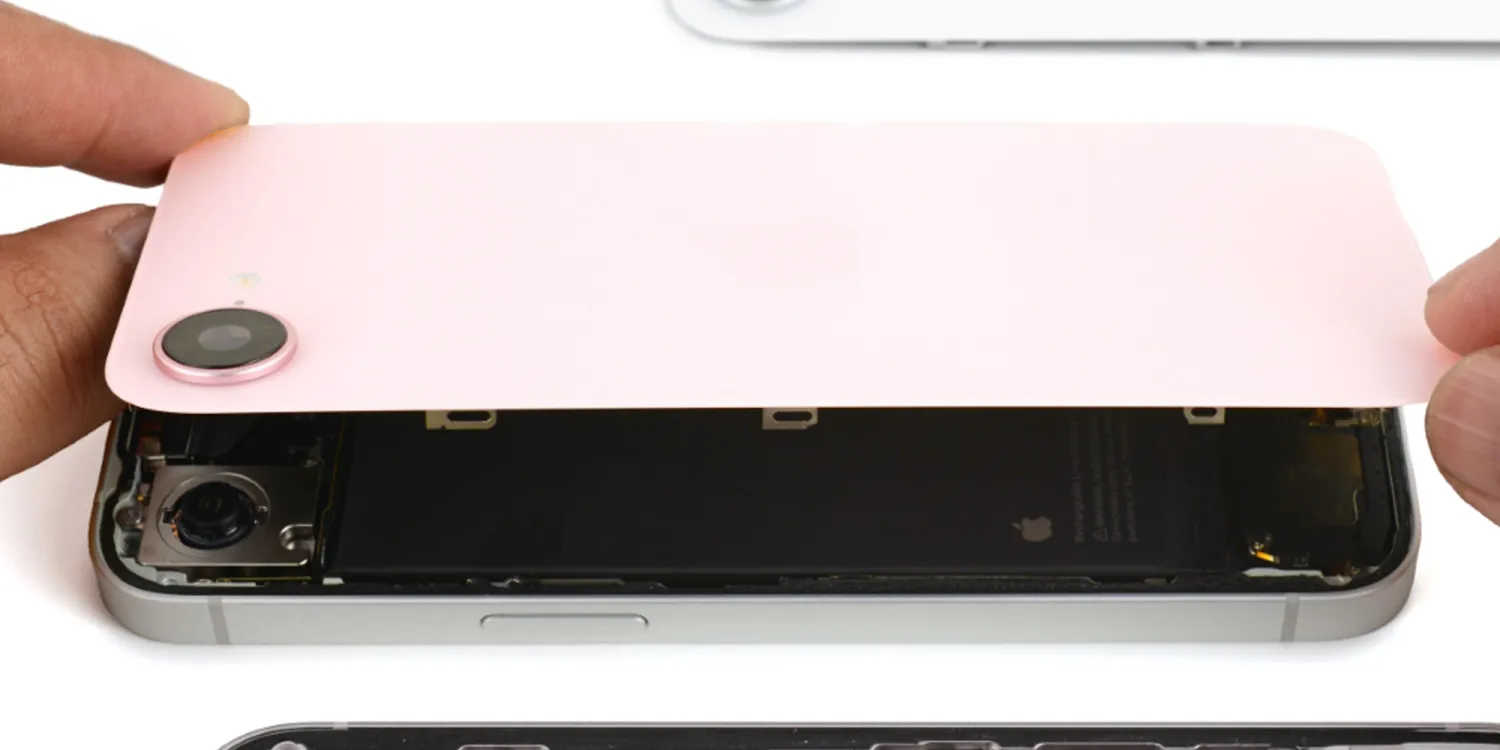
The back panel with MagSafe fits the 16e. Image: 9to5mac.com
It sounds too good to be true, but iFixit actually demonstrated this compatibility in practice. For iPhone 16e users, this is especially important because the lack of MagSafe was one of the most notable complaints about this model. Apple already fixed this shortcoming in the iPhone 17e, and now it turns out that part of this upgrade can be transferred to the previous generation as well.
Does MagSafe Work on iPhone 16e
That said, this modification can’t be called perfect. According to iFixit, the iPhone 16e apparently lacks the necessary software component for full MagSafe accessory recognition. So after installing the back panel from iPhone 17e, the characteristic on-screen animation and that signature haptic feedback when connecting don’t appear.
There’s also another important question that doesn’t have a definitive answer yet. It’s unclear whether the iPhone 16e with the back cover from iPhone 17e can charge at the full 15W power like the iPhone 17e itself. iFixit specifically notes that this point still requires additional testing. So for now, this is about a potential possibility rather than a guaranteed full MagSafe experience like the one implemented on the new model.
Parts Compatibility Between iPhone 16e and 17e
Interestingly, the story doesn’t end with just the back panel. iFixit notes that the iPhone 16e and iPhone 17e actually have a lot of interchangeable components. Moreover, they even managed to boot up the iPhone 17e with the logic board from the iPhone 16e. However, Face ID no longer worked in that configuration.
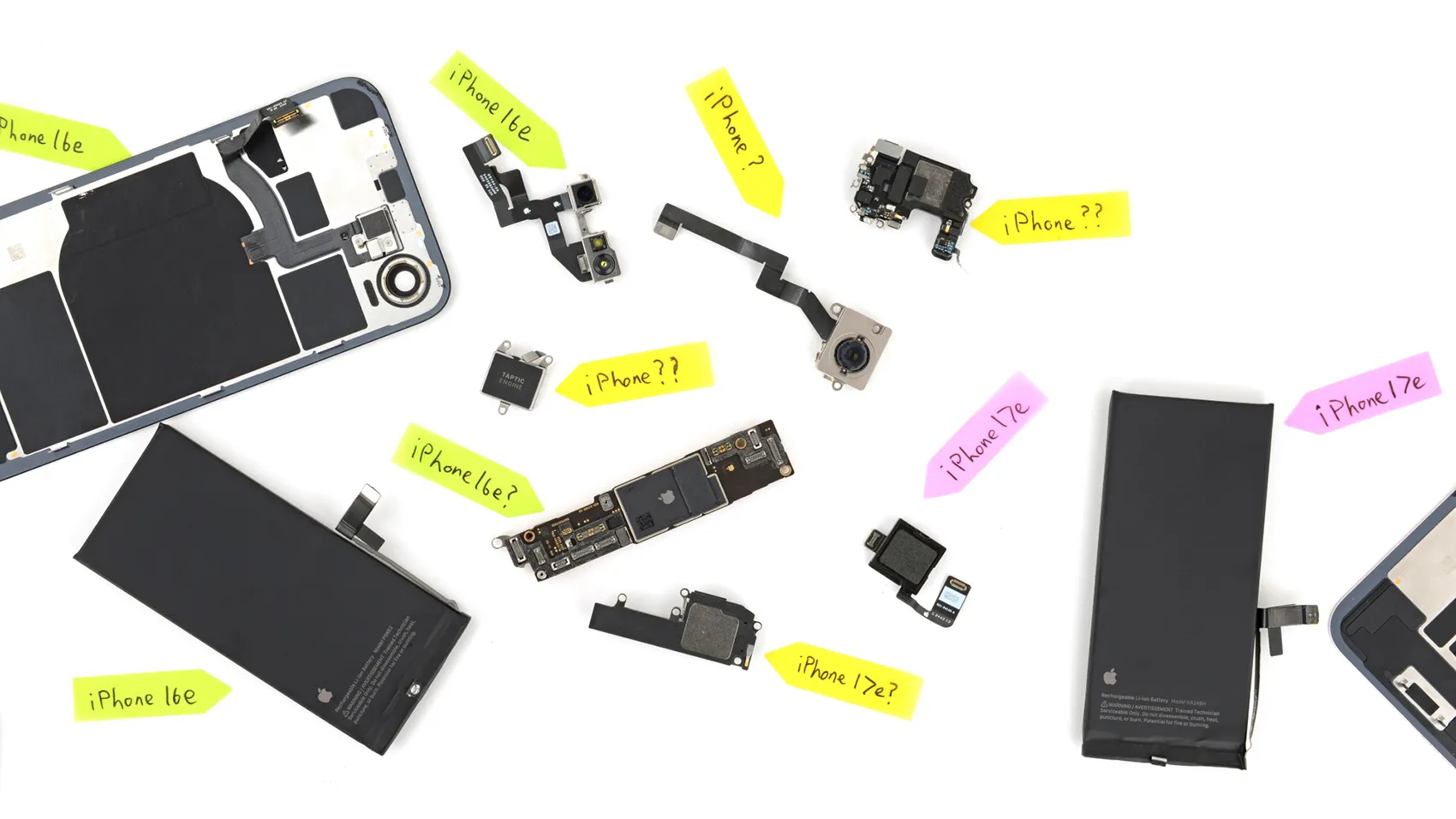
Most parts from one iPhone fit the other. Image: 9to5mac.com
But even with this caveat, the compatibility itself looks significant. The more identical parts there are between generations, the easier the repair, the simpler it is to find spare parts, and the cheaper device restoration can be. For the average user, this means something quite straightforward: repairing the smartphone in the future may be easier and cheaper than before.
What Changed in iPhone 17e Compared to iPhone 16e
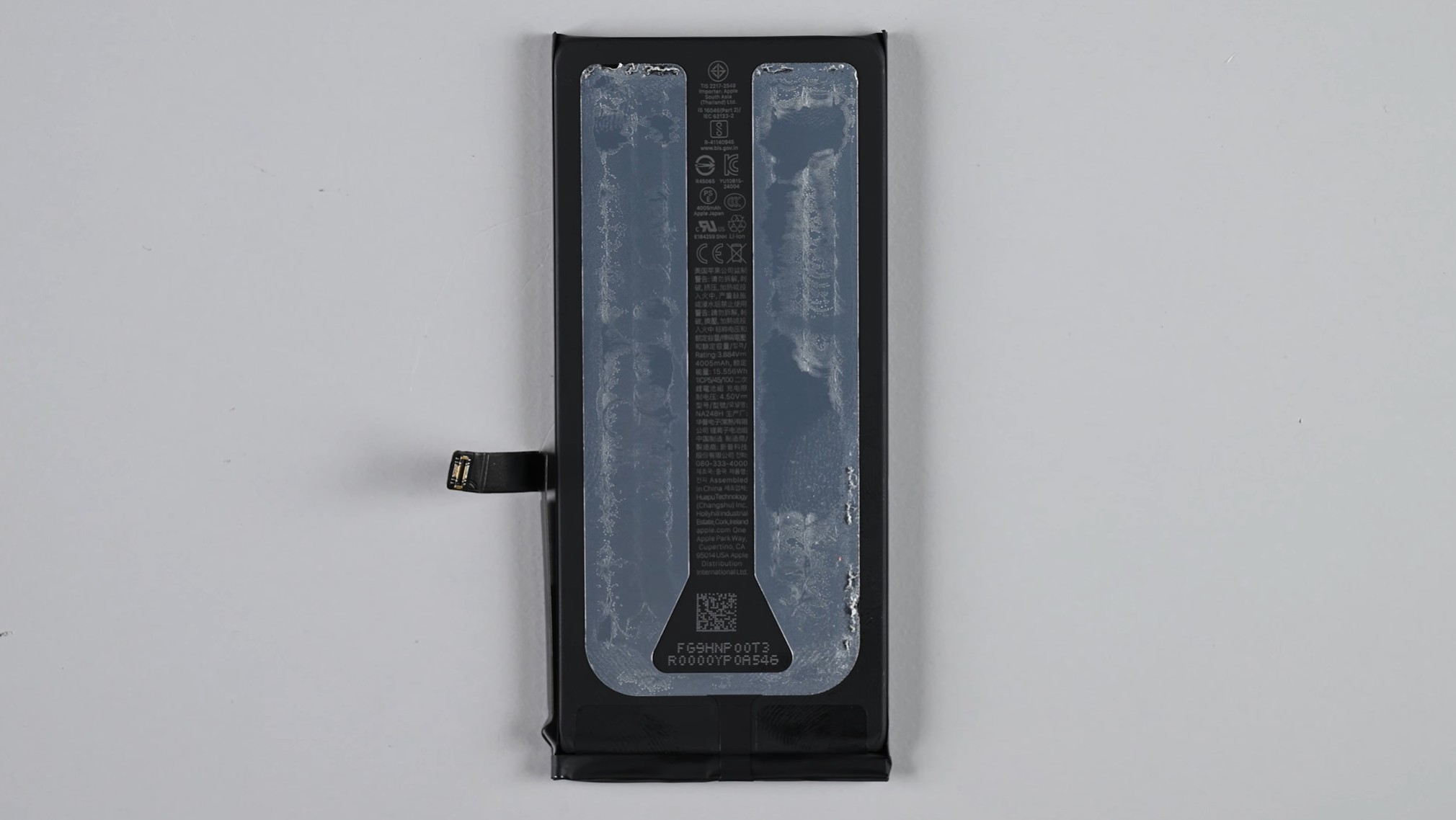
The battery in iPhone 17e is very easy to remove. Image: wccftech.com
In terms of construction, the iPhone 17e turned out to be very similar to the iPhone 16e and other recent Apple models. Its front and back panels come off separately, which significantly simplifies disassembly. For example, replacing the battery doesn’t require going through the more fragile screen each time — and that’s already a noticeable plus for repairability.
It’s precisely these small details that ultimately shape the overall impression of a device. The smartphone doesn’t become fully modular and certainly doesn’t turn into a construction set, but individual steps toward more convenient repair are clearly visible here.
Why USB-C in iPhone 17e Is Hard to Replace
That said, the iPhone 17e still can’t be called perfect. iFixit specifically criticized the process of removing the USB-C port. According to them, reaching it is still too difficult, especially considering that connectors typically wear out and require repair more often than many other internal components located above them.
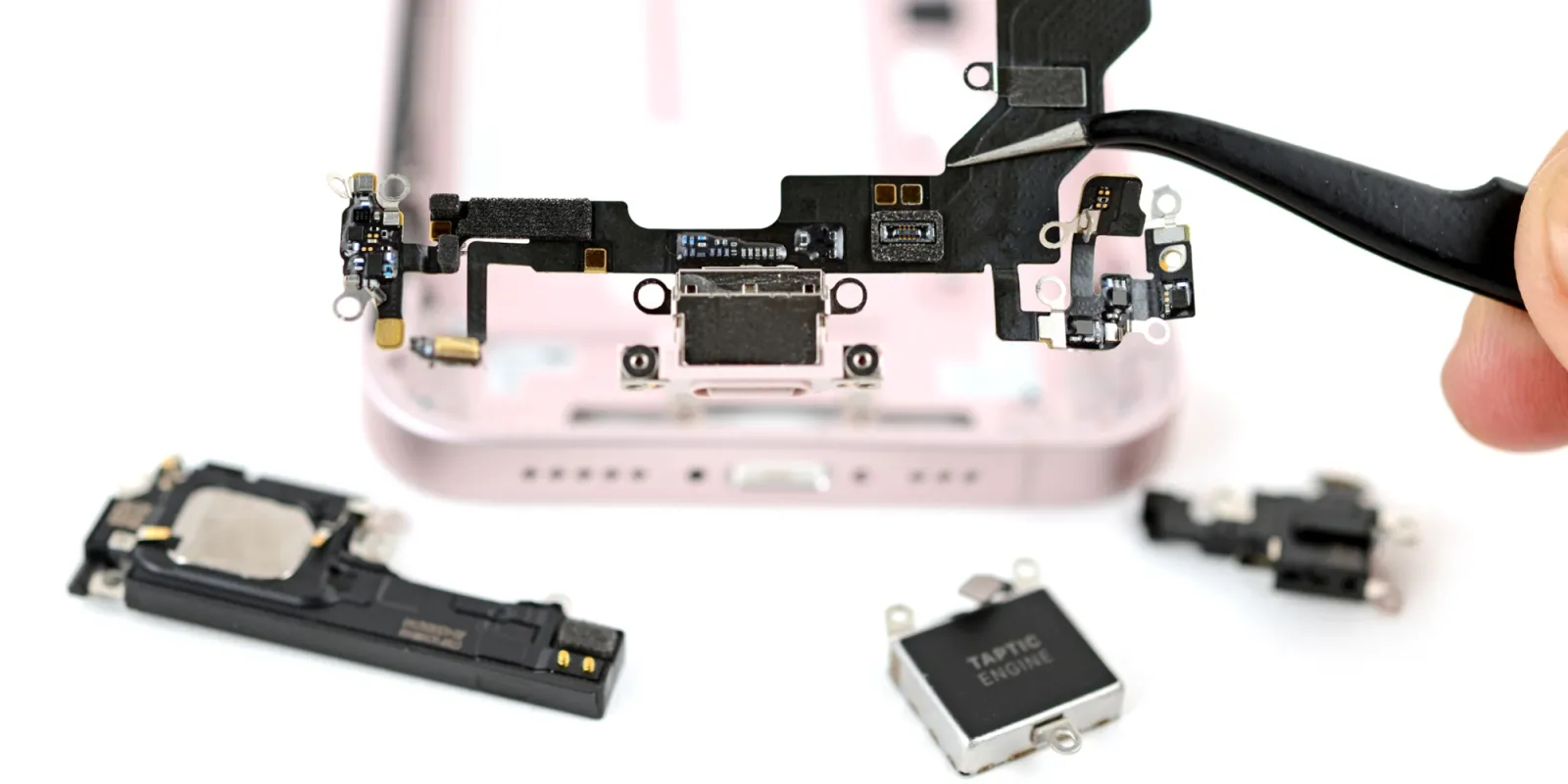
Replacing the USB-C port is quite a challenge. Image: 9to5mac.com
And this observation sounds perfectly logical. If a part breaks more often or requires servicing, access to it should be as simple as possible. But Apple still hasn’t arrived at a truly convenient solution here.
How Hard Is It to Repair the iPhone 17e
Based on the teardown results, iFixit preliminarily gave the iPhone 17e a score of 7 out of 10 on their repairability scale. This is a fairly good result, largely due to the high interchangeability of parts between the iPhone 16e and iPhone 17e.
There could be two explanations for this. Either Apple is genuinely making devices more repair-friendly over time, or this compatibility became a side effect of efforts to simplify manufacturing. For the user, it doesn’t really matter which reason is behind this decision. What matters far more is that the iPhone 17e ultimately turned out to be noticeably more interesting from a repair standpoint than one might have expected.
Is It Worth Installing the iPhone 17e Cover on iPhone 16e