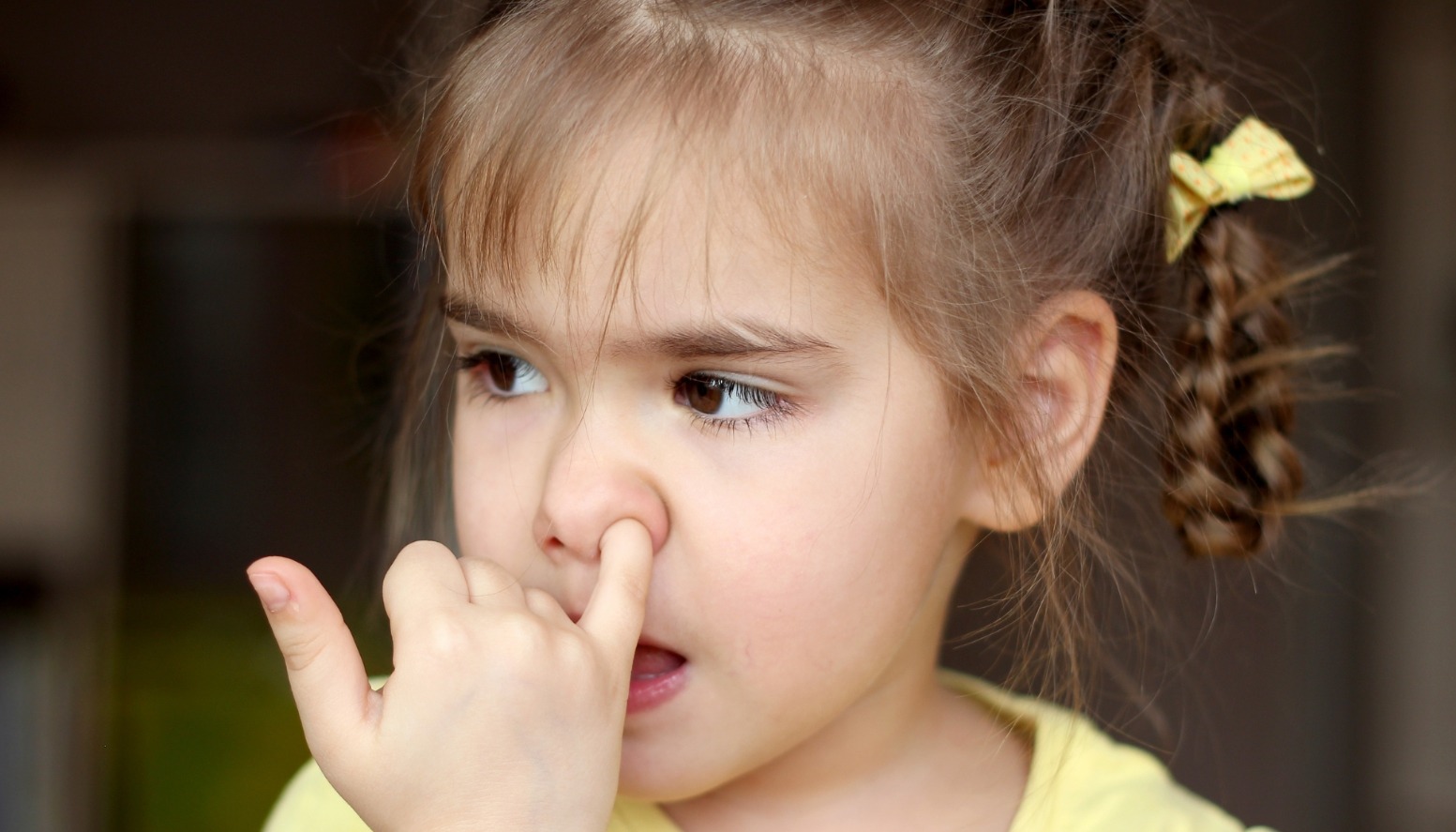
Children often pick their noses due to dry air. Image source: parentology.com
The habit of picking your nose seems harmless — at worst, it’s just bad manners. But Australian scientists have discovered something alarming: damage to the nasal lining can help bacteria reach the brain and trigger processes resembling Alzheimer’s disease. Does this mean people urgently need to break this habit?
Dangerous Bacterial Nasal Infection
Scientists from Griffith University (Australia) demonstrated that the bacterium Chlamydia pneumoniae can penetrate through the olfactory nerve directly into the brains of mice and cause characteristic signs of Alzheimer’s disease. The study was published in the journal Scientific Reports.
Chlamydia pneumoniae is not the chlamydia people usually think of. It causes respiratory infections like pneumonia, and should not be confused with Chlamydia trachomatis — the agent responsible for sexually transmitted infections. But it has an unpleasant characteristic: the DNA of this bacterium was found in the brains of 90% of patients who died from late-onset dementia, and in only a few percent of people without dementia.
For a long time, it remained a mystery exactly how this bacterium reaches the brain. The 2022 study was the first to demonstrate a direct pathway: from the nose along the nerves to the brain, in just a matter of days.
How Bacteria Travel From the Nose to the Brain
The nose and brain are directly connected through the olfactory nerve — the very nerve responsible for our sense of smell. Its receptors are located in the upper part of the nasal cavity, and the olfactory nerve leads straight to the brain, allowing bacteria to bypass the blood-brain barrier — the protective “wall” that normally prevents microbes from getting inside.
In the experiment, scientists introduced Chlamydia pneumoniae into the noses of mice and discovered that the bacterium reached the brain via the olfactory nerve in just 72 hours. This surprised even the researchers themselves, as it was previously believed that central nervous system infection would take weeks or months.
Once in the brain, the bacterium caused cells to deposit beta-amyloid protein — the main marker of Alzheimer’s disease. It is precisely the accumulations (plaques) of this protein that are found in the brains of dementia patients. Think of it this way: the brain sees an uninvited guest and tries to “wall it off,” but in the process harms itself.
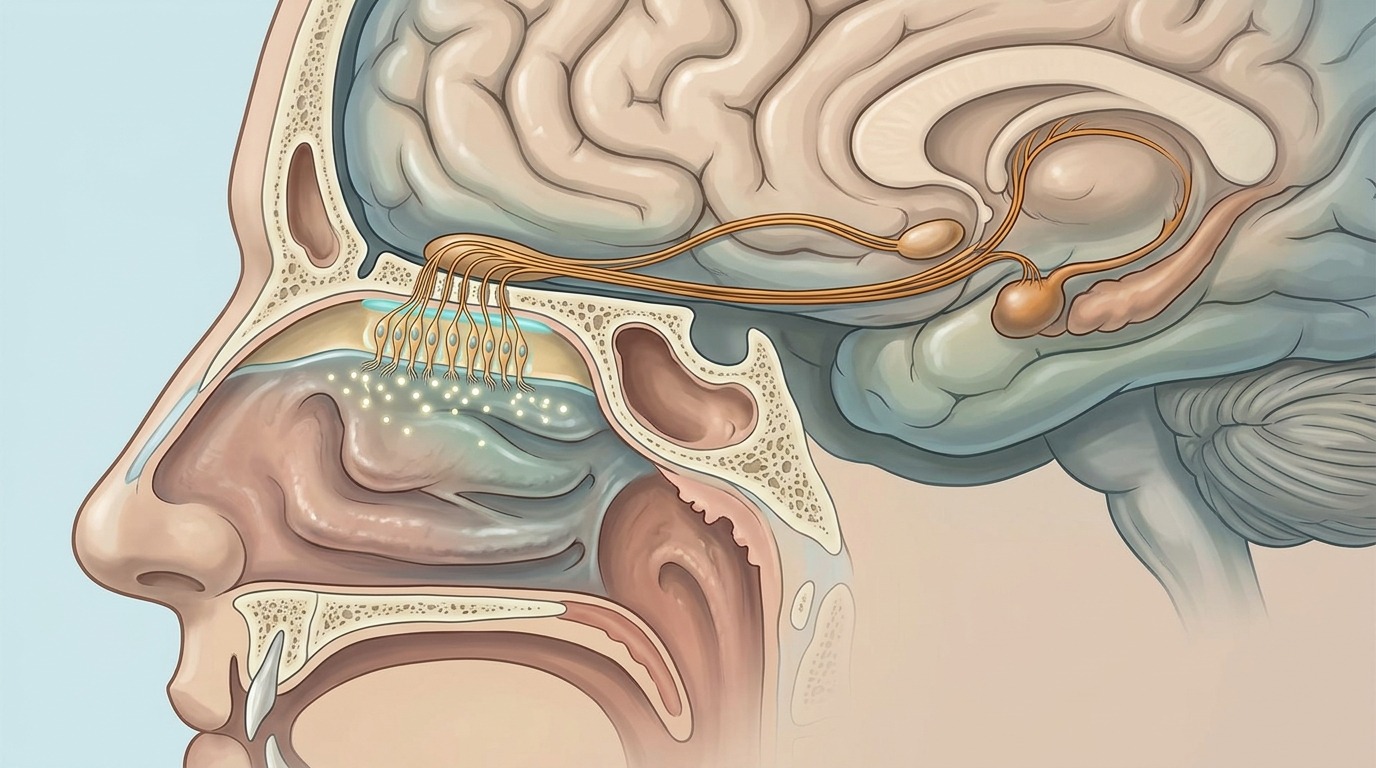
Anatomical structure of the nasal cavity and the olfactory nerve leading to the brain
How Nose Picking Damages the Nasal Lining
But what does nose picking have to do with it? The thing is, in this same study, scientists verified that when the nasal lining was damaged, infection of the olfactory nerve intensified, and the mice’s brains deposited even more beta-amyloid.
The nasal mucosa is a thin protective barrier that prevents bacteria from reaching the nerves. When you pick your nose or pull out nose hairs, this barrier is damaged. Professor James St John from Griffith University states directly:
If you damage the lining of the nose, you can increase how many bacteria can go up into your brain.
It is important to understand that the study itself did not directly investigate nose picking. In the scientific paper, nose picking and pulling out nose hairs are not mentioned at all. The connection to this habit is the authors’ interpretation in the press release, based on the idea that any damage to the mucosa theoretically makes the path easier for bacteria. This is logical, but has not yet been proven in humans.
Nasopharyngeal Infections and Dementia Risk
In 2023, a scientific review by researchers from Western Sydney University expanded on the hypothesis that nose picking may increase the risk of Alzheimer’s disease. The authors noted that the olfactory system is a “plausible pathway for pathogen entry, given its direct anatomical connection to the brain.”
A separate study showed that nose picking is also a risk factor for COVID-19: among 404 healthcare workers, the incidence of SARS-CoV-2 was approximately four times higher among those who admitted to this habit. This supports the general idea: dirty fingers in the nose are a pathway for all sorts of infections.
The authors of the 2023 review emphasize that one of the lessons of the COVID-19 pandemic is the importance of hand hygiene. Frequent handwashing and use of hand sanitizers are what they call “mandatory procedures for incorrigible nose pickers.”
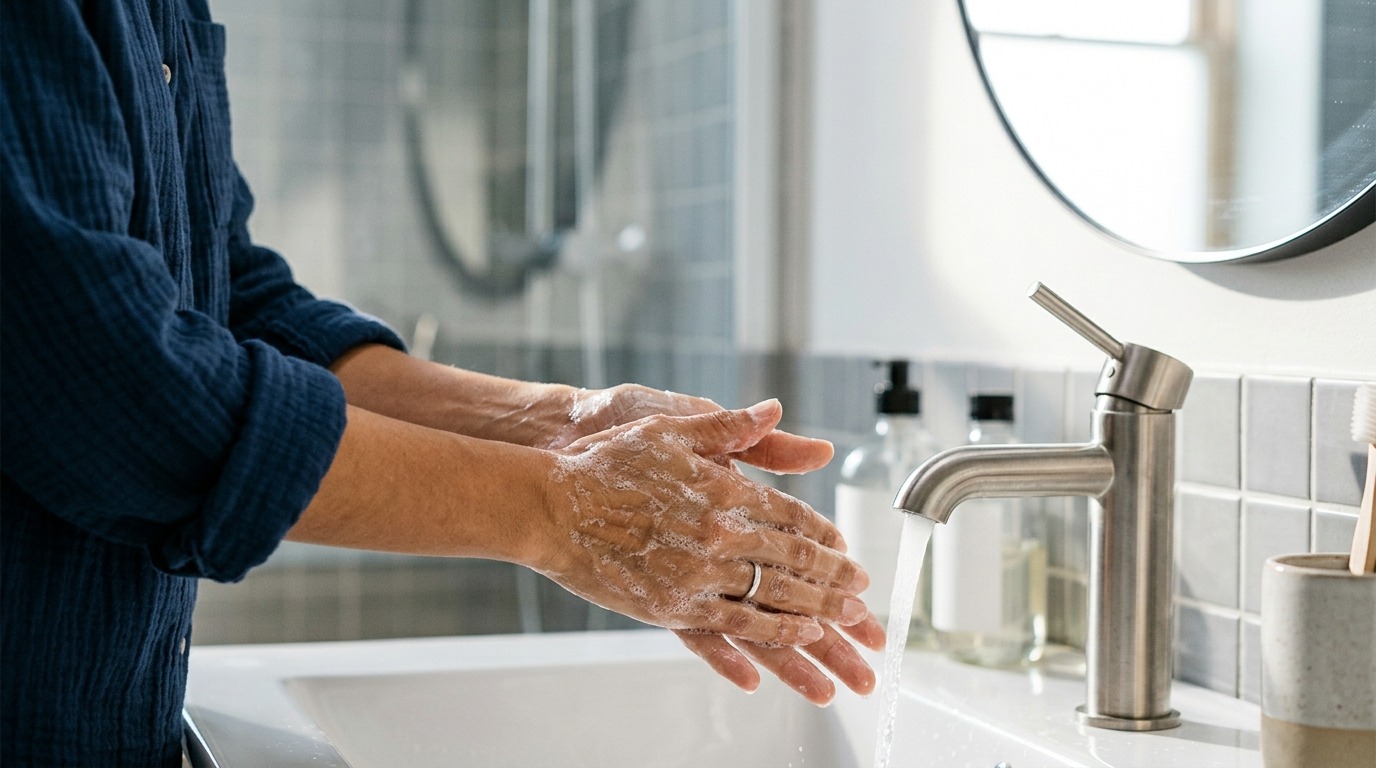
Handwashing — a simple way to reduce the risk of nasal infections
The Link Between Nose Picking and Alzheimer’s in Humans
Here we need to be honest: there is no direct evidence yet that nose picking causes Alzheimer’s in humans. The main caveat is that the study was conducted on mice, not humans. Moreover, it has still not been definitively established whether beta-amyloid plaques are the cause of Alzheimer’s disease or merely a sign of it.
Professor St John’s team has already received ethical approval to conduct a study involving human participants in Queensland (Australia). The scientists plan to recruit patients with early stages of late-onset Alzheimer’s disease and check which bacteria are present in their noses.
It is also worth considering the scale: nine out of ten people admit to picking their noses. By age 20, about 50% of people have traces of Chlamydia pneumoniae in their blood, and by ages 60–70, the figure is already 80%. Does this mean they are all at risk? Probably not — Alzheimer’s disease clearly depends on many factors, not just one.
One of the key questions scientists have yet to answer is whether the increased beta-amyloid deposits are a temporary defensive immune response that resolves once the infection is defeated, or whether this triggers an irreversible process.
How to Protect Your Nasal Lining From Bacteria
While science has not yet reached a definitive conclusion, the scientists’ recommendations are quite simple and require no medication:
- Don’t pick your nose, especially with dirty hands;
- Don’t pluck nose hairs (it’s better to carefully trim them);
- Wash your hands with soap more frequently or use hand sanitizer;
- Don’t damage the nasal lining unnecessarily.
Professor St John believes these are simple steps you can take right now if you want to reduce the potential risk of developing late-onset dementia.
Picking your nose and plucking nose hairs is not a good idea, — he says.
Incidentally, there is a separate recommendation for people over 60: loss of smell may be an early sign of Alzheimer’s disease, and Professor St John suggests using smell tests as a method of early detection.
Alzheimer’s disease remains one of the most complex mysteries of modern medicine because it has many possible causes, and none of them explains everything. Each new study is another step toward understanding how to stop this disease. The connection between the nose and the brain is one of the promising research directions, but it is important not to confuse a hypothesis with a fact. While we await results from human studies, the most sensible thing to do is simply to keep dirty hands out of your nose.