
Chocolate is made from cacao beans, which contain toxic alkaloids — theobromine and caffeine
Chocolate is one of the few treats that is literally made from poison. Cacao beans contain substances that are deadly to most animals. But humans turned out to be surprisingly resistant: to receive a lethal dose, you’d have to eat a huge amount of chocolate in one sitting. How did this come to be, and where exactly is the line?
Why Chocolate Can Be Toxic to Humans
Chocolate is made from roasted seeds of the Theobroma cacao tree — the name literally translates from Greek as “food of the gods.” Sounds beautiful, but hidden inside these “divine” beans are two toxic alkaloids — theobromine and caffeine. They are responsible for chocolate’s bitter taste and energizing effect, as well as its potential danger.
Theobromine is a powerful heart stimulant that acts longer than caffeine and is eliminated from the body more slowly. Caffeine, in turn, raises blood pressure and stimulates the nervous system. Both substances stimulate the gastrointestinal tract and have a diuretic effect.
In large doses, this "duo" can cause nausea, vomiting, rapid heartbeat, tingling in the extremities, seizures, internal bleeding and, in extreme cases, cardiac arrest due to overstimulation of the heart.
It’s important to understand: chocolate “comes out of the ground ready to kill” — this isn’t a matter of additives or processing. The toxicity is inherent in the very nature of cacao beans.
Lethal Dose of Chocolate for Humans: The Math
Toxicologists use the concept of LD50 — the dose of a substance that kills 50% of test subjects. Conducting such experiments on humans is, of course, not allowed, so the figures for humans are calculated based on animal data and rare clinical cases.
The LD50 of theobromine in humans is estimated at approximately 1,000 mg per kilogram of body weight. For an average adult weighing about 84 kg, that means about 84 grams of pure theobromine. Is that a lot or a little? Let’s do the math.
Theobromine concentration varies greatly depending on the type of chocolate:
- Cocoa powder — about 20 mg/g
- Unsweetened (baking) chocolate — about 15 mg/g
- Dark chocolate — about 5–6 mg/g
- Milk chocolate — about 2 mg/g
- White chocolate — trace amounts (about 0.1 mg/g)

To get a lethal dose of theobromine, you’d need to eat several kilograms of chocolate in one sitting
Even in the most “dangerous” variant — unsweetened baking chocolate — to accumulate a lethal dose of theobromine, a person would need to eat about 6.5 kg in one sitting (remember: this is for a person weighing 84 kg).
With caffeine it’s even harder: its lethal dose is about 10 grams for an adult. To get that much caffeine from chocolate, you’d need to eat more than 23 kg. In practice, this is absolutely impossible.
Why Dark Chocolate Is More Dangerous Than Milk Chocolate for Humans
The higher the cocoa content in chocolate, the more theobromine it contains. Dark chocolate with 70% cocoa contains 2–3 times more of this alkaloid than milk chocolate. And baking (unsweetened) chocolate — even more. White chocolate, which is made from cocoa butter without cocoa solids, contains virtually no theobromine at all.
This is exactly why all calculations of the lethal dose “in bars” vary so widely. For dark chocolate, a person weighing 75 kg would need to eat about 13–14 kg, for milk chocolate — around 30–40 kg. For white chocolate, the figure goes beyond all common sense.
So if you prefer dark chocolate — the theoretical “danger zone” is closer. But in practice, this fact has almost no significance, because long before the lethal dose is reached, the body’s defense mechanisms kick in.
How the Body Protects Itself from Chocolate Poisoning
The main reason we can enjoy chocolate without worry is our liver. In humans, it’s large, well-supplied with enzymes, and incredibly efficient at processing plant toxins. This is also what allows us, among other things, to tolerate alcohol much better than, say, cats or dogs.
When we eat chocolate, the liver breaks down caffeine into paraxanthine (a milder nervous system stimulant) and theobromine into xanthine and methyluric acid. These metabolic products are much safer than the original substances and are eliminated fairly quickly through the kidneys. The half-life of theobromine in humans is only 2–3 hours — the body processes it very quickly.
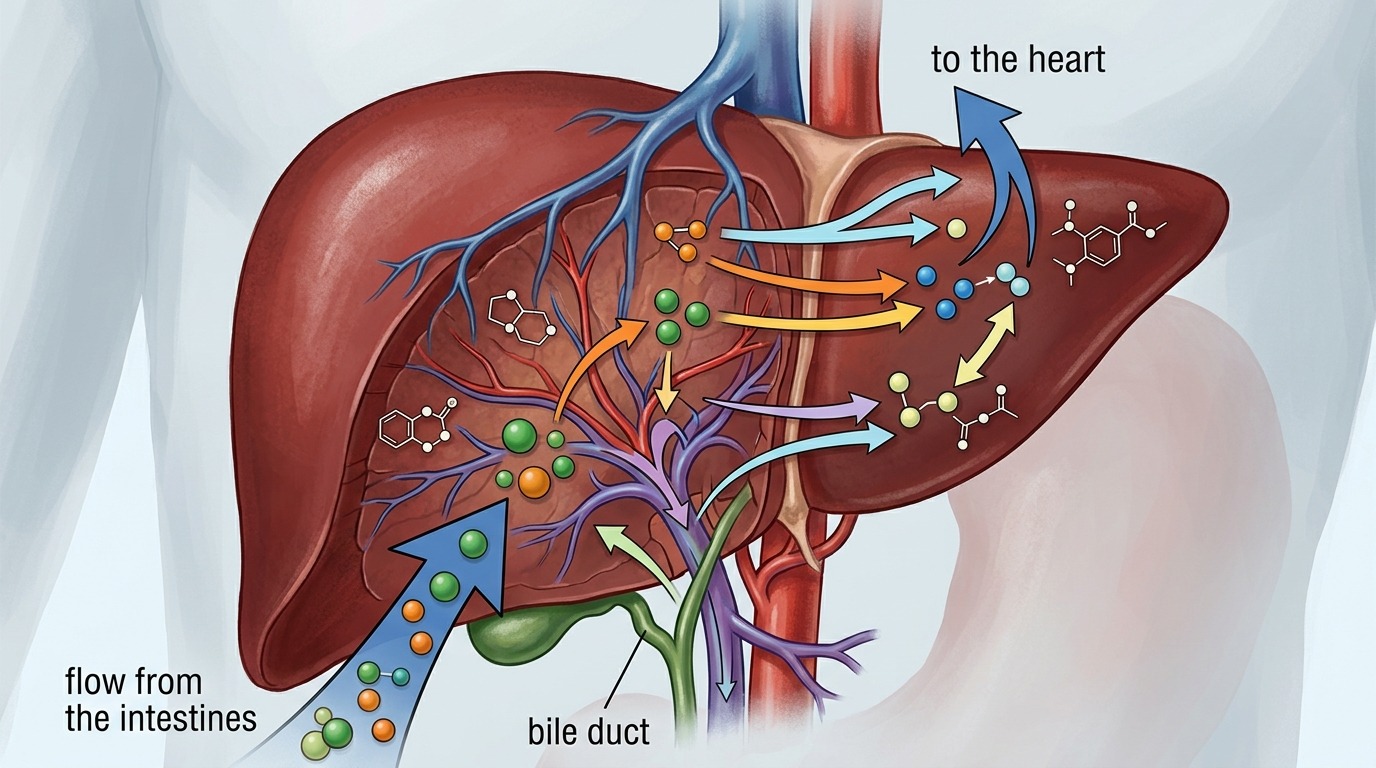
The human liver quickly breaks down theobromine and caffeine into safe substances
For chocolate to actually kill, you’d need to eat so much and so quickly as to overwhelm the body’s natural ability to process it. And even before that, another defense kicks in: nausea and vomiting. As Jennifer Temple, an associate professor at the University at Buffalo, explained, in acute caffeine poisoning “usually the first symptoms are nausea and vomiting, and that’s essentially a protective response — the body gets rid of the toxin before it has a chance to become truly dangerous.”
Why Chocolate Is Dangerous for Dogs, Cats, and Other Animals
For pets, however, it’s a completely different story. Humans (and to a lesser extent mice and rats) are the exception: most species process theobromine much more slowly.
In dogs, the half-life of theobromine is about 18 hours — 6–9 times longer than in humans. This means the substance accumulates in the body and has time to cause serious damage. The lethal dose of theobromine for dogs is 100 to 500 mg/kg of body weight, which is 2–10 times lower than for humans. For a small dog, a single bar of dark chocolate can be enough to warrant a trip to the vet.
Cats are even more sensitive — their lethal dose is about 200 mg/kg. For veterinarians, the question of whether cats can eat chocolate is not up for debate at all. However, they can’t taste sweetness, so they rarely eat chocolate voluntarily. But rabbits, parrots, and other pets are also at risk.
Veterinarians recommend: if your pet has eaten chocolate, don’t wait for symptoms — contact a vet immediately. The first signs of poisoning can appear within 2 hours, but sometimes not until a day later, and recovery can take up to three days.
Can You Eat Chocolate Every Day Without Harming Your Health
For a healthy adult, normal chocolate consumption is completely safe. As emergency medicine physician Reed Caldwell from NYU Langone Medical Center emphasized, in his entire career he has never encountered a case of theobromine poisoning in humans — and hasn’t heard of such cases from colleagues either.
Mild unpleasant symptoms — headache, sweating, trembling — can appear when consuming 0.8–1.5 g of theobromine per day. This amount is found in approximately 50–100 grams of pure cocoa powder. To reach serious problems like arrhythmia or seizures — that would require tens of kilograms of chocolate in one sitting.
Moderate chocolate consumption is safe and may even be beneficial
Thus, death from chocolate is more of a theoretical phenomenon than a practical one. A toxic dose exists, but reaching it through normal chocolate consumption is nearly impossible: the body simply won’t let you eat that much. But for pets, it’s a completely different picture — keep this in mind and don’t leave chocolate where a dog, cat, rabbit, or parrot can reach it. Perhaps the most accurate advice on this matter belongs to the same Dr. Caldwell: “Unless your partner gives you a 20-pound chocolate bunny — you’ll be fine.”