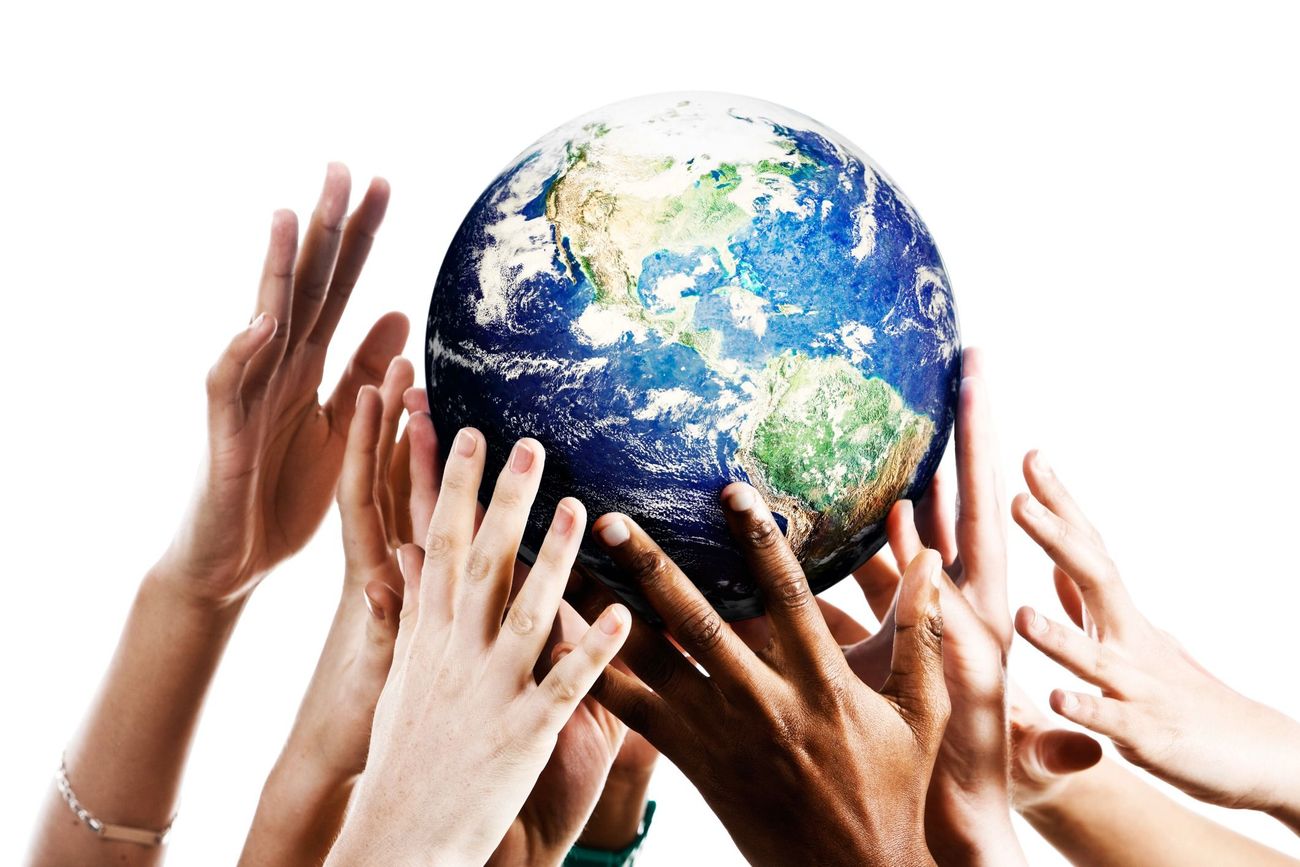
Our planet is overcrowded. In fact, its ecological capacity was exceeded several decades ago.
Earth’s population in 2026 is approximately 8.3 billion people — but according to calculations by a group of ecologists, the planet can sustainably support only 2.5 billion. It turns out that our planet is overcrowded, and the difference is colossal: there are already more than three times the “norm” of us. In fact, its ecological capacity was exceeded several decades ago — humans have depleted the planet’s resources, going far beyond its long-term capabilities. This is the main conclusion of a new study: humanity has been living beyond its means for decades, and it’s becoming increasingly evident. Although the question of how many people planet Earth can support is far more complex than it appears at first glance.
How Many People Live on Earth in 2026
According to the latest UN estimates, approximately 8.28–8.3 billion people currently live on the planet. As recently as 2011, there were 7 billion of us, and the 8 billion mark was passed in 2022. Population growth rates are still positive — approximately 69 million people are added each year.
But the speed of this growth is declining: the peak occurred in the mid-1960s, when the population was increasing by about 2% per year, while now it’s less than 0.9%. This very paradox — the population is growing, but ever more slowly — became the starting point for the new study.
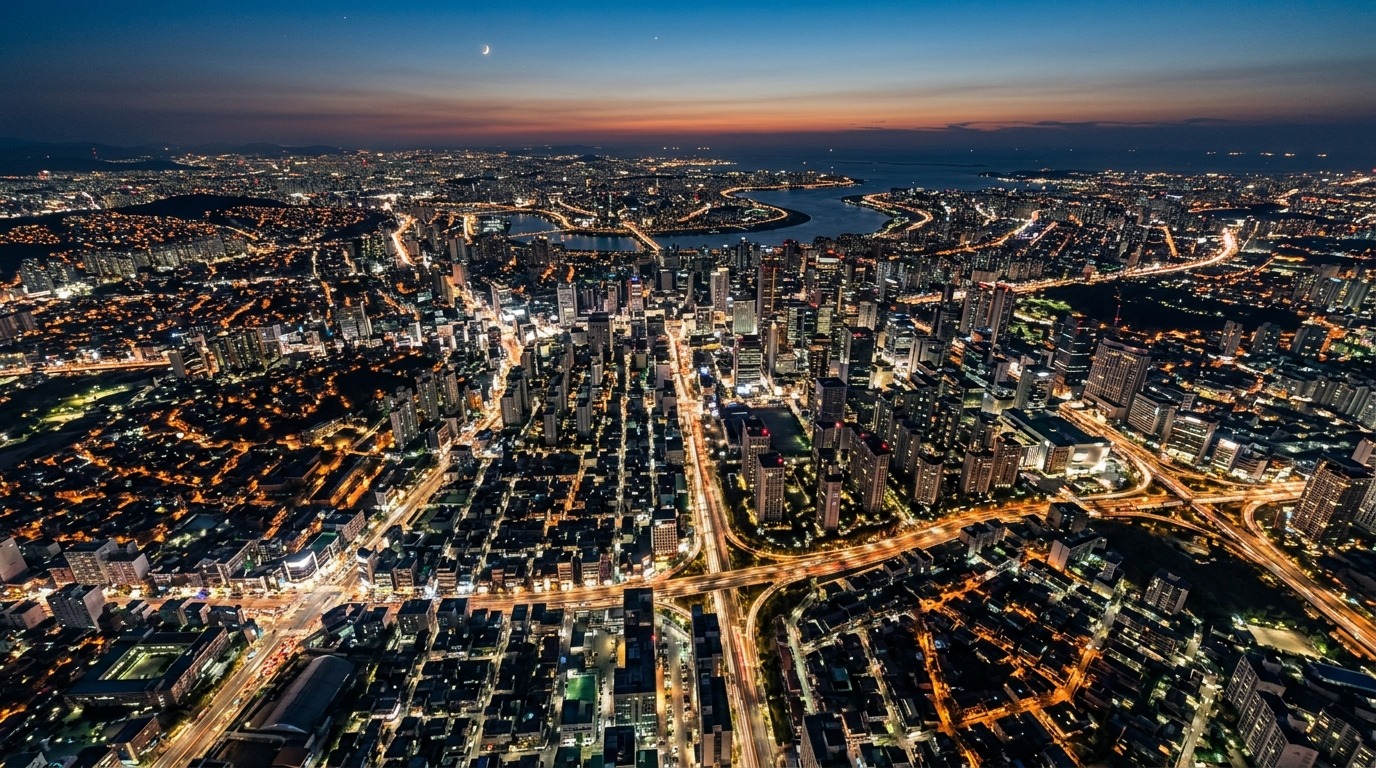
Aerial view of a densely populated megacity: Earth already has more than 8 billion people
How Many People Can Earth Feed According to Scientists
The study was conducted by a team led by Professor Corey Bradshaw from Flinders University (Australia). Co-authors include scientists from the University of Western Australia, Cambridge, the University of California, and Stanford, including the recently deceased Paul Ehrlich, author of the famous 1968 book “The Population Bomb.”
The group analyzed data on Earth’s population spanning more than a thousand years, starting from 1000 AD, and applied ecological growth models — the same ones biologists use to study animal populations. The logic is simple: every ecosystem has a limit to how many individuals it can feed. The scientists set out to determine where that limit lies for humanity.
The result was alarming. According to their model, the sustainable population of Earth is approximately 2.5 billion people. That’s roughly how many lived on the planet in the mid-20th century. Everything beyond that is essentially living “on borrowed time” from nature.
Why Earth Supports More People Than It Should
For centuries, population growth went hand in hand with technological development. More people — more ideas and inventions — more resources — even more people. This system worked like a self-sustaining engine. However, according to the study, in the 1950s the mechanism began to break down. By 1962, the world entered what the authors call a “negative demographic phase”: the population continued to grow, but the growth rate began to steadily decline.
So why didn’t the catastrophe become obvious? The answer is fossil fuels. Oil, gas, and coal made it possible to artificially maintain food production, energy, and industrial goods at a level that the planet’s natural systems could not provide on their own. Imagine spending more than you earn, but taking out a new loan every month. For a while, everything looks fine — until the loans run out.
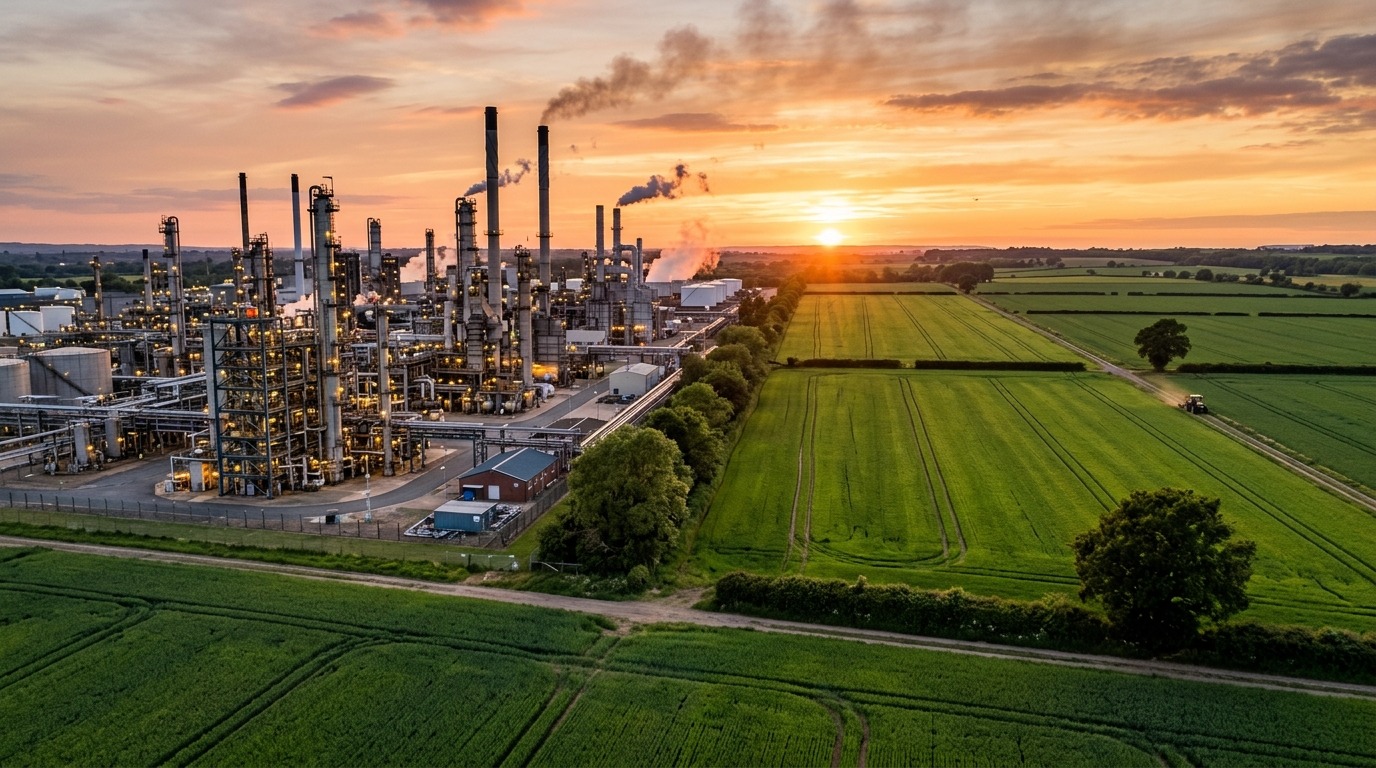
An oil refinery next to agricultural land — a symbol of modern civilization’s dependence on fossil fuels
The researchers note that the global biocapacity deficit — a situation where humanity consumes more than nature can regenerate — began around 1970. Since then, each year “Earth Overshoot Day” arrives earlier: if in the 1970s it fell at the end of December, in 2025 it was already on July 24. This means that in the first seven months of the year, we used up the planet’s entire annual budget.
When Will Earth’s Population Peak and Begin to Decline
According to the researchers’ calculations, the global population will peak between 11.7 and 12.4 billion people — approximately in the late 2060s or 2070s. After that, the number of people on Earth will begin to decline for the first time since the Black Death — the plague pandemic of the 14th century.
For comparison: UN estimates are more moderate — about 10–11 billion by 2100. The discrepancy is explained by different models: the authors of the new study used the Ricker biological model, which accounts for ecological feedback loops, rather than just demographic trends.
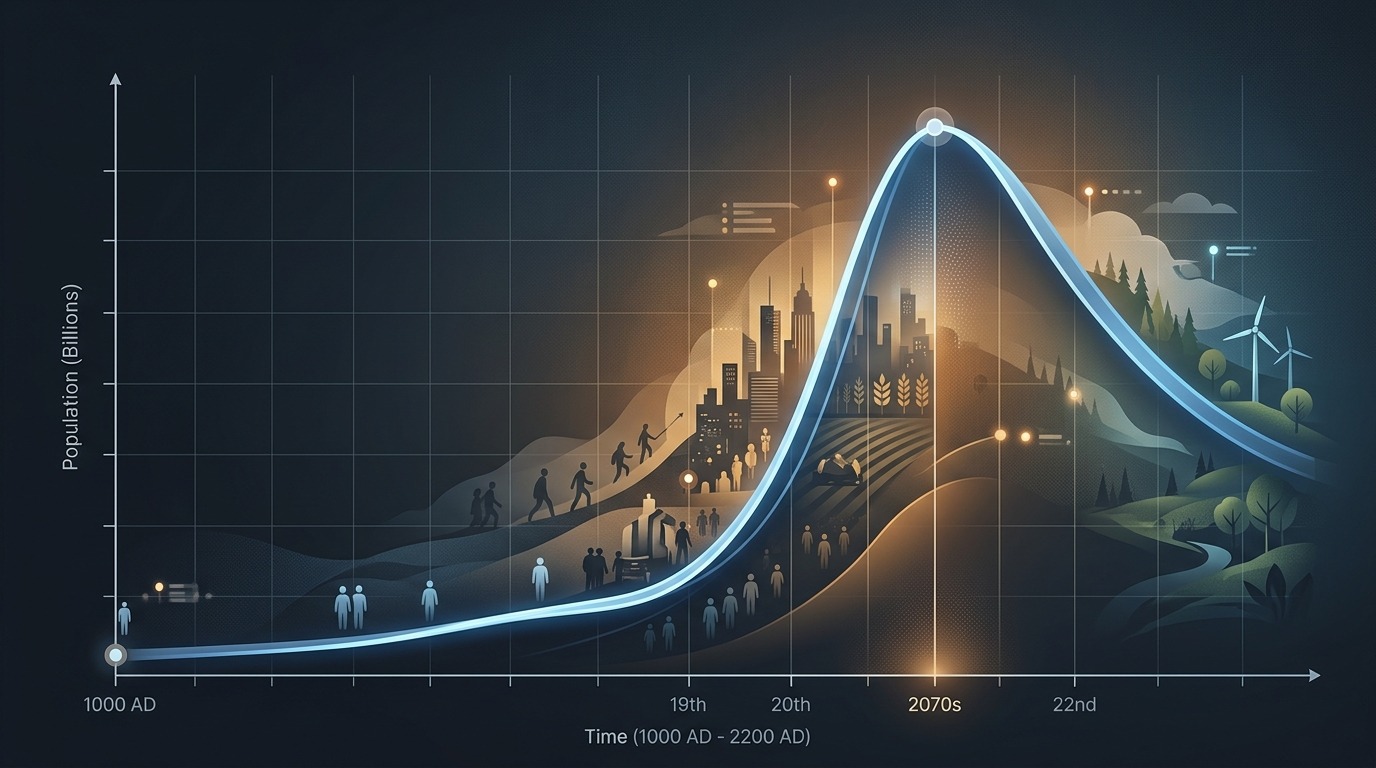
Schematic curve of Earth’s population growth: the peak is expected in the 2060s–2070s
It’s important to emphasize: the study does not predict a sudden collapse. The authors speak of a gradual buildup of pressure: intensifying climate change, declining biodiversity, food and water shortages, growing inequality. All of these are consequences of consumption exceeding the planet’s capabilities.
Why Earth Cannot Feed 8 Billion People
One of the key consequences of ecological overpopulation is the threat to food security. Today, global agriculture is critically dependent on fossil fuels: fertilizers are produced from natural gas, machinery runs on diesel, logistics rely on petroleum products. When the study’s authors write that humans “removed the natural limiter on population growth through the exploitation of fossil fuels,” they mean precisely this: without cheap energy from oil and gas, feeding 8 billion people would be impossible.
At the same time, the study showed that total population size explains more variation in ecological indicators — such as global temperature, carbon emissions, and ecological footprint — than per capita consumption. In other words, it’s not only about how we live, but also about how many of us there are.
Is Earth Really Overpopulated and What Can Be Done About It
It should be noted right away: not all scientists agree with the figure of 2.5 billion. Estimates of Earth’s carrying capacity vary widely — from 2 to 15 billion, depending on the model and assumptions.
The authors base their analysis on a scenario in which every person lives at a comfortable economic level and within ecological limits. If one assumes a more modest level of consumption or more efficient technologies, the figure could be higher.
The authors separately emphasize: their study is not a call for birth control or population reduction. Such measures, as other scientific groups note, often