At first glance, it seems like the iPhone 17e and iPhone 17 are almost the same thing, so there’s simply no point in overpaying for the higher-end model. Especially since the iPhone 17e received new features that weren’t available before. But Apple doesn’t talk openly about everything. There are a number of key areas where the iPhone 17e turned out to be noticeably worse than the iPhone 17.
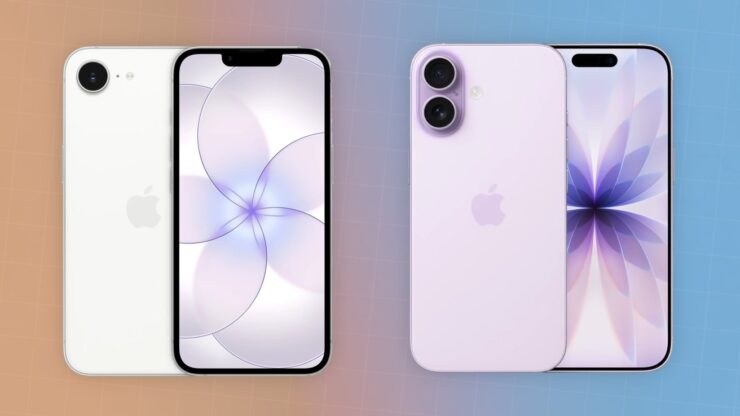
So which is better to buy: 17 or 17e? Image: appleinsider.com
iPhone 17e and iPhone 17 Price in Russia: Is It Worth Saving 7,000 Rubles
In dollars, the difference between iPhone 17e and iPhone 17 is $200. Significant. But in rubles, the picture looks more interesting. The iPhone 17e in Russia costs roughly 7,000 rubles less than the iPhone 17 in the base configuration. That means the difference is less than the cost of a decent MagSafe case and a screen protector combined. Meanwhile, the list of what you get for the extra money looks particularly compelling:
- 120 Hz display
- Second camera with ultra-wide lens
- Dynamic Island instead of notch
- Better battery life
Essentially, 7,000 rubles is the price difference between “good enough” and “no compromises.” Keep in mind that budget iPhones typically drop in price a few months after launch. If you’re not in a rush to buy, by summer the price gap between the 17e and 17 could shrink even further.
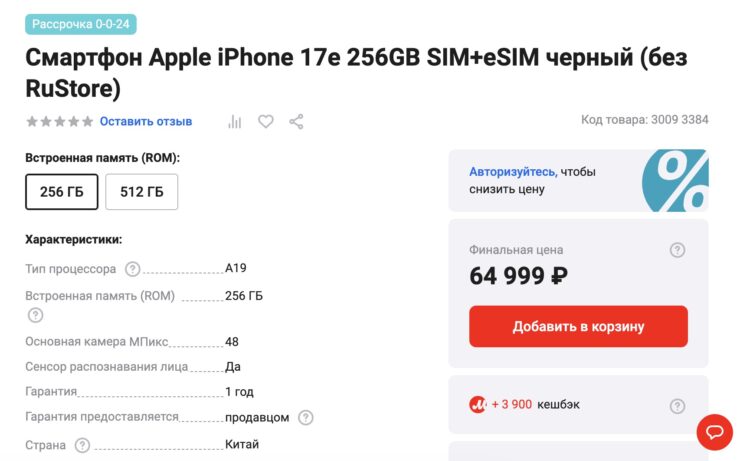
Here’s the iPhone 17e pre-order price in Russia
If you need an affordable iPhone with a good processor for calls, messengers, photos in normal conditions, and long-term update support, the iPhone 17e will do an excellent job.
iPhone 17e vs iPhone 17 Display: What’s the Difference Between 60 Hz and 120 Hz
The display is the main and most noticeable difference between the two smartphones: 120 Hz ProMotion on the higher-end model versus 60 Hz on the junior one. In practice, this means the following: feed scrolling, app opening animations, typing — all of this looks noticeably smoother on the iPhone 17. If you’ve ever used a smartphone with 120 Hz, going back to 60 will feel uncomfortable. Here are a few more important points:
- The iPhone 17 display is slightly larger — 6.3 inches versus 6.1 inches on the 17e
- iPhone 17 peak brightness reaches 3000 nits with Ceramic Shield 2 coating
- The iPhone 17e has an OLED Super Retina XDR with maximum brightness of 1200 nits in HDR mode
- Always-On Display is absent from the iPhone 17e — it remains a privilege of Pro models
iPhone 17e and iPhone 17 Camera: One vs Two — What the Buyer Loses
The iPhone 17 received a dual camera: a top-tier 48 MP main module plus a 12 MP ultra-wide. The iPhone 17e has a single 48 MP camera without the ultra-wide. Without it, you can’t properly capture a wide landscape, a room interior, or a large group at a table — you literally have to step back.
In the iPhone 17, Apple updated its image processing algorithms and night mode — thanks to which photos look noticeably better than on last year’s model. The iPhone 17e works with the same algorithms but still falls behind in hardware. It simply has a worse camera than even the old iPhone 15.

In skilled hands, the 17e takes excellent photos. Image: Apple
The only good news: the front camera on both smartphones supports Center Stage — it automatically keeps you in frame during video calls. This is one of the few areas where the 17e almost matches up. However, neither model has optical zoom — that’s exclusively for Pro versions.
Why iPhone 17e Doesn’t Have Dynamic Island — and How Much It Matters
This is where many will be surprised, because contrary to rumors and leaks, the iPhone 17e retained the classic notch cutout at the top of the screen — the very same one Apple removed from iPhones back in the 15 series. Base iPhones have had Dynamic Island for a while now, and seeing a notch in 2026 feels a bit strange.
Dynamic Island isn’t just about external aesthetics and technological appeal. The “island” displays timers, navigation, current track, and call status right in the top bar. It’s a living interface element that’s genuinely used every day. The iPhone 17e doesn’t have it. On the back, however, both smartphones look similar: aluminum body, glass panel. The iPhone 17 is just slightly heavier — 177 g versus approximately 167 g for the 17e.
A19 Processor in iPhone 17e: Same as in iPhone 17, or Not
In theory, the iPhone 17e processor is the A19 chip, the same as in the base iPhone 17. Sounds like a tie, but the devil is in the details: in the 17e, the A19 runs at the same clock speeds, but the number of GPU cores is limited. It has one fewer stream than the iPhone 17.
For everyday tasks and Apple Intelligence, this is more than enough, but in games there will be frame drops. And this is yet another area where the iPhone 17e falls short.
MagSafe in iPhone 17e: What Changed Compared to 16e
iPhone 17e finally got MagSafe — something the 16e model was sorely missing. Now all magnetic accessories, cases, and wireless chargers with magnetic attachment work the same way with both smartphones.
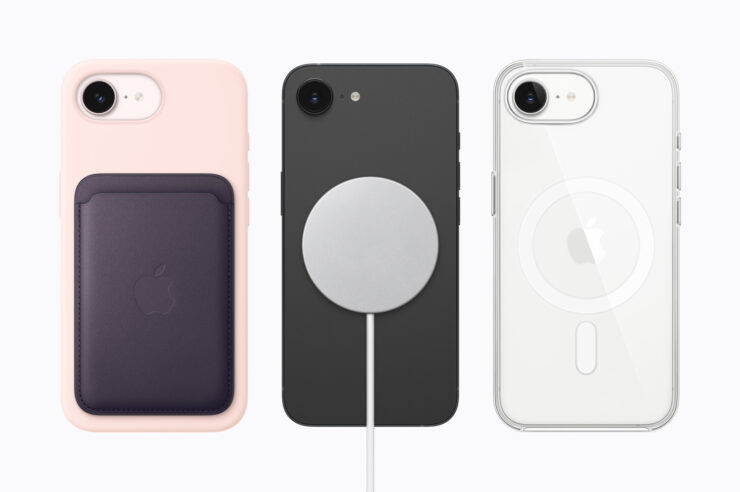
Magnets like the “grown-up” models. Image: Apple
In terms of charging speed, iPhone 17 is slightly faster — it supports charging to 50% in 20 minutes. The iPhone 17e is a bit more modest here — you’ll need at least half an hour to charge it to 50%.
Battery Life and Storage on iPhone 17e: 256 GB Base and How Long the Battery Lasts
Both smartphones start at 256 GB of built-in storage — Apple raised the bar for the 17e compared to the 16e while keeping the price the same. Both have 8 GB of RAM, which will be sufficient for several years.
In terms of battery life, the iPhone 17e claims 26 hours of video playback. The iPhone 17 lasts 4 hours longer thanks to a slightly larger battery and LTPO technology, which reduces the screen refresh rate in static scenes.
What to Buy: iPhone 17e or iPhone 17
Go with the iPhone 17e if you’re upgrading from an iPhone 13 or older and your budget is limited, you don’t need an ultra-wide lens, and 120 Hz isn’t a priority. It’s also a good fit if you need a current new iPhone with MagSafe at the lowest possible price.
On the other hand, consider the iPhone 17 if: 120 Hz is already a habit for you, you actively shoot photos and videos, or you simply want a smartphone with no compromises in the base lineup. In terms of software support, they’re on equal footing, and that’s important: neither of them will be playing catch-up in a year or two.