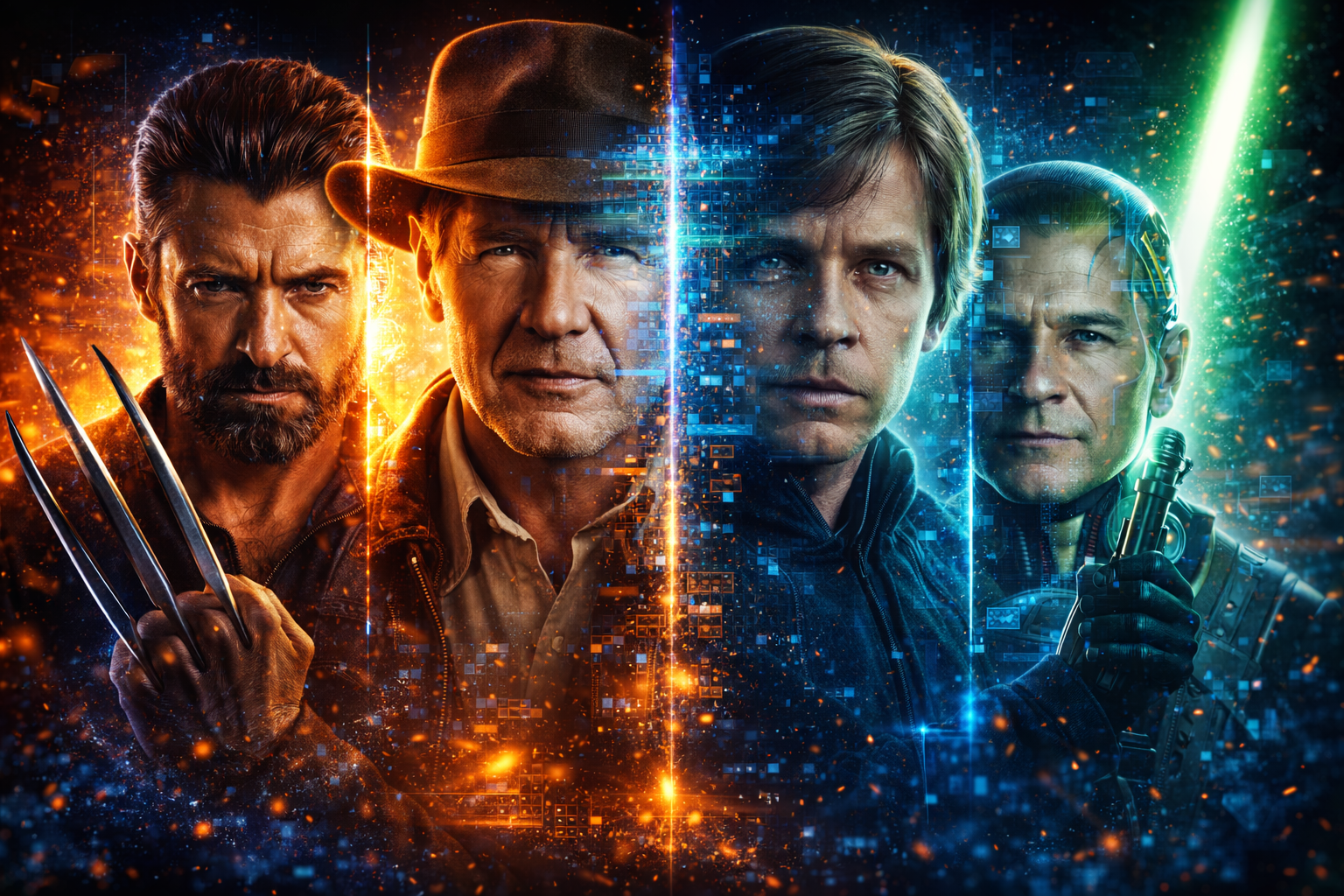
How AI is used in Hollywood: not just effects, but also analytics, marketing, de-aging, voice processing, and post-production.
Just ten years ago, artificial intelligence in cinema was considered something experimental. Today, however, it quietly works at almost every stage of film production — from screenwriting to final frame processing. At the same time, most viewers don’t even suspect that part of what they see on screen was created or enhanced by algorithms. Don’t worry, AI hasn’t replaced Hollywood — it has simply become its useful and nearly invisible tool.
How Artificial Intelligence Is Used in Film Production
In the modern film industry, artificial intelligence is used much more broadly than it might seem. For example, algorithms analyze thousands of scripts and help studios understand which stories could potentially become hits.
One of the most well-known tools is the Merlin system, which was used by 20th Century Fox. It literally “broke down” trailers frame by frame and compared them with a massive database of viewer preferences.
For instance, when promoting the film “Logan”, the algorithm unexpectedly showed a high audience overlap with fans of the teen drama “The Fault in Our Stars” — and the film’s marketing was partially adjusted for that audience.

A still from the film “Logan”. AI was used for trailer and audience analysis. Image source: kino-teatr.ru
AI is also actively used during the pre-production stage:
- script analysis and identification of weak scenes;
- box office revenue forecasting;
- casting actors based on “compatibility” with roles;
- budget and shooting schedule planning.
Similar systems are now used by major studios like Warner Bros., which are testing tools like Cinelytic. These tools can calculate a film’s commercial potential even before the first set is built.
Why Viewers Don’t Notice Artificial Intelligence in Movies
The greatest strength of artificial intelligence in cinema is that it does invisible things.
For example, in the film “The Irishman”, Industrial Light & Magic used machine learning to de-age Robert De Niro, Al Pacino, and Joe Pesci. The actors didn’t even have to perform with the usual facial markers — the system analyzed their movements and automatically reconstructed younger versions of their characters.

In Martin Scorsese’s film “The Irishman,” Robert De Niro was 76 years old, yet he played a 40-year-old character. Image source: film.ru
As a result, viewers simply see characters at different stages of their lives and rarely realize that part of this magic was created by algorithms.
A similar technology was used in the adventure film “Indiana Jones and the Dial of Destiny”. For the opening scenes, artificial intelligence helped create a young version of Harrison Ford using archival footage from older films in the franchise.

At the beginning of “Indiana Jones and the Dial of Destiny,” a young version of Indiana Jones is shown, created using ML and archival Lucasfilm materials. Image source: ew.com
And in the experimental drama “Here”, AI de-aging allowed Tom Hanks and Robin Wright to look decades younger and older within a single story — without jarring visual jumps.
Algorithms also help:
- automatically remove unwanted objects from frames;
- restore old films;
- improve lighting and color in scenes;
- synchronize lip movements for dubbing into other languages.
Viewers see the result but not the process itself, which is why AI’s influence often remains behind the scenes.

A still from the film “Here”. This film used the Metaphysic system with generative AI to change character ages. Image source: kinotv.ru