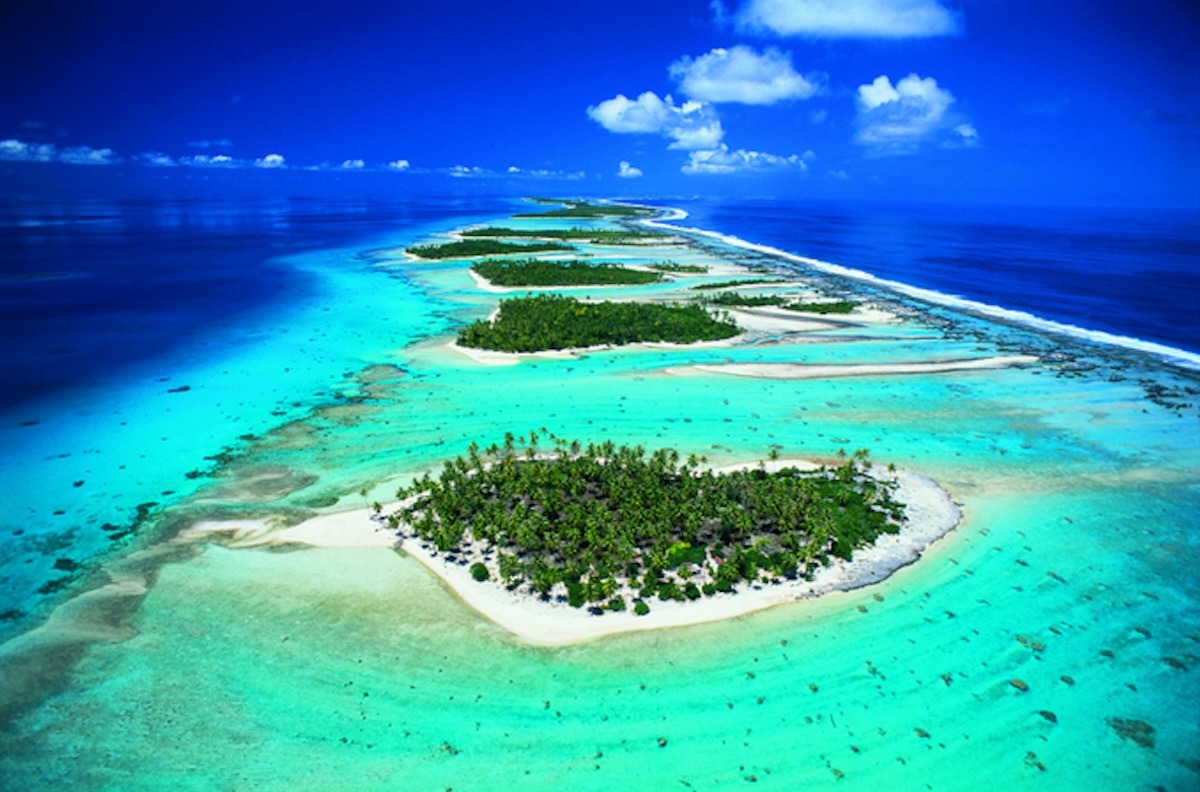
Remote islands also need energy and fresh water. Image: Panda Travel
The global energy transition has long gone beyond solar panels and wind turbines. One of the most underestimated sources of renewable energy remains the ocean — specifically, its waves. Many believe that marine energy could become a real breakthrough for island nations, which combine a high dependence on imported fuel with constant access to powerful wave activity. New agreements between major energy companies and the governments of remote islands show how energy will be produced in the future.
Electrical Energy from Waves
In 2026, the government agency Export Barbados signed a Memorandum of Understanding with the Danish company Wavepiston to launch a commercial pilot project with a capacity of 50 MW.
This was preceded by months of preliminary research on the island. The project is neither a full-scale commercial power plant nor a laboratory experiment — it is a kind of flagship installation, designed to prove the reliability, stability, and profitability of the technology before its large-scale deployment. For Barbados, the partnership fits into its ambitious goal of achieving carbon neutrality by 2030. And for an island context, this is a serious undertaking.
Why Wave Energy Is Better Than Wind and Solar
According to researchers, the annual energy potential of waves off the coasts of the United States alone reaches 2.64 trillion kWh — that’s more than 60% of the country’s total utility-scale generation. At the same time, waves are fundamentally different from sun and wind: they are significantly more predictable and stable.
The sun sets, the wind changes, but waves almost never stop. Nevertheless, out of more than 200 active marine energy technologies, only a handful have reached the development stage that allows for any kind of serious results.
How Electricity Is Generated from Waves
Wavepiston’s technology is a modular system that converts the kinetic energy of waves simultaneously into electricity and desalinated drinking water. At the core of the design is a long flexible “string” approximately 350 meters in length, anchored in the sea. Along it, like beads on a thread, energy collectors with small underwater “sails” are positioned.
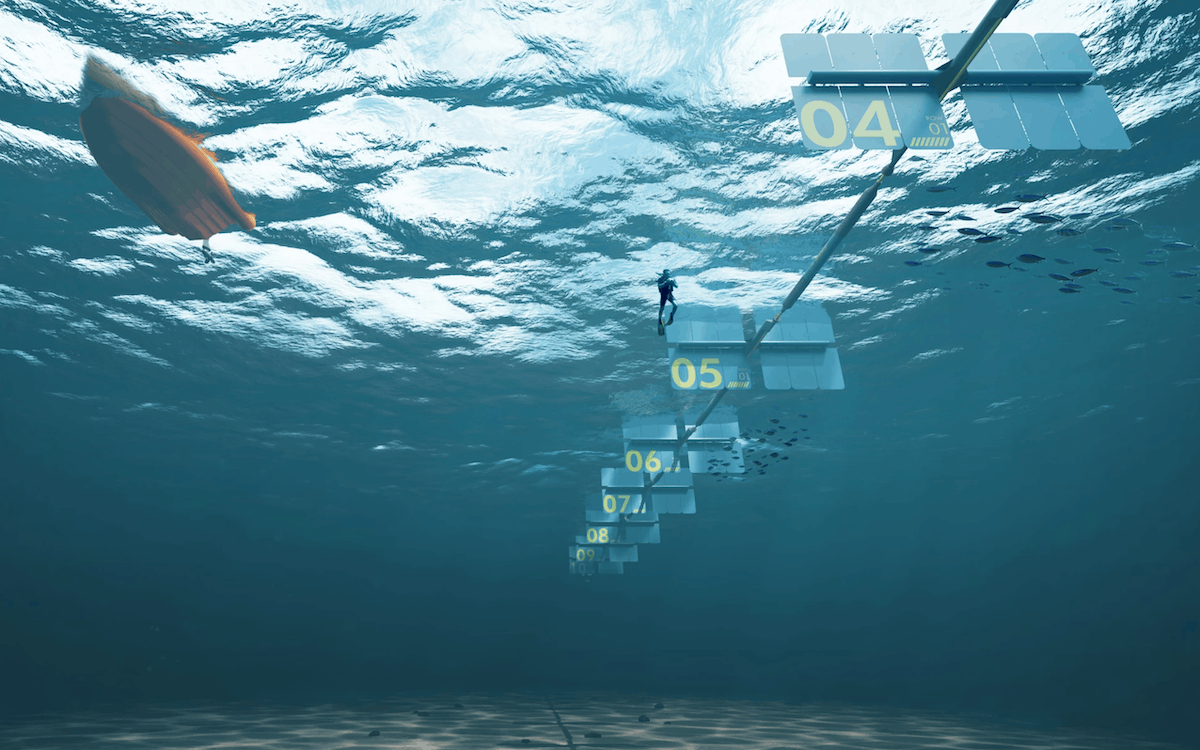
The new installation looks approximately like this. Image: New Atlas
As waves pass through, the sails perform reciprocating movements, driving a built-in hydraulic pump inside each collector. The pump pressurizes seawater, which is then delivered through pipelines to a central conversion station — either onshore or offshore.
There, it either spins a hydro turbine to generate electricity or is fed into a reverse osmosis system to produce fresh water. Two results from one installation — this is a rarity even by the standards of renewable energy.
An important feature of the system is the so-called force compensation effect. Since each collector operates in a slightly shifted phase relative to its neighbors, the opposing forces of waves on different sections of the string cancel each other out. This reduces the load on the anchoring system, makes the entire structure lighter and cheaper to operate, and the water flow at the output is smooth rather than pulsating.
Eco-Friendly Ways of Generating Energy
The environmental aspect deserves special attention. Testing has shown no negative impact on marine ecosystems — moreover, in some cases, an increase in biodiversity was observed around the installations: the structures became artificial reefs.
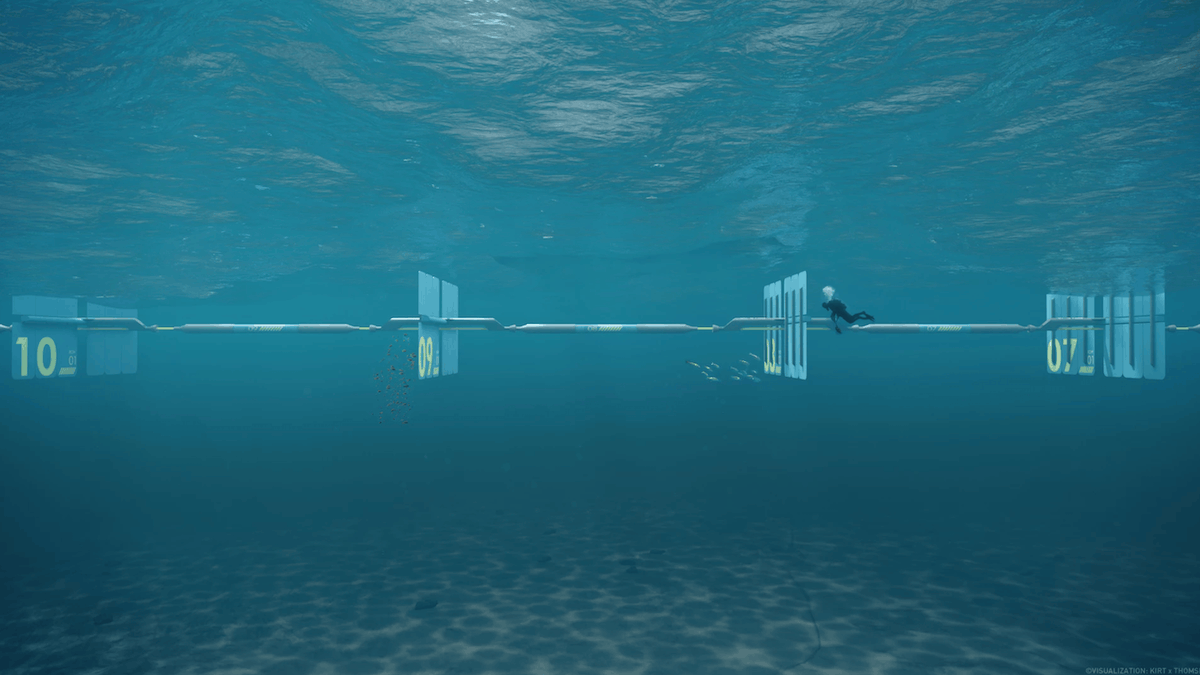
The structure does not disturb local marine life. They even settle near it. Image: New Atlas
In addition to clean energy and drinking water, the project aims to create local jobs and improve the island’s long-term energy resilience. Wavepiston openly states its intention to make Barbados a “regional beacon” of wave energy in the Caribbean. And this is just one region as an example. If the results are positive, all of this can be scaled worldwide.
The technology has been in development since 2009, when the company received its first patent. The journey from idea to commercial pilot took a decade and a half — and today Barbados is becoming the place where this journey reaches the home stretch. Let’s see how the technology develops further, but it looks promising and exciting.