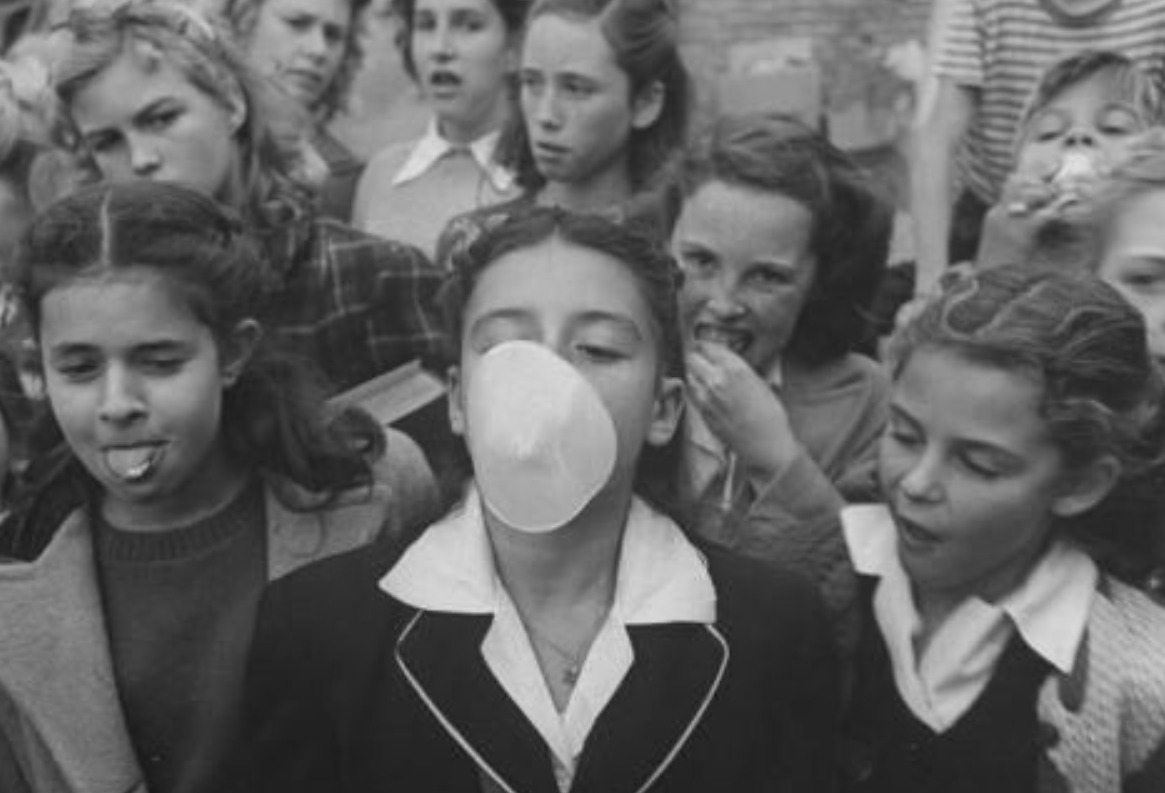
Soviet children chewing gum. Image source: reddit.com
For a Soviet child, a pack of chewing gum was almost more valuable than a toy. While the lucky ones unwrapped imported pieces, the rest chewed whatever they could get their hands on. And sometimes the ingredients for this gum were so shocking that they would make your hair stand on end today. What did children in the USSR actually make chewing gum from when store shelves were empty?
When Chewing Gum Appeared in the USSR
Opinions differ on where the first chewing gum production line was launched in the USSR. Some say Tallinn in the late 60s, others say Yerevan in the 70s. But there is an exact date: October 1976. That was when the Estonian factory Kalev started producing the first Soviet chewing gum. Technologist Tia Martens recalled that the production line was converted from one that had previously made toffees, and 36 people worked in the workshop, producing 1,200 kg of product per day.
This Estonian marvel cost 15 kopecks and was called narimiskummi. The flavor was either orange or mint. You could chew it, but compared to imported counterparts, it was worlds apart.
Interesting fact: back in 1968, the same Kalev tried to launch a gum called "Tiri, aga tõmba" (translated as "Come on, pull!"). But it was so hard to chew that the project was abandoned.
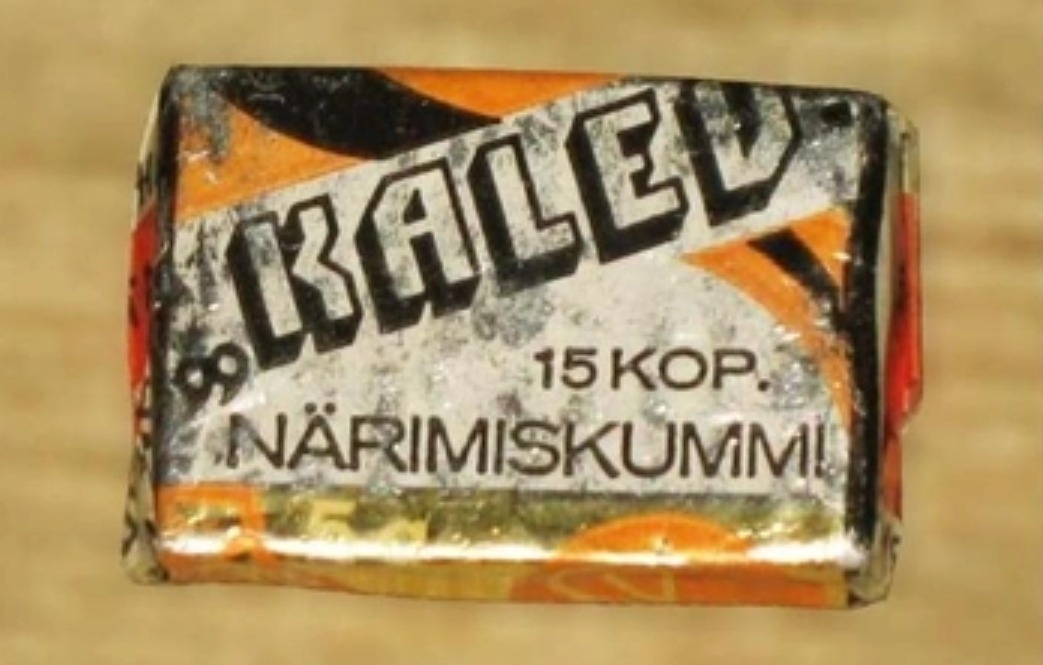
Narimiskummi gum. Image source: yaplakal.com
Soviet Chewing Gum “Coffee Aroma”
In the same year, 1976, production was set up in Armenia (the “Sweets of Yerevan” factory) and at a pasta factory in Rostov-on-Don. Yes, pasta and chewing gum were relatives for a while.
The Rostov producers gave the country the iconic “Nu, Pogodi!” (“Well, Just You Wait!”) gum with a mint flavor. Later, for the 1980 Olympics, modern equipment was purchased from East Germany, and production lines appeared in Leningrad and Moscow (“Rot-Front” factory). That’s how gum featuring Neznaika and other characters was born.
There were five flavors in total:
- mint;
- orange;
- strawberry;
- raspberry;
- coffee.
Soviet children remember the last one with a shudder. It had distinct notes of a burnt shoe sole and was harder to chew than concrete. But there was a legend that the “coffee” flavor was the best at masking the smell of tobacco and alcohol.
A pack of gum sticks initially cost 60 kopecks, then dropped to 50. But the main problem wasn’t the price: after 3 minutes, the gum turned into a tasteless piece of rubber, and blowing a bubble with it was simply impossible.
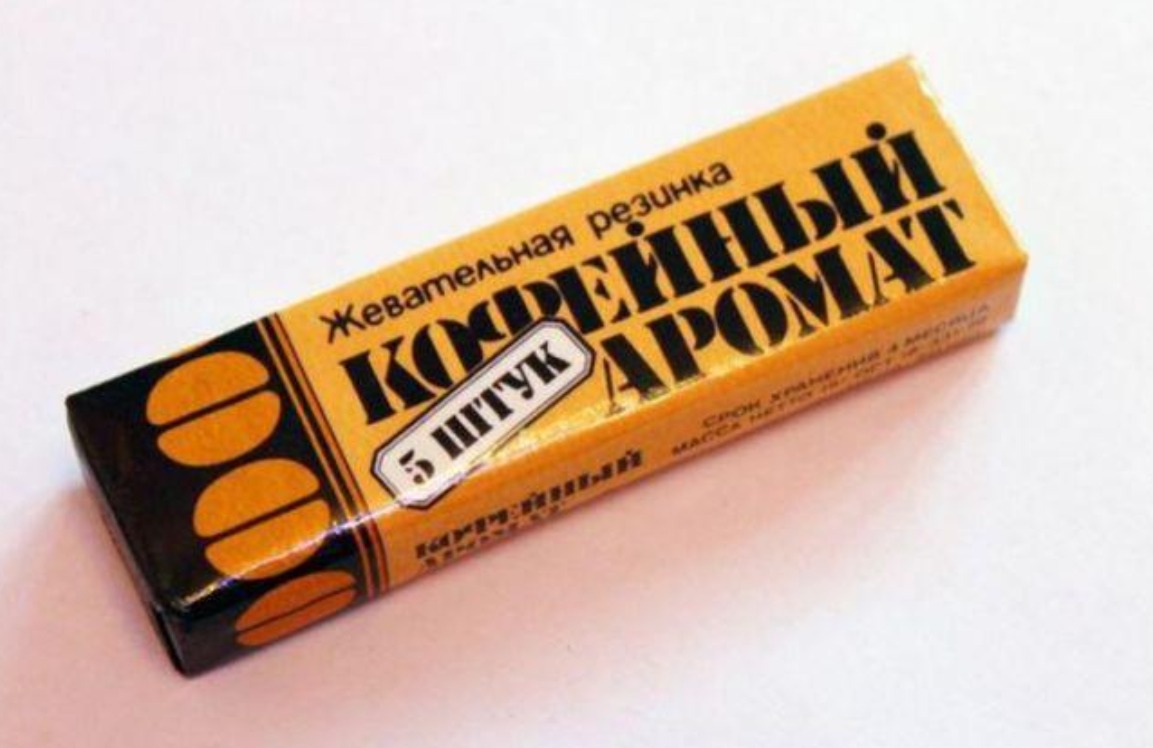
“Coffee Aroma” chewing gum. Image source: maximonline.ru
How “Turbo” Gum Appeared in the USSR
Everything changed in the late 80s. Turkish chewing gum flooded into the USSR — Turbo, Love Is…, Bubble Gum with collectible inserts. There were cars, funny phrases, and more. It was pure delight. Kids collected entire sets, traded duplicates, and for the first time learned what a bubble was. From that moment on, Soviet gum became a thing of the past.
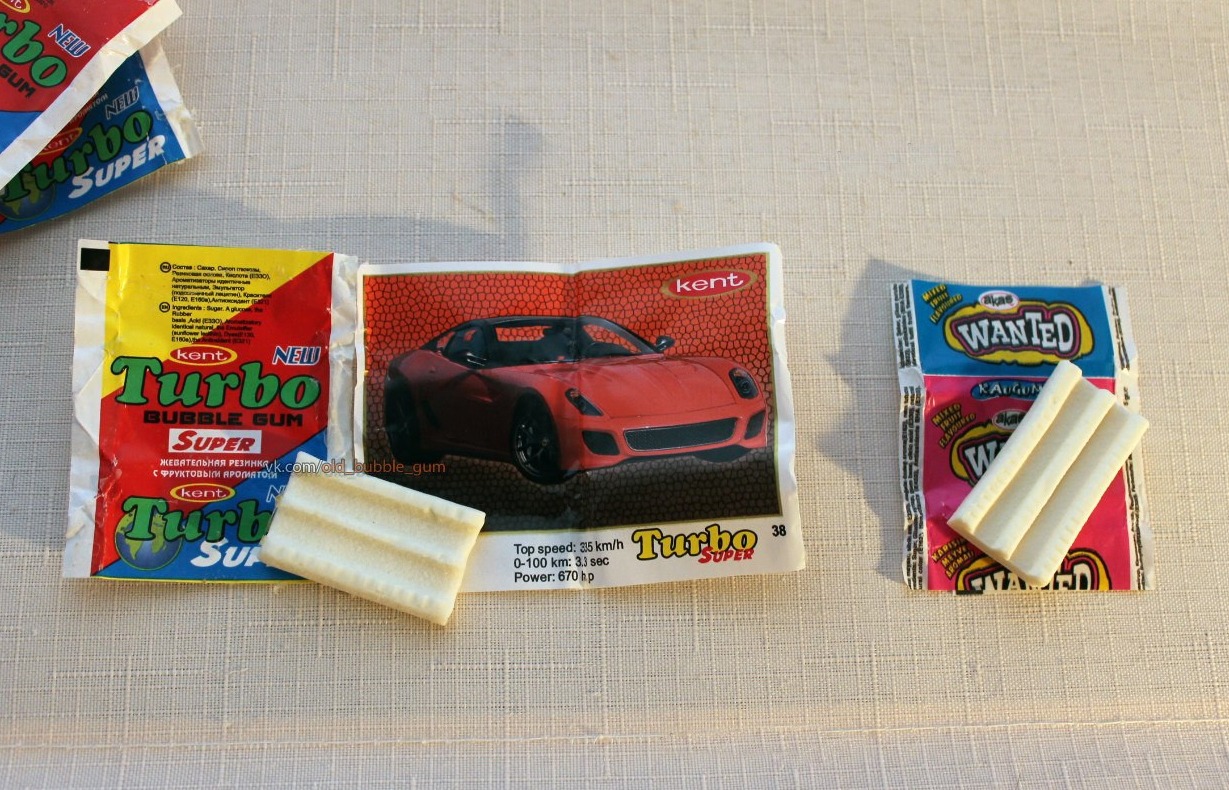
“Turbo” gum with collectible inserts. Image source: yaplakal.com
What Soviet Children Made Chewing Gum From
And this is where it gets really interesting. Before “Turbo” appeared, and even before the Rostov factory, children chewed whatever they could find on the ground. Here is a list of popular substitutes:
- Tar (bitumen). At construction sites, this stuff was everywhere. Black, sticky, smelling of gasoline, but you could chew it for a long time. Needless to say, it was harmful to health.
- Resin from fruit trees. Cherry or plum trees produced a stretchy and even slightly sweet resin. Pine or spruce, however, were not recommended — too bitter, and the resin would irritate the mouth.
- Raw rubber. If you managed to find a piece of raw rubber (for example, from a bicycle inner tube), that was a win. However, you had to chew it in microscopic portions, otherwise it would stick to your teeth and fall apart into fibers.
- Champagne bottle stoppers. Those white, semi-transparent plastic caps. People chewed them just as they were. It was believed that the plastic was food-grade and non-toxic (spoiler: it was better not to risk it).
To somehow restore flavor to already tasteless gum, children resorted to tricks: they chewed it together with a toffee candy or dipped it in condensed milk.
There was also a ritual of “re-chewing.” If you saw a friend with gum, you’d ask them to share. And this was completely normal! A single stick could make its way around half the neighborhood in a day. At night, gum was stuck behind the ear or on the nightstand to be chewed again in the morning.
That was the history of chewing gum in the USSR. From food it turned into a cult, from culture into a business, and from business into simply a habit that stayed with many people for the rest of their lives.