Foldable smartphones have been on sale for several years, but no manufacturer has been able to fully eliminate the noticeable screen crease at the fold point. Apple, according to an industry report by TrendForce and the company’s own patents, is approaching this problem differently — through materials rather than hinge mechanics. Now it’s clear why iPhone Ultra will cost so much.
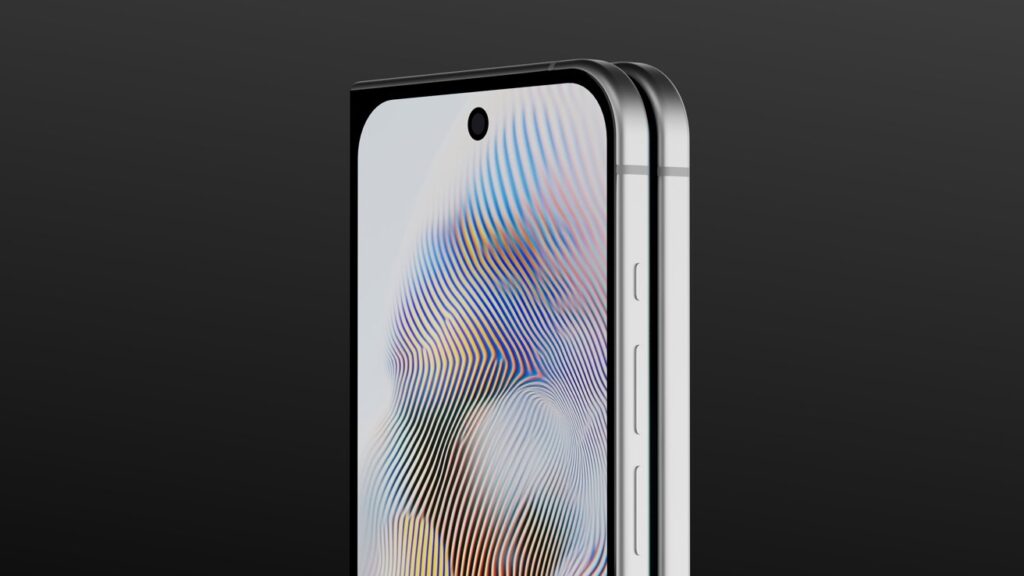
How iPhone Fold will solve the main problem of foldable smartphones: a new hinge material
In short: instead of perfecting the hinge, engineers are working on how the display layers behave during repeated folding. And this is precisely what could determine how much iPhone Fold (or is it iPhone Ultra after all? What will Apple name its smartphone?) will differ from competitors.
Why Foldable Smartphones Develop a Crease
The screen crease is not just a cosmetic defect. It occurs because with each fold, mechanical stress concentrates at a single point. Over time, the internal display layers shift, micro-deformations appear, and that noticeable line emerges on the surface.
All major manufacturers — Samsung, Google, Huawei — have tried to solve this through hinge design: complex tensioning systems, support plates, multi-link hinges. These solutions improved durability but didn’t eliminate the root cause of the problem — the stress within the display layers remained.
According to TrendForce analysts, several generations of foldable devices with advanced hinges still suffer from creasing. The problem turned out to be not in the mechanics, but in the physics of materials.
What Is OCA and How It Reduces Screen Creasing
At the center of this new approach is optically clear adhesive (OCA). Previously, it simply bonded display layers together while remaining invisible. Now engineers are designing it as an active functional element.
According to the TrendForce report, new versions of OCA work as a flexible cushion: during normal folding, the material stays soft and distributes the load across the entire screen area, preventing it from accumulating at a single point. Under sudden pressure, the same material densifies and supports the display shape at the fold point.
There’s another effect: over time, OCA slightly shifts at the micro level, filling in small irregularities. This reduces light scattering at the crease and makes it less noticeable even after prolonged use.
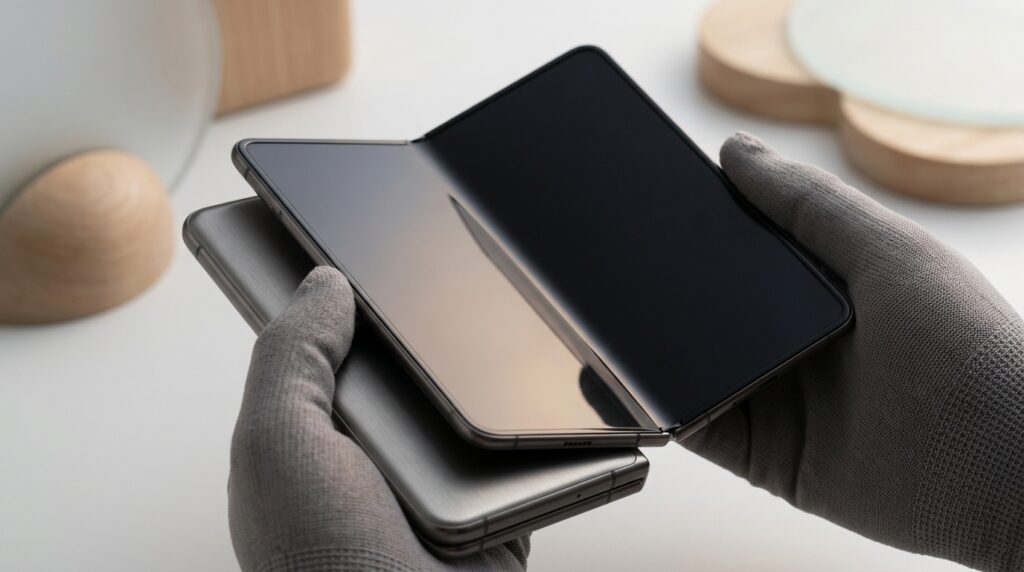
Flexible screen of a foldable smartphone without a pronounced crease
Essentially, manufacturers are shifting from fighting consequences to managing the behavior of each display layer — how it bends, stretches, and recovers.
What the iPhone Ultra Screen Will Be Like
Apple’s patents describe glass with variable thickness: thinner in the fold zone for flexibility, and thicker everywhere else for durability. This is a “controlled deformation” approach: the screen bends predictably and evenly, rather than resisting the fold until damage occurs.
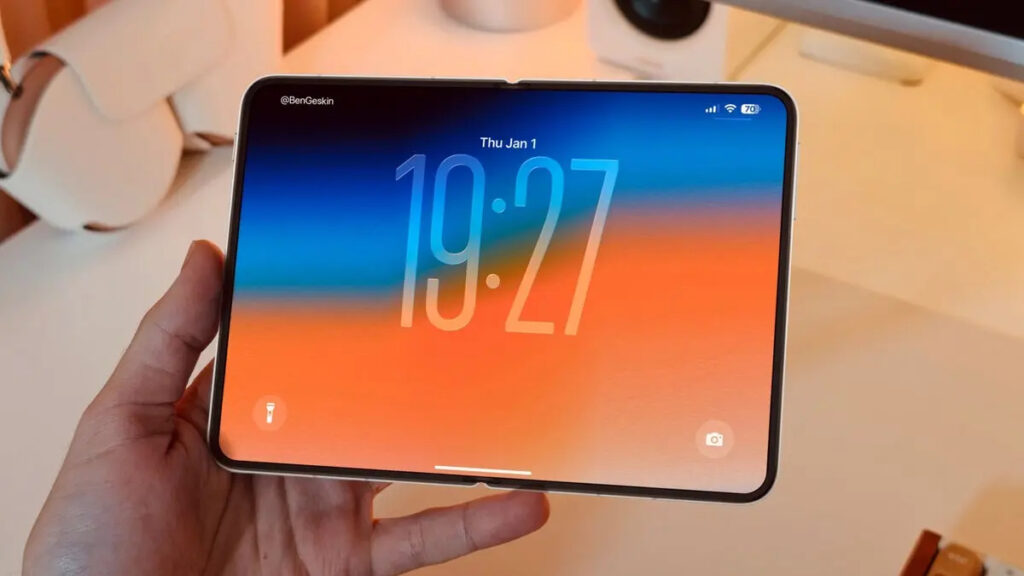
When unfolded, the iPhone Ultra crease will be invisible
This strategy makes sense for Apple. The company traditionally enters the market later than competitors, but with a solution where key technical limitations have already been overcome. Foldable smartphones appear to be approaching that point.
It’s important to understand: for now, these are patents and industry research, not confirmed specifications of a specific device. iPhone Fold has not yet been announced, and exact release dates are unknown.
Should You Wait for iPhone Ultra or Buy a Foldable Smartphone Now
The main takeaway from the TrendForce report: the most significant progress in foldable screens is happening not in hinges, but inside the display itself. Adhesive layers, stress management, variable-thickness glass — all of this directly affects two key user parameters:
- Crease visibility — how noticeable the fold line is during normal use
- Screen durability — how quickly the display degrades from repeated folding
If Apple truly bets on materials rather than mechanics, this could give the iPhone Fold a tangible advantage over the Samsung Galaxy Z Fold and other competitors — provided the technology makes it to a mass-produced product.
For those currently considering foldable smartphones: current models still have a noticeable crease, and it won’t disappear with a firmware update. If the crease is a dealbreaker — it makes sense to wait for the next generation of devices, including the possible iPhone Fold. But if you’re interested in the form factor itself and the crease doesn’t bother you, there’s no need to wait for Apple — competitors offer mature solutions right now.