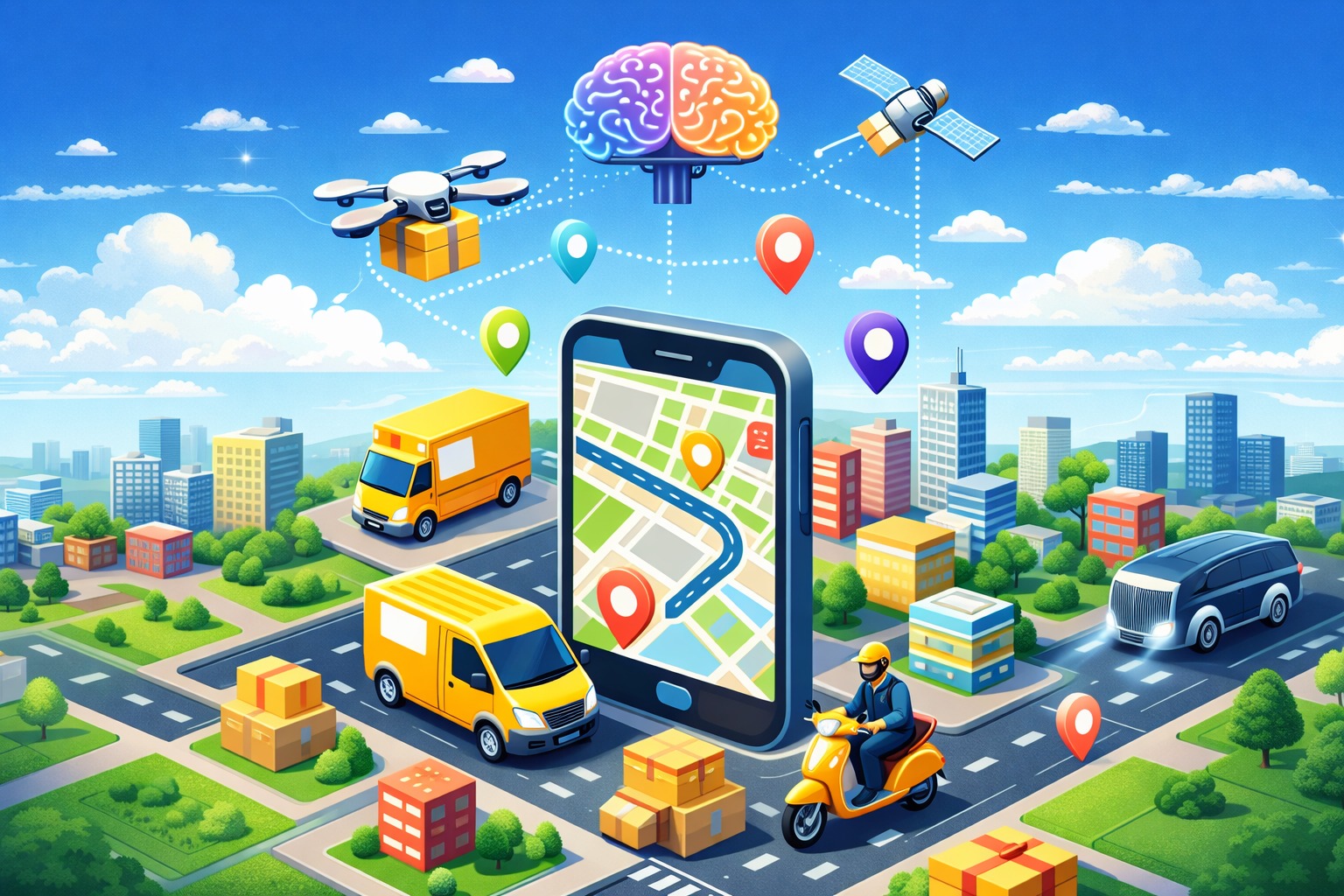
Artificial intelligence is already widely used in delivery
Just five years ago, a courier was a person with a backpack and a paper waybill. Today, behind their back stands an infrastructure comparable in complexity to a major airport dispatch center: neural networks build routes, machine learning predicts delays, and algorithms distribute a thousand orders among hundreds of couriers in ten minutes. And all of this fits into a single mobile app on the courier’s smartphone.
The market is pushing the industry toward automation at a noticeable pace. According to AKIT, online retail in Russia grew by 32% in the first nine months of 2025, reaching 8.2 trillion rubles. Demand for freight transportation added 25% over the same period. Meanwhile, in the fall of 2025, the AvtoGruzEx association recorded a shortage of transport companies for the first time in 17 years. Manual management of such order volumes is already physically impossible, and for delivery platforms, the choice between “automate” and “don’t automate” was settled long ago.
How AI Distributes Orders Among Couriers
The main task of any delivery platform is to match an order with a courier so that the customer receives the product on time, the courier doesn’t travel unnecessary kilometers, and the business doesn’t overpay for logistics. Previously, a live logistics manager with an Excel spreadsheet handled this. Now — a neural network.
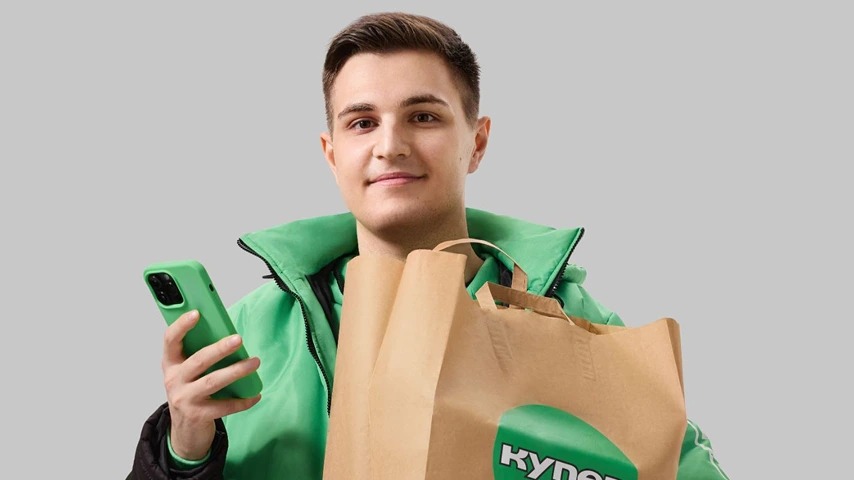
AI precisely distributes orders among couriers. Image: kuper.ru
Smart order distribution is a system that analyzes dozens of parameters in real time: courier location, road congestion, order weight and volume, pickup point operating hours, and the specific courier’s history. According to Strategy Partners, 45% of Russian logistics companies plan to implement AI within the next 2–3 years, and about 30% of mid-size and large players are already using such systems to their full extent.
The numbers from implementation are impressive. Users of Russian freight management systems report cost reductions of 9–21%, a 5–10% increase in completed orders, a 6–9% reduction in downtime, and delivery accuracy improvements up to 95%. Some platforms report that their algorithm distributes 1,000 orders in 10 minutes — a speed unattainable for a human dispatcher.
How AI Builds Delivery Routes
The second area of AI responsibility is route building. A standard navigation app shows the shortest path from point A to point B, but courier platform algorithms solve a problem of an entirely different level: how to cover 15 addresses in a single shift, accounting for traffic jams, delivery windows, order weight, and even weather.
Neural networks constantly recalculate the route as new data comes in. A courier receives an additional order — the system instantly integrates it into the existing path. There’s an accident on the road — a detour is built. A customer reschedules the time — the order of stops changes automatically. For comparison: the international platform DiDi processes more than 20 billion requests per day to its own dispatching system — a figure backed not by magic, but by tens of thousands of computing servers and machine learning models.
In Russia, the same approach is used by Yandex routing systems, which most courier services integrate with. The result is predictable: less mileage, lower fuel consumption, higher productivity.
What a Courier App Can Do
All this intelligence needs to meet the real-world performer somewhere. The point of contact has become the courier’s mobile app — essentially a full-fledged workplace that fits in a smartphone.

Essentially, every courier now has a full office in their pocket. Image: kuper.ru
Take Shopper as an example — the official app for couriers of the Kuper service, one of the largest Russian grocery delivery platforms. Through it, the courier receives orders, views the route, tracks earnings in real time, and communicates with support. The principle is typical for the entire industry: the courier doesn’t visit an office, doesn’t sign papers, doesn’t call a dispatcher. All management happens through the smartphone screen.
| App Function | What It Does |
|---|---|
| Order Distribution | AI matches orders to the courier’s location and schedule |
| Route Building | Automatic calculation of the optimal path accounting for traffic |
| Shift Management | Diagnostics, photo reports, work time tracking |
| Earnings Calculation | Transparent breakdown for each order |
| Support | Built-in chat with operators, no phone calls needed |
Modern courier apps have become fully functional work tools
It is precisely these apps that have become the main interface of the gig economy. The courier works as a self-employed individual, chooses their own shifts, and tracks their own income. In return, the platform gets a flexible and scalable workforce that can be tripled for Black Friday and scaled back the following week.
Key AI Functions in Delivery
Delivery optimization has long gone beyond “who goes where.” Here are several areas where algorithms deliver real value today:
- Delay prediction. The system estimates the probability of a delay before it occurs and warns the customer in advance, adjusting the estimated delivery date. This reduces the load on support and doesn’t break the buyer’s expectations.
- Delivery cost calculation. Machine learning calculates the price in real time, accounting for weight, dimensions, distance, and courier availability in the required zone.
- Intelligent suggestions. Algorithms analyze the product and user preferences to automatically suggest the optimal delivery method — fast or cheap.
- Predictive demand analytics. The neural network forecasts where and when couriers will be needed so the platform can allocate shifts in advance.
- Quality control. Computer vision checks delivery photo reports and sorts packages at warehouses without human involvement.
Each of these tasks used to be handled by people. Now they’re handled by models trained on millions of orders that become more accurate every day.
Will Robots and Drones Replace Couriers
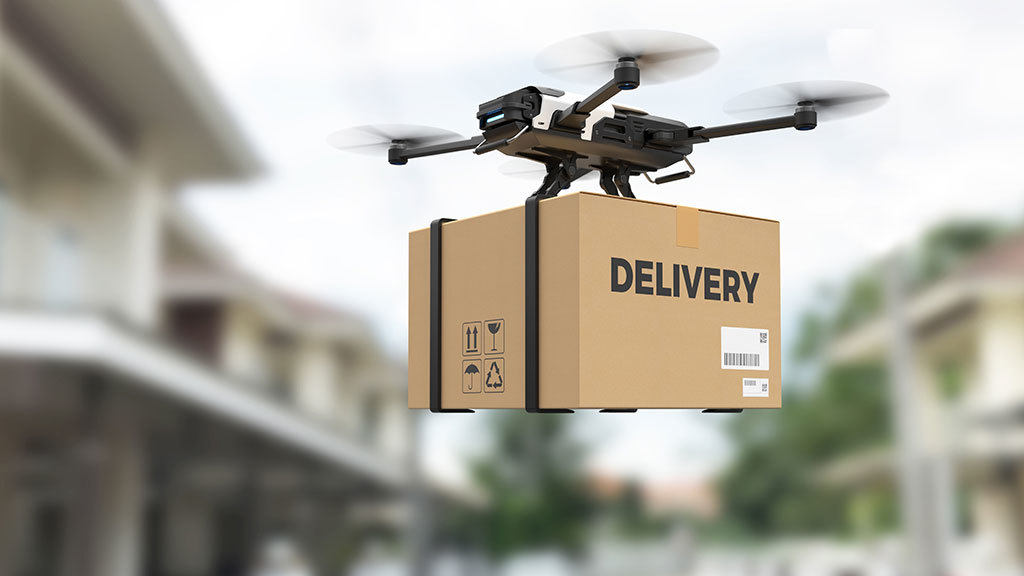
Drones will soon be massively integrated into delivery. Image: vedomosti.ru
Talk about robots and drones replacing couriers has been going on for a long time. In reality, things are not that radical. In Moscow and Innopolis, Yandex has been testing rovers — autonomous delivery robots for food and groceries — for several years. Major retailers are experimenting with drones in remote regions. But a mass replacement of humans has not happened and won’t happen in the foreseeable future.
The reason is pragmatic: a robot excels on a standard route with simple logistics. As soon as there’s a building entrance without an elevator, a dog in the yard, a non-standard address, or an oversized order, a human proves to be far more effective. In the next 5–10 years, automation will occupy the niche of lightweight delivery over short distances, while everything else will remain with couriers. Though couriers of a completely different kind — with a smart app in their pocket, a neural network dispatcher behind them, and real control over their own schedule.
How AI Is Changing the Work of Couriers
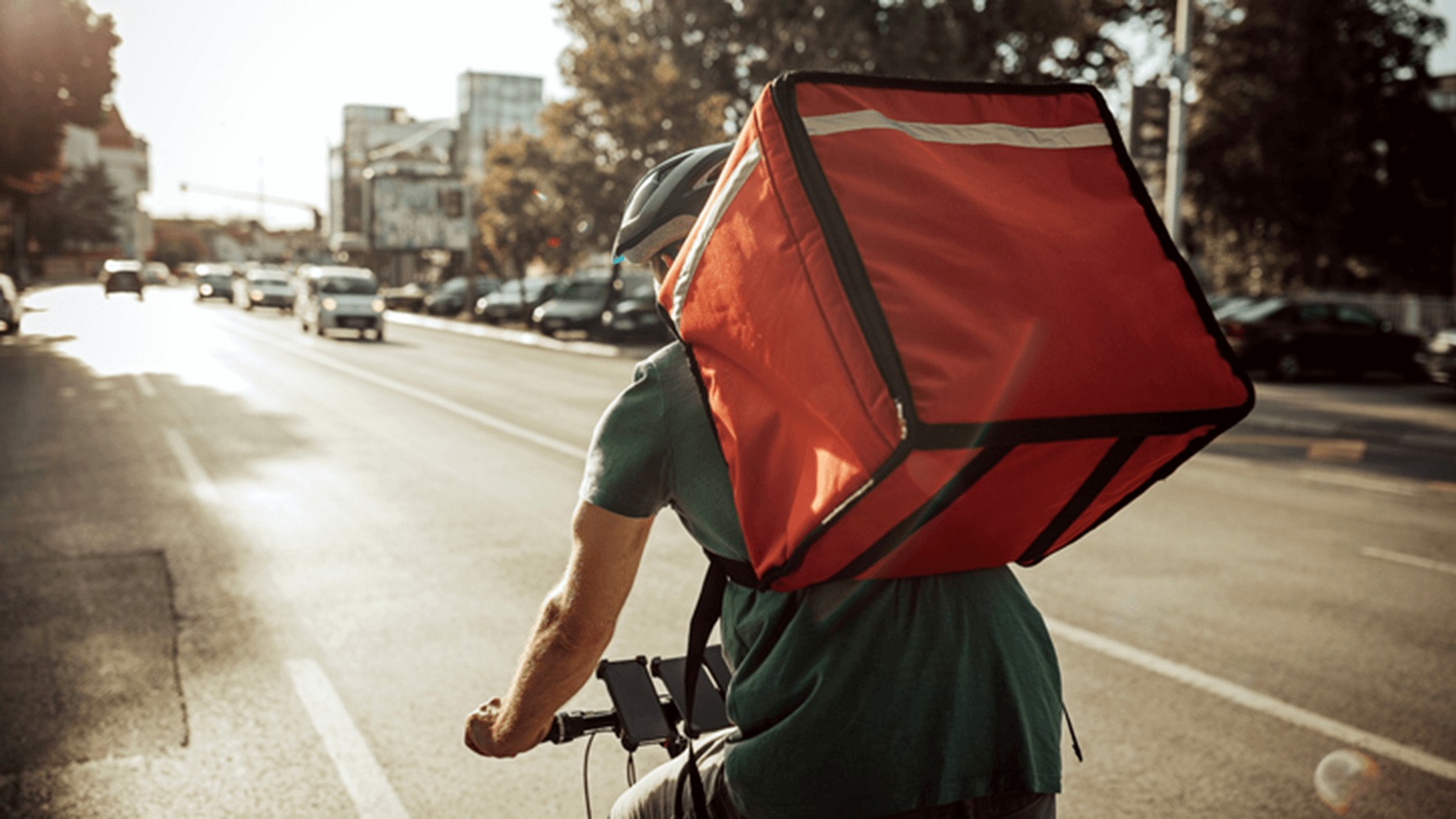
AI definitely won’t be able to replace couriers. Image: raiffeisen-media.ru
An interesting side effect of automation: instead of eliminating jobs, it creates new ones. The more delivery platforms grow, the more couriers they need — but now these couriers are empowered by AI tools that make their work more efficient, transparent, and flexible.