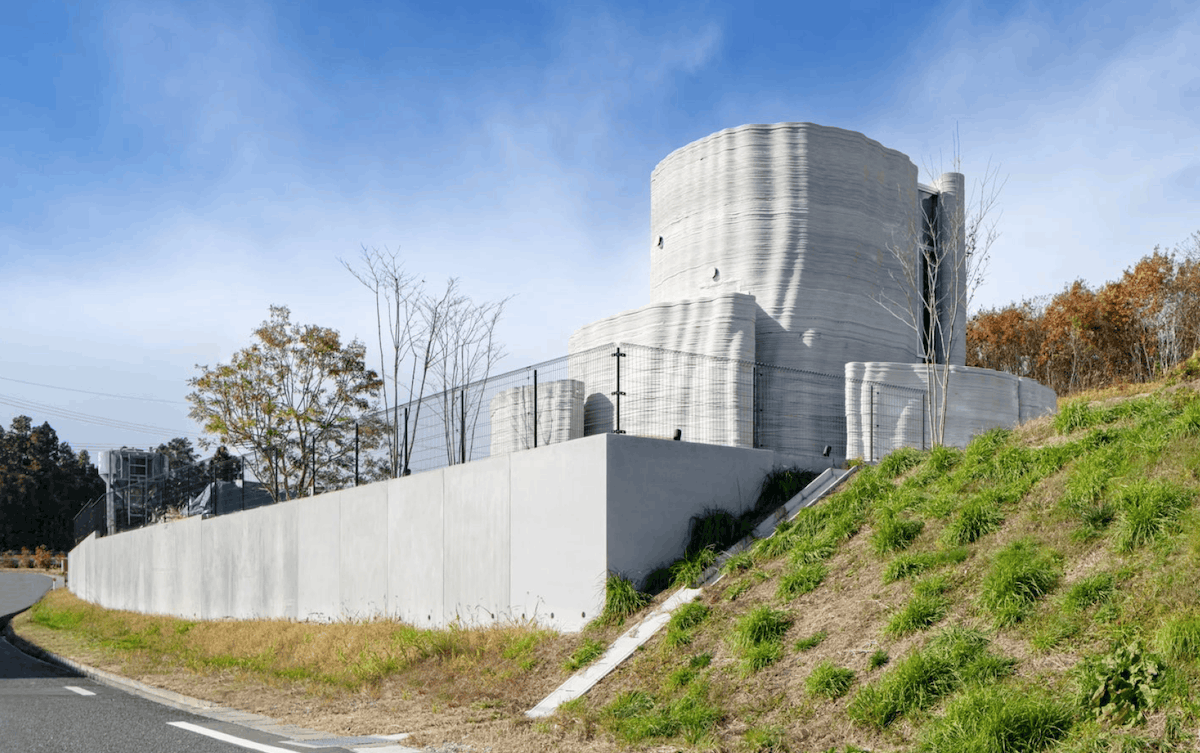
This house looks unusual, but the technology behind its construction is even more remarkable. Image: Onocom
Construction technologies are changing faster than most people think. When it comes to 3D-printing residential homes, most people imagine something the size of a dog kennel or at best a small utility shed you could store shovels in during winter. Some may have even seen single-story experimental structures, but things have gotten much more interesting. In Japan, a full-sized two-story house already exists that shatters stereotypes. It covers 50 square meters and is livable. It was built using robotics and inspired by the geometry of natural caves.
Are 3D-Printed Houses Safe?
The project was carried out by a team led by companies Onocom and Kizuki using the industrial COBOD 3D printer. Four specialists operated the equipment, with some elements printed directly on-site and others off-site. For additional strength and stability, the structure extends half a meter into the ground and rises seven meters in height.
Notably, Japan is one of the most seismically active countries in the world, and building codes here are exceptionally strict. That’s why the structural design of O House is a hybrid: 3D-printed walls with arched vaults are integrated into a traditional reinforced concrete frame that bears the main loads.
The foundation is a reinforced strip on piles that improve the ground base. This solution ensures stability during seismic events and received official approval from Japanese regulators. Yes, because of this, it can’t be said that the house is entirely 3D-printed, but the core of everything is precisely this technology.
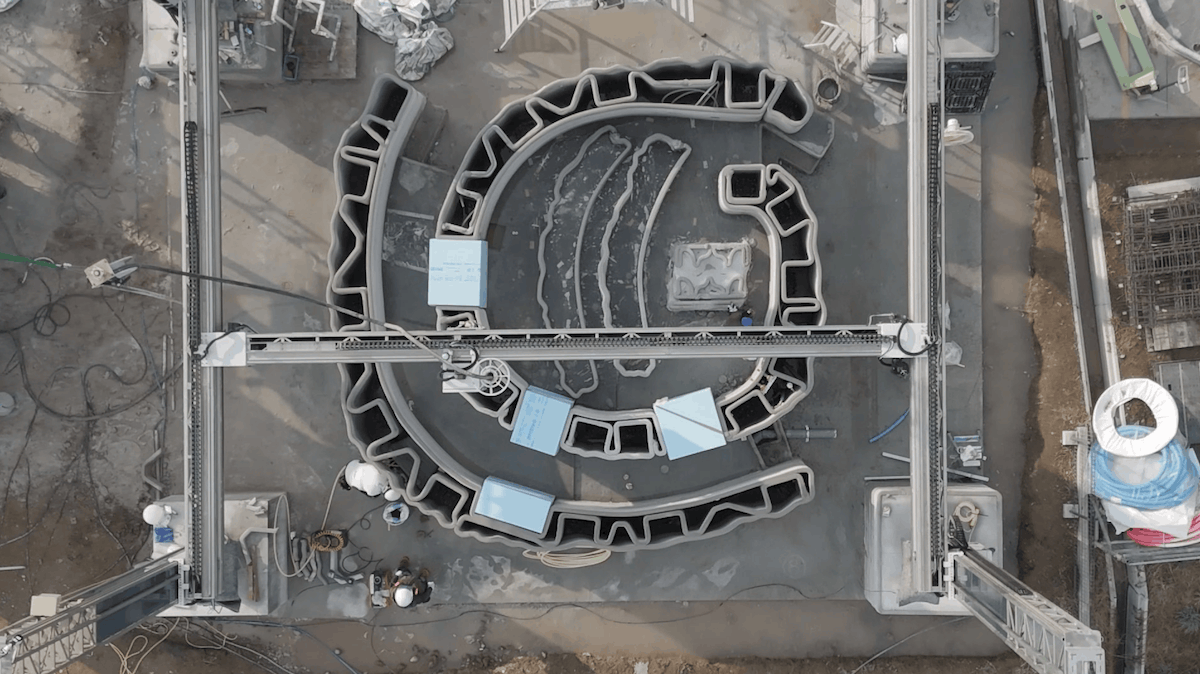
In essence, it’s a full-fledged 3D printer, just a very large one. The working principle is the same — only the materials differ. Image: Onocom
COBOD founder Henrik Lund-Nielsen notes that the completion of this project confirms the readiness of 3D construction printing technology for structures requiring high structural precision — including in seismically active zones. And this approach makes the construction more affordable and, in some cases, stronger due to its monolithic nature.
A House Shaped Like a Cave
Inside, the house develops the cave theme: curved walls, minimal traditional windows, and an emphasis on overhead lighting through skylights. The layout is built “upside down” — the living room, kitchen, and dining area are combined on the second floor, where custom furniture with rounded facades has been crafted to match the organic curves of the walls. The first floor houses a bedroom with its own bathroom.
This design is intentional: the upper floor with the living area receives more natural light through roof openings, while the bedroom below remains shaded and cool — logic familiar to anyone who has been in a real cave.
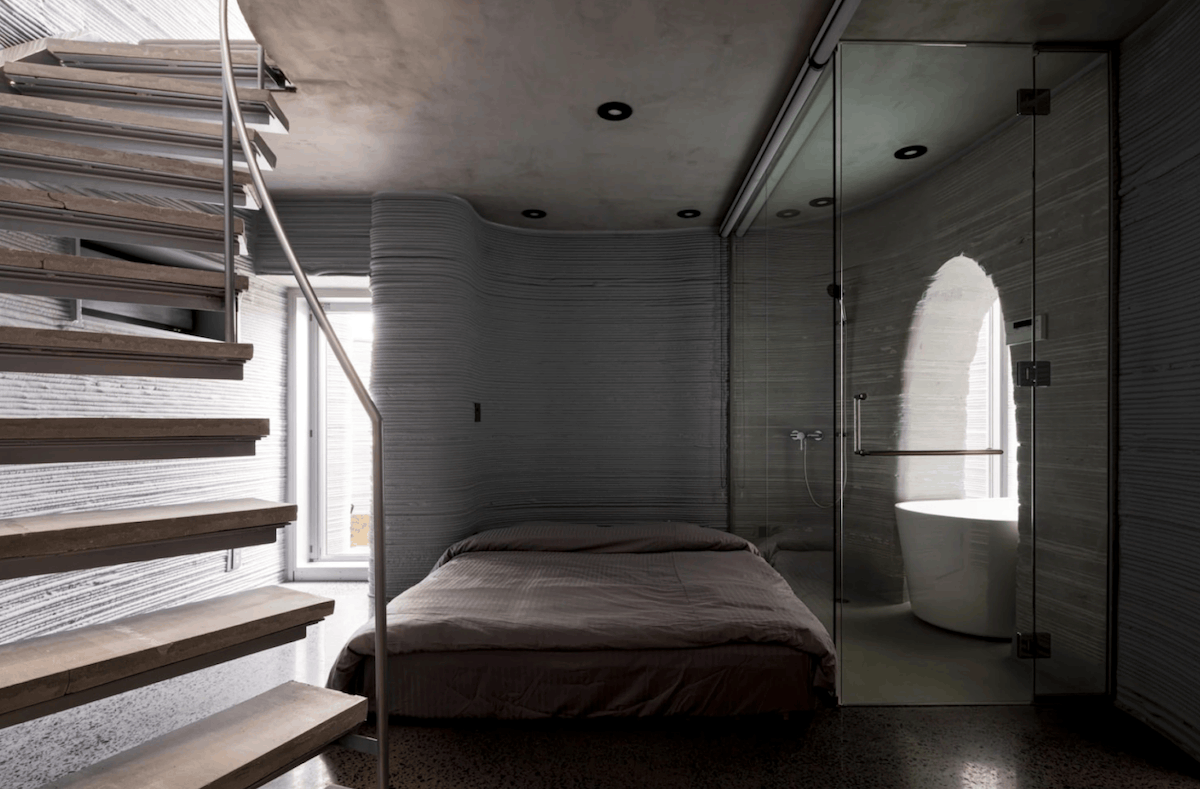
The bedroom is on the first floor, but there’s plenty of light here too. Image: Onocom
O House was created as a demonstration project, but the team is already making plans for development: more residential homes, as well as applying the technology in the defense sector and rebuilding areas after natural disasters. The latter is especially relevant for a country that regularly faces the aftermath of earthquakes and tsunamis.
Obtaining a government seismic certificate for a two-story 3D-printed house is not just a technical record. It’s a signal to the entire construction industry: robotic building construction is ready to work where the cost of error is at its highest.