You know what divers, snorkelers, and people who simply love swimming on vacation all have in common? They all eventually ask themselves: what tech can I take underwater? Ten years ago, the answer was short: a waterproof phone case and, if you were lucky, an action camera. Today, everything is different. Underwater drones shoot 4K at a hundred-meter depth, smartwatches work as dive computers with sonar communication, and action cameras stabilize footage as if you’re shooting from a tripod. We won’t be looking at indestructible smartphones, but we will break down which gadgets are worth taking on a seaside vacation and what to look for when choosing.
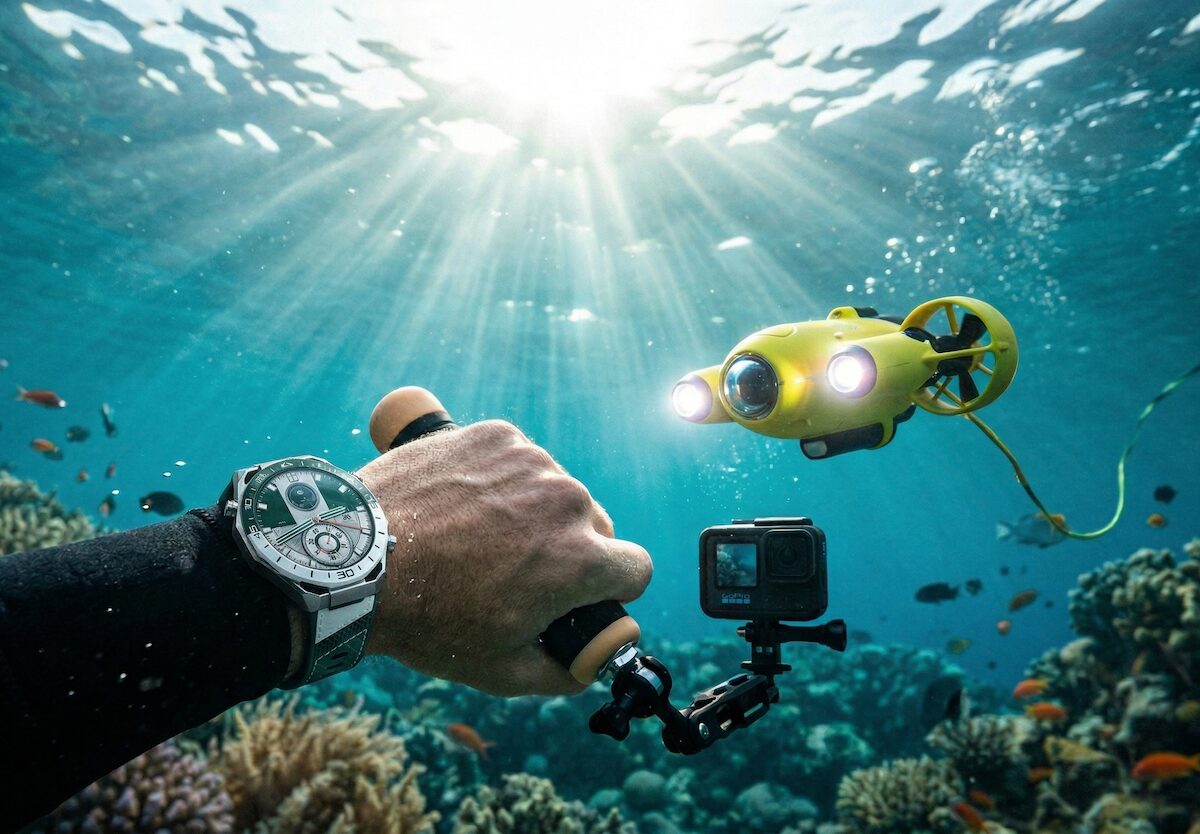
You can not only have a great time underwater but also use cool gadgets. The main thing is that they need to be specialized.
Action Cameras for Underwater Shooting. Which One to Choose in 2026
The action camera remains the top gadget for those who want to bring back more than just memories from an underwater trip. And here everything is quite predictable: the market is divided among three players, each with their own strengths.
GoPro HERO13 Black — a classic. The camera shoots 5.3K at 60 frames per second and works without a housing at depths up to 10 meters. For snorkeling, that’s more than enough. If you need to go deeper, the official housing allows diving to 60 meters, and third-party solutions from Isotta or Recsea can handle 100–300 meters. HyperSmooth 6.0 stabilization works well even in strong currents. But there’s a catch: at depths greater than 10 meters, colors shift toward blue, and without a red filter, the image will look washed out.
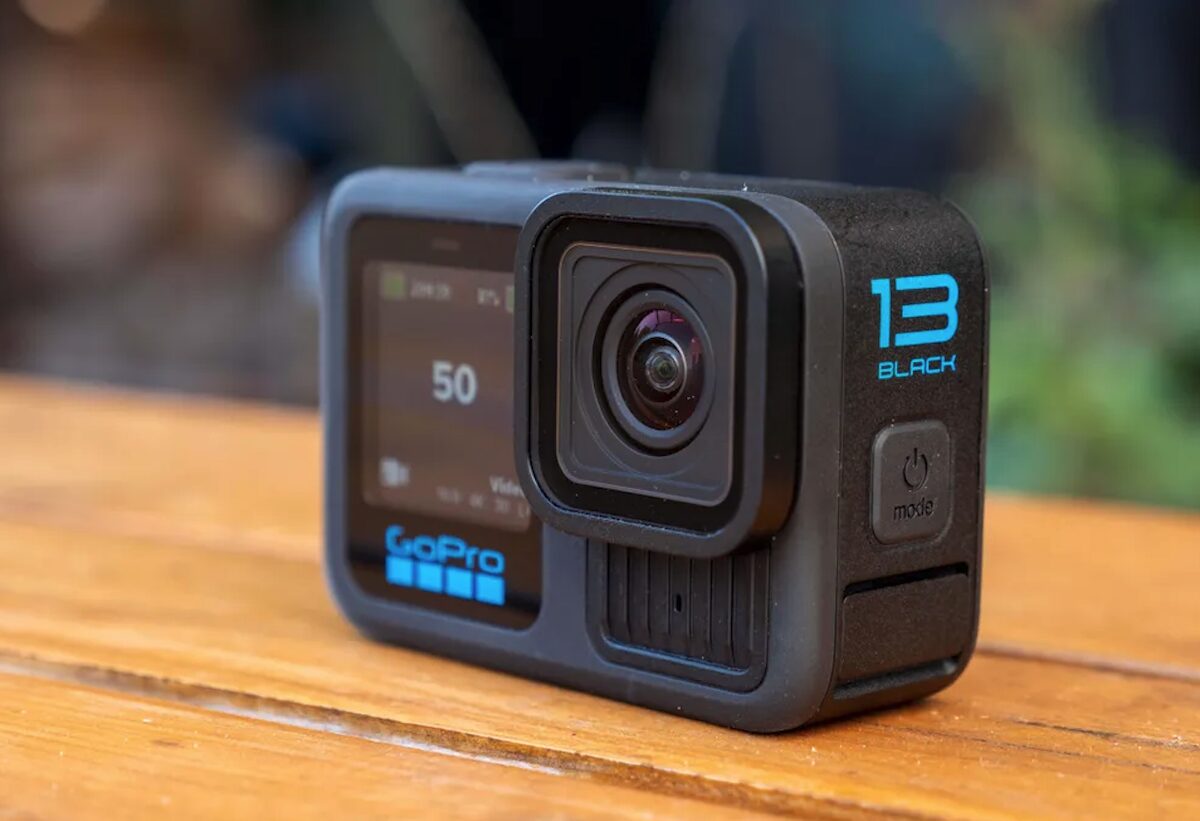
GoPro is a household name. Often even other action cameras are called that out of habit. Image: CNET
DJI Osmo Action 5 Pro — GoPro’s main competitor. The 1/1.3-inch sensor delivers better quality in low light, which is critically important for underwater shooting. Waterproofing without a housing is also up to 10 meters. Out of the box, the image is brighter thanks to automatic processing. But if you’re used to post-processing, GoPro with GP-Log gives more freedom for color correction.
Insta360 X4 — the choice for those who want 360-degree video. The camera records panoramic footage in 8K and lets you choose the angle after shooting. Without a housing, it holds up to 10 meters; with the special Invisible Dive Case — deeper. For snorkeling, the immersion effect is stunning, but the files are huge, and editing requires more effort. As a competitor in the panoramic video segment, you can also consider the DJI OSMO 360, which differs slightly but is overall a similar product.
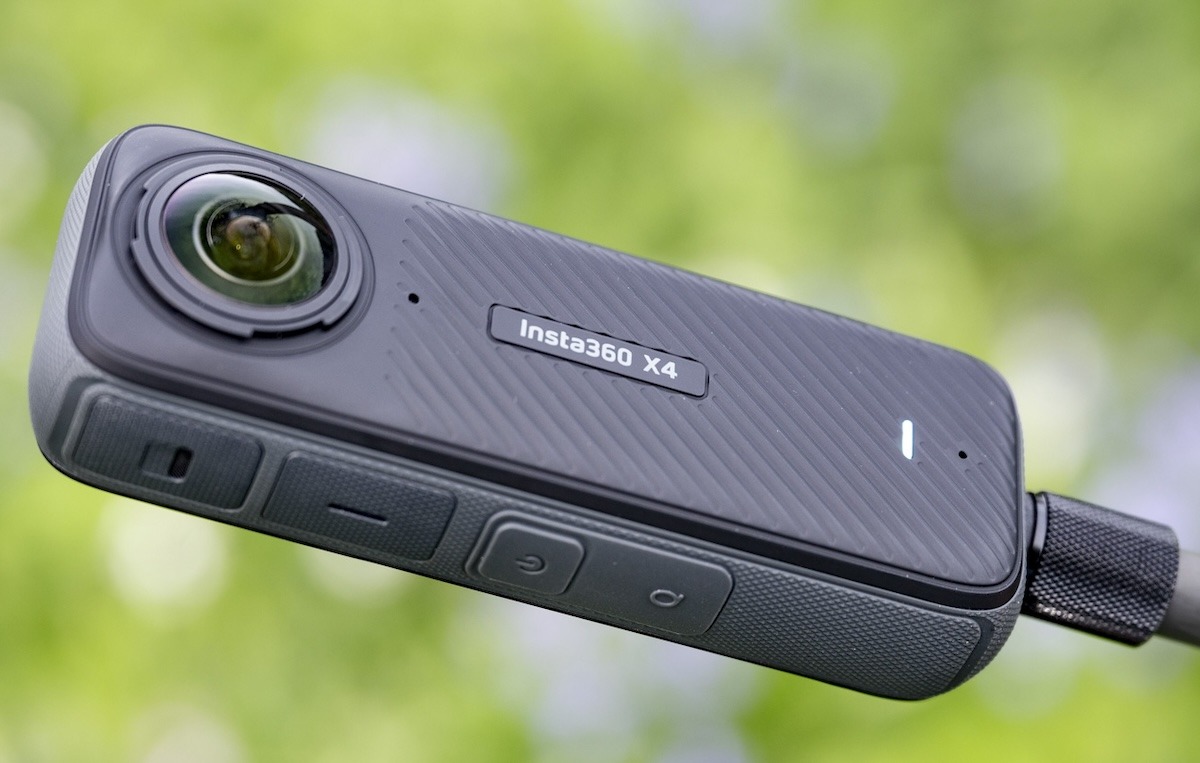
Insta360 is one of the most popular 360 cameras in the world. Image: TechRadar
Honestly, for most underwater tasks, any of these cameras will do an excellent job. The choice comes down to the accessory ecosystem and your video editing habits.
Underwater Drones for Filming and Exploring the Seabed. What’s on the Market
If action cameras are about “filming what you see yourself,” then underwater drones offer the ability to look where you physically can’t reach. Or wouldn’t dare to. The market for these devices has grown noticeably over the past couple of years, and there’s plenty to choose from.
At the entry level, it’s worth checking out the Chasing Dory. It’s not the smallest drone, weighing just over a kilogram, and you’ll need a separate backpack for it or it’ll take up a good chunk of your suitcase, but it’s worth it. The drone dives to a depth of 15 meters, shoots in 1080p, is controlled via smartphone, and maintains connection through a cable. For lake fishing, inspecting a pool bottom, or just having fun on vacation — it’s more than enough. Just don’t expect professional-grade footage from it; this is entry-level after all.
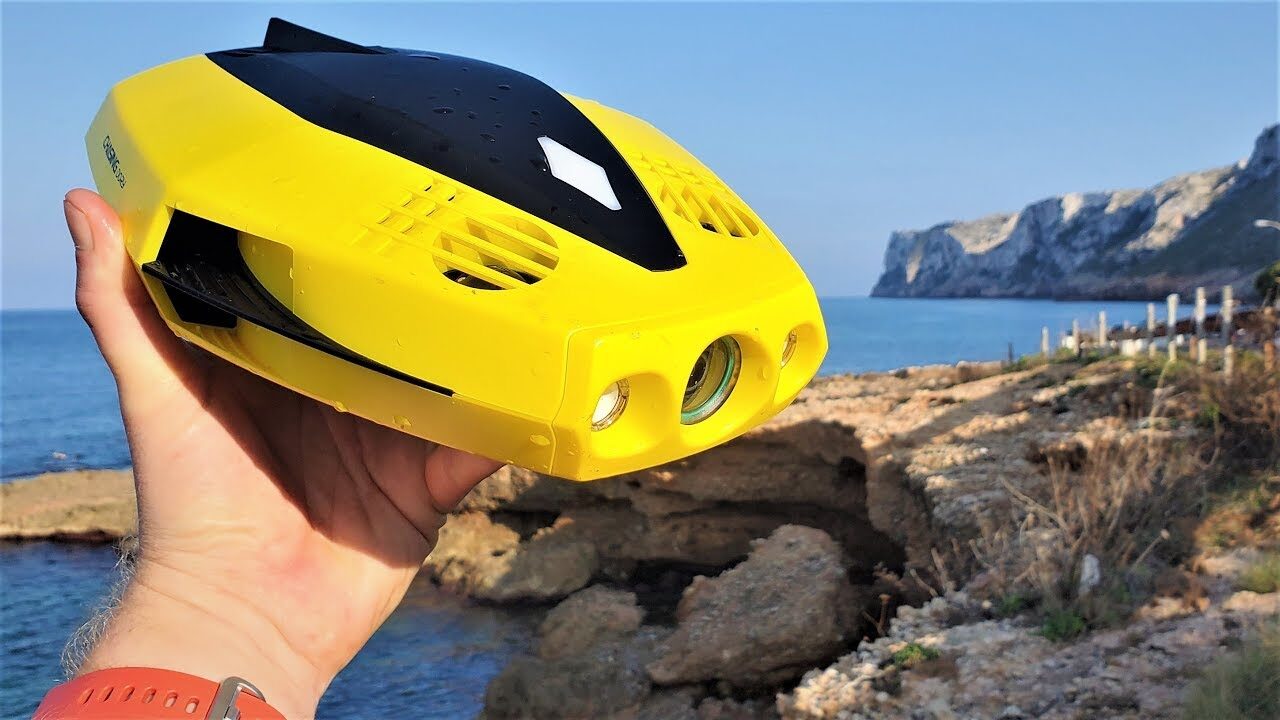
The Chasing Dory is fairly large, but it can swim on its own. Image: Drones For Hire
The mid-range segment features the Chasing Gladius Mini. Five thrusters, a 4K camera with 1200-lumen lighting, depth up to 100 meters. Controlled via an app, compatible with VR goggles for an immersive experience. In practice, the drone responds quickly and shoots decent footage, although stabilization could be better in rough water.
For serious tasks, there’s the FIFISH V6 Expert from QYSEA, though it’s not easy to buy in Russia. It offers six vectored thrusters, 4K with a 166-degree field of view, depth up to 100 meters, up to 6 hours of battery life, and a 100-meter fiber optic cable. This is essentially a professional tool for inspections and professional filming, and the price reflects that.
Most importantly, before launching, make sure you’re not violating local regulations. They’re less common than for flying drones, but they do exist. It’s better to miss some good shots than to ruin your vacation.
Smartwatches for Diving. Which Features Do You Actually Need Underwater
A separate category of underwater gadgets that has made a huge leap in recent years is watches. In the past, you’d buy a separate dive computer for dives and leave your watch on shore. Today, the lines have blurred.
Most flagship smartwatches can withstand submersion to a few meters. Apple Watch Series 11 works up to 6 meters and shows depth and water temperature through the built-in app. Samsung Galaxy Watch 8 has a 5ATM and IP68 rating, which allows swimming in a pool, but nobody recommends them for serious diving. It’s more of a protection against accidental water contact than full-fledged underwater functionality.

Apple Watch water protection is at the “washing your hands” level. Image: Fotosklad.ru
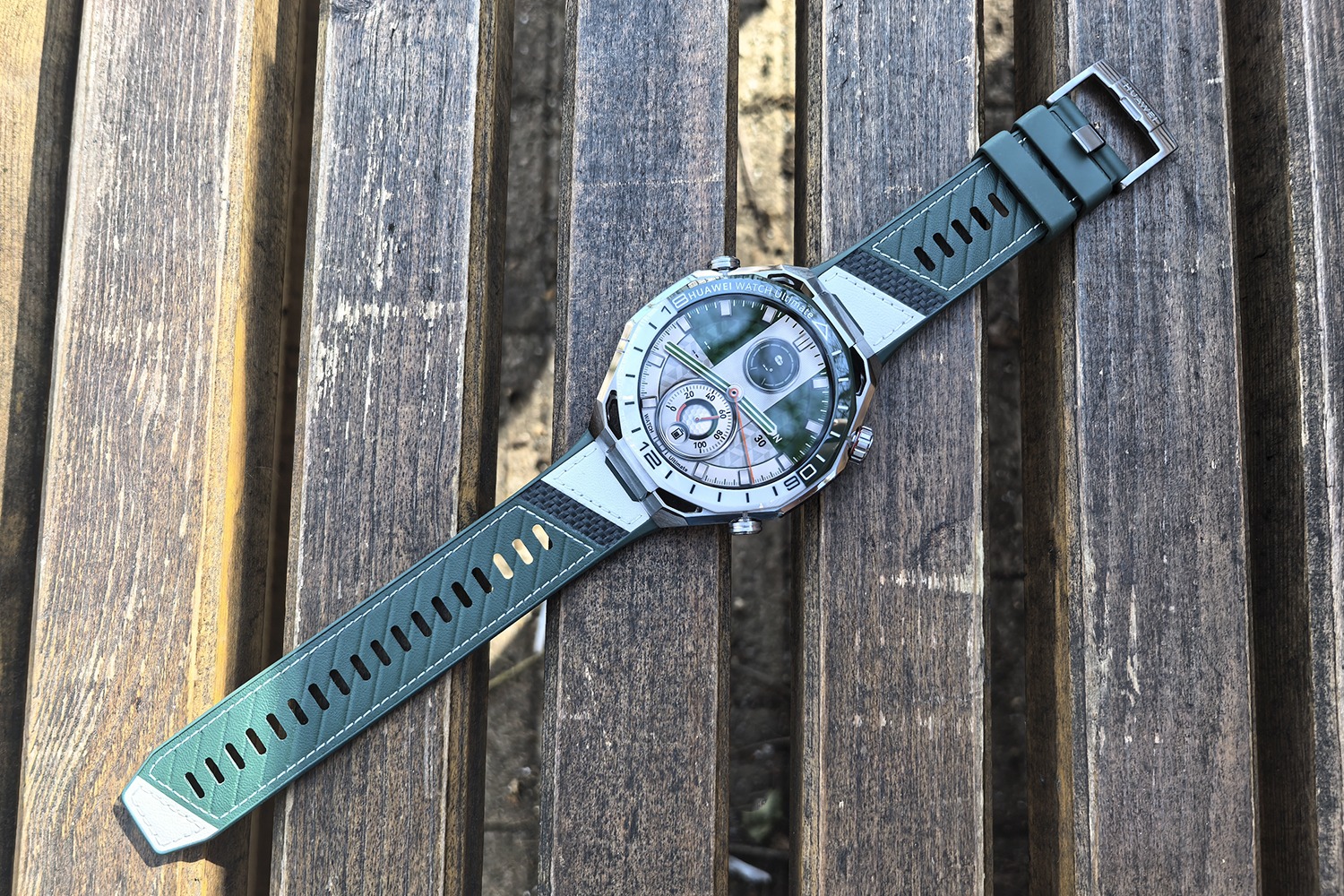
A completely different story — watches designed specifically for depth. For example, the HUAWEI Watch Ultimate 2 is rated for dives up to 150 meters with 20 ATM and IP69 certification. For comparison, most recreational divers don’t go deeper than 40 meters. But the main highlight isn’t the depth — it’s the sonar communication. The watch can exchange short messages with another Watch Ultimate 2 underwater using sound waves. Radio and Bluetooth don’t work at depth, but sonar does. For buddy diving, this is a genuinely useful feature that, honestly, I haven’t seen in any other civilian smartwatch that you can also wear to dinner after a dive.
Additionally, the watch functions as a dive computer with the Bühlmann ZHL-16C decompression model, displaying depth, dive time, and decompression data. The case is made of zirconium-based liquid metal with sapphire crystal and a nanoceramic bezel, so you don’t need to worry about scratches at depth. Not long ago, I bought myself the green version of the Watch Ultimate 2 and haven’t used it for diving yet, as I’m not a fan of that activity. But now I want to give it a try.