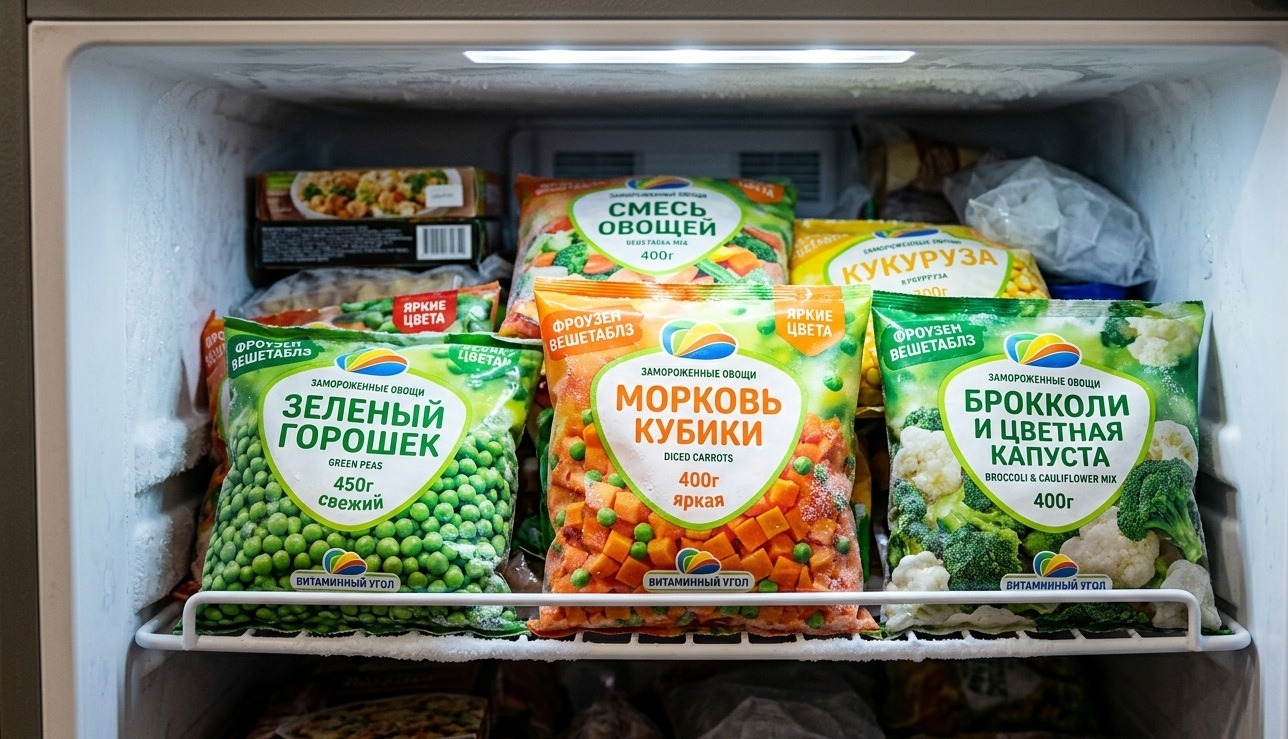
Frozen and fresh vegetables on store shelves — the difference is not only in temperature but also in vitamin content
Fresh vegetables and fruits seem like the obvious choice for healthy eating — they’re bright, crispy, straight from the garden. But research shows that frozen products often surpass “fresh” ones in vitamin and nutrient content. It sounds paradoxical, but the logic behind it is simple: it all depends on when the produce was picked and what happened to it afterward. So frozen vegetables are maximally beneficial only under certain conditions.
Benefits of Frozen Vegetables
The main secret behind the benefits of frozen vegetables lies in the moment of harvest. Vegetables and fruits intended for freezing are picked at peak ripeness, when the content of vitamins, minerals, and beneficial plant compounds is at its maximum. According to CNN, the difference can range from 10% to 50% in favor of ripe produce.
Meanwhile, “fresh” vegetables from the supermarket are picked earlier, at a less mature stage, so they can survive transportation and storage. They’re harvested, cooled, loaded onto a truck for two to three days, then sent to a warehouse, and only after that placed on the store shelf. Throughout this time, oxygen gradually destroys nutrients. By the time you put that “fresh” pepper in your basket, it has already lost a significant portion of its nutritional value.
How Vegetables and Fruits Are Frozen
At production facilities, fruits after harvesting undergo so-called Individual Quick Freezing (IQF), and are then packaged in a nitrogen atmosphere. Nitrogen displaces oxygen from the packaging, which slows down oxidation — the main enemy of vitamins.
With vegetables, there’s an additional step — blanching. Before freezing, they are briefly treated with hot water (32–35 degrees). This is needed to deactivate enzymes that cause browning, color loss, and flavor deterioration. Thanks to blanching, frozen broccoli stays bright green instead of turning into a gray-brown mush.
But blanching comes at a cost: up to 50% of vitamin C, which is sensitive to heat, can be lost. However, vegetables destined for freezing are initially harvested at a more mature and nutritious stage, so the losses from blanching are partially offset by this “starting advantage.” As a result, frozen green beans from a bag almost always contain more nutrients than the same beans from the “fresh vegetables” shelf.
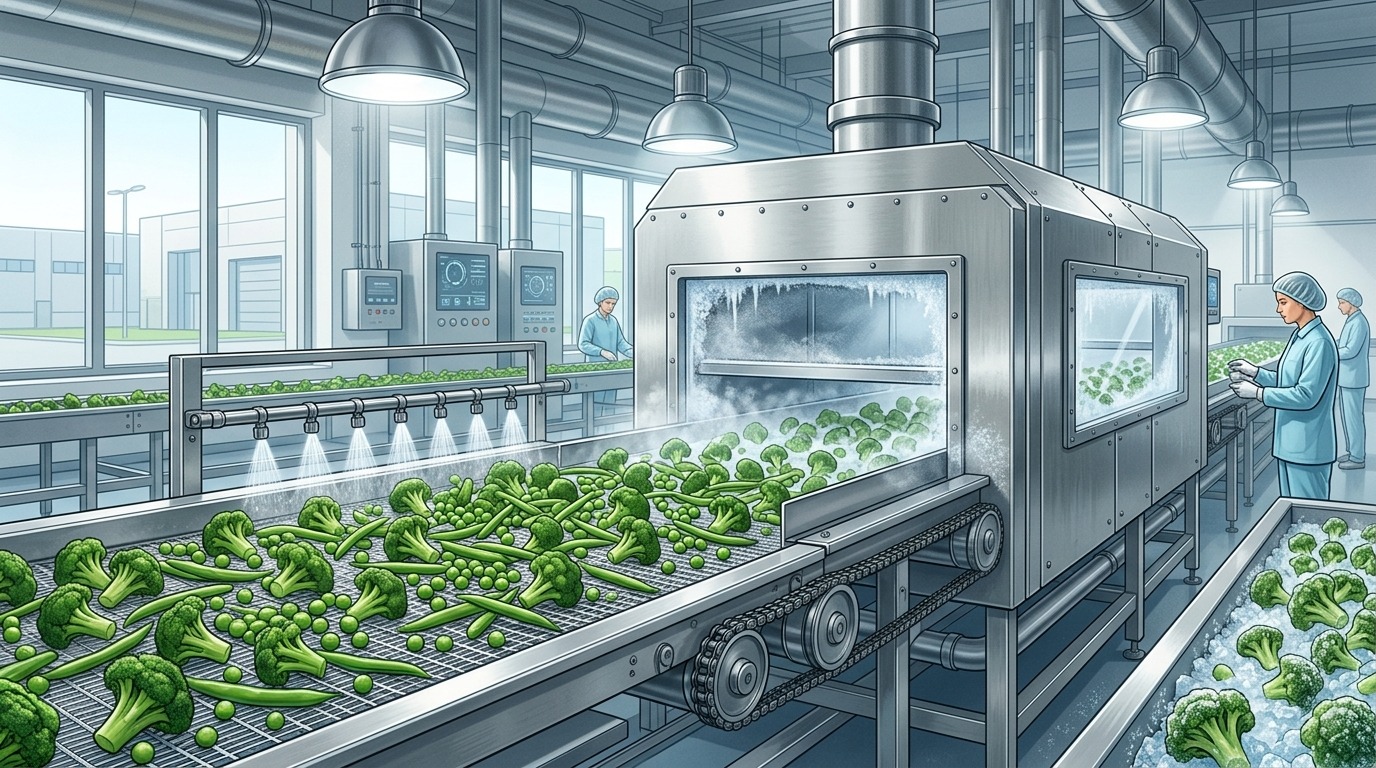
Quick freezing of vegetables at production facilities preserves the maximum amount of nutrients
Benefits of Fresh Vegetables and Fruits
But fresh fruits and vegetables aren’t always worse than frozen ones. If you buy vegetables at a farmers’ market where they were picked yesterday at peak ripeness, that’s arguably the best option for nutrient content. But with one condition: you need to eat them within one to two days.
Every extra day of storage in the refrigerator means a loss of vitamins and beneficial compounds due to contact with oxygen. In other words, a bunch of spinach that’s been sitting in the fridge drawer for a week may be less beneficial than its frozen counterpart.
It’s important to note that freezing is also the best way to preserve not only vitamins but also phytoactive compounds. These are plant substances that help protect against diseases. So if you don’t plan to cook vegetables right after buying them, frozen is the smarter choice.
How to Properly Thaw Frozen Vegetables
Even the highest-quality frozen vegetables can be ruined by improper preparation. Here’s what experts recommend to preserve maximum nutrition and flavor:
- Choose vegetables without sauces and added salt, and fruits without sugar. A pure product is healthier and more versatile for cooking.
- Feel the bag before buying. You should be able to feel individual pieces inside, not one solid block of ice. A block is a sign that the product was thawed and refrozen. Spots and ice crystals on the packaging are also a bad sign.
- Don’t overheat. Frozen vegetables in a pan or slow cooker are best prepared quickly — steamed or with minimal water. Light steaming or microwaving best preserves vitamins.
- Squeeze lemon over the finished vegetables. Vitamin C from lemon juice compensates for losses during blanching and makes the flavor brighter and fresher.
- Thaw fruits at room temperature or briefly in the microwave — this better preserves beneficial plant compounds.
By the way, frozen vegetables in a pan is one of the quickest and easiest cooking methods. No thawing needed: just dump them onto a hot pan, add a little oil and spices, and in 5–7 minutes it’s ready. Rice with frozen vegetables or oven-roasted frozen vegetables with herbs are also excellent options that require almost no effort.

Quick stir-frying of frozen vegetables in a pan helps preserve vitamins
How to Properly Store Frozen Vegetables
Buying the right frozen vegetables is only half the battle. It’s also important to preserve their benefits at home. And there are some non-obvious nuances here.
Every time you open the freezer door, warm air from the room slightly thaws the products. This leads to the loss of those very phytoactive compounds that the whole effort was about. That’s why experts recommend storing vegetables and fruits deep inside the freezer, near the back wall, where the temperature is most stable. Leave the front part for items you take out frequently — like ice, for example.
Frozen vegetables and fruits are not a compromise or “poor people’s food.” They’re a conscious choice that often turns out to be more nutritious than the attractive but shelf-worn “fresh” products from the supermarket. The key is to buy quality frozen products without additives, store them properly, and not overcook them. And if you want the absolute maximum benefit, get vegetables from a farmers’ market and eat them the same day. But let’s be honest: that doesn’t always work out.