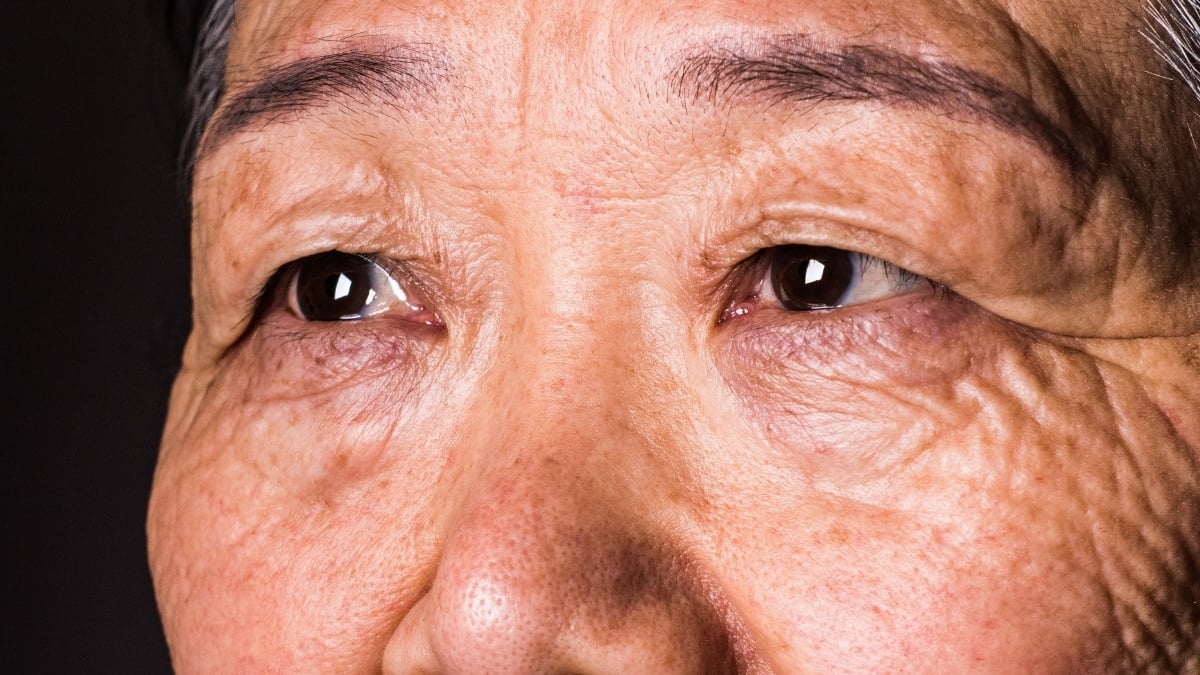
The retina is an extension of the brain available for direct observation. Image source: Science Alert
Eyes are literally a part of the brain brought to the outside. And, as it turns out, they can reveal approaching dementia long before the first memory lapses appear. Two large-scale studies have shown that vision deterioration is linked to an increased risk of dementia up to 12 years before an official diagnosis. This is not science fiction, because leading medical authorities have already recognized vision loss in old age as a new risk factor.
The Connection Between the Brain and the Retina
The retina is the only part of the central nervous system that can be seen directly, without opening the skull. The retina forms from the same tissue as the brain and shares common blood vessels, neurons, and aging mechanisms with it. This is precisely why scientists have long suspected that eyes could serve as a kind of “display” of what is happening inside the skull.
New data confirms this idea on large samples. Two independent studies published in 2024 converge on the main point: people with deteriorating vision are significantly more likely to experience cognitive decline within 10–12 years. Moreover, this is not about rare ophthalmological diseases, but about indicators that can be measured with the simplest tests.
How the Link Between Vision and Dementia Was Tested
A British study published in the journal Scientific Reports covered more than 8,000 participants. The test was extremely simple: a person sat in front of a screen and pressed a button as soon as they saw a triangle appear. Visual processing speed was measured — how quickly the brain recognizes and reacts to a visual signal.
The results showed that participants with slower visual processing speed were significantly more likely to receive a dementia diagnosis in the following 12 years. An important caveat: the test could not predict who exactly would get the disease. It recorded statistical risk at a group level, rather than providing an individual prognosis. The study authors explicitly stated that such tests are not yet a clinically reliable diagnostic tool for a specific patient, but could be useful as part of a comprehensive screening.
How Loneliness Harms People
In parallel, Australian scientists studied data from 2,281 participants. Here they measured not reaction speed, but visual acuity — the ability to distinguish fine details. Decreased visual acuity turned out to be a significant predictor of memory, attention, and problem-solving decline over a similar 12-year period.

Social activity can partially compensate for the impact of vision deterioration on cognitive functions
But the most interesting finding was in the details. It turned out that social activity partially mitigates this connection. The lead author of the study, neuroscientist Nikki-Anne Wilson, explained it this way: people with poor vision are more likely to avoid social events due to anxiety and discomfort, and social isolation is itself a known risk factor for dementia. This creates a kind of chain: poor vision -> less socializing -> higher risk of cognitive decline.
We showed for the first time that the connection between vision decline and cognitive functions is partially explained by a reduction in social contacts, — Wilson noted.
Early Diagnosis of Dementia
In 2024, the authoritative Lancet commission on dementia updated its list of modifiable risk factors. Vision loss in old age was included in this list for the first time. According to expert estimates, it accounts for up to 2.2% of dementia cases. For comparison: uncorrected hearing loss in middle age is responsible for approximately 7% of cases.
The figure of 2.2% may seem modest, but on the scale of tens of millions of people with dementia worldwide, this amounts to hundreds of thousands of cases that could potentially be prevented. The Lancet commission directly recommended making screening and treatment of vision loss accessible to all older adults.
A separate study showed that one in five cases of dementia in older adults is associated with common vision problems. This does not mean that cataracts or nearsightedness “cause” dementia, but timely resolution of these problems — surgery, properly fitted glasses — may reduce associated risks.
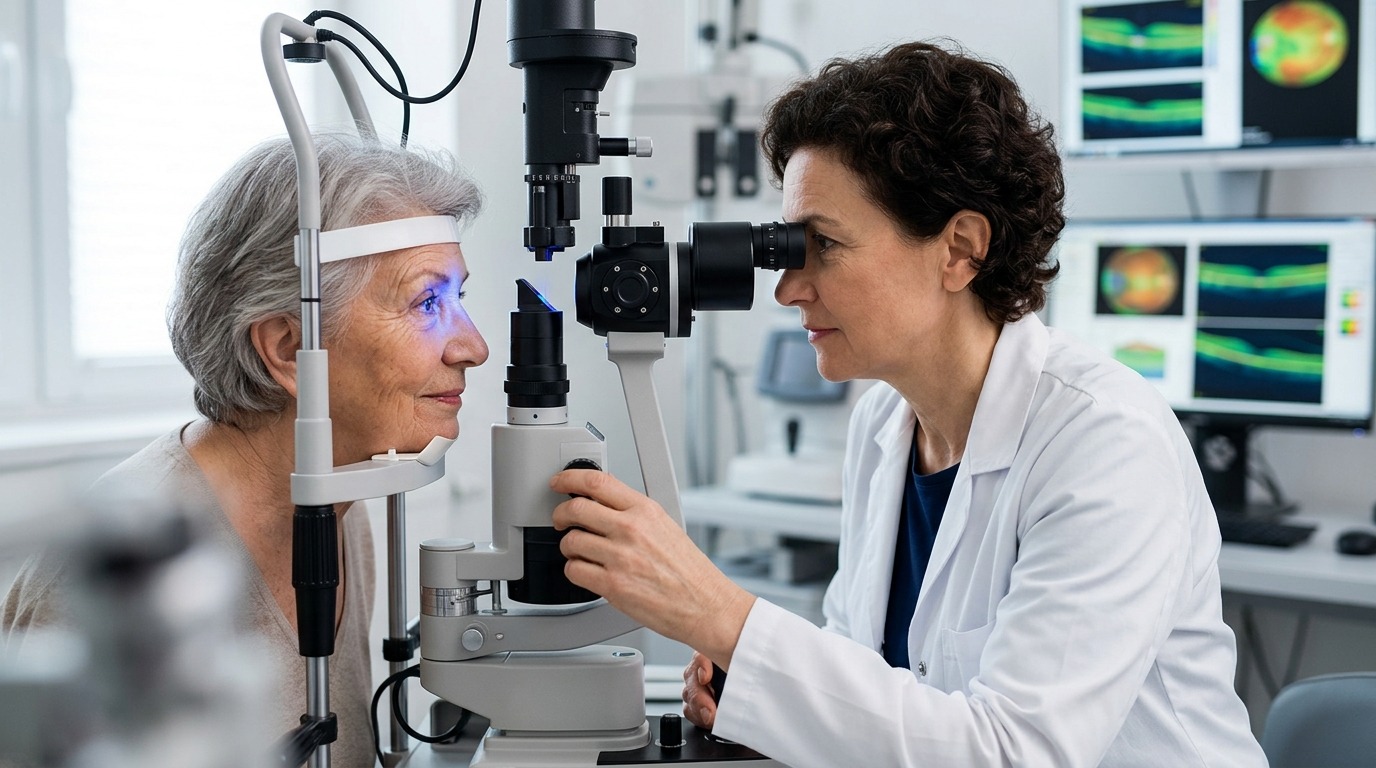
Regular eye exams for older adults could become part of dementia prevention
Can Dementia Be Prevented by Treating the Eyes
Here it is important not to jump from correlation to causation. Vision decline is not a “cause” of dementia in the direct sense. Dementia is an extremely complex condition with multiple factors, and it is unlikely that any single one plays a decisive role.
However, the logic of prevention is simple and convincing. As Nikki-Anne Wilson explained:
Vision decline can be caused by many factors, and some of them are treatable — for example, cataracts or improperly fitted glasses. Research shows that early detection and resolution of these problems can help reduce the risk of dementia.
The parallel with hearing loss strengthens this hypothesis. There is already evidence that wearing hearing aids reduces the risk of dementia. If the same pattern works for vision — and preliminary data points exactly to this — then regular eye exams in old age could turn out to be one of the most accessible preventive measures.
Furthermore, a growing body of research shows that eyes are generally very sensitive to aging processes. Wear and tear visible during retinal scanning turned out to be a significant predictor of overall mortality risk. And dementia remains the most common cause of death in the United Kingdom.
Diagnosing Dementia Through the Eyes
If you or your elderly relatives are long overdue for an eye doctor visit — this is yet another reason not to delay. A simple eye exam costs nothing compared to the potential benefit. Here is what to keep in mind:
- Vision deterioration in old age is a reason not only for fitting glasses, but also for more careful monitoring of cognitive functions;
- Social isolation caused by poor vision can itself accelerate cognitive decline;
- Vision correction (glasses, cataract surgery) potentially reduces the risk of dementia, although this has not yet been conclusively proven;
- Vision tests do not replace a full dementia diagnosis, but can become part of a comprehensive screening.
These studies do not offer a magic solution, but they give a clear signal: eye health and brain health are more closely connected than we are accustomed to thinking. The sooner vision problems are noticed and the faster they are resolved, the better — not only for the eyes, but possibly for mental clarity for decades to come.