After buying a new smartphone, many people start recalling old tips about batteries. One of the most popular is to first fully drain the battery and then charge it to 100%. That’s why many wonder whether you need to fully discharge a new phone before the first charge. Some even specifically look for ways to quickly drain a smartphone to “do everything right.” In reality, this advice is long outdated, and modern batteries work by completely different rules.
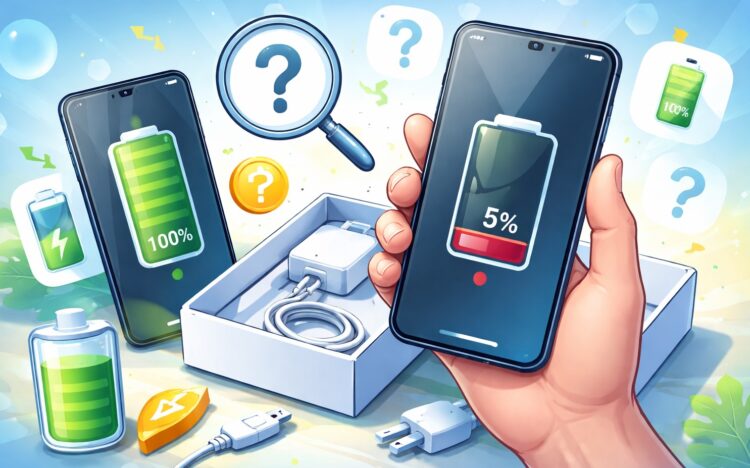
Drain to zero or hold off?
Do You Need to Fully Discharge Your Phone?
In short — no. Modern smartphones simply don’t need this. Today, almost all devices use lithium-ion or lithium-polymer batteries, which don’t require special discharge cycles.
That’s why the question of whether you need to discharge your phone before the first charge has long lost its relevance. You can safely turn on a new smartphone and start using it right after purchase.
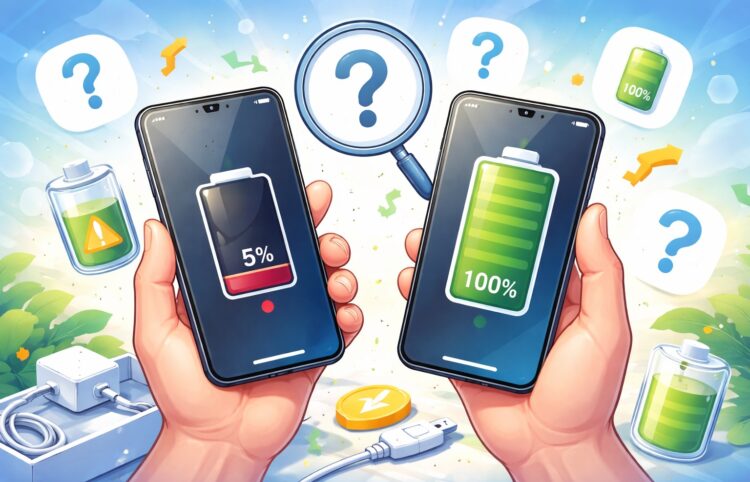
To charge or to discharge — that is the question
If the battery is half charged — great. If it’s almost dead — just plug in the charger. There’s no point in deliberately draining the device to zero, so the benefit of fully discharging a phone is more of a myth than an important recommendation.
Why Do People Say You Need to Fully Discharge a Smartphone?
This recommendation dates back to the era of old mobile phones. Back then, phones ran on nickel-cadmium batteries, which suffered from the so-called memory effect. If you constantly recharged such a battery without fully discharging it, it could “remember” a smaller capacity. Over time, the phone would work less than it was supposed to.
To prevent this, users were advised to first fully discharge the battery and then charge it completely. That’s where the question of whether you need to discharge your phone after purchase came from. But with modern batteries, this logic no longer applies.
What Happens If You Fully Discharge Your Phone?
If you drain the battery to zero once — nothing terrible will happen. The smartphone will simply turn off and start charging after you connect the cable. But if you do this regularly, the battery will wear out faster. Lithium batteries don’t like deep discharge. When the charge drops too low, the chemical processes inside the battery operate in a harsher mode.
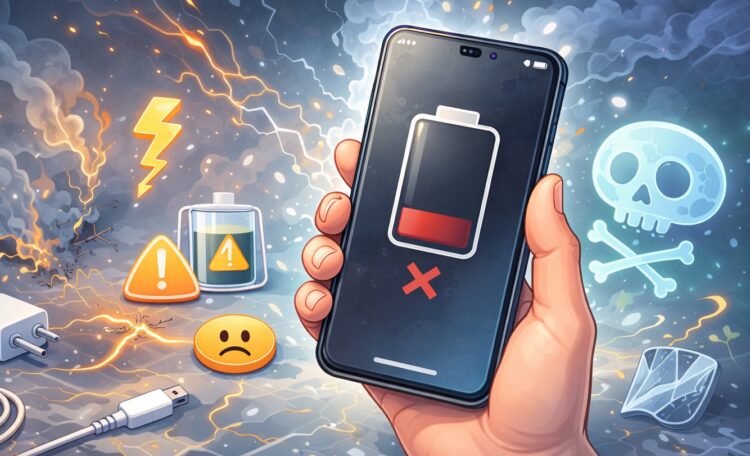
Full discharge can even cause harm
Sometimes after a full discharge, the phone may not even turn on right away. You connect the charger, but the screen stays black for several minutes. This isn’t a malfunction — it’s a deep discharge, from which the smartphone sometimes can’t even be recovered.
How to Properly Charge Your Phone
For modern smartphones, it’s much more important not to “properly discharge” but to properly use the battery every day. Here are a few simple rules that actually help extend battery life:
- don’t let the charge constantly drop to zero;
- try to keep the battery roughly between 20% and 80%;
- don’t overheat the smartphone while charging;
- use quality chargers;
- don’t leave the phone fully discharged for a long time.
If you follow these simple habits, the battery will retain its capacity longer. So don’t try to fully discharge a new smartphone. It’s better to just use the device as usual and not torture the battery with unnecessary “experiments.”