You bought a smartphone for 60–80 thousand rubles, it arrived with a factory film, the seller insistently offered a screen protector for 2–3 thousand — and you, of course, took it. And then you read that Gorilla Glass supposedly withstands drops from two meters — and you wondered: why bother with all this if the manufacturer already put in a great glass? Let’s figure it out honestly.
Why does a smartphone even need a screen protector?
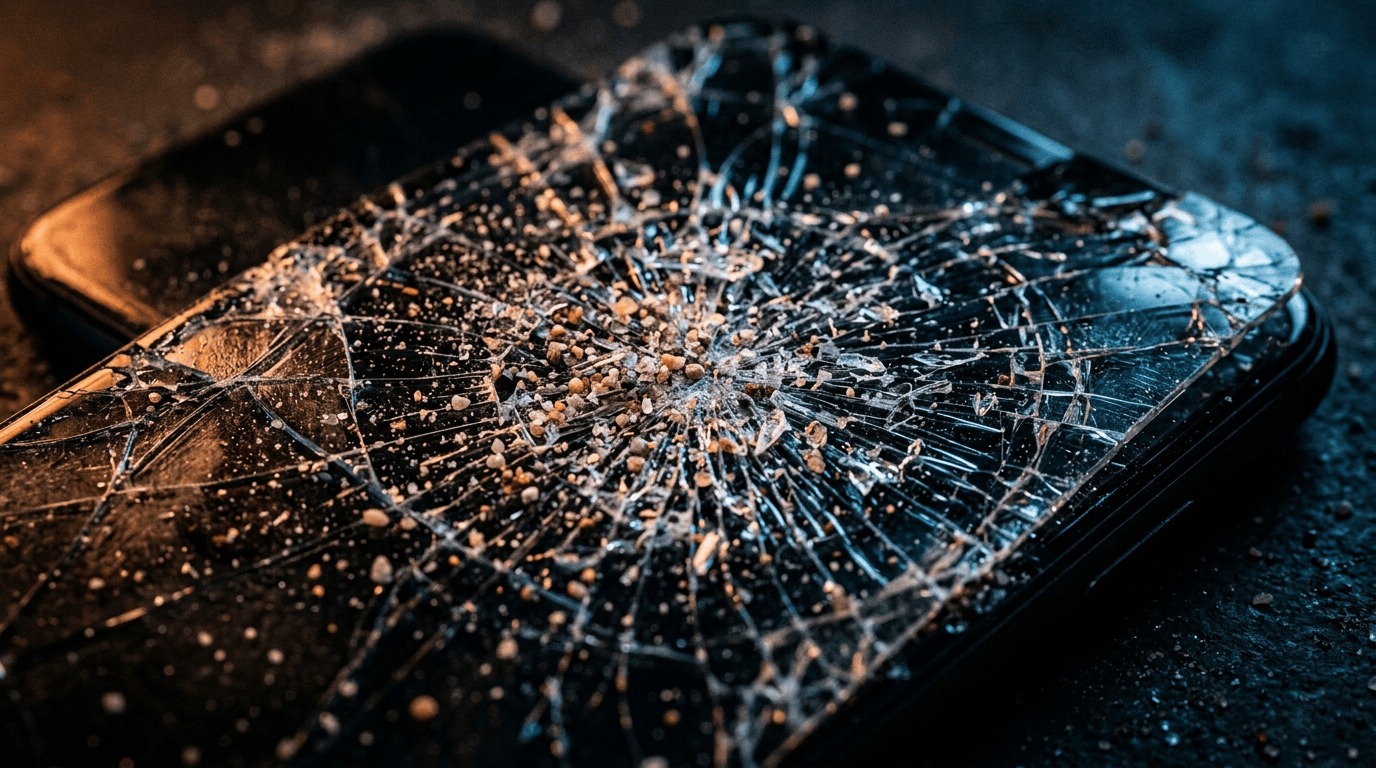
The truth is that even on the most expensive flagship, after a few months the screen gets covered with tiny scratches. This isn’t a defect or a scam — it’s physics. Let’s figure out why this happens, what actually protects your screen, and whether it’s worth paying for an additional screen protector.
What Is Gorilla Glass and How Do the Versions Differ
Gorilla Glass is a chemically tempered glass made by the American company Corning. Its history began back in the late 1950s, but it gained widespread recognition thanks to Apple: they were the first to put this glass in the iPhone in 2007.
Since then, quite a few generations have been released, each solving a specific problem:
- Gorilla Glass 5 and 6 — improved drop protection. The sixth generation withstands up to 15 drops from one meter onto a hard surface.
- Gorilla Glass Victus (2020) — a real breakthrough: the glass became twice as scratch-resistant and withstands drops from two meters.
- Gorilla Glass Victus 2 (2023) — focused on rough surfaces: concrete and asphalt. Samsung Galaxy S23 was the first to receive it.
- Gorilla Armor 2 (2025) — the first glass based on glass-ceramic. Withstands a drop from 2.2 meters onto simulated concrete. Debuted on the Samsung Galaxy S25 Ultra.
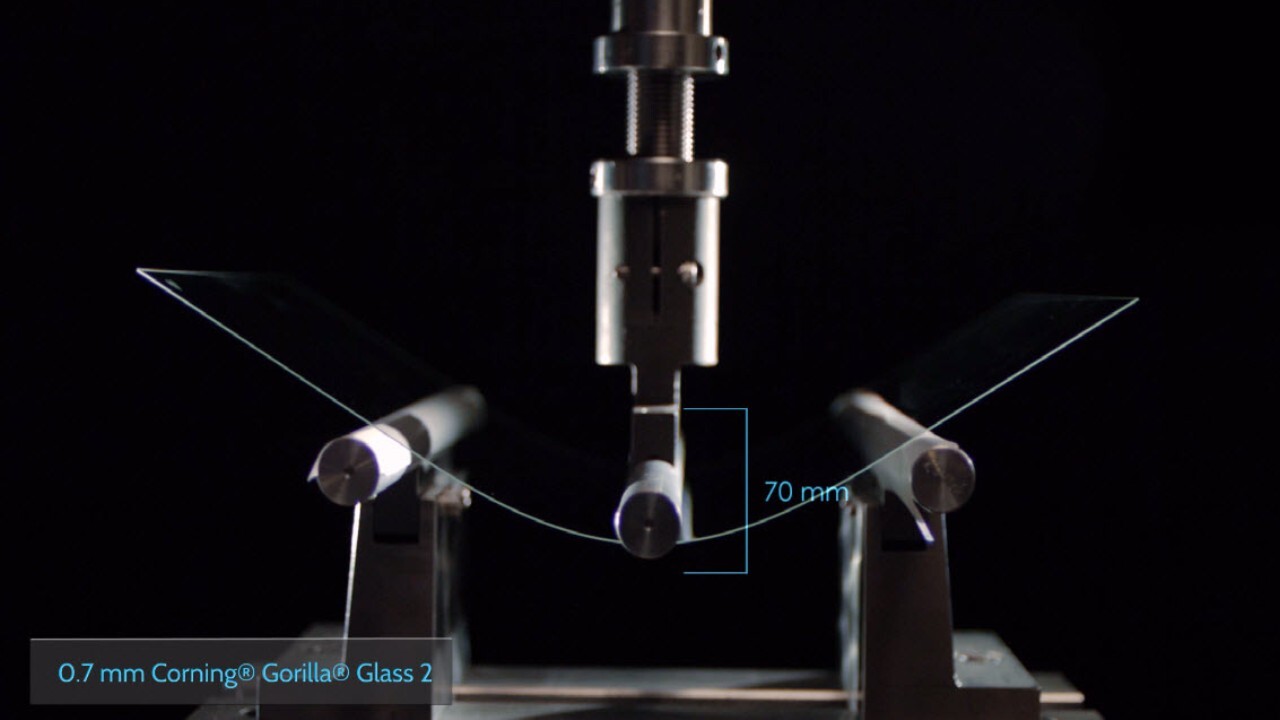
Each generation of Gorilla Glass solves its own problem. But none will save from ordinary sand in your pocket. Image: Corning
In parallel, Apple developed its own solution together with Corning — Ceramic Shield. The second generation appeared in 2025 in the iPhone 17. Chinese manufacturers use similar technologies under their own names — for example, Kunlun Glass by Xiaomi.
The protective glass withstands many tests, and some tests look impressive. But there’s one nuance that ads usually don’t mention.
Where Do Scratches on a Smartphone Screen Come From
It’s all about material hardness. There’s the Mohs scale — from 1 to 10, where diamond equals 10. Here’s the thing:
- Gorilla Glass — about 6–6.5 on the Mohs scale
- Metal (keys, coins) — 5.5
- Quartz (i.e., ordinary sand) — 7
This creates a paradox: keys and coins aren’t a threat to the glass, but ordinary dust in your pocket is a tiny abrasive that methodically leaves micro-scratches on the screen. Especially if you place your phone screen-down on a table — dust particles turn into sandpaper.
Corning Vice President Jaymin Amin honestly admitted: Gorilla Glass Victus won’t get scratched only if there’s no dirt, sand, or keys in your pocket. In other words, practically never.
Another enemy of the screen is the oleophobic coating. This is a thin layer that makes the glass slippery for fingers and repels greasy fingerprints. Its hardness is significantly lower than the glass itself, and it wears off fairly quickly — especially if you wipe the screen with whatever’s handy. That’s why over time the phone starts feeling “greasy” and fingers don’t slide as well.
How a Screen Protector Differs from Factory Glass
The factory Gorilla Glass is part of the phone’s construction. It’s thin, fits tightly against the display, and doesn’t create an air gap. An aftermarket screen protector is a separate piece that’s glued on top.
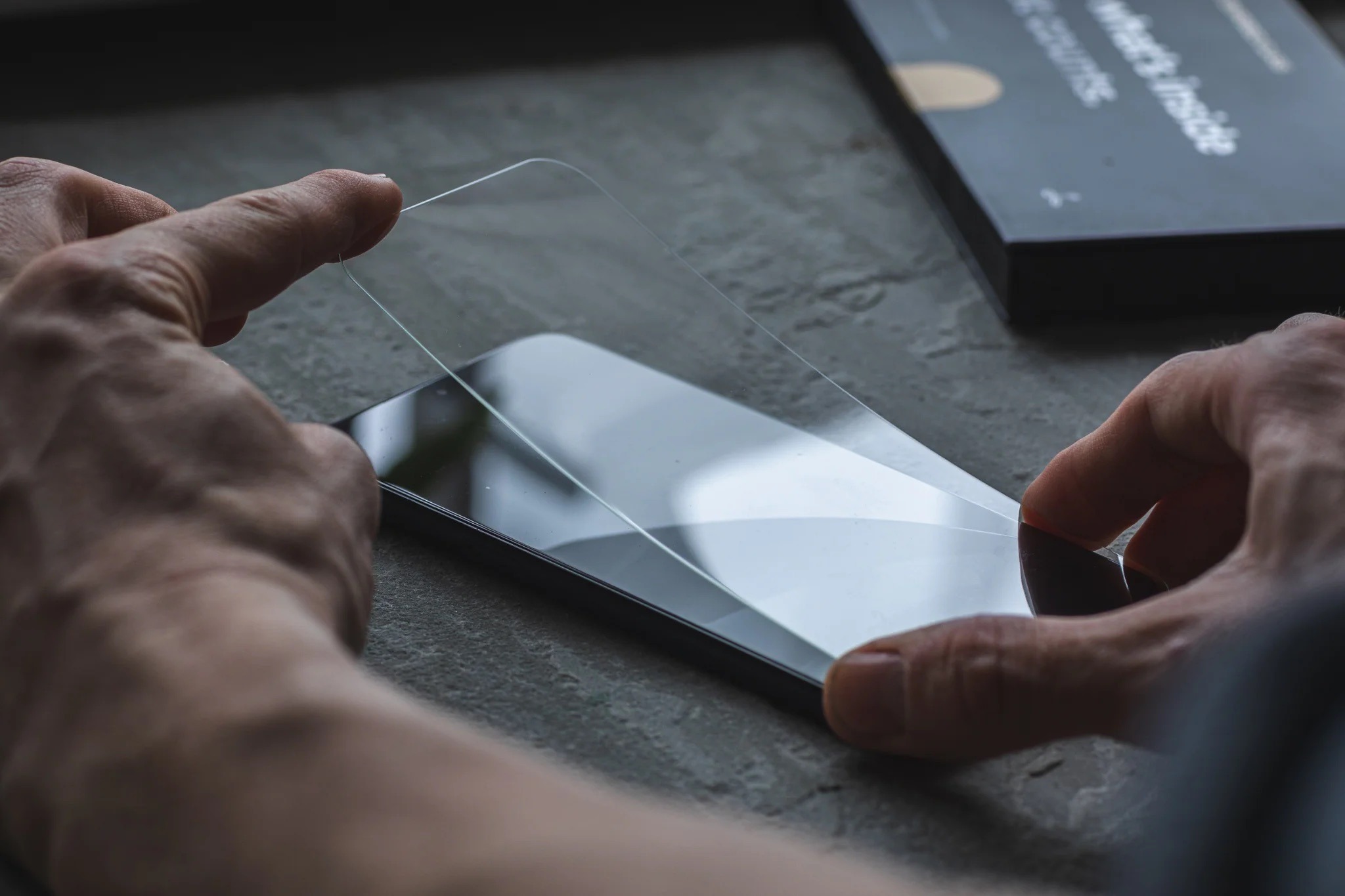
Stick on a glass for 500 rubles or pay 10,000 for a screen replacement — the choice is obvious. Image: snakehive.co.uk
The difference is fundamental:
- Factory glass is thinner, better at transmitting colors, and doesn’t affect brightness
- Aftermarket glass adds thickness, may slightly worsen tactile feel, but takes scratches and impacts on itself
The logic is simple: it’s better for a 500-ruble protector to crack than a 60,000-ruble screen. That’s the main argument for applying one. Replacing a smartphone screen protector takes a couple of minutes and a few hundred rubles. Replacing a flagship screen costs 8–15 thousand rubles and a week without a phone.
Screen Protector and Fingerprint Scanner
This is one of the most frequently asked questions. The answer depends on the type of scanner.
Optical scanner — essentially a camera under the screen that photographs your finger. It’s straightforward: a matte glass or matte film blurs the image and can significantly worsen recognition or even break it entirely. A transparent glossy glass usually works fine, but quality depends on its thickness and manufacturer.
Ultrasonic scanner — used in Samsung flagships (starting with the Galaxy S10), as well as in some other top models. It works differently: it sends a sound wave through the glass and receives back a three-dimensional fingerprint impression. Some screen protectors and films partially scatter this wave — the scanner starts working slower or less accurately.
Conclusion: if you have a phone with an under-display fingerprint scanner, only get a glass that is compatible specifically with your model. Manufacturers often write this right on the packaging: “compatible with fingerprint scanner.” Don’t skimp on this — a no-name protector for 200 rubles from Ozon can make unlocking impossible.
Google recommends only protectors marked “Made for Google” for their Pixel phones — precisely for this reason. Although, of course, other protectors work fine on smartphones too, you just need to choose quality ones that support fingerprint sensor operation.
Screen Protective Film: Pros and Cons
Besides glass, there’s another option — a protective screen film. Usually it’s a hydrogel or polyurethane material that’s cut to the screen’s shape and fits tightly against it.
Film pros:
- Very thin, almost unnoticeable under the finger
- Flexible — doesn’t crack on impact
- Fits well on curved screens
- Cheap — starting from 100–200 rubles
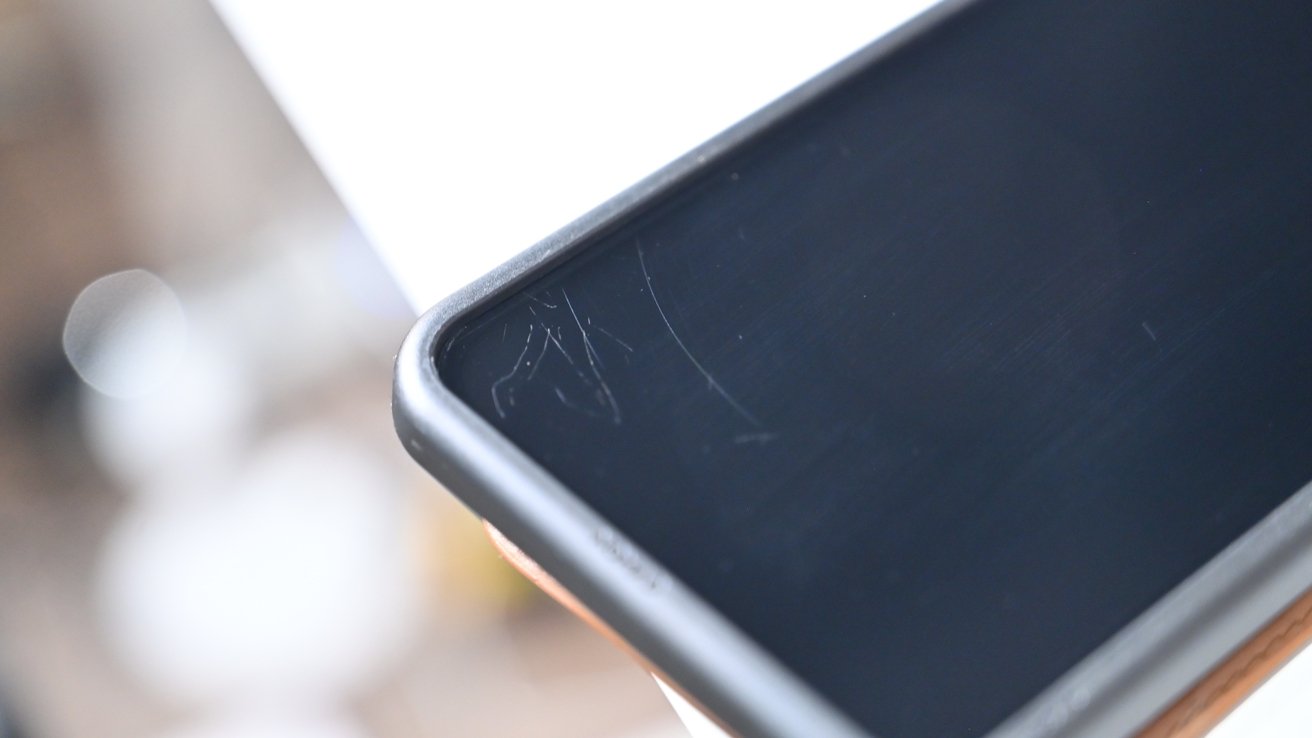
The film is thinner and cheaper, but after a couple of months it looks like this
Film cons:
- Scratches much faster than glass — after 2–3 months of active use it won’t look great
- Oleophobic coating is worse than on glass — fingers don’t slide as pleasantly
- Only protects against scratches: a film practically doesn’t absorb impact
A hydrogel film works well as a temporary or budget solution. If you’re careful and rarely drop your phone — it’ll do just fine. But if your phone regularly flies out of your hands — a film won’t help with impact, it’ll just get scratched itself.
Are Thick Tempered Glass Protectors Better
There’s an opinion that the thicker the tempered glass, the better. In practice, it’s more complicated.
Very thick glass (0.5 mm and more) can crack on its own during a strong impact or even press down on the screen. The optimal thickness is 0.3–0.4 mm. Such protectors offer sufficient protection, don’t interfere with the scanner, and don’t add unnecessary weight.
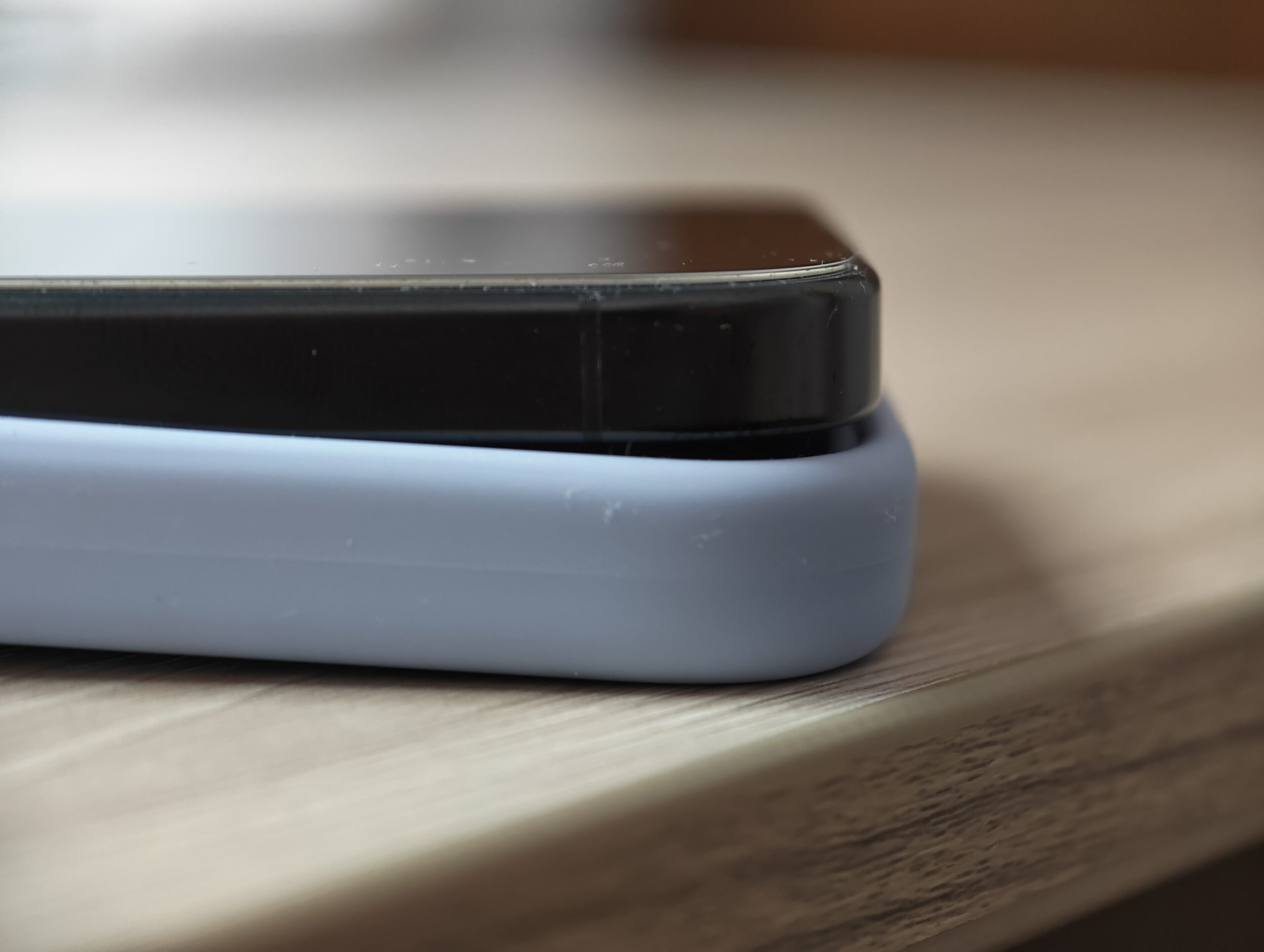
The screen protector protrudes above the factory glass, so it catches your finger when using gestures
Also pay attention to the Mohs hardness rating — good screen protectors should be rated 9H. This means keys, coins, and regular metal won’t scratch them. But fighting sand and abrasives still won’t work — as explained above.
Do You Need to Apply a Screen Protector in 2026
In short: yes, if you care about your phone’s appearance after a year. No, if you’re extremely careful.
Here’s the simple logic: