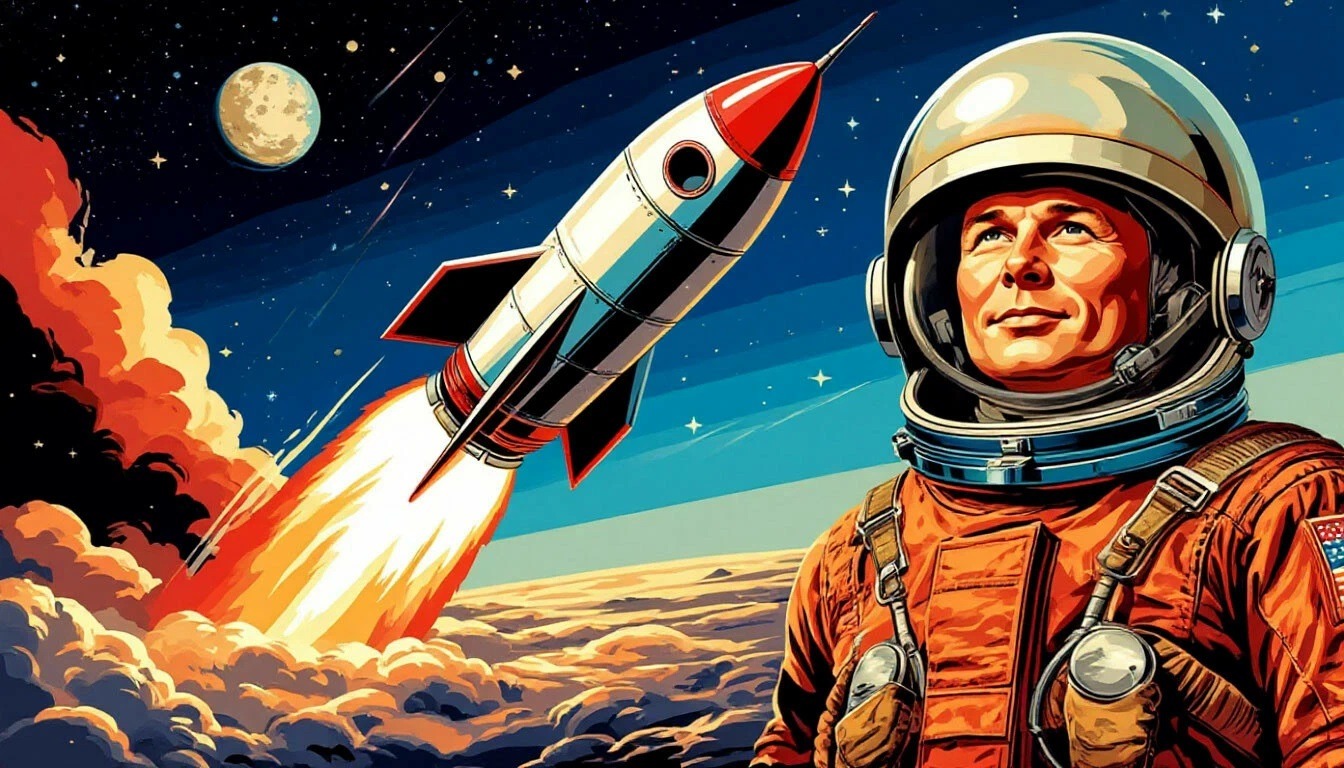
April 12 Cosmonautics Day. Image source: shedevrum.ai
April 12, 2026 marks exactly 65 years since Yuri Gagarin became the first person in history to orbit the Earth aboard the Vostok-1 spacecraft. The flight lasted only 108 minutes — less than an average movie at the theater. But those minutes forever changed humanity’s understanding of what was possible. And just days ago, the crew of the Artemis 2 mission flew to the Moon — people once again traveled beyond low Earth orbit for the first time since 1972. The coincidence of dates is symbolic: Cosmonautics Day this year feels especially relevant.
When Is Cosmonautics Day Celebrated and Why April 12
Cosmonautics Day is celebrated on April 12 — the date when in 1961, Soviet cosmonaut Yuri Gagarin launched from the Baikonur Cosmodrome aboard the Vostok-1 spacecraft and completed the world’s first orbital flight around Earth. The flight lasted 108 minutes.
The holiday was established in the Soviet Union by a decree of the Presidium of the Supreme Soviet of the USSR on April 9, 1962 — one year after the flight. It was proposed by the second pilot-cosmonaut of the USSR, German Titov. And in 2011, the United Nations General Assembly adopted a resolution officially proclaiming April 12 as the International Day of Human Space Flight.
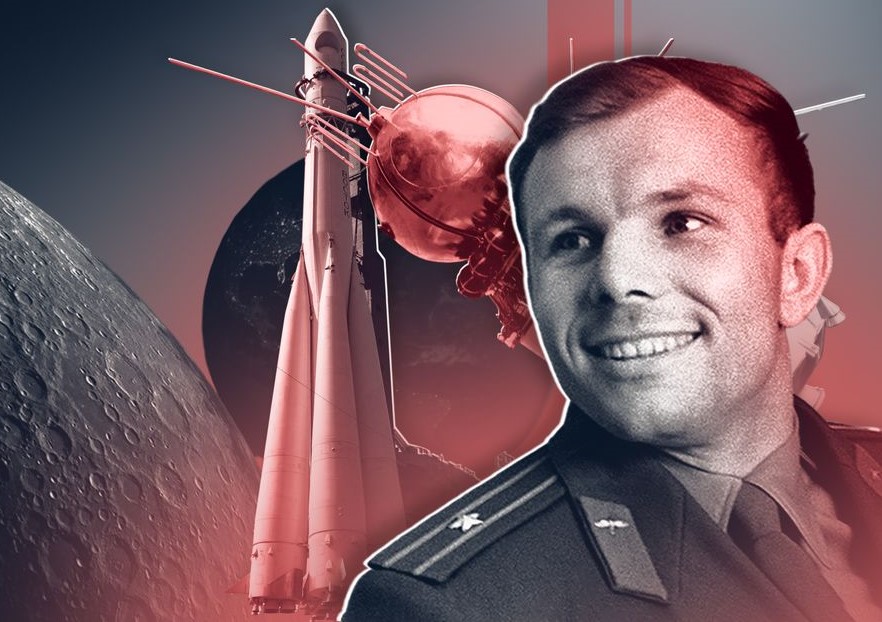
Yuri Gagarin and the Vostok-1 spacecraft — the beginning of the era of crewed spaceflight. Image source: regnum.ru
In 2026, we celebrate the 65th anniversary of Gagarin’s flight. For the jubilee, it was decided not to limit it to a single day: from April 6 to 12, 2026, Russia is hosting its first Space Week. Abroad, Gagarin’s flight is celebrated as “Yuri’s Night” — since 2001, space enthusiasts in 60 countries have been organizing themed events.
Artemis 2 Mission: Flight to the Moon in 2026
Space Week in 2026 coincided with a real space story that was unfolding before the eyes of the entire world — the Artemis 2 mission. The SLS super-heavy rocket launched on April 1, 2026 at 22:35 UTC from Launch Pad 39B at the Kennedy Space Center in Florida with a crew of three U.S. astronauts and one Canadian.
This is the first crewed expedition of the Orion spacecraft and the first flight of humans beyond low Earth orbit since December 1972. The crew includes Americans Reid Wiseman, Christina Koch, Victor Glover, and Canadian Jeremy Hansen. The astronauts flew around the Moon and ventured deeper into space than any Apollo mission crews managed over 50 years ago, capturing incredible and scientifically important photographs.
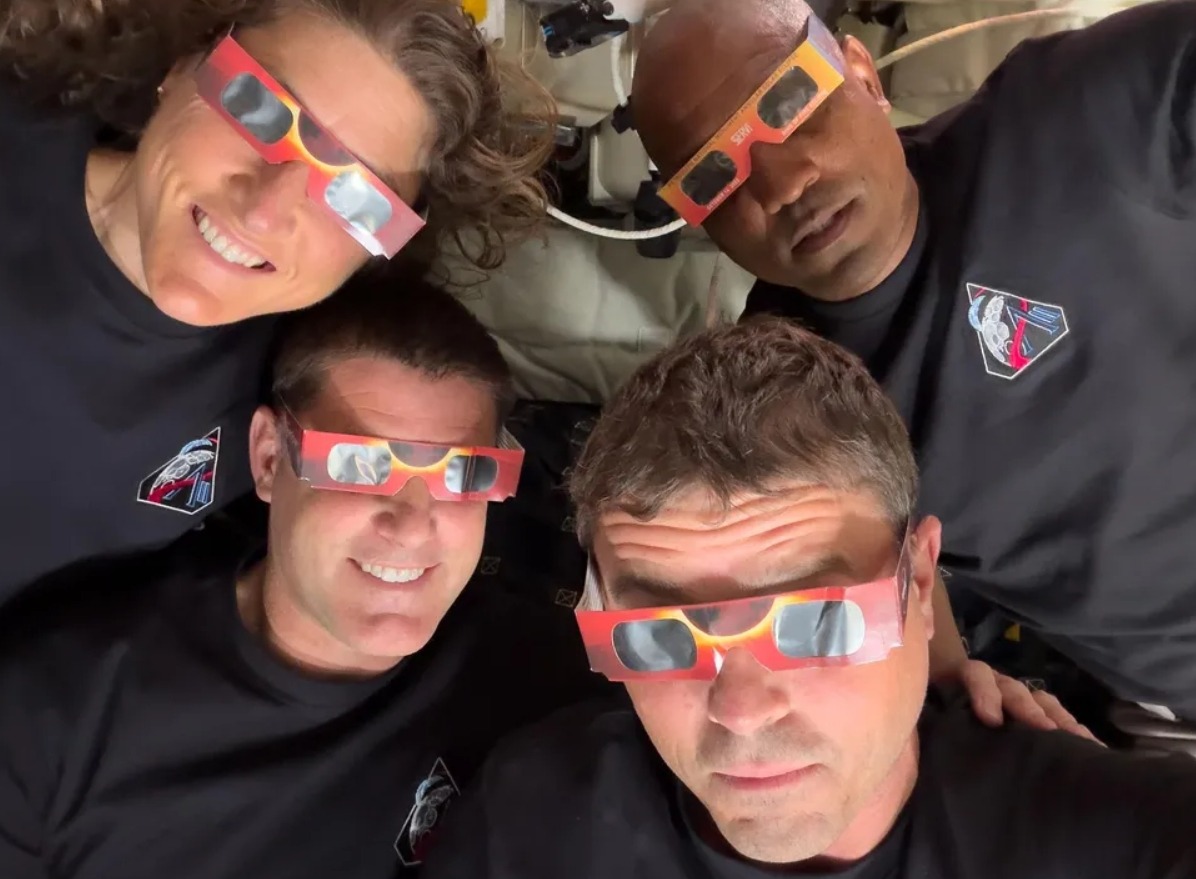
Artemis 2 mission crew members. Image source: Live Science
This flight serves as preparation for future launches that envision a lunar landing and the establishment of a base there. If everything goes successfully, the next mission, Artemis 3, should deliver humans to the lunar surface for the first time since 1972 — tentatively in 2028.
How to Become a Cosmonaut in Russia: Requirements in 2026
Space seems distant, but formally the path to it is open to any citizen of Russia — if you have the education, health, and patience. In 2026, Russia launched another open selection for the Roscosmos cosmonaut corps. Applications can be submitted until September 30, 2026.
Here is what is typically required of candidates:
- Citizenship of the Russian Federation
- Higher education (typically a master’s or specialist degree) in an engineering, scientific, or medical field
- At least 2–3 years of professional work experience in one’s specialty
- Excellent physical health and psychological resilience
- Knowledge of foreign languages (English is mandatory for work on the ISS)
Selection takes place in two stages — remote and in-person. Candidates undergo document review, followed by evaluation of professional skills, psychological qualities, physical fitness, and health status.
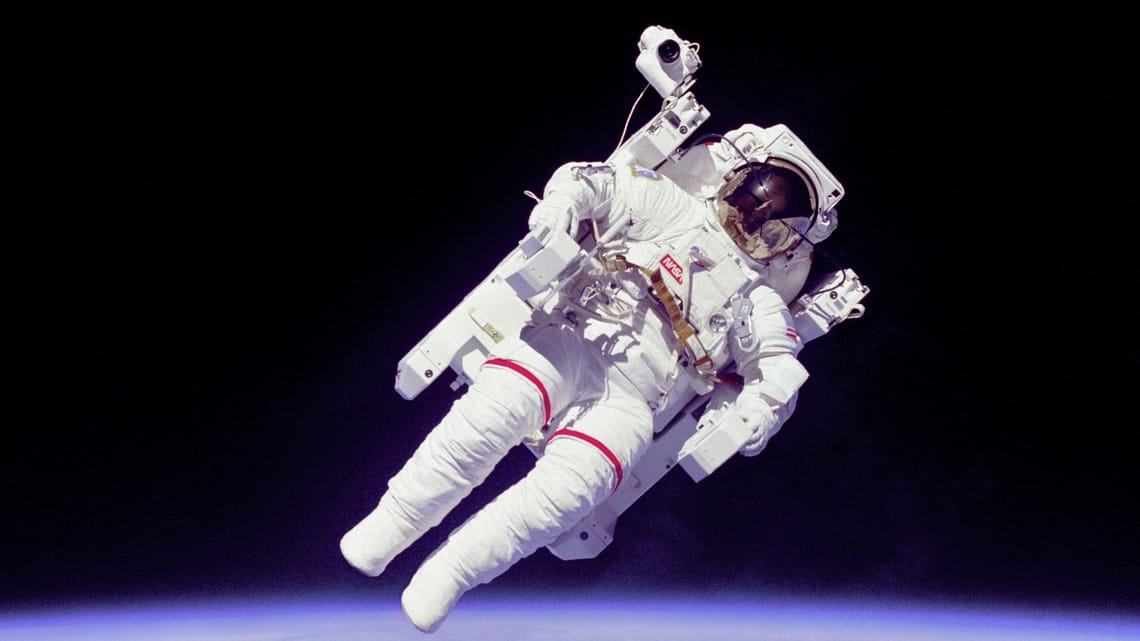
NASA astronaut Bruce McCandless II uses the Manned Maneuvering Unit outside the Space Shuttle Challenger during mission STS-41-B in 1984. Image source: starwalk.space
An interesting detail: excessively bulky muscles are more of a hindrance for a cosmonaut — in zero gravity they become a burden. Overall endurance and coordination are more important.
How Many Years Are Cosmonauts Trained Before Their First Flight
Even after successful selection, years pass before the first flight. And this is where the hardest part begins — cosmonaut training. First comes basic training, which includes studying onboard systems of spacecraft, training in vacuum chambers, simulating weightlessness in parabolic flights and underwater, as well as extended isolation sessions to test psychological resilience.
The duration of training depends on the country and agency:
- Roscosmos (Russia) — 2 years
- NASA (USA) — 2 years
- ESA (Europe) — more than 3.5 years
- JAXA (Japan) — 4 years
- CMSA (China) — nearly 5 years
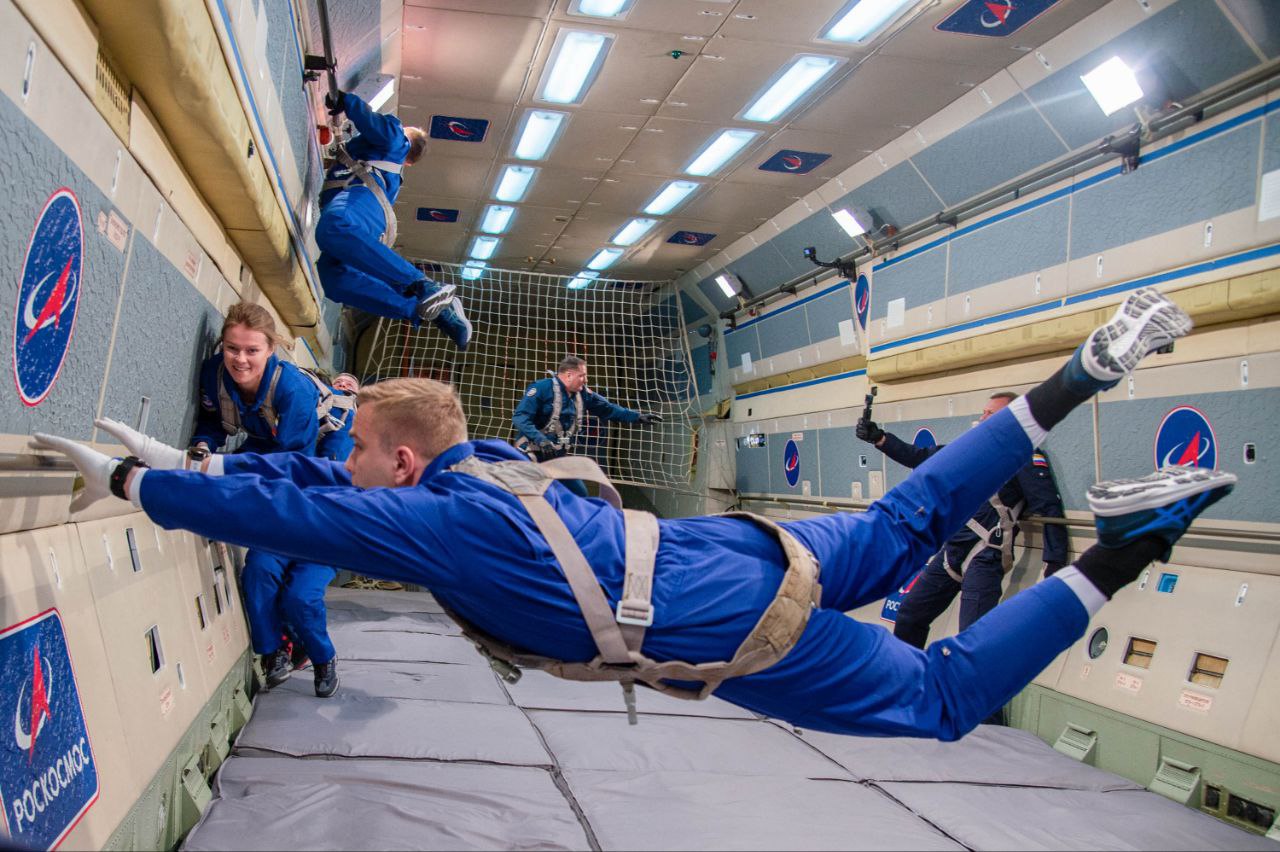
Introduction to weightlessness: cosmonaut-tester candidates completed a training flight on the IL-76MDK laboratory aircraft. Image source: gctc.ru
If you calculate the entire journey from the start of education to launch: 5–6 years to earn a degree, 2–3 years of professional experience, another 2–5 years of training at a preparation center. And after that, you might wait months or even years to be assigned to a crew. In total — at least 10–15 years from the decision “I want to become a cosmonaut” to the phrase “Let’s go!”.
Cosmonaut Salaries in Russia and the USA in 2026
Romance is one thing, but how much do they pay for this? A fair question. After salary increases in 2021, newcomers to the Roscosmos corps without flight experience began earning about 300,000 rubles per month, while experienced cosmonauts earn up to 500,000 rubles. For a six-month expedition in orbit, a Russian cosmonaut earns about 5.5 million rubles, and with all bonuses, the income of an experienced cosmonaut on the ISS can reach 1–1.5 million rubles per month.
For comparison: according to NASA, in 2024 the annual income of an American astronaut was about $152,258. The salary range for NASA astronauts is from $65,000 to $170,000 per year depending on experience, tenure, and qualifications.
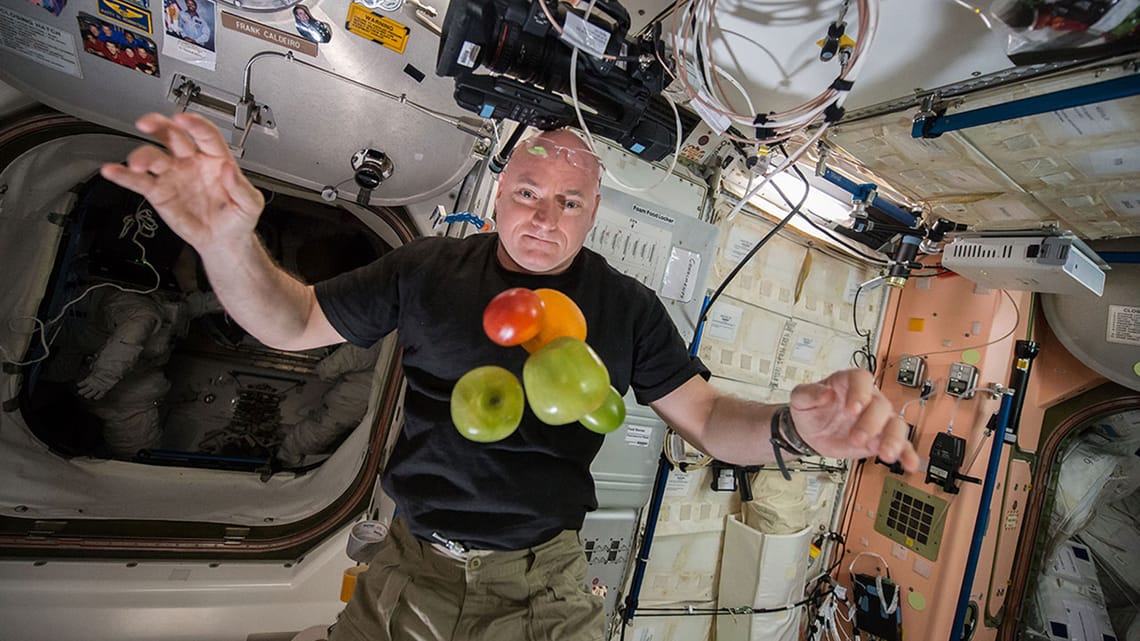
Astronaut Scott Kelly enjoys fresh fruits and vegetables on the ISS. Image source: starwalk.space
A special bonus for Russian cosmonauts: everyone who has been to orbit becomes a Hero of Russia, and this title comes with a monthly payment of 90,000–120,000 rubles.