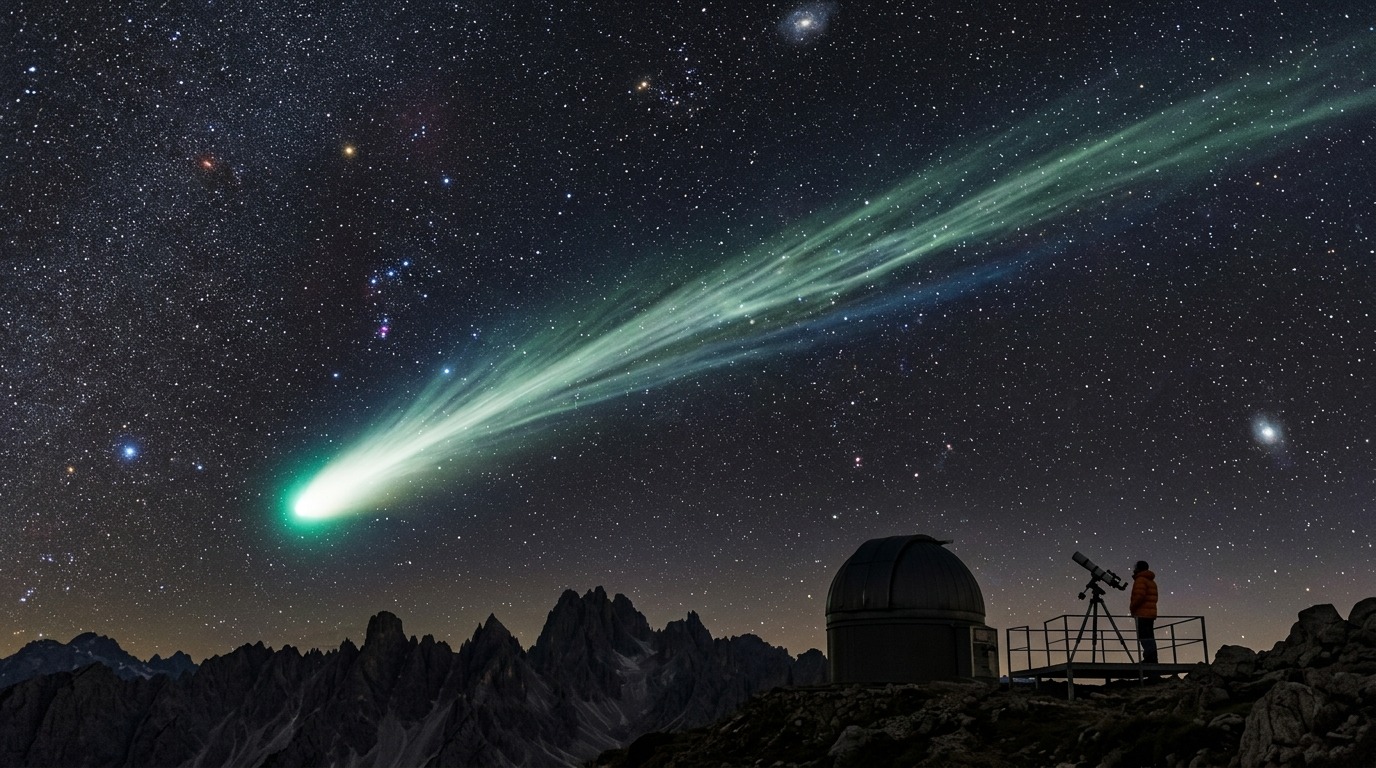
Many experts expected the comet to shine so brightly that it could be seen even during the day. Instead, the object was torn apart due to an ultra-close “fatal encounter” with the Sun.
Comet C/2026 A1 (MAPS), which many called the main cometary intrigue of 2026, did not survive its close approach to the Sun on April 4 and disintegrated. Its nucleus broke apart, the remaining dust trail dispersed, and now nothing remains of the comet that could be seen in the sky. But it’s too early to be sad: another comet is on the way — C/2025 R3 (PanSTARRS), which may become visible to the naked eye as early as late April. In the meantime, here’s what happened to C/2026 A1 (MAPS), and how it looked.
Comet C/2026 A1 (MAPS): What It Was and Why Astronomers Worldwide Were Watching
C/2026 A1 (MAPS) was discovered on January 13, 2026 by a group of amateur astronomers — Alain Maury, Georges Attard, Daniel Parrott, and Florian Signoret. They used robotic telescopes in Chile’s Atacama Desert, and the name MAPS is an abbreviation of the first letters of their surnames (Maury/Attard/Parrott/Signoret). It was the first comet discovered in 2026 — hence the elegant designation A1 in the catalog.
But the key point wasn’t its name — it was which family it belonged to. C/2026 A1 turned out to be a sungrazing comet from the Kreutz family — a group of objects that travel along elongated orbits and pass extremely close to the Sun. It is believed that all Kreutz comets are fragments of one giant comet that broke apart back in antiquity. The possible progenitor was a comet observed by Aristotle and Ephorus in 371 BC.
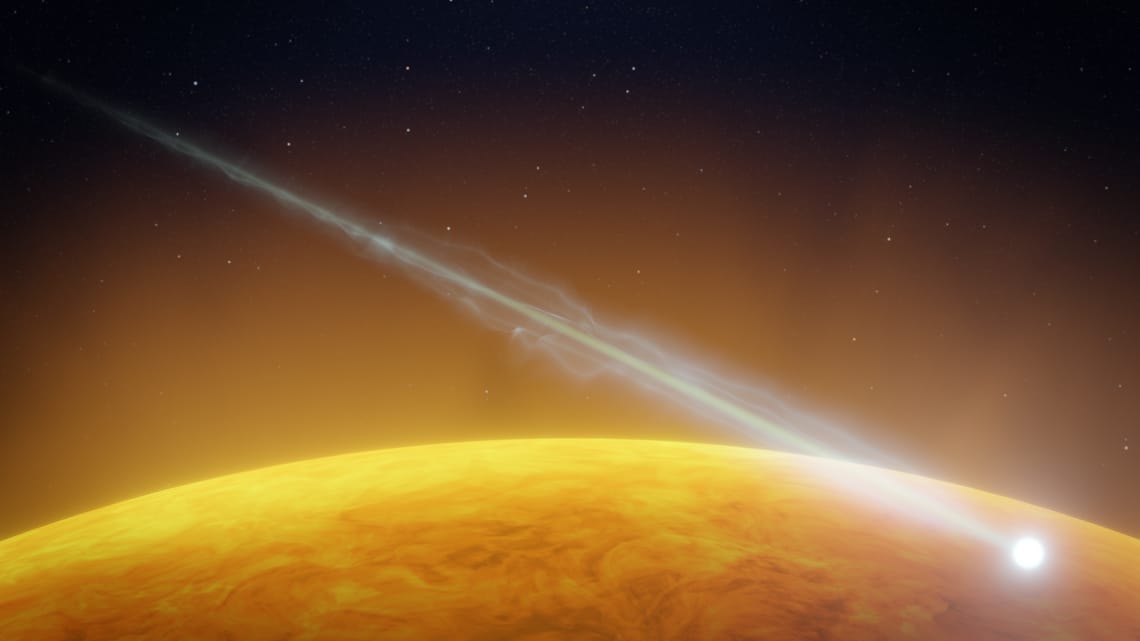
Bright comets were observed as far back as antiquity — some of them became progenitors of entire families. Image source: starwalk.space
What made MAPS special even among Kreutz comets? It was spotted unusually early — 81 days before its close approach to the Sun. Typically, such objects are detected by space-based coronagraphs just days before their demise. Here, there were nearly three months for observations, giving scientists a rare opportunity to study a sungrazing comet “from afar.”
What Was the Brightness of Comet C/2026 A1 (MAPS) Before Perihelion
In February 2026, Comet MAPS was too faint for the naked eye — only large telescopes could see it. But astronomers were optimistic: early estimates suggested that the comet’s nucleus could be up to 2.4 km in diameter. If confirmed, the chances of surviving the encounter with the Sun would have been high.
However, in March, data from the James Webb Space Telescope (JWST) showed that the nucleus was actually only about 0.4 km — roughly the same as Comet Lovejoy in 2011. This dramatically lowered the chances of survival. Notably, MAPS is the only Kreutz comet for which direct nucleus size measurements were obtained out of more than 5,000 known members of this family.
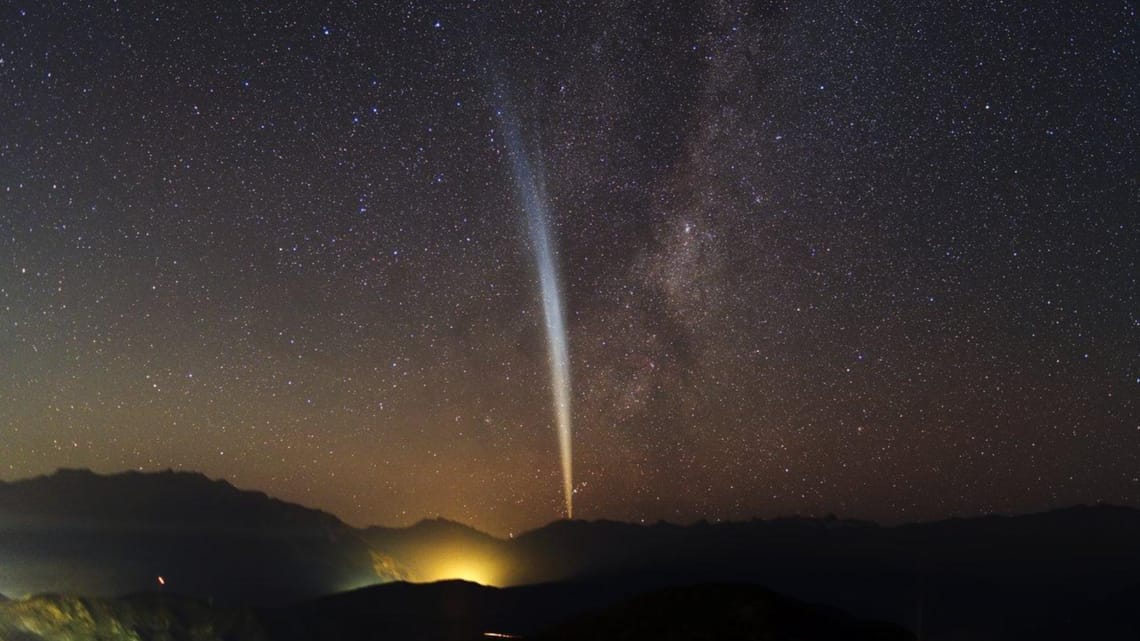
Comet Lovejoy in the sky, 2011. Image source: starwalk.space
In early March, the comet was rapidly gaining brightness: from magnitude 12 to 10.5 in less than a week. Then the brightness stalled for a while, and on March 26 a sharp outburst occurred, alarming observers. Such unpredictable behavior is a typical trait of Kreutz comets, and it’s exactly what makes them so difficult to forecast.
By the end of March, ground-based observations became virtually impossible: the comet sank into bright twilight, and attention shifted to images from the SOHO space coronagraph.
How Comet C/2026 A1 (MAPS) Broke Apart Near the Sun
On April 4, 2026, the comet passed at a distance of only about 160,000–170,000 km from the Sun’s surface. For comparison, that’s less than half the distance from Earth to the Moon. The comet’s speed at that moment reached approximately 300 km/s — more than 1 million kilometers per hour.
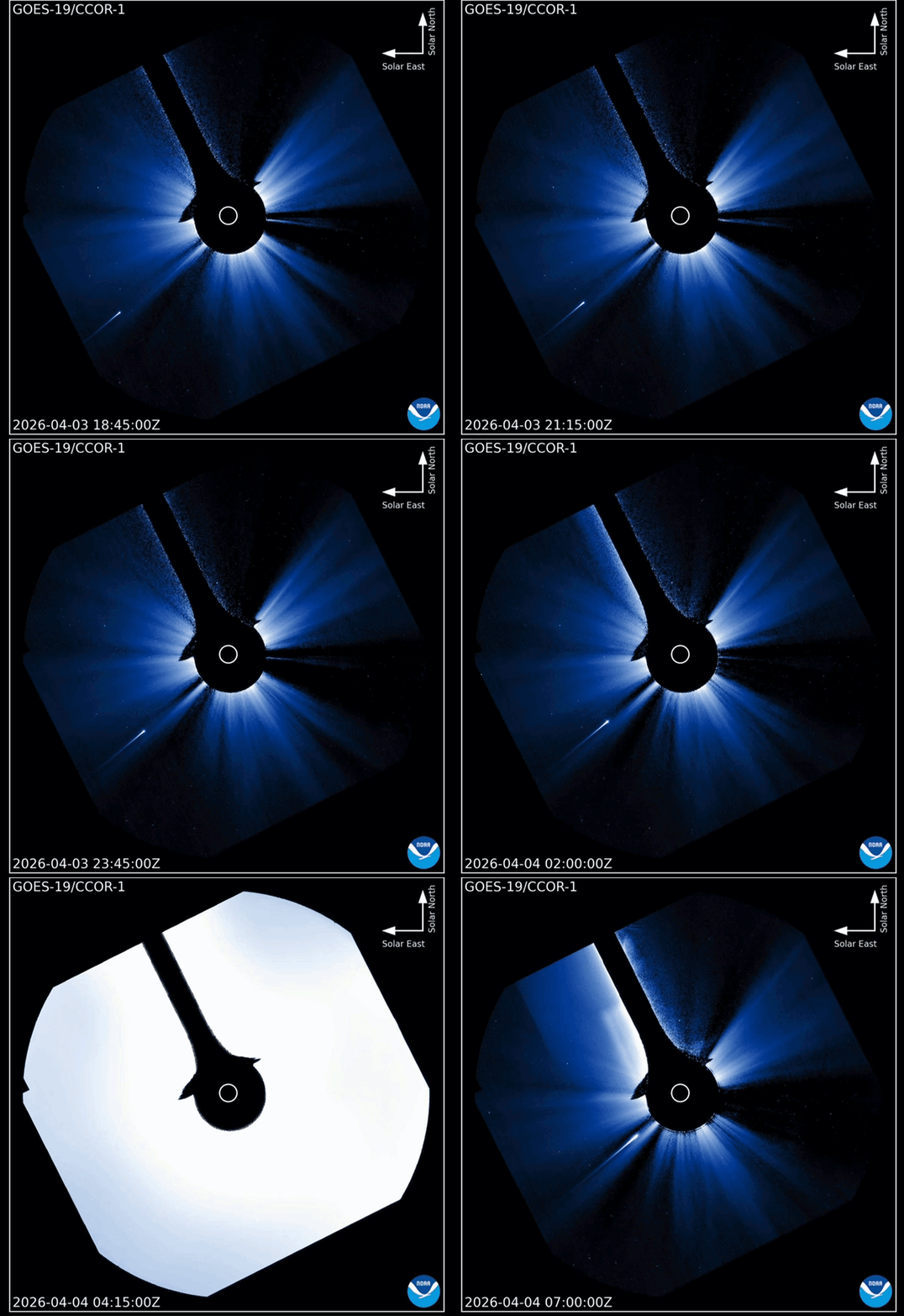
As late as April 3, images from the LASCO C3 coronagraph showed the comet looking bright and seemingly still intact. Its peak brightness reached approximately magnitude −1 — comparable to Sirius, the brightest star in the night sky. But by April 4, just hours before the calculated perihelion, the nucleus disintegrated.
Why? A comet’s nucleus is essentially a fragile mixture of ice, rock, and dust, cooled to temperatures near absolute zero. During its approach to the Sun, it encountered temperatures exceeding 3,000 °C. The ice began to evaporate rapidly, creating powerful gas jets from within, while tidal forces — the gravitational “stretching” by the Sun — finished the job. The comet literally tore itself apart from the inside.
In coronagraph images, what emerged from behind the Sun was not an intact nucleus but merely a curved dust trail — the remnants of the destroyed body. Initially, there was hope that this dust would form a bright tail — astronomers call such a scenario a “headless wonder” (a comet without a nucleus but with a beautiful tail). Unfortunately, the debris cloud dispersed too quickly.
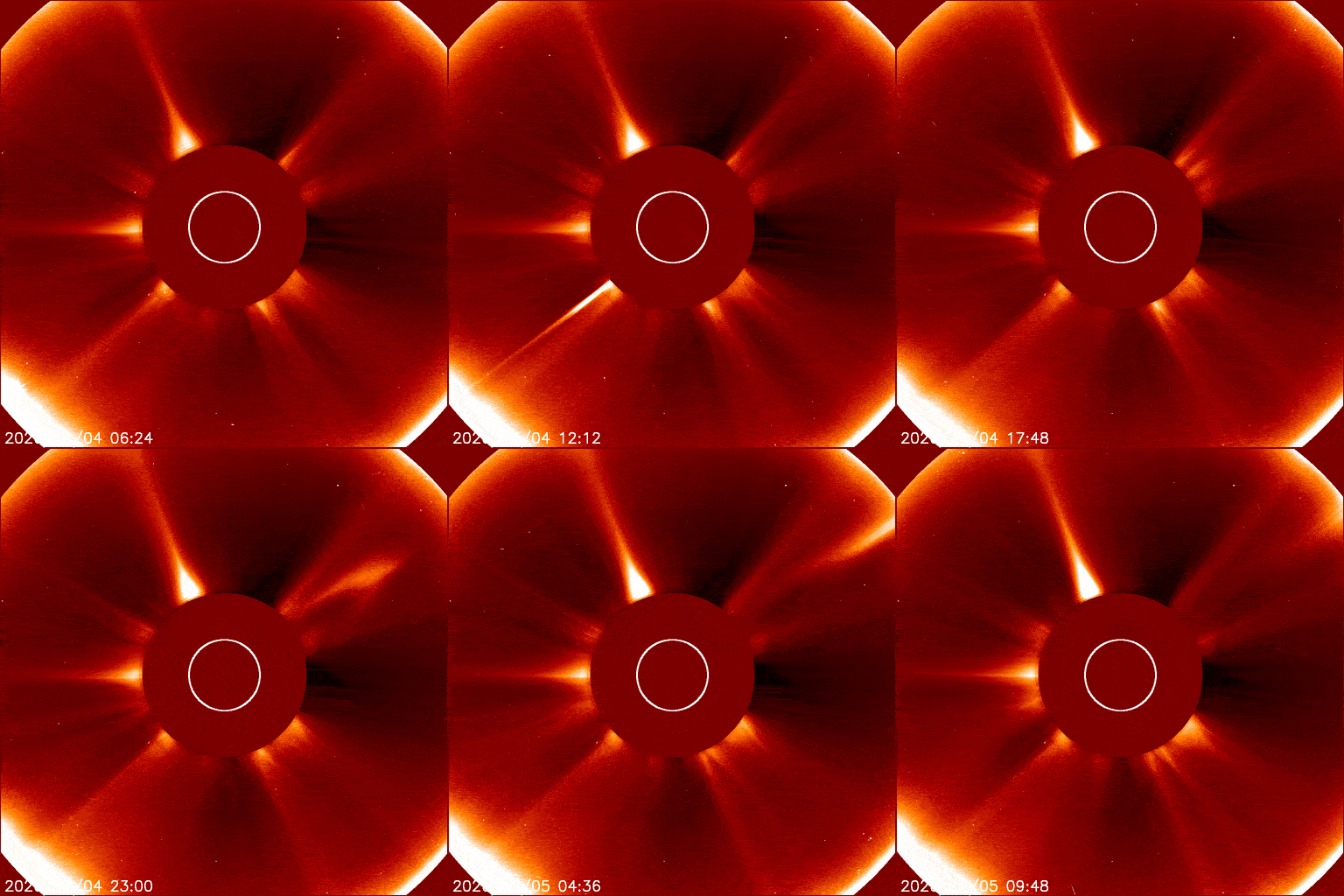
The SOHO satellite captured how Comet MAPS entered the Sun’s atmosphere (left) and then emerged from the other side as a debris cloud. Source: livescience.com
Why Comet MAPS Did Not Become Visible to the Naked Eye
The main reason was that the nucleus turned out to be too small to withstand the extreme close encounter with the Sun. At a diameter of about 400 meters, the comet was doomed.
The fate of MAPS repeated the fate of the vast majority of Kreutz family comets. According to observations from the SOHO observatory, none of the small comets of this family detected over the past three decades survived perihelion passage. Only a select few — such as the Great Comet of 1843, the Comet of 1882, and Ikeya-Seki — survived thanks to truly large nuclei.
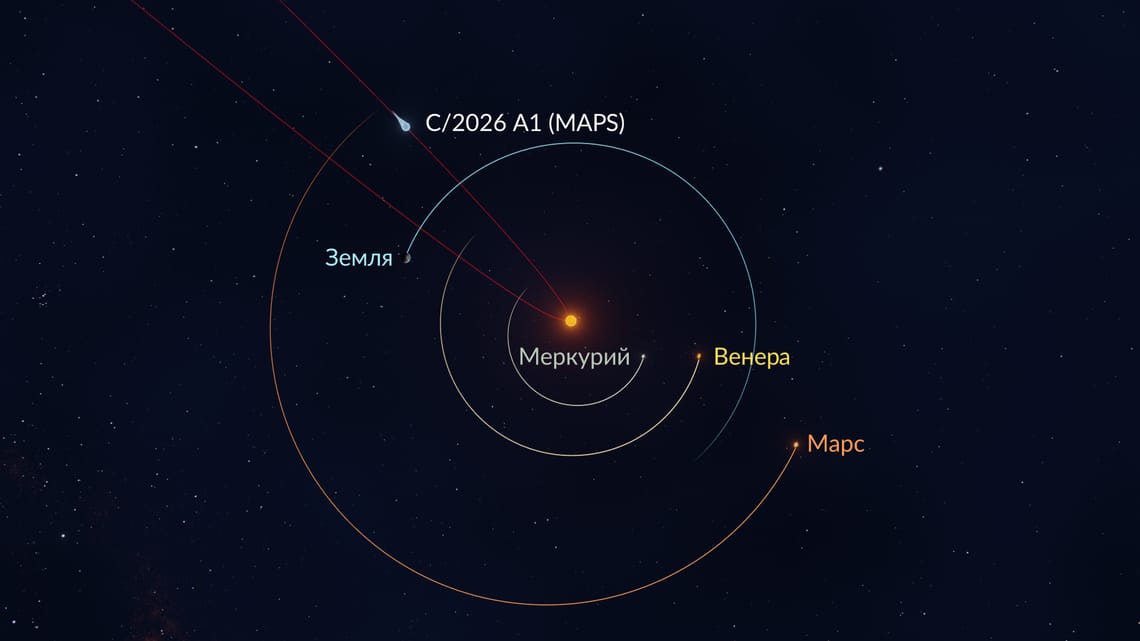
Orbit of Comet C/2026 A1 (MAPS). Image source: starwalk.space
So the destruction of MAPS was no surprise to specialists. Many had assessed the chances of survival as low even before perihelion. But hope — as is often the case with comets — persisted until the very last moment.
What Comet C/2026 A1 (MAPS) Contributed to Science Despite Its Destruction Near the Sun
Despite its sad ending, MAPS managed to tell scientists a great deal. Here’s what was learned thanks to it:
- The only direct measurement of a Kreutz comet’s nucleus — all other estimates are based on indirect data.
- MAPS’s orbital period was approximately 1,660–1,900 years — nearly twice as long as most comets of this family, which typically have periods of 700–800 years.
- Its trajectory suggests that MAPS may be a fragment of a comet observed in 363 AD and described by the Roman historian Ammianus Marcellinus. This makes it a rare “second-generation descendant” of the ancient progenitor comet.
- Observational data will help refine models of Kreutz family fragmentation and better understand how one giant comet of antiquity turned into thousands of fragments.
In essence, every Kreutz comet is a small piece of ancient material preserved from the time of the Solar System’s formation. Its demise is not just a spectacular flash but a chance to see how intense solar heat affects volatile-rich bodies frozen for billions of years.
Bright Comets of 2026 After the Demise of MAPS: What to Watch in the Sky
MAPS is gone, but April 2026 doesn’t end there. The main hope now is Comet C/2025 R3 (PanSTARRS), discovered on September 8, 2025 by the Pan-STARRS telescope system in Hawaii. It is already visible through binoculars and telescopes and continues to brighten.
Key dates for observations:
- April 19, 2026 — perihelion (closest point to the Sun, about 76 million km).
- April 26–27, 2026 — maximum brightness expected.