
Drinks above 50% ABV (such as absinthe or certain whiskey varieties) burn so intensely that a person loses the ability to taste flavors. Still from the movie “The Shining”
Have you ever knocked back an ice-cold shot of vodka and felt your insides flood with fire? It seems like a paradox: the higher the proof and the colder the drink, the more it burns your throat and esophagus. How is it that an ice-cold liquid creates the illusion of a fire in your mouth? The answer lies not in temperature, but in how our body reacts to ethanol.
Alcohol Tricks Your Heat Receptors
Our body is full of various sensors. In the skin, mouth, and throat, there are special protein receptors called VR1. Their direct function is to respond to high temperatures. When you touch a hot frying pan, it’s these receptors that scream.
The authors of the website Enki Very Well explain that ethanol is a cunning substance. By itself, it doesn’t cause a burn in the literal sense. But it lowers the sensitivity threshold of these receptors by approximately 10 degrees.
In simple terms: the body thinks it’s being burned, even though it’s just “imagining” it. Your normal body temperature (our norm is 36.6 degrees Celsius) becomes “critical” for the receptors after contact with alcohol. As a result, the brain receives an SOS signal, and you feel the heat.
Alcohol Irritates the Mucous Membrane
If you’ve ever tried hot pepper and alcohol, you’ve probably noticed the similarity in sensations. This is no coincidence.
Strong drinks aggressively affect the mucous membrane of the mouth and throat. A high concentration of alcohol literally irritates the tissues. The mechanism is similar to the effect of capsaicin in hot peppers. It’s not a real burn, but the mucous membrane perceives it as a threat — hence the pain and the characteristic feeling of a “fiery trail.”
Alcohol Causes Dry Mouth
Alcohol by its chemical nature is a powerful solvent. When it enters the mouth, it immediately begins drawing moisture from the cells of the mucous membrane.
Imagine applying an alcohol-based lotion to your lips. The effect would be the same: dryness, tightness, and micro-cracks. When there’s no moisture, the mucous membrane becomes hypersensitive. That’s why even a small sip can feel painful, especially if you were already experiencing dry mouth beforehand.
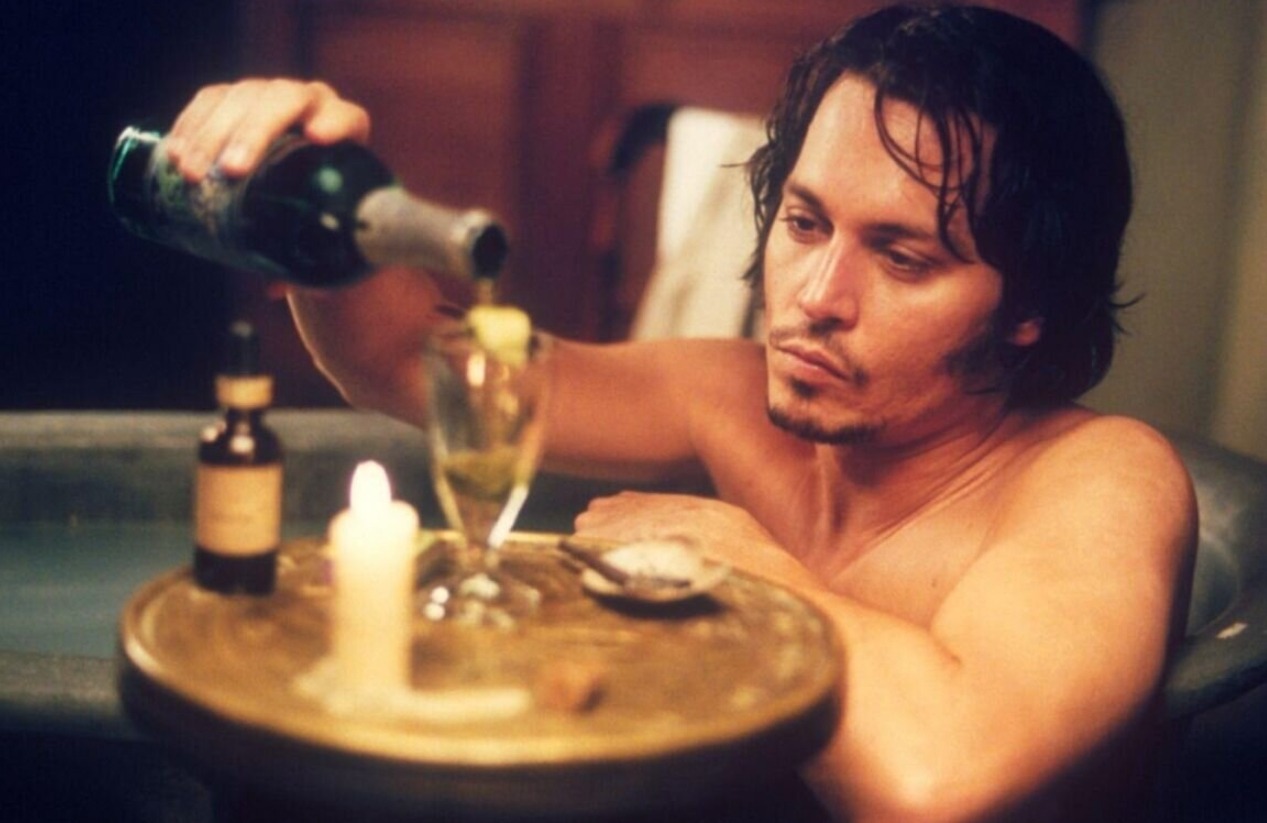
Alcohol draws moisture from the mucous membrane, which is why we feel dry mouth. Still from the movie “From Hell.”
Warmth in the Stomach After Drinking Alcohol
Is the burning sensation limited to the mouth? No. Many people notice how after a sip of strong whiskey or rum, a pleasant warmth spreads through the body. This is where the circulatory system comes into play.
Alcohol dilates blood vessels. This is called vasodilation. Blood rushes to the surface of the body and to the stomach, creating the illusion of warming up. In reality, the body doesn’t become warmer in a global sense — you’re simply losing heat faster. But the sensation of “fire in the belly” occurs precisely because of the sudden rush of blood and the dilation of capillaries.
Why Heavy Drinkers Have Red Faces
The body remembers this stress. If you frequently drink strong beverages, the blood vessels become accustomed to constant dilation. Over time, their walls lose elasticity. Visually, this manifests as spider veins and vascular networks (rosacea), especially on the face and décolleté area. This is not just an aesthetic problem but a signal that the blood vessels have stopped constricting normally. That’s why alcoholics have red faces.
In the end, it turns out that alcohol burns not because it’s hot, and not even because it’s cold. It tricks the system: it lowers the sensitivity threshold of your receptors, draws out moisture, irritates the mucous membrane, and dilates blood vessels. The brain receives a clear “FIRE!” signal, even though there is no physical burn. It’s pure chemistry and neurobiology that makes us wince after a sip of an ice-cold shot.