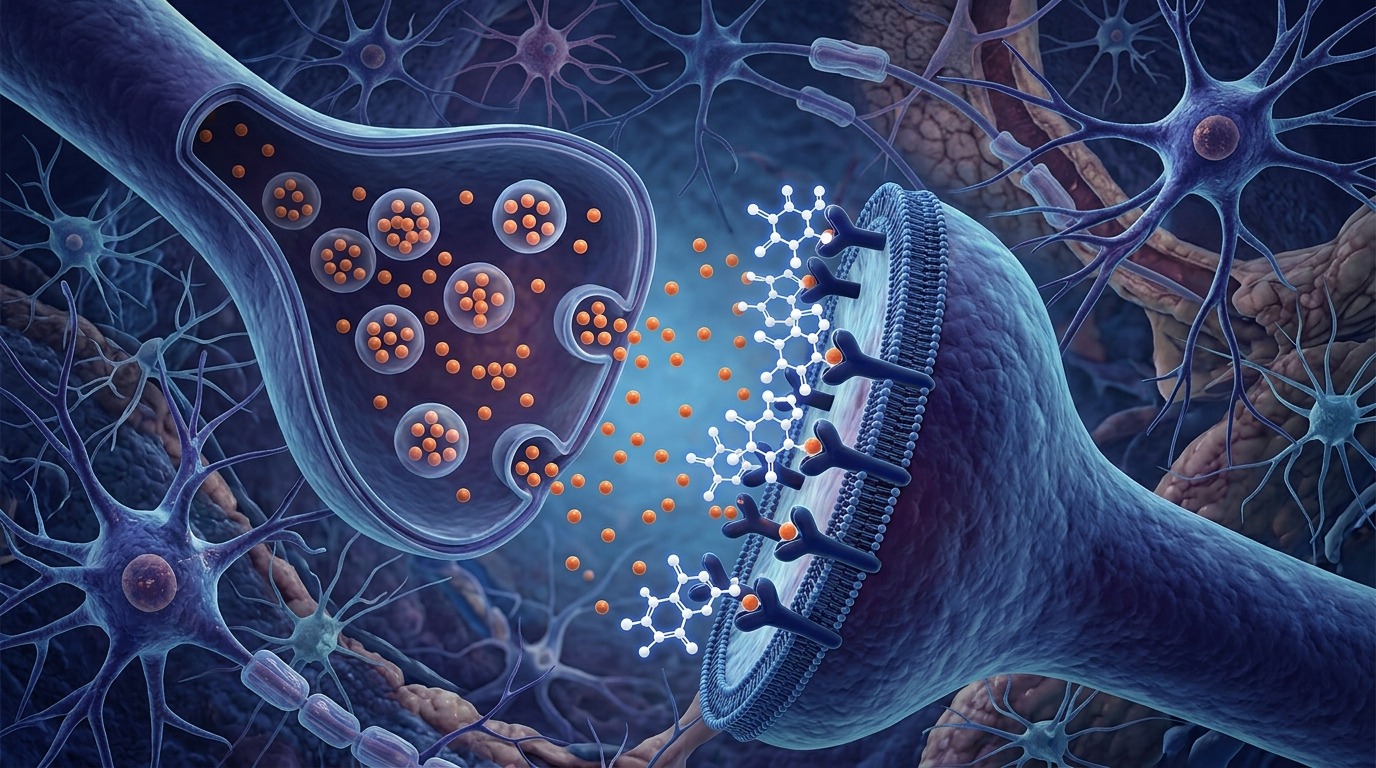
Caffeine occupies adenosine receptors in the brain and prevents fatigue signals from reaching neurons
Every morning, billions of people start their day with a cup of coffee, and most don’t even think about what exactly this drink does to their body. Caffeine blocks “sleepy” receptors in the brain, kickstarts the intestines, and, according to large-scale studies, is associated with a reduced risk of cardiovascular disease and even protection against dementia. But the mechanisms behind these effects are far more interesting than they seem.
How caffeine blocks fatigue
To understand why coffee makes you feel alert, you need to meet adenosine — a molecule in our brain responsible for the growing sensation of fatigue. Throughout the day, adenosine levels gradually rise: it binds to neuronal receptors and signals the body that it’s time to rest. The longer you stay awake, the stronger the urge to sleep.
Caffeine’s molecular structure is very similar to adenosine. When it reaches the brain, it occupies the same receptors but doesn’t activate them. Essentially, caffeine acts as a plug: it prevents adenosine from “reaching” the neurons, and the brain simply doesn’t receive the fatigue signal. Additionally, blocking adenosine receptors stimulates the production of dopamine and adrenaline — hence the feeling of alertness and good mood.
But there’s an important nuance. While caffeine blocks the receptors, adenosine doesn’t go anywhere — it keeps accumulating. When the caffeine wears off — and its half-life averages about 5 hours — all the accumulated adenosine rushes the freed receptors at once. That’s why after coffee you sometimes experience a wave of fatigue stronger than before — this is the so-called caffeine crash.
When to drink coffee so it doesn’t ruin your sleep
Since caffeine’s half-life is 4 to 6 hours, five hours after a cup of coffee your body still has half the dose. If you drink two cups at 2 PM, by 8 PM you still have about 100 mg of caffeine in your blood. That’s enough to disrupt falling asleep and reduce the deep sleep phase.
Studies confirm that two cups of coffee consumed 6 hours before bedtime can reduce total sleep time by nearly an hour. You may not even realize it — tolerance masks subjective sensations, but deep restorative sleep still suffers.
It’s important to consider that the rate of caffeine elimination varies greatly among individuals. Smokers metabolize it faster, while women taking oral contraceptives may see the half-life double to 10 or more hours. During pregnancy, especially in the third trimester, it can reach 11–18 hours. So there’s no universal “right time” for coffee — you should rely on your own feelings and, at the very least, avoid coffee 6–8 hours before bed.
A recent study revealed another curious fact: people who drink coffee only in the morning have a 31% lower risk of death from cardiovascular disease compared to those who drink coffee throughout the day. The authors suggest that afternoon coffee may disrupt circadian rhythms and suppress melatonin production.

The time of your last cup of coffee should be calculated based on your sleep schedule
Why coffee makes you want to poop
Many people notice that as soon as they drink coffee in the morning, their intestines literally “wake up.” This is not a coincidence or a placebo effect. According to research, about 29% of people feel the urge to defecate within 20 minutes of a cup of coffee. And it’s not just about the caffeine.
Coffee stimulates the production of several digestive hormones:
- Gastrin — makes the stomach secrete hydrochloric acid and triggers a wave of intestinal contractions, known as peristalsis;
- Cholecystokinin — stimulates the release of bile from the gallbladder and enzymes from the pancreas, helping to break down food;
- Gastrocolic reflex — a wave of movement that pushes intestinal contents forward, making room for new food. In the morning, this reflex is especially active, which is why the first cup of coffee has the most noticeable effect.
Interestingly, even decaffeinated coffee stimulates the intestines, though to a lesser degree. Regular coffee increases colon motility 60% more than water and 23% more than decaf. This means that besides caffeine, other substances in the drink are at work — for example, chlorogenic acid and other polyphenols.
That said, coffee is not a laxative. If you have irritable bowel syndrome, it may worsen symptoms. However, with moderate consumption — 3–5 cups a day — coffee may even reduce the risk of chronic constipation and positively influence the composition of gut microbiota by increasing the proportion of beneficial bifidobacteria.
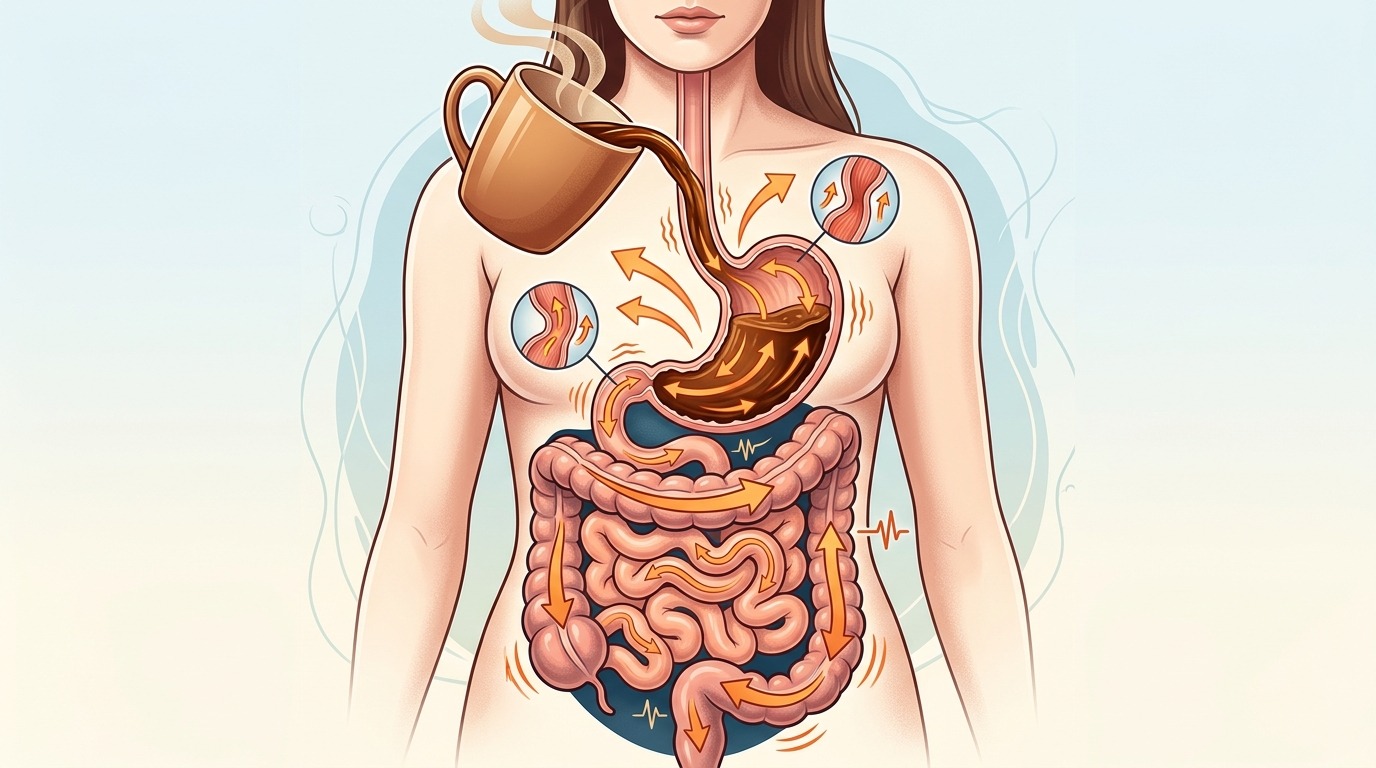 Coffee triggers a chain of reactions in the digestive system — from the stomach to the colon. Photo.” width=”1376″ height=”768″ class=”size-full wp-image-464311″ srcset=”https://hi-news.ru/wp-content/uploads/2026/04/kofe-i-vashe-zdorove-chto-na-samom-dele-p-3.jpg 1376w, https://hi-news.ru/wp-content/uploads/2026/04/kofe-i-vashe-zdorove-chto-na-samom-dele-p-3-650×363.jpg 650w, https://hi-news.ru/wp-content/uploads/2026/04/kofe-i-vashe-zdorove-chto-na-samom-dele-p-3-750×419.jpg 750w” sizes=”(max-width: 1376px) 100vw, 1376px” />
>Coffee triggers a chain of reactions in the digestive system — from the stomach to the colon
How coffee affects the heart and blood vessels
Back in the 1960s, coffee was considered a risk factor for the heart. Today the picture looks different: most modern meta-analyses show that moderate coffee consumption either has no effect on the cardiovascular system or is associated with reduced risks.
The largest analysis of data from more than 380,000 people showed that 2–3 cups of coffee per day are associated with a 10–15% reduction in the risk of coronary heart disease, heart failure, and arrhythmias. These results held true for both ground and instant coffee.
Yes, caffeine temporarily raises blood pressure, but this effect passes, and regular coffee consumption does not increase the risk of developing hypertension. However, unfiltered coffee (for example, made in a French press) contains diterpenes — substances that can slightly raise “bad” cholesterol levels. Still, at 1–2 cups per day, this effect is considered minimal.
An important caveat: all these data come from observational studies. They show correlation but do not prove that coffee itself protects the heart. It’s possible that coffee lovers on average lead more active lifestyles or have other habits that influence the results. Nevertheless, scientists note that coffee beans contain more than 100 biologically active compounds, including polyphenols and chlorogenic acid, which have antioxidant and anti-inflammatory properties.
Can coffee extend your life
One of the most impressive findings in recent years: moderate coffee consumption is associated with increased life expectancy. A meta-analysis of 85 studies conducted by Portuguese scientists showed that three cups of coffee a day are associated with an increase in life expectancy of an average of 1.84 years and an extension of “healthy years” — time free from serious chronic diseases.
Another large study based on data from more than 43,000 participants showed that 1–2 cups of coffee per day are associated with a 2-year increase in life expectancy compared to those who don’t drink coffee. Nearly a third of this gain was explained by reduced cardiovascular mortality.
Moderate coffee consumption is associated with a longer and healthier life, but it’s not a guarantee.
A massive umbrella review of 201 meta-analyses of observational studies confirmed that the greatest risk reduction is observed at 3–4 cups of coffee per day. This includes a reduced risk not only of cardiovascular disease (by approximately 15%) but also of type 2 diabetes (by 29%) and certain types of cancer, primarily liver cancer.
But let us repeat: these are associations, not proven cause-and-effect relationships. Randomized controlled trials that would directly prove that coffee extends life do not yet exist. Furthermore, all the positive effects apply specifically to black coffee or coffee with minimal additions. Cream, sugar, and syrups add calories, fats, and sugar that may negate the potential benefits.
How much coffee can you drink without harming your health
According to FDA recommendations and most professional organizations, the safe dose of caffeine for healthy adults is up to 400 mg per day. That’s roughly 4–5 cups of regular filtered coffee. Pregnant and breastfeeding women are advised to limit themselves to 200 mg — that’s 2–3 cups.
There are several important things to keep in mind:
- Individual sensitivity to caffeine varies greatly — it depends on genetics, age, medications, and other factors;
- Caffeine is found not only in coffee: its sources include tea, cocoa, energy drinks, cola, and some medications. The total intake should be taken into account;
- If coffee causes anxiety, rapid heartbeat, or interferes with sleep — that’s a signal to reduce the dose, not to “get used to it”