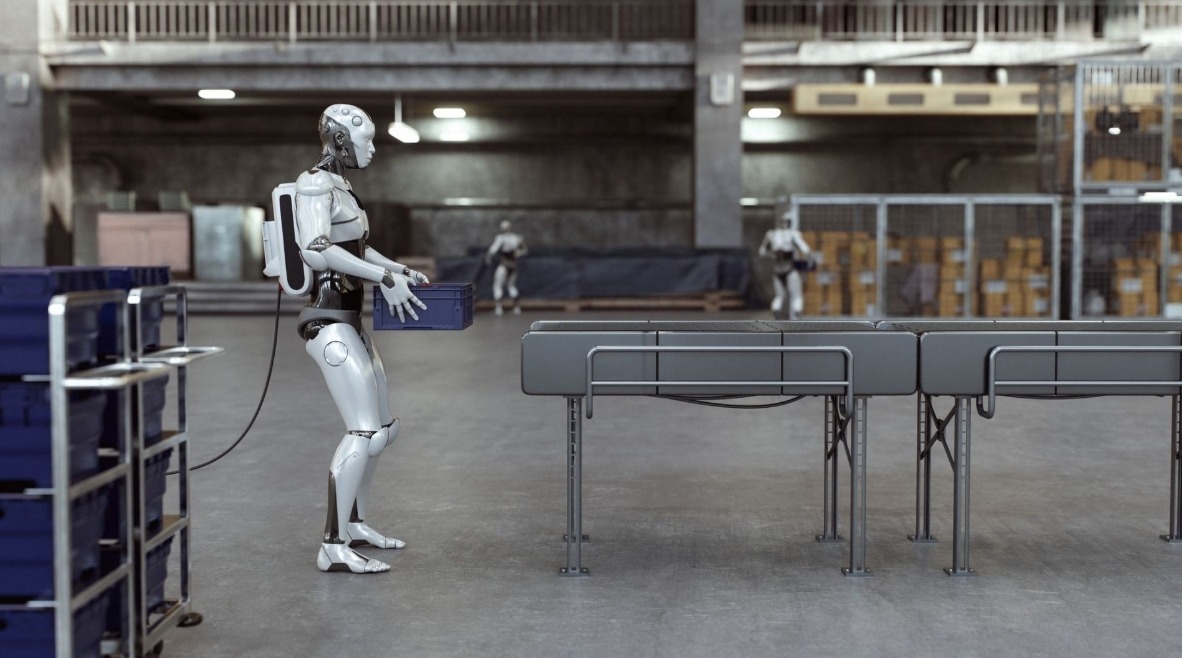
A robot learning to carry a tray. Image source: interestingengineering.com
Robots that fold clothes, carry trays, and retrieve water from shelves — sounds cool, doesn’t it? At the moment it seems impossible, but in China this is already the everyday reality of dozens of special training centers. The country has launched real “schools” for humanoid robots, where androids learn to perform simple but critically important tasks for subsequent work in factories and warehouses.
Robot Schools in China
According to Interesting Engineering, China is seriously accelerating efforts to move humanoid robots from showrooms to real production. The country already has special training centers where androids are taught to perform various practical tasks. The ultimate goal is the commercialization of next-generation robotics.
In February 2026, Chinese robots caused a real sensation at the Spring Festival Gala — the country’s largest television show. Robots from four companies, including Unitree Robotics, performed backflips, kung fu moves, and synchronized combat sequences that instantly went viral on social media. While a year earlier androids at the same show were awkwardly twirling handkerchiefs, now they were literally flying across the stage.
But behind the spectacular show lies systematic work. The provinces of Anhui, Zhejiang, and Shandong are opening robotic training centers one after another. For example, a center in Shandong is currently training dozens of humanoids in basic skills: carrying trays, folding clothes, and retrieving water bottles from shelves.
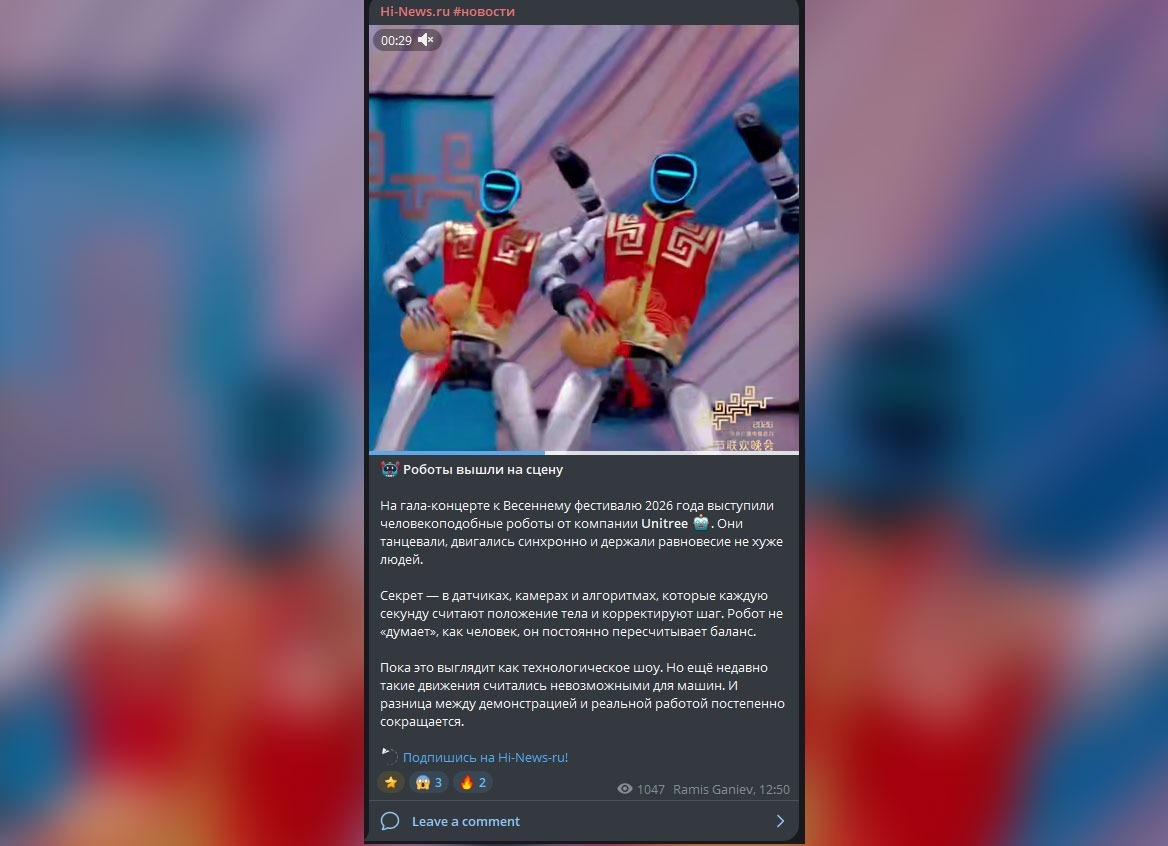
The robots’ performance at the Spring Festival Gala
Why Entire Schools Are Needed to Train Robots
At first glance, it seems like you just need to program a robot and it will do anything. But in reality, it’s much more complicated. Training humanoids requires fundamentally different data than training conventional AI models. Neural networks learn from texts and images from the internet, but data about joint movements, speed, rotation, visual perception, pressure, and force simply doesn’t exist in the public domain. It needs to be created manually, in direct contact with the machine.
That’s exactly why by the end of last year, China had created more than 40 state-run robotics data collection centers, of which 24 were already operational. These are enormous facilities covering thousands of square meters, with dozens of robots inside. Human operators repeatedly perform simple actions alongside the machines, and the system records every movement in the finest detail. Essentially, it’s an assembly line for producing artificial intelligence data.
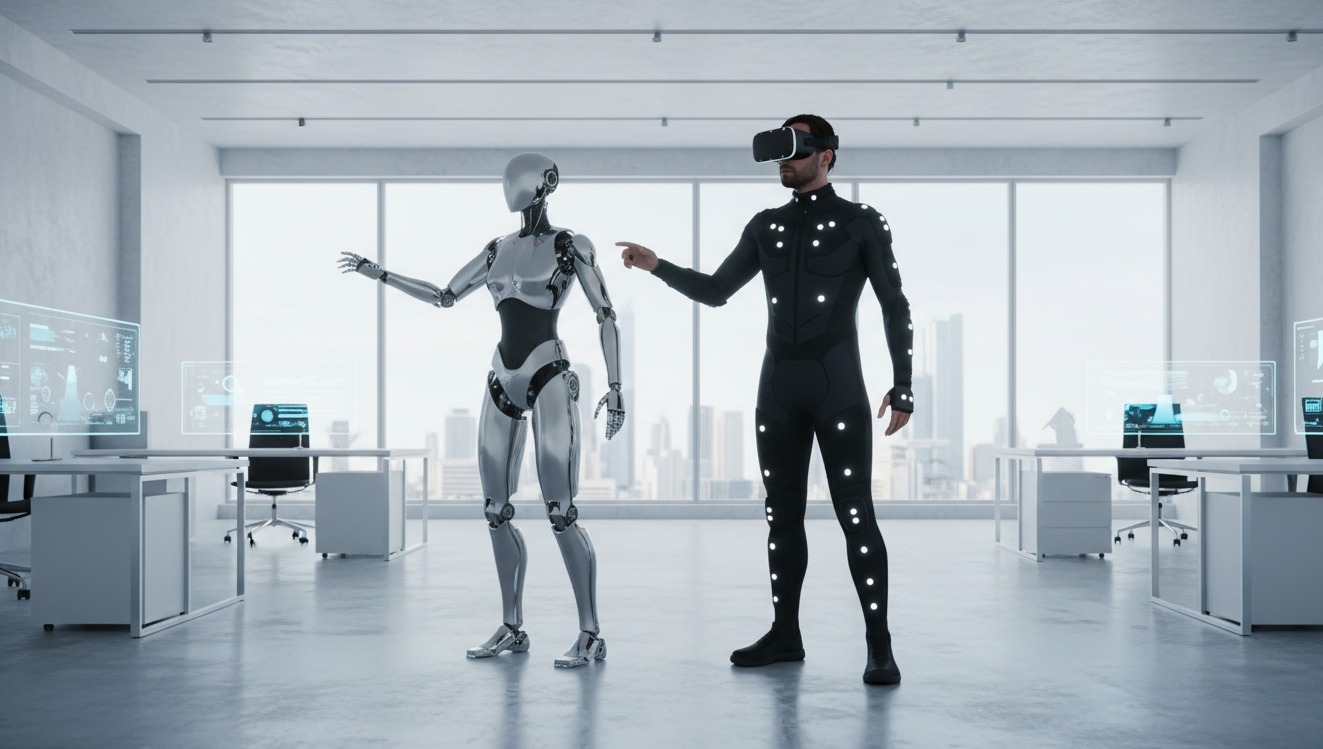
Operators literally “show” robots how to move, and the robots memorize it — again and again
How Robots Are Trained in China
One of the most illustrative examples is the Leju company center in the city of Shijiazhuang (Hebei Province), established with state support. On an area of 10,000 square meters, full-scale working environments have been recreated: an automobile assembly line, a smart home, and an elderly care facility. Sixteen humanoid training programs operate here.
In some cases, robots equipped with virtual reality (VR) and motion capture systems perform tasks such as returning empty boxes, sorting materials, and packaging products. The Leju center generates approximately 6 million data records per year — a record figure for the country. Robots trained here have mastered more than 20 functions, and the claimed task completion success rate is 95%.
In another center, located in Hubei Province, approximately 100 humanoid robots iron clothes, fold items, and wipe tables hundreds of times every day, building up an invaluable dataset.
Which Factories Will Get Robots
If you don’t train robots in real situations, it’s impossible to truly advance the technology, — explained Li Chao, co-founder and CTO of Deep Robotics.
According to him, the state policy supporting robot deployment allows testing real implementations and finding new use cases. And this, as Li Chao emphasizes, is “the aspect that is most envied abroad.”
Training centers are already generating real revenue. Three data collection centers in the provinces of Jiangxi, Guangxi, and Sichuan have driven humanoid robot sales for UBTECH Robotics totaling 566 million yuan (approximately $78 million). For context: UBTECH is one of the market leaders, which began mass deliveries of industrial humanoid Walker S2 robots to real factories in November 2025.
The automotive industry and logistics are expected to be the first sectors for mass deployment of humanoid robots — areas where many tasks are simple and repetitive. These fields are ideally suited for machines that have honed their skills hundreds of times in “school” conditions.