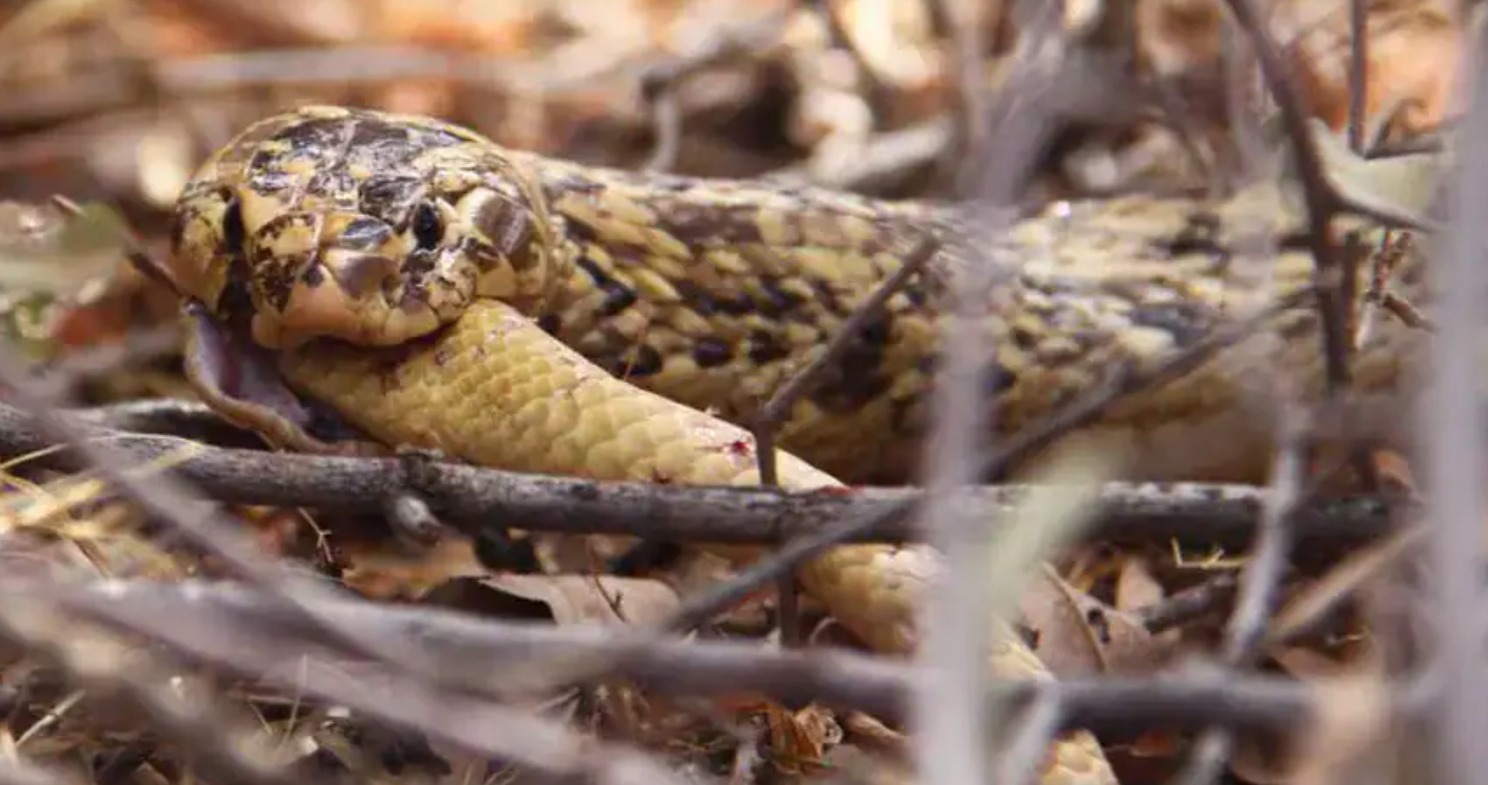
Cannibalism in snakes
Snakes eat their own kind far more often than scientists previously believed. A large-scale study compiled over 500 documented cases of cannibalism across 207 snake species — and according to the authors, this is just the tip of the iceberg. It appears that cannibalism in snakes is not a rare quirk but a full-fledged evolutionary strategy that has arisen again and again.
Cannibalism in Snakes: What It Is and Why It Occurs
Cannibalism — the consumption of individuals of one’s own species — is a form of intraspecific predation. Cannibalism among animals in general is not that uncommon — in nature it occurs far more frequently than one might think: more than 1,500 animal species, from invertebrates to mammals, have been observed engaging in this behavior. Spiders and praying mantises devouring their partners after mating are just the most well-known examples. For ecology, cannibalism is important as a population regulation mechanism: it helps control numbers, redistribute resources, and even weed out weaker individuals.
But with snakes, as it turns out, things are especially interesting. A team of Brazilian scientists led by Bruna Falcão from the University of São Paulo conducted a large-scale meta-analysis. The results were published in the journal Biological Reviews.
The researchers found 503 documented cases of cannibalism in at least 207 snake species from 15 families. Moreover, cannibalistic behavior arose independently during evolution — no fewer than 11 times in different branches of the snake family tree. This suggests that we are not looking at a random glitch but rather a stable adaptive strategy.
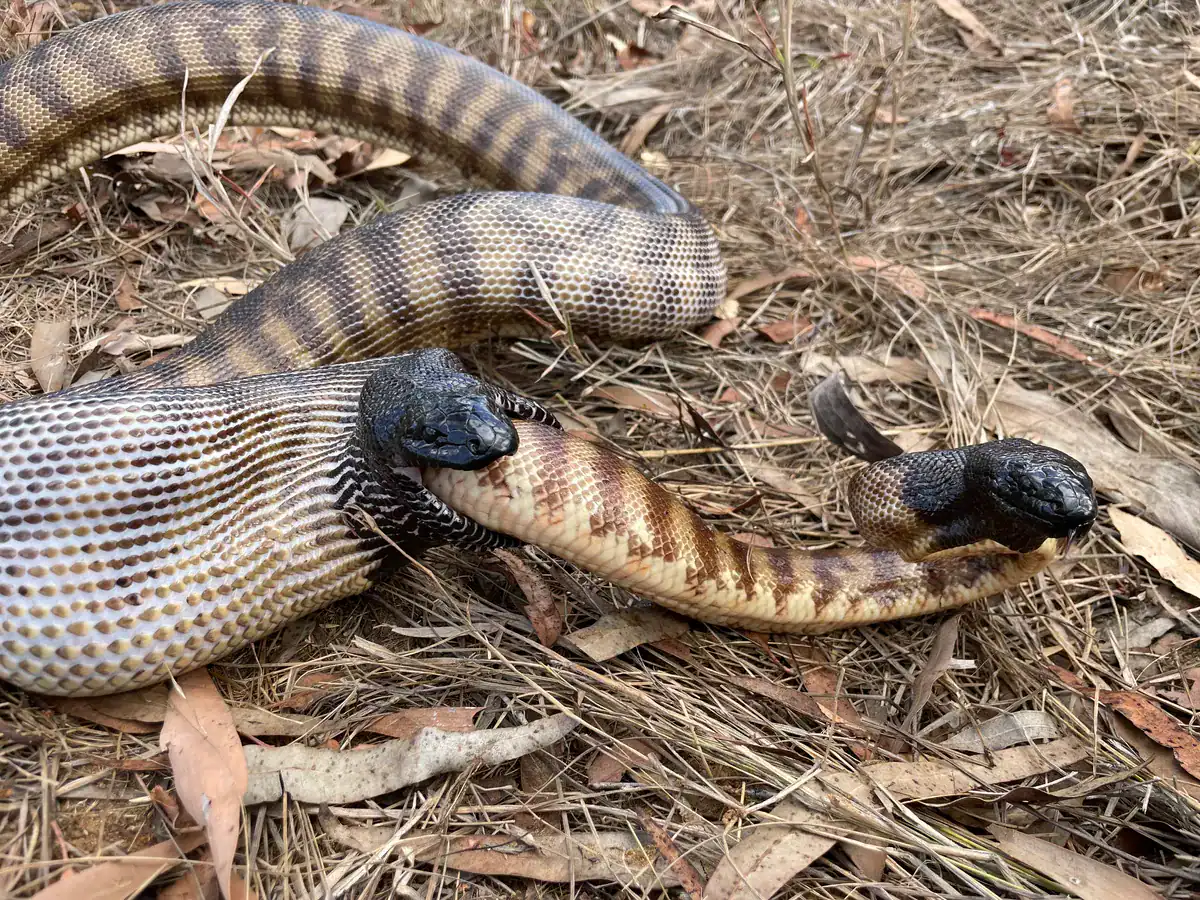
A snake eating a conspecific — a gruesome sight, but as it turns out, quite common in the reptile world
Which Snake Species Most Often Eat Other Snakes
Not all snakes are equally prone to cannibalism. The leaders turned out to be colubrids (family Colubridae) — accounting for 29% of all recorded cases. This is the largest snake family, which includes such familiar species as corn snakes, milk snakes, common grass snakes, and water snakes. Interestingly, colubrids do not typically specialize in eating other snakes, so scientists suggest that their cannibalism is most often triggered by stressful conditions — a shortage of their usual prey.
In second place are vipers (Viperidae) with 21% of cases, but there is an important caveat: most of these observations were made in captivity. In third place are elapids (Elapidae) — 19%, including cobras, mambas, and kraits. Cannibalism among elapids surprises no one: many cobras are recognized snake-eaters. The very scientific name of the king cobra, Ophiophagus hannah, literally translates as “snake-eater.”
Meanwhile, blind snakes (Scolecophidae) turned out to be the only major group without a single recorded case of cannibalism. The reason is likely anatomical: they descended from an ancient lineage of reptiles and never developed the flexible lower jaw characteristic of most snakes — the very structure that allows snakes to swallow prey wider than their own head. It is precisely this structure that allows many species, including pythons, to swallow prey whole, even if it is too large.
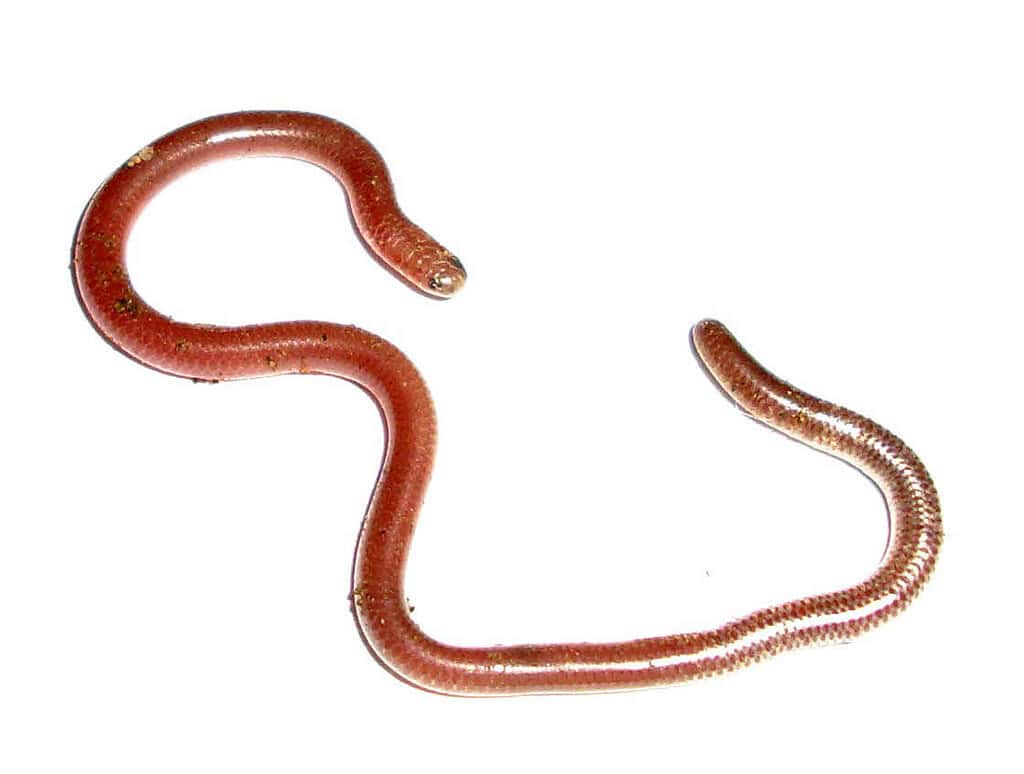
Texas blind snake
Why Female Snakes Eat Their Own Offspring
One of the most common types of cannibalism in snakes is maternal cannibalism. Females eat their own non-viable eggs or dead hatchlings. It sounds horrifying, but from a biological standpoint it is a rational strategy: the mother recovers the energy spent on gestation and redirects it toward protecting her healthy offspring. This behavior has been particularly frequently observed in boids — a family in which females often exhibit parental care.
An even more impressive example involves green anacondas. Females of this species are significantly larger than males and mate with multiple partners. After mating, the female may simply eat several of her suitors — thereby gaining a protein reserve for egg formation while also reducing sperm competition between different males. Brutal, but effective.
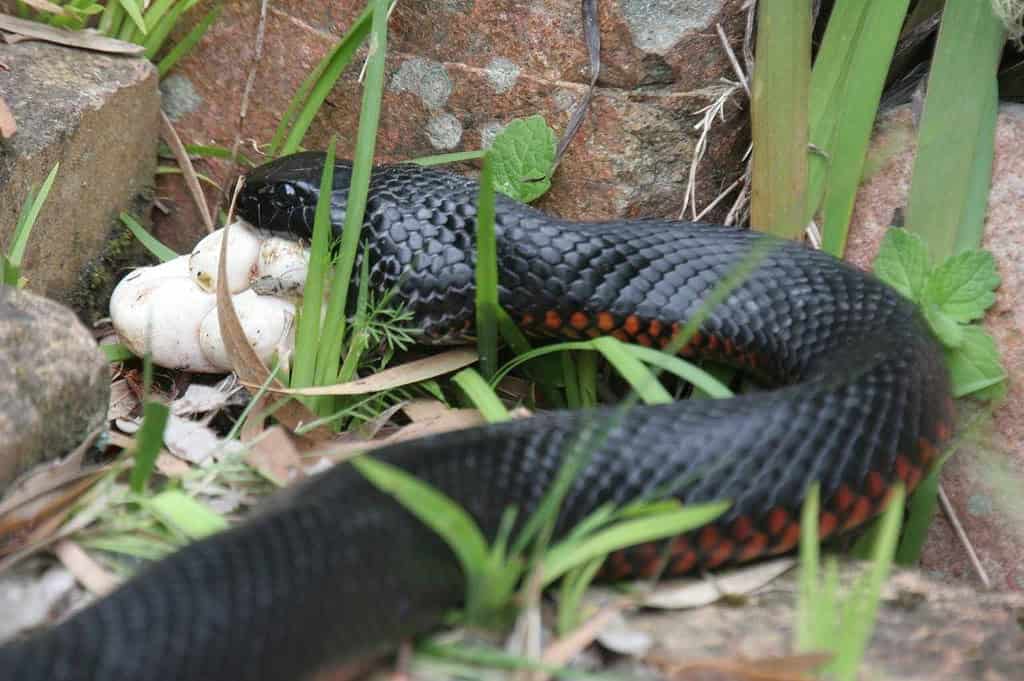
Researchers discovered numerous cases of maternal cannibalism, where females eat their own non-viable eggs or hatchlings
There is also territorial cannibalism. In South Africa, researcher Bryan Maritz discovered a Cape cobra that had swallowed a rival whole after a territorial conflict. The snake was nicknamed “Hannibal” — after the famous movie cannibal. And in Thailand, scientist Max Jones, who was tracking king cobras using GPS transmitters, noticed that the signals of two snakes converged and then “moved together.” When he found the source — it turned out that the male had swallowed the female.
Why Snakes Eat Each Other: Innate Behavior or a Stress Response
The key question facing scientists is: is this genetically hardwired behavior or a flexible response to circumstances? Opinions are divided.
The study authors believe that cannibalism in snakes is an “ecologically significant behavior” that evolution “invented” over and over again. According to Falcão, the scale of the findings astonished even them: “Going from a few scattered reports to more than 500 documented cases was truly staggering.”
However, not all colleagues share this enthusiasm. Harvey Lillywhite, an ecologist at the University of Florida, believes that cannibalism in snakes is more of a “plastic” behavior — an opportunistic response to specific circumstances (hunger, crowding, stress) — rather than a genetically programmed trait. After all, a stressed snake may even bite its own tail.
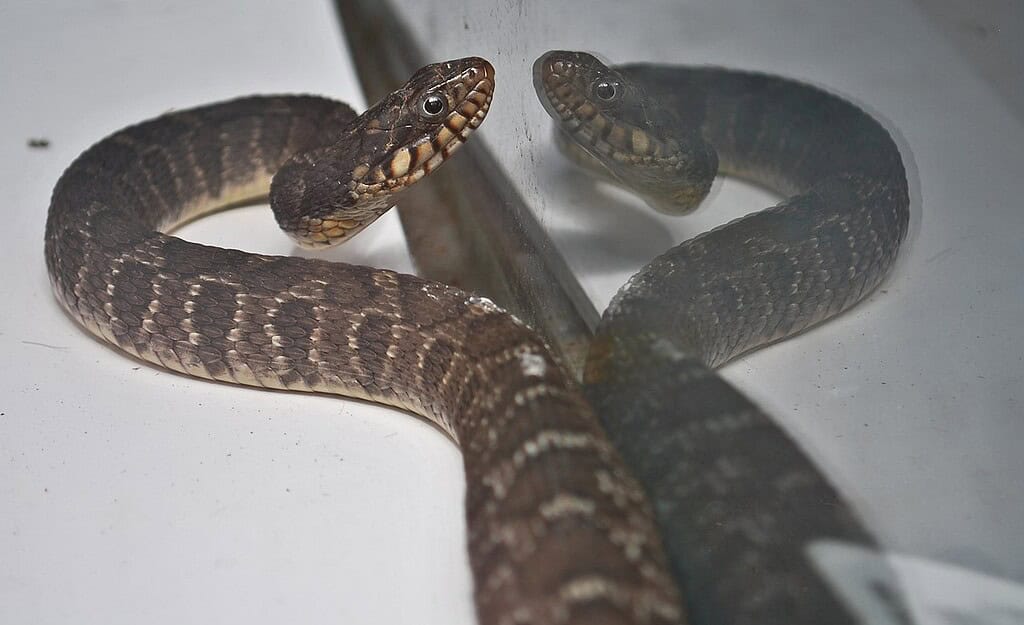
Nerodia rhombifer — a species of snake in the family Colubridae
And here it is important to consider a serious caveat: nearly half (43%) of all recorded cases of cannibalism occurred in captivity. The stress of being kept in a confined space, artificial food restriction — all of this can provoke behavior that the snake would not display in the wild. Some early 20th-century experiments were outright dubious: researchers deliberately starved snakes or placed two individuals in a cramped container with a single prey item — and waited to see what would happen.
Why Cannibalism in Snakes Is More Common Than Scientists Think
503 cases is not the ceiling but rather the lower bound. Falcão and her colleagues are confident: the real picture is far more extensive. Many observations remain in old field notes, undigitized archives, and regional museum collections that the researchers simply could not access.
Moreover, snakes are secretive animals.