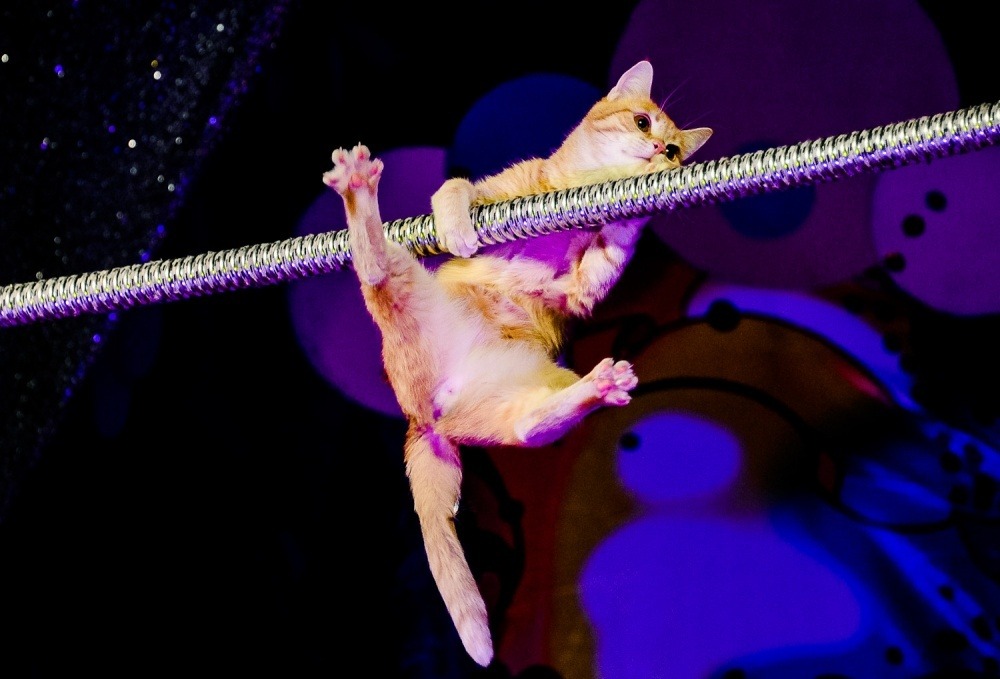
Can cats be trained to follow commands? You’ll be surprised at what they’re capable of
A cat is not a dog — that’s a fact. But this doesn’t mean they’re untrainable. Cats are intelligent, it’s just that their motivation works differently. And if you approach it correctly, you can teach your pet not only to come when called, but also to perform tricks. The question isn’t whether it’s possible, but rather — how exactly to do it.
Why Cats Are Harder to Train Than Dogs
The main difference lies in psychology. Dogs are evolutionarily oriented toward hierarchy and cooperation with humans. Cats are not. They don’t perceive their owner as a pack leader, which means they don’t automatically strive to follow commands.
There are other nuances as well:
- cats are harder to read through facial expressions and body language than dogs;
- they lose concentration more quickly;
- they cannot be forced to work through pressure.
It’s important to remember: punishment doesn’t work with cats, and only destroys their trust in you. If a pet doesn’t respond — they’re not being stubborn, they simply don’t see any reason to comply. That’s just how cats are.
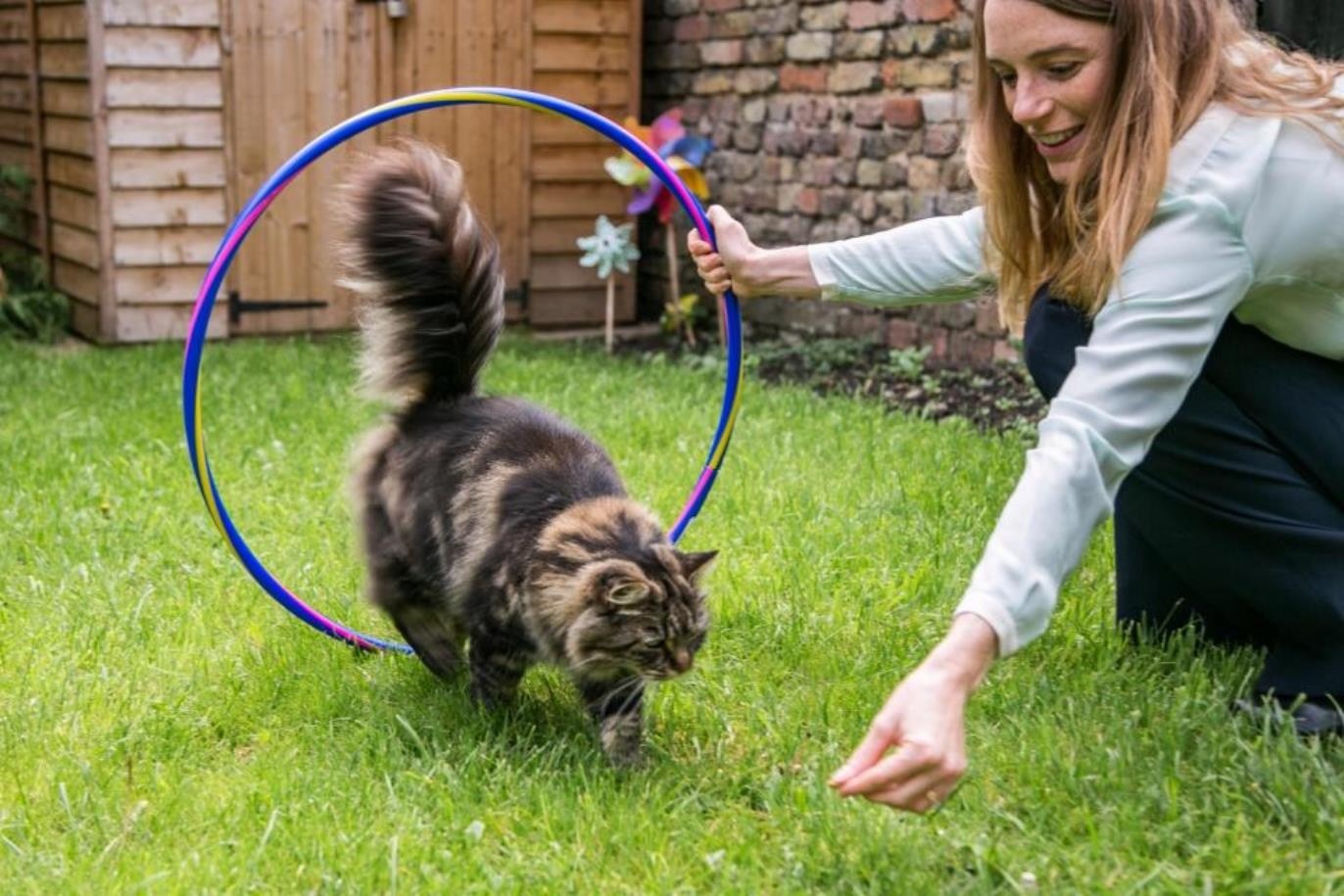
Cats generally aren’t oriented toward directives and hierarchy, so commands work differently than with dogs
What Commands and Tricks Can a Cat Learn
Despite stereotypes, the list of skills is quite extensive. With systematic training sessions, cats are capable of:
- coming on command;
- walking on a harness;
- sitting;
- giving a high five;
- searching for and fetching toys;
- going to a designated spot on command;
- jumping onto objects and jumping over obstacles;
- rolling over.
Some cats are more trainable than others. Everything depends on age, temperament, and breed. Young and curious animals typically learn faster.
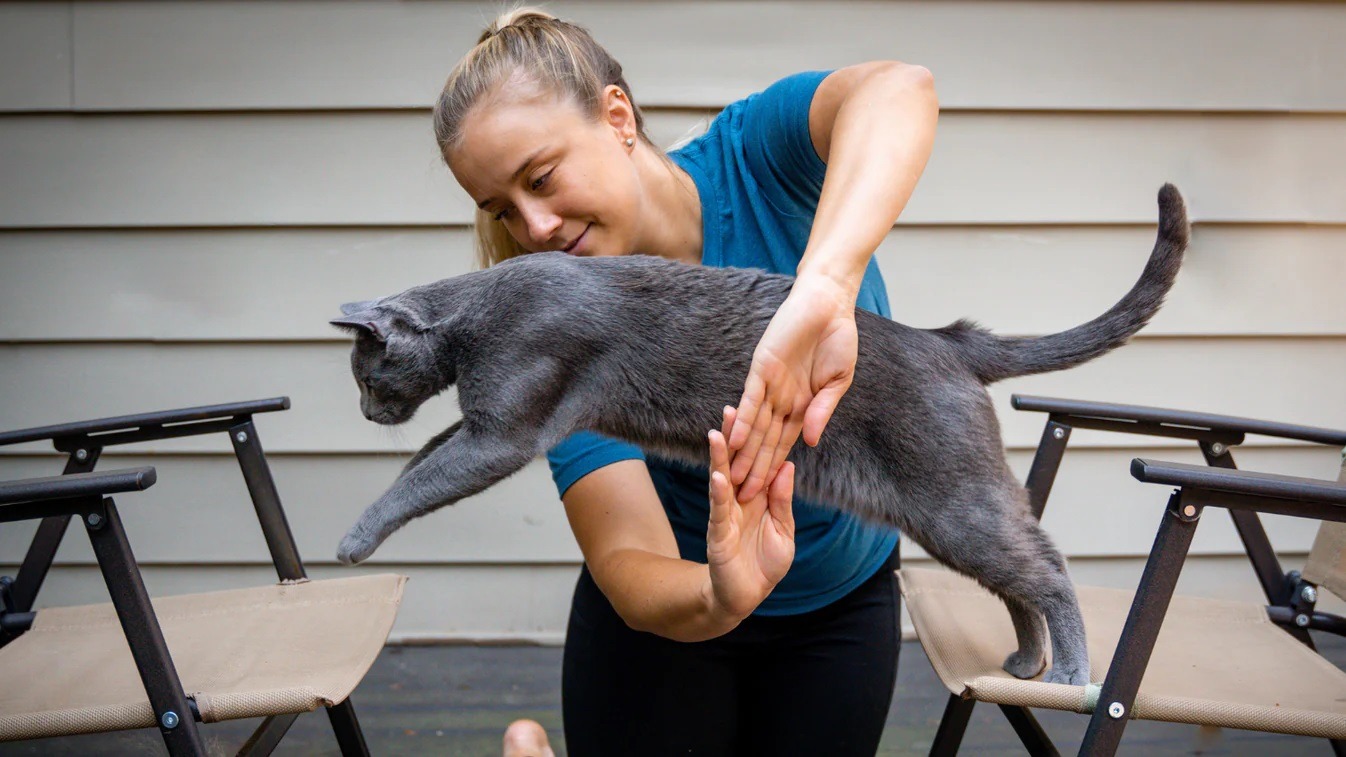
It’s best to start training at an early age, when the cat is still exploring the world around them
How to Properly Train a Cat Without Stress
The first rule — patience. If a dog needs just one session, a cat may need three or five. Short sessions of 3–5 minutes work better than long training periods. Don’t rush, don’t pressure the cat, and over time they’ll get used to training.
Second — rely on natural inclinations. Does your cat like to reach out with their paw? Work on the high five. Love chasing a ball? Try fetch training.
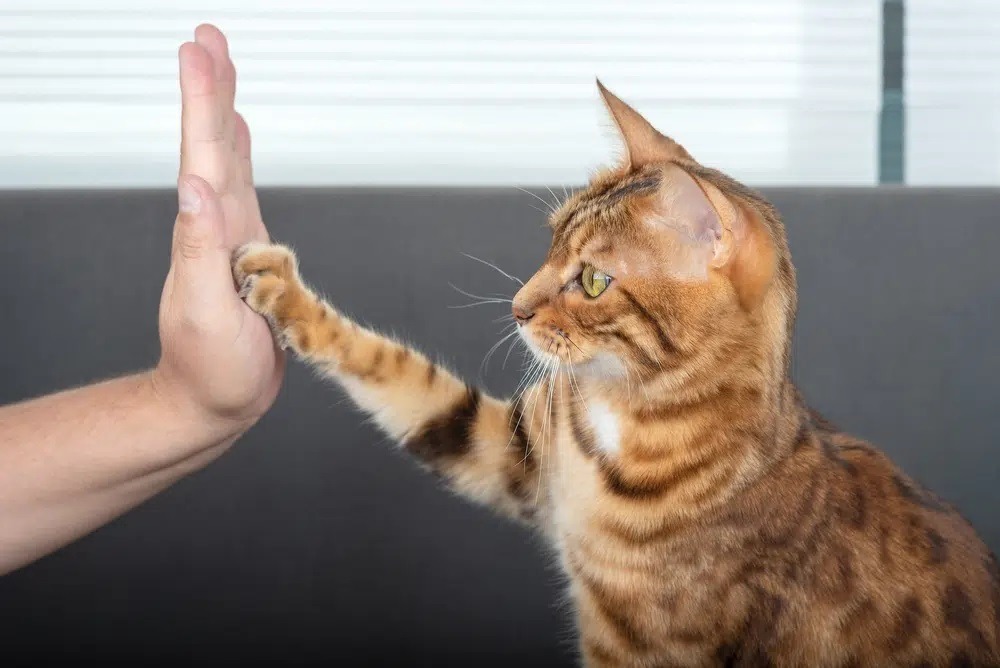
Once you’ve mastered basic skills, you can move on to other activities that your cat isn’t naturally inclined toward
Third — rewards. Treats reinforce desired behavior, but they shouldn’t exceed 10% of the diet. It’s better to use special low-calorie treats and give them only during training sessions.
And most importantly: the goal of training isn’t circus tricks, but connection. If the cat feels interested and safe around you, learning becomes a natural extension of communication. Remember: cats are smarter than commonly believed.