I’ve long been waiting for the moment when AI companies would start affecting not just graphics cards, but smartphones too. And that moment has arrived. Because major corporations are buying up RAM for their neural networks, the prices of phone components have sharply increased. Budget and mid-range smartphones, which already balance between price and specs, are suffering the most. Well-known insiders are already sounding the alarm about what changes to expect. And some of them, I’ll say right away, won’t make you happy. Let’s break down what’s actually happening.
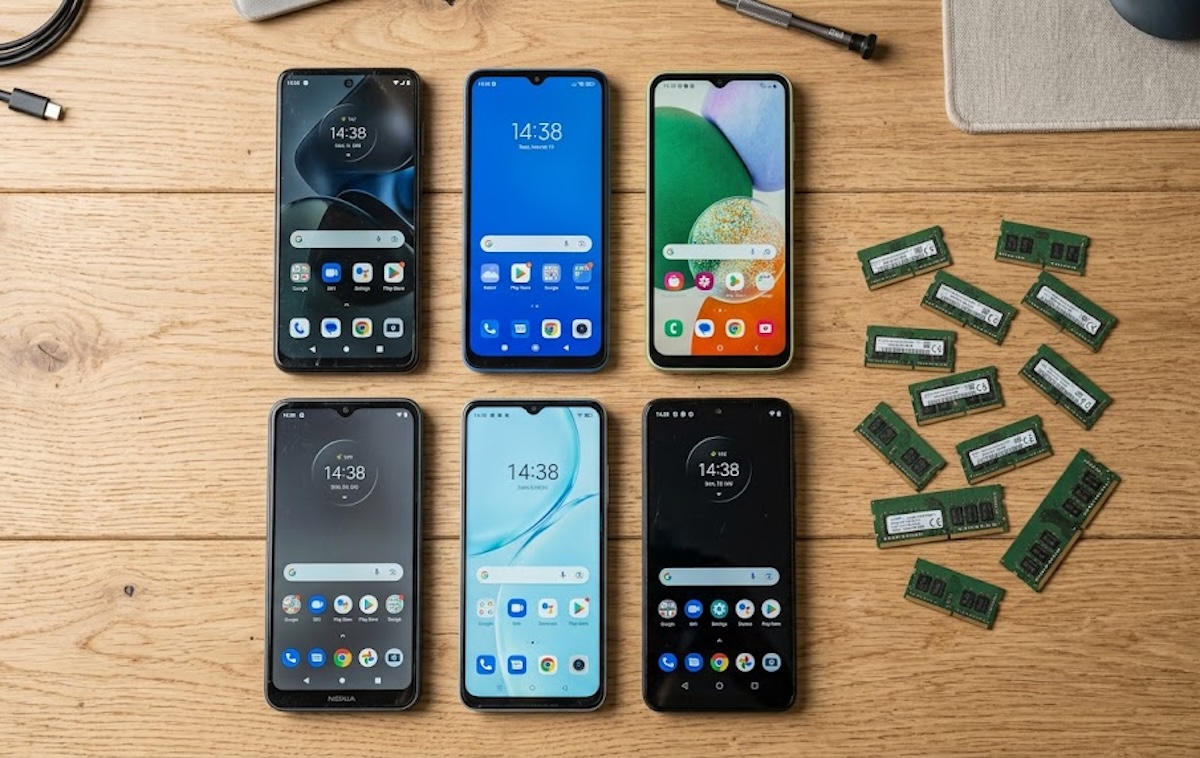
Smartphones will change soon.
Why Smartphones Are Getting Much More Expensive
The core of the problem is simple. Companies like OpenAI, Google, and others are building massive data centers and buying memory chips in bulk. Demand has skyrocketed, supply can’t keep up, and LPDDR5X RAM prices have risen by tens of percent in recent months, sometimes even doubling. According to Counterpoint Research analysts, in a smartphone with 8 GB LPDDR5X and 256 GB UFS 4.0, the RAM and storage already account for 14% and 11% of the cost respectively. And by the second quarter, these figures could increase by another 20% and 16%.
Put simply, this means manufacturers have to make sacrifices. And they’re not sacrificing in the premium segment, where margins can absorb the rising costs, but specifically in the mid-range and budget segments. There, every dollar counts, and if a component gets more expensive, it’s either cut down or replaced with something cheaper.
Will 8 GB of RAM Be Enough for a Smartphone in 2026
One of the main changes the insider talks about is that smartphones with 8 GB of RAM and 512 GB of internal storage will once again become the norm in the mid-price segment. Currently, configurations of 12/256 or 12/512 are common in this niche, but when every extra gigabyte of RAM noticeably hits the budget, it’s easier for manufacturers to cut the RAM than to raise the price tag.
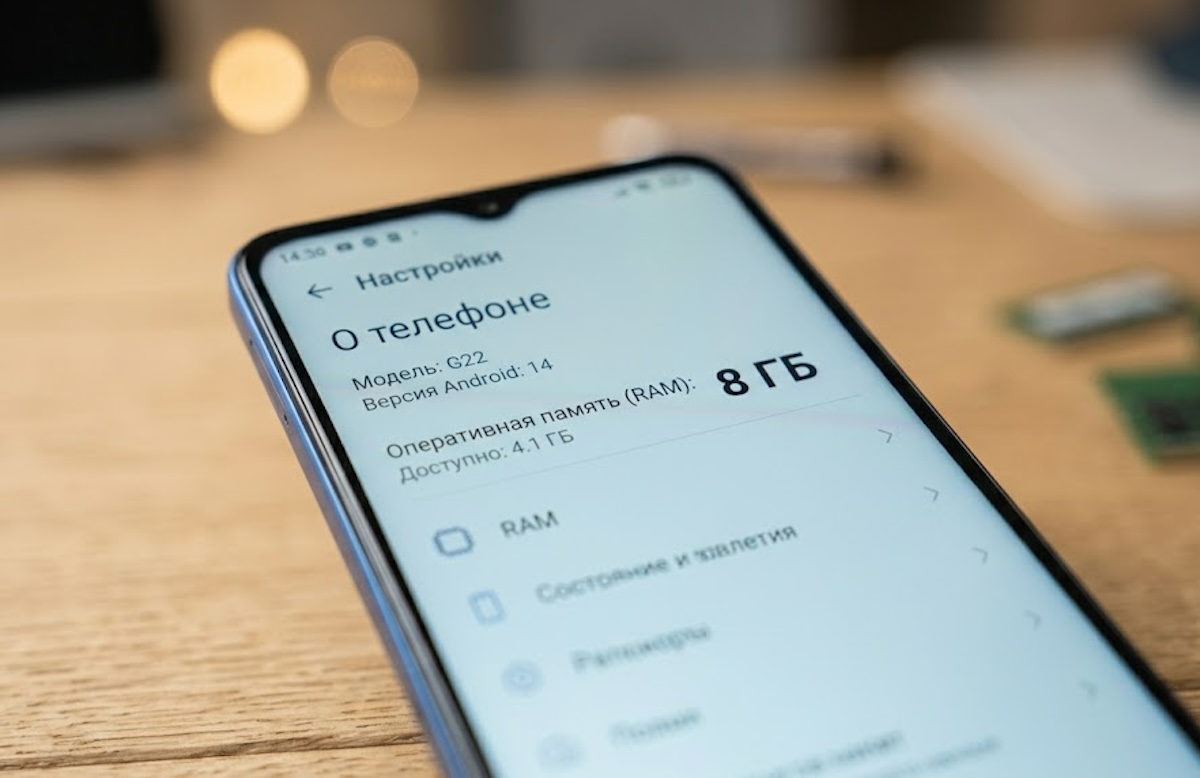
8 GB will become the norm again.
Honestly, for the vast majority of tasks, 8 GB will be enough in 2026. But if you’re used to keeping a dozen apps running in the background and switching between them without reloading, the difference will be noticeable. Yes, Android is quite good at managing memory, but 12 GB still feels different in multitasking.
Smartphones with microSD Card Slots
Now this is perhaps the most pleasant news from the entire leak. According to Digital Chat Station, the hybrid microSD card slot is returning to mid-budget smartphones. It works like this: the tray has space for two SIM cards, but one of them can be replaced with a memory card.
I personally think this is an excellent solution. When internal storage is getting more expensive, the ability to expand storage for a couple hundred rubles on a card becomes truly valuable. Although using cards is worse than internal storage. Remember how just a few years ago microSD support was in practically every smartphone, and then manufacturers started getting rid of it, citing “space savings.” In practice, it was savings for the manufacturer’s wallet, not the user’s. I’d like to believe the slot will return to flagships too, but for now it’s only about the mid-range segment.
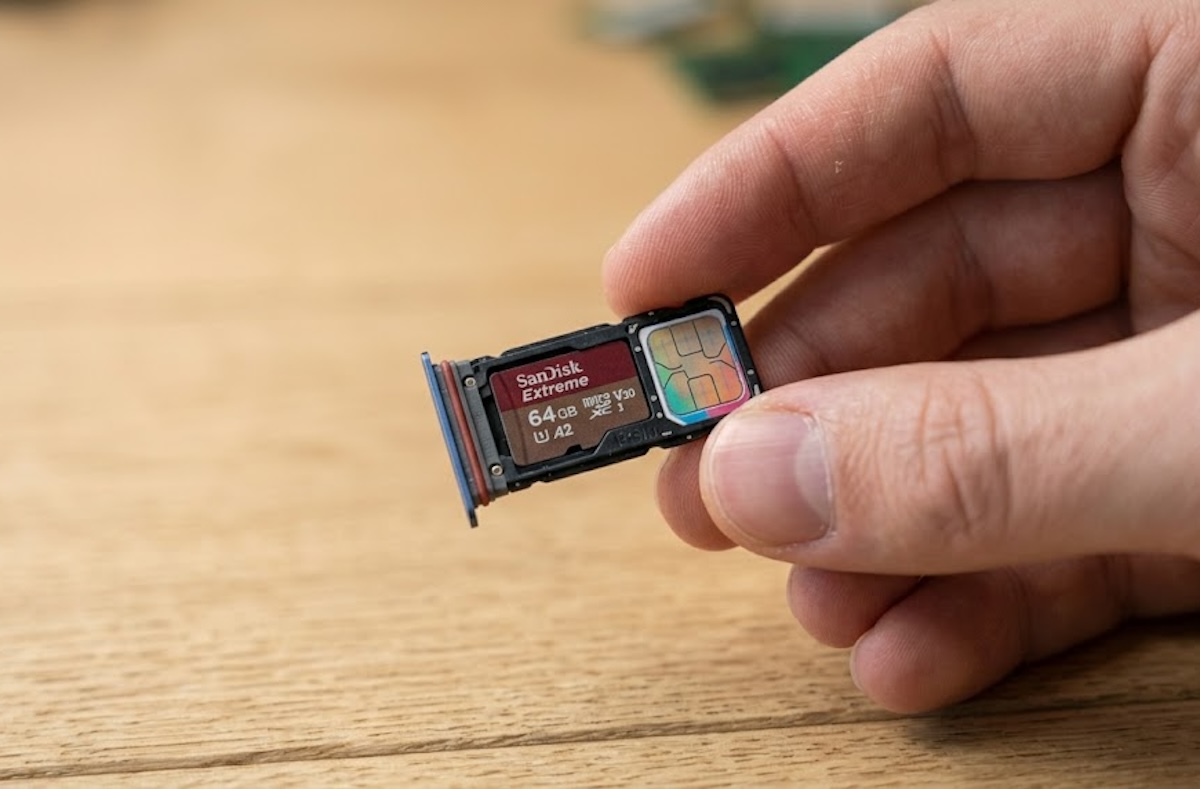
Memory cards expand smartphone capabilities. The main thing is that they don’t interfere with using the second SIM.
Plastic Body in a 40,000-Ruble Smartphone. Why Is This Happening
If I talk about microSD with enthusiasm, things aren’t as rosy here. Insiders claim that plastic frames and optical fingerprint scanners will return to mid-range smartphones. We’re talking about the price segment around 40,000 rubles. Models like the OPPO Reno 15, OnePlus Ace 6T, and Samsung Galaxy A56 fall into this niche.
In practice, this means that for the same money you’ll get a smartphone that feels a bit cheaper in hand than before. An optical scanner works slower than an ultrasonic one and responds worse to wet fingers. And a plastic frame is simply less pleasant to the touch. Personally, I don’t think this is critical, but if you’re used to a metal frame and a fast under-display sensor, the difference will be noticeable.
90 Hz Smartphone Screen. Is It Worth Buying in 2026
And here’s the most unpleasant part. According to the same source, screens with 90 Hz refresh rate and waterdrop notches may appear in devices slightly more expensive than where they usually were. Currently, this is the domain of very cheap models like the Samsung Galaxy A17 for $200 or Redmi 15C for $120. But under memory shortage conditions, manufacturers will save on the display to avoid inflating the final price tag.
If you’re used to 120 Hz AMOLED displays even in affordable smartphones, this could be an unpleasant surprise. A waterdrop notch instead of a compact “pill” or “hole-punch” looks frankly outdated in 2026. But manufacturers have their own logic: it’s better to use a simpler screen than to raise the price by two or three thousand rubles.
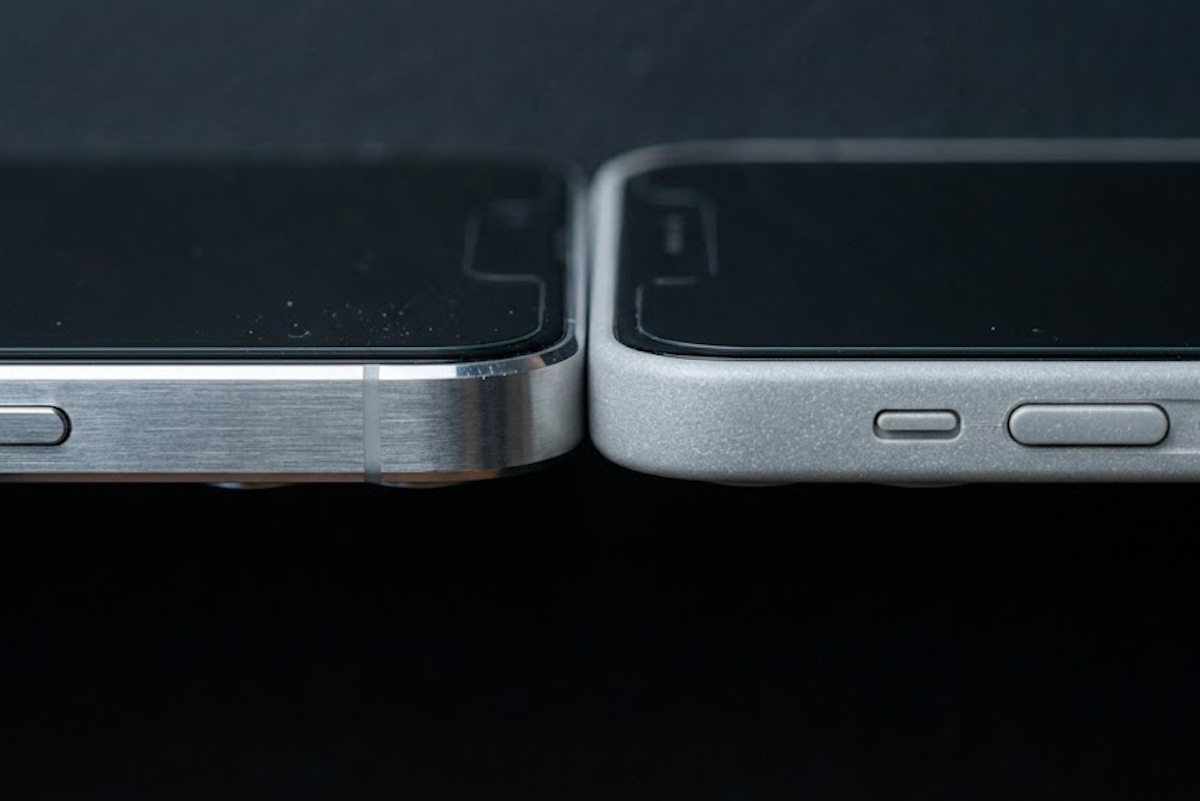
Saving on body materials isn’t that critical, but a metal phone feels nicer to hold. You can even tell from the picture.
Is It Worth Buying a Budget Smartphone in 2026
The RAM crisis situation is unlikely to resolve quickly. AI companies continue to ramp up capacity, while memory supply grows slower than demand. This means that mid-budget smartphones in 2026 may give you less for the same money than a year ago. Less RAM, simpler materials, more modest screens.
But it’s not all bad. The return of the microSD slot partially compensates for the cut in internal storage, and 8 GB of RAM is still enough for comfortable use in the mid-range segment, as long as you’re not loading your smartphone with heavy games and dozens of background apps. My advice: if you’re planning a purchase, carefully study the specs and don’t rely on price as the only indicator of quality. This year, price tags have become less predictable, and for the same amount of money you can get very different devices.