Apple is reportedly preparing a second October launch, and for Mac buyers it may matter more than the first. According to Bloomberg’s Mark Gurman, Apple plans to introduce new products “around Tuesday, October 27.” The headline device is a 14- and 16-inch MacBook Pro with a touch-enabled OLED display. Apple has not confirmed the date. It has officially announced only its October 13 event, so the October 27 lineup remains a report, not an announcement. If you are thinking about buying a MacBook Pro, it may be worth waiting a couple of weeks, but the caveats below matter.
What you need to know
- Bloomberg reports that Apple will launch new products around October 27, mainly through online videos and in-person demos for journalists rather than a large stage event.
- The 14- and 16-inch MacBook Pro is expected to get a touch-enabled OLED display and a Dynamic Island in place of the notch. Bloomberg says the bodies will also be thinner and noticeably lighter.
- Bloomberg reports that the base 14-inch MacBook Pro and the iMac will get the new M6 chip, and 9to5Mac’s sources say their designs will not change. 9to5Mac and Cult of Mac report that the OLED models will use M5 Pro and M5 Max.
- The iPad mini is reportedly getting an OLED display, a redesigned speaker system and a front camera on the long edge.
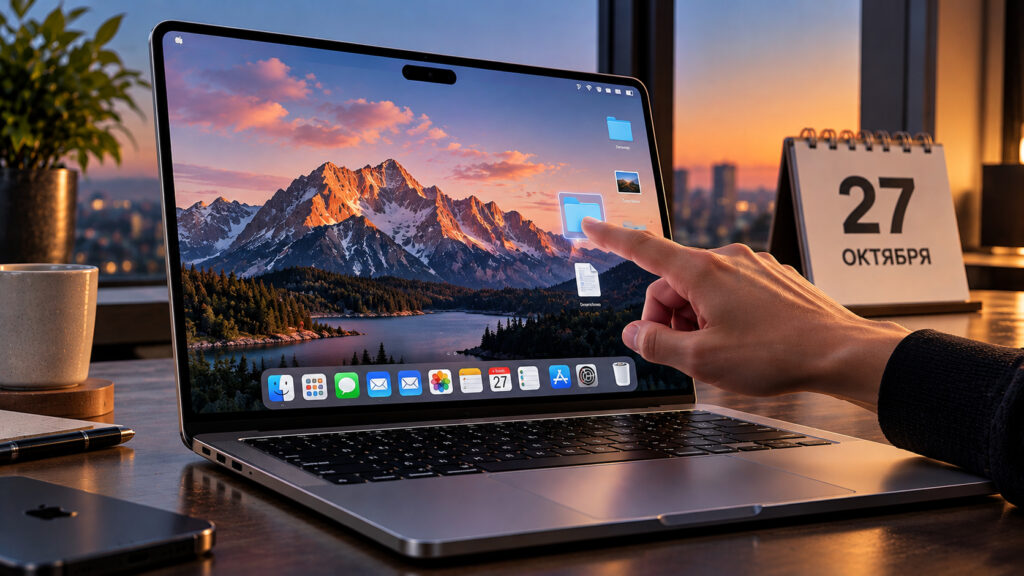
Render of a MacBook Pro with an OLED display and Dynamic Island
Why Apple may hold two launches in one month
According to Mark Gurman of Bloomberg, Apple will introduce new products “around Tuesday, October 27.” That would be the company’s second launch of the month. On October 13, Apple is set to show a smart home hub, a new Apple TV 4K and an updated HomePod mini. MacRumors reported earlier in the month that Apple was planning two waves of October announcements. Bloomberg’s report now attaches a specific date to the second wave.
A big stage event appears unlikely. Bloomberg describes online videos and in-person demos for journalists. The source compares this to October 2024, when Apple released the M4 iMac, Mac mini and MacBook Pro over several consecutive days through videos and press releases. Gurman says the launch is aimed at people who edit video, process photos and make music.
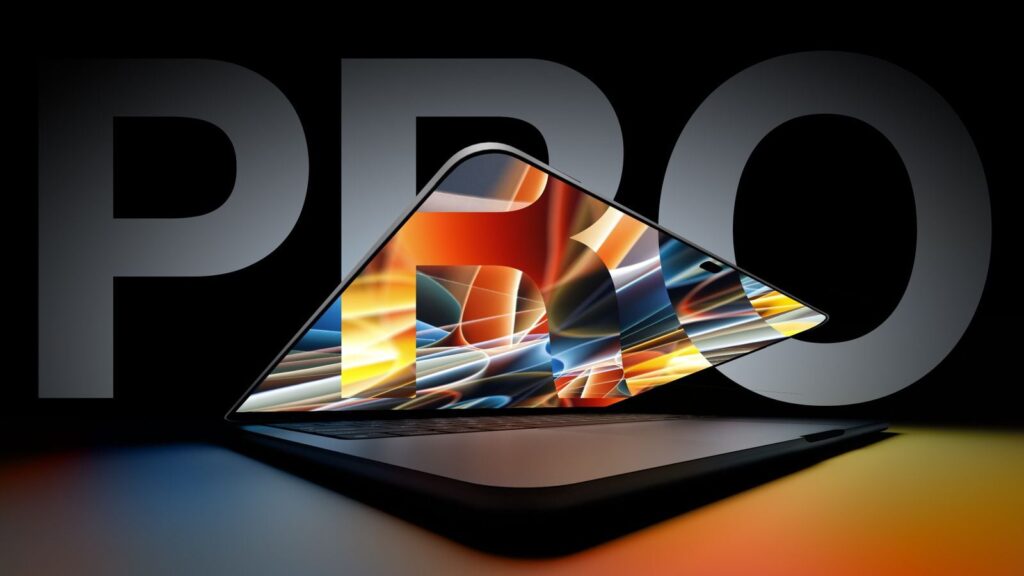
Render of an OLED MacBook Pro, partially open
There is no official invitation yet. Apple has confirmed only the October 13 event, so the October 27 date remains Bloomberg’s reporting.
The MacBook Pro with an OLED touchscreen
The main product expected on October 27 is a 14- and 16-inch MacBook Pro that would, for the first time, have an OLED display with touch support. According to the source, signs of this are already visible in Apple’s software. Finger-control gestures were reportedly found in the macOS 27.2 beta. The source also argues that parts of the macOS 27 Golden Gate interface, such as Control Center and the volume slider, appear designed for a finger rather than a cursor.
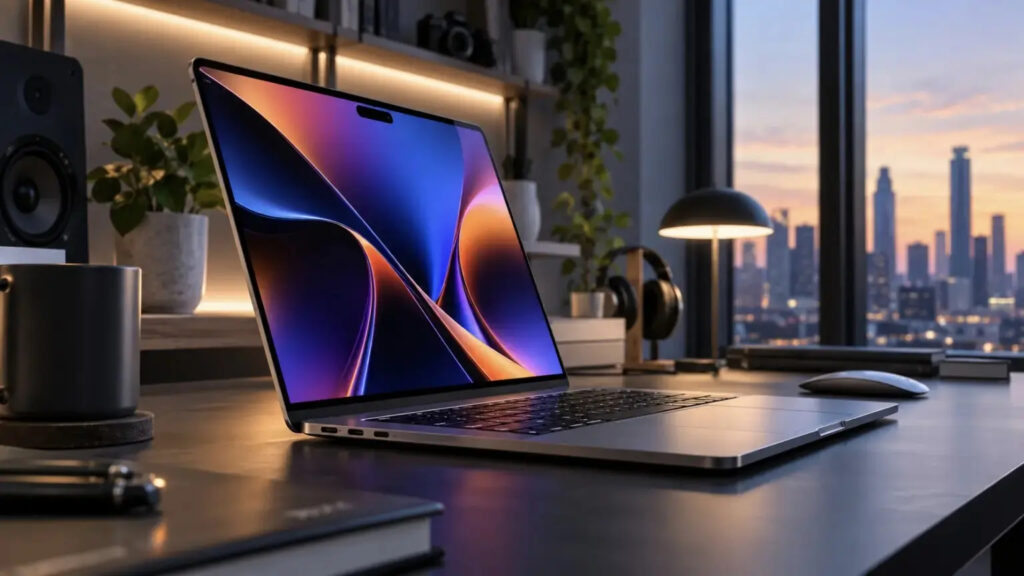
Render of an OLED MacBook Pro with Dynamic Island
Design: Dynamic Island, thinner and lighter bodies
The notch has cut into the top of the MacBook Pro display since 2021. It is expected to be replaced by the iPhone’s Dynamic Island, which would be a first for the Mac. Bloomberg reports that the bodies will be thinner and noticeably lighter than the current models, although nobody has said by how much. The naming also appears settled: rumors of a “MacBook Ultra” did not pan out, and both models will reportedly stay in the MacBook Pro lineup.
Chips: M5 Pro and M5 Max, not M6
Reports differ on the chips. 9to5Mac and Cult of Mac say the OLED models will use M5 Pro and M5 Max rather than the new M6 generation. The source acknowledges this sounds odd for a flagship but argues that the display and body are the main upgrades here, not the processor. Buyers hoping for an M6 Max and OLED in one machine would, under these reports, have to choose one or the other.
What OLED changes compared with mini-LED
The display itself raises the most questions. The mini-LED panels in current MacBook Pro models already hold brightness and contrast well, according to the source. However, a halo can appear around bright objects in dark scenes. On an OLED panel, each pixel produces its own light, so there should be no blooming, and black backgrounds should no longer glow gray. Apple has used a two-layer OLED in the iPad Pro since 2024. The source suggests that this proven tablet technology could move to the laptop, but it presents this as a possibility, not a confirmed detail.
A standard MacBook Pro and iMac with M6
According to Bloomberg, Apple will update the base 14-inch MacBook Pro and the iMac on the same day, and both will get the new M6 chip. Sources cited by 9to5Mac say neither computer will change externally, and both will look like the current versions.
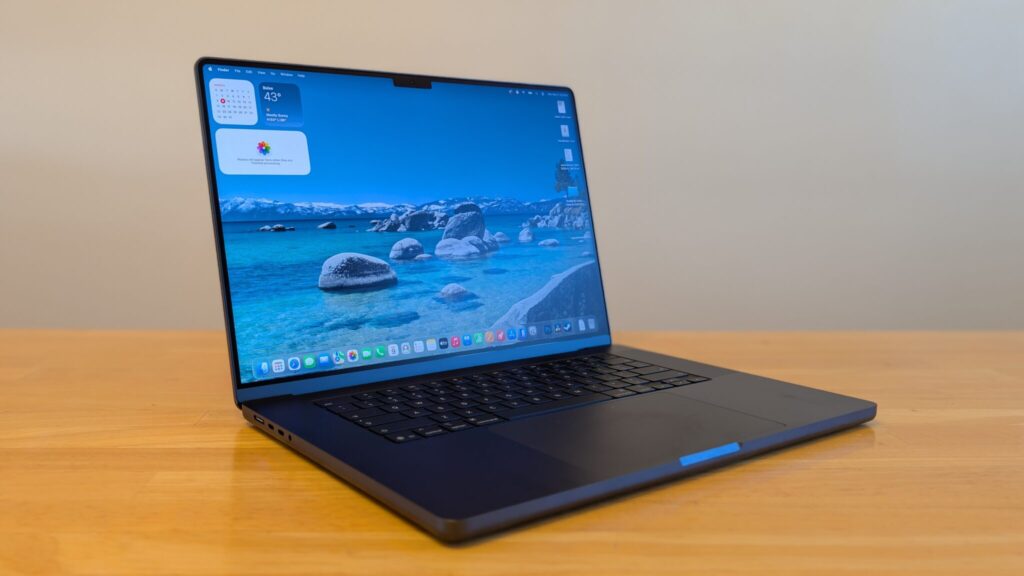
MacBook Pro with the M5 chip
If these reports are accurate, the most basic MacBook Pro would get a newer processor than the more expensive OLED models. The source argues this could suit people who need a laptop for study, browsing and office work. In the source’s view, a new chip in a familiar body usually costs less than a redesign, and such a Mac tends to have fewer first-generation problems.
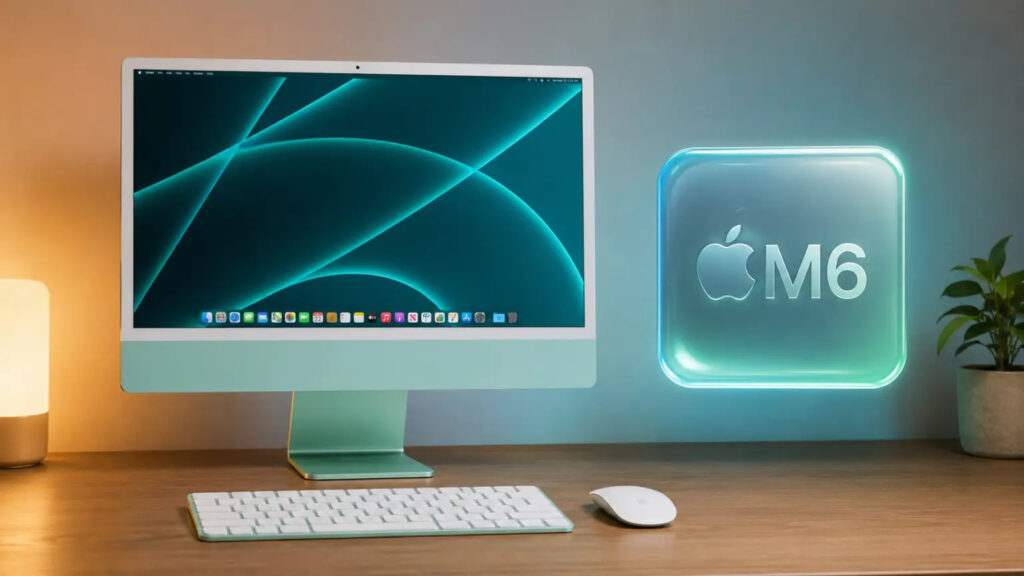
Render of an iMac with the M6 chip
The iMac story is similar. No new design is expected this time, so the difference from the M4 model would come down to performance and possibly new colors. The source suggests there is little reason to replace an M1 or M3 iMac that is working without problems just to get M6.
iPad mini gets OLED for the first time
The last item on the list is not a Mac. Apple will reportedly update the iPad mini, and the small tablet is also expected to get an OLED display. According to Gurman, that is not the only change. The iPad mini will also get a redesigned speaker system and a front camera on the long edge.
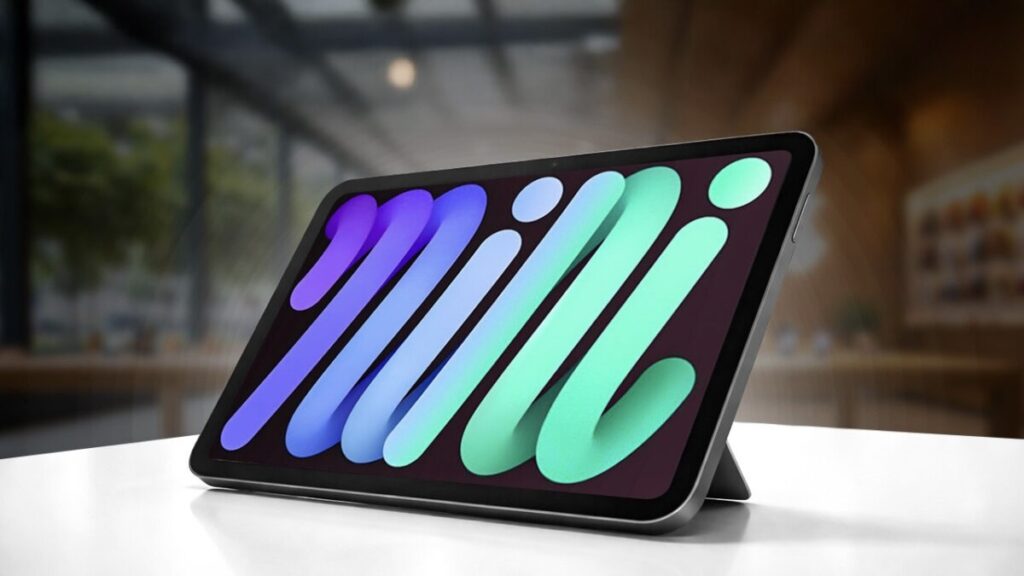
Render of an OLED iPad mini
The camera move matters more than it might seem. The iPad mini’s camera currently sits on the short edge, so during a call in landscape orientation you appear to be looking off to the side of the other person. The iPad Pro, iPad Air and standard iPad have already moved to a landscape camera, which would make the mini the last in the lineup to drop this quirk.
The sources do not say which chip the tablet will use. The current iPad mini runs on the A17 Pro. The source author expects a chip from a more recent iPhone but explicitly labels this as personal speculation, not Bloomberg’s reporting.
Wait for October 27 or buy now?
If you are choosing between the current MacBook Pro and what may be announced in a couple of weeks, start with what you need from a laptop. Neither Apple nor Bloomberg has given prices. The source author finds it hard to imagine that an OLED panel, a touchscreen and a new body would make the MacBook Pro cheaper.
- Waiting may make sense if you work with video and photos and have long wanted a display without blooming, or if laptop weight matters to you.
- Buying now may make sense if you need a working Mac right away. The current model is not going anywhere, and the source author expects it to be sold at lower prices after the announcement.
- Keep first-generation risk in mind. According to the source, the first version of a new design almost always has teething problems that Apple fixes only in the next generation.
What is confirmed and what is not
Everything about the October 27 lineup currently comes from reports by Bloomberg, 9to5Mac, Cult of Mac and MacRumors, not from Apple. The date could change, and Gurman himself has allowed that the touchscreen MacBook Pro could move to November. The chip configuration of the OLED models is based on reporting from 9to5Mac and Cult of Mac and may not prove accurate. If Bloomberg is right, however, the MacBook Pro’s most important component, its display, would change for the first time in five years, and the long-running debate over whether a Mac needs a touchscreen would move from theory to store shelves.