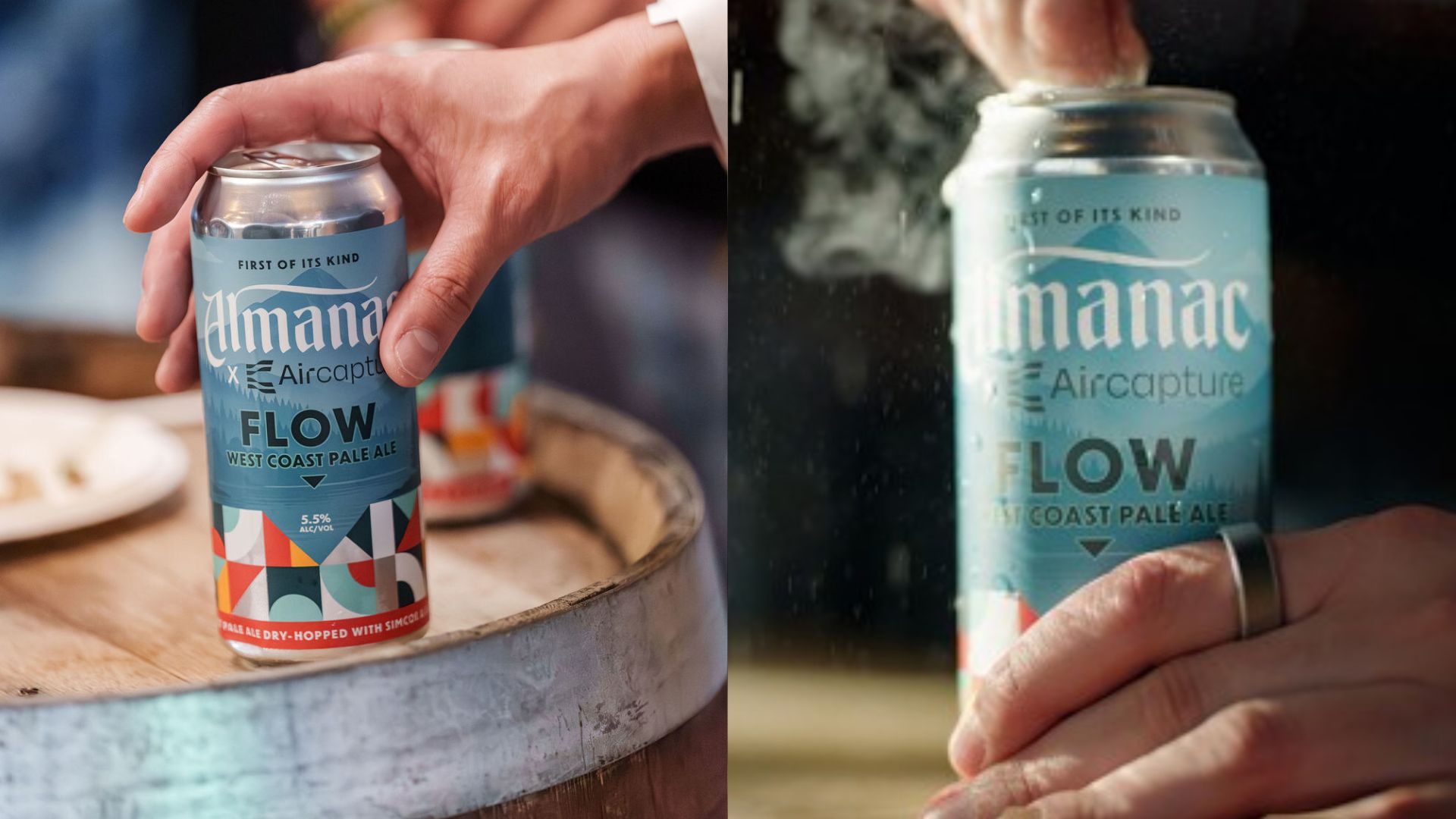
Flow Beer — the world’s first beer carbonated with carbon dioxide captured directly from the air.
A craft brewery in California has released a beer carbonated with CO₂ that was literally pulled from the air. Aircapture, a company specializing in direct air capture of carbon dioxide, installed a modular direct air capture system right on the premises of Almanac Beer Co. — and now that gas goes into beverage production. This is not a marketing gimmick; behind this innovation lie real technological, economic, and environmental challenges. In essence, it’s an attempt to turn an invisible carbon footprint into useful raw material.
Where Does CO₂ for Beer Come From, and Why Is It a Problem
To understand why anyone would need to extract carbon dioxide from the air, you first need to understand where it usually comes from. Most people know what beer is made of — water, malt, hops, yeast. But few think about where the bubbles in beer come from and why carbonated drinks fizz in the first place. Some CO₂ is produced naturally during fermentation, but for industrial production, that’s not enough. Breweries have to purchase carbon dioxide separately — for carbonation, bottling, and packaging.
And here’s where it gets interesting. Industrial CO₂ is a byproduct of ammonia, ethanol, and other chemical processes closely tied to fossil fuels. Essentially, the bubbles in your beer are the “exhaust” of the petrochemical industry. When a serious CO₂ shortage hit the U.S. in 2022, breweries were among the first to suffer: prices skyrocketed, supplies became unreliable, and some production had to be halted.
This crisis exposed a structural vulnerability: an entire industry depended on a byproduct of a completely different sector. If ammonia production slows down or ethanol plants close — brewers are left without gas.
How CO₂ Is Extracted from Air: Direct Air Capture Technology
CO₂, or carbon dioxide, is a colorless substance that we exhale with every breath. Its concentration in the atmosphere is quite low — about 0.04%. It would seem that extracting something so “diluted” from the air is like looking for a needle in a haystack. But Direct Air Capture (DAC) technology does exactly that.
The working principle of DAC can be imagined like this: a huge “vacuum cleaner” pushes air through special sorbent filters that selectively “stick” to CO₂ molecules. Then the sorbent is heated, the CO₂ is released in pure form, and it can be collected, compressed, and used.
In fact, ideas about extracting carbon dioxide from the atmosphere have been discussed for years, but here they were applied for the first time to an ordinary consumer product. The Aircapture system installed at the Almanac brewery produces liquid CO₂ with 99.999% purity — which exceeds standard food-grade requirements.
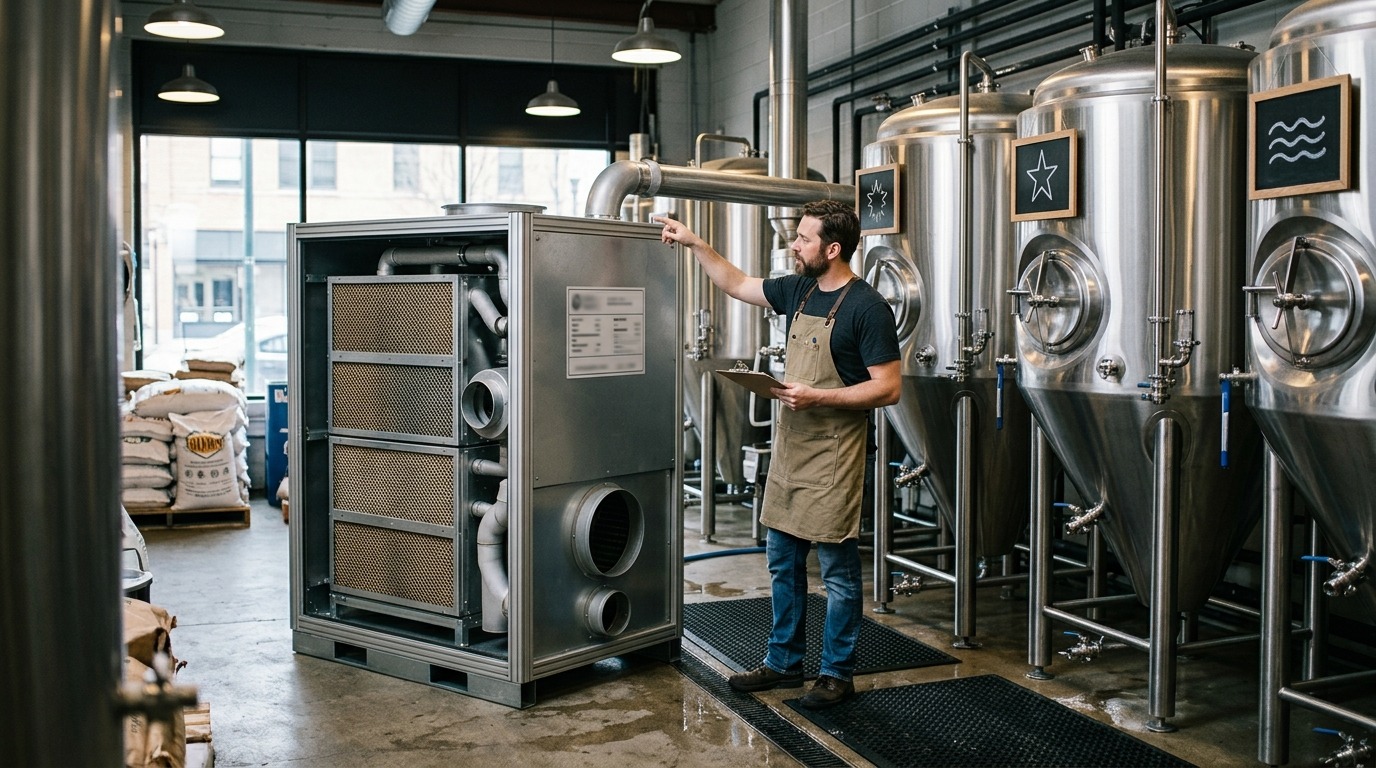
Visualization of a modular direct air capture CO₂ system at the brewery premises.
An important detail: DAC projects are usually massive construction efforts requiring years of preparation and hundreds of millions of dollars. Aircapture took a different path, creating a compact modular system that can be integrated into existing brewery infrastructure in just a few weeks. No new building, no production shutdown.
The First Beer from Air: How the Atmospheric CO₂ Technology Works
The beverage was named Flow – Clean Air Edition (Flow – CAE). It was released jointly by Aircapture and Almanac Beer Co. — a craft brewery from the city of Alameda, California. Technologically, the beer is brewed using a standard recipe, but all the CO₂ for carbonation comes not from cylinders supplied by an external vendor, but from the very same system standing right there in the facility.
The result is a closed loop: carbon dioxide is taken from the air inside the brewery and immediately returned to production. For the brewer, this means complete independence from external CO₂ supplies, stable prices, and predictable production. According to Almanac Beer Co. CEO Damian Fagan, the brewery no longer depends on distant industrial sources of carbon dioxide.
The presentation took place on March 21, 2026, at the brewery premises. Visitors could inspect the DAC system and see how the captured CO₂ feeds into the bottling line. Flow – CAE is already available not only at the brewery itself but also in more than 800 retail locations across California. Perhaps someday it will reach us too.
Where Is Air-Captured CO₂ Used and Why Is Capture Technology Needed
Beer is the showcase for the technology, but not its ultimate goal. CO₂ is used across many industries:
- food industry — carbonating beverages, freezing, modified atmosphere packaging;
- refrigeration technology — as a refrigerant;
- concrete production — to accelerate curing and reduce carbon footprint;
- agriculture — to enrich air in greenhouses.
Matt Atwood, CEO and founder of Aircapture, emphasizes that their system is already commercially viable, not at an experimental stage. According to him, the company produces CO₂ from air right where it’s needed, at a price acceptable for business. If this is truly the case, the technology could prove interesting far beyond breweries.
The key idea is decentralization. Instead of depending on a few large chemical plants, each enterprise can produce CO₂ on its own. It’s roughly like the difference between a central power station and a solar panel on a roof: the resource is produced right where it’s consumed.
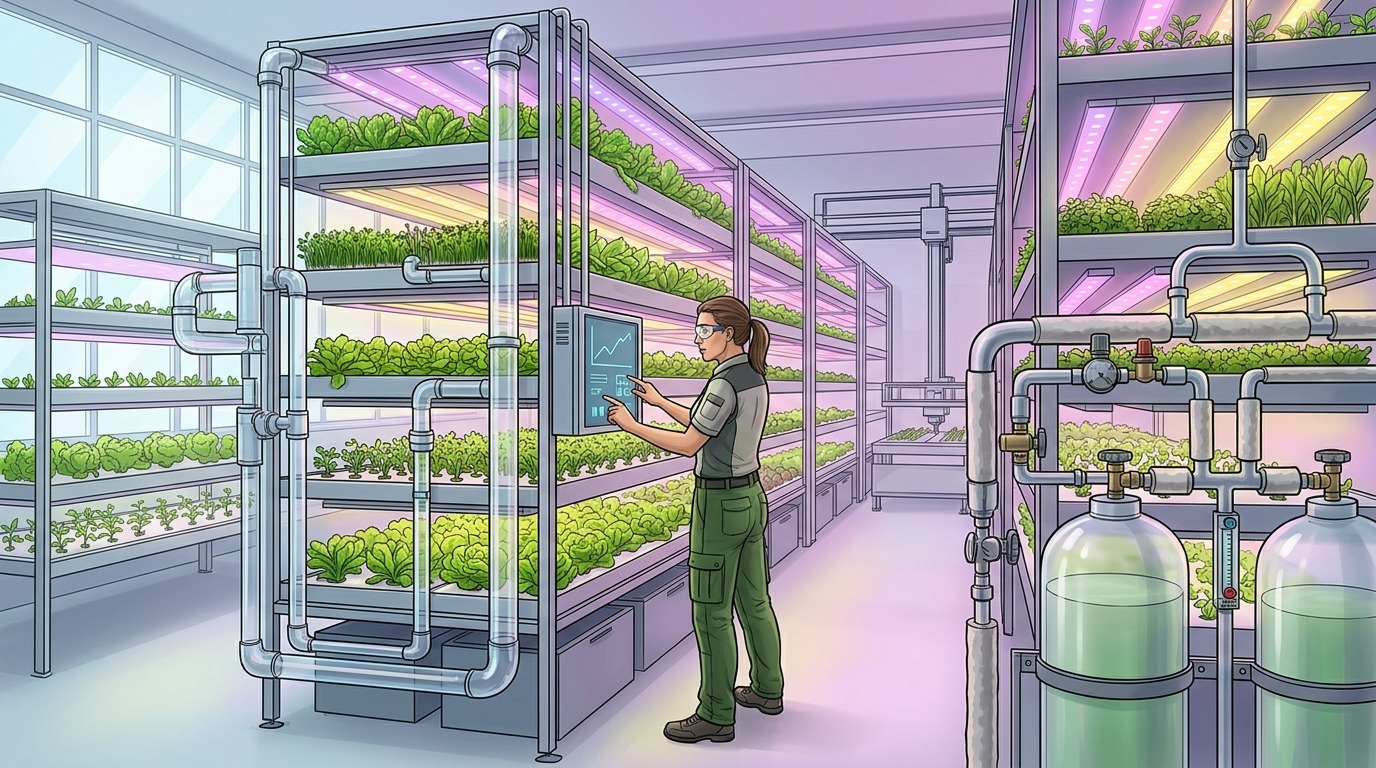
Greenhouses — one of the industries where local air-captured CO₂ production could be in demand.
How Realistic Is the Technology of Extracting CO₂ from Air
It’s worth soberly assessing the scale of what’s happening. For now, this is one project at one brewery in one state. We don’t have exact data on the system’s energy consumption, the cost of the produced CO₂ compared to conventional sources, or how easily the technology scales to larger enterprises. The company claims the price is competitive, but there are no independent confirmations yet.
It’s also important to understand: direct air capture of CO₂ itself requires energy. If that energy comes from fossil sources, the environmental impact may not be as impressive. The source does not specify what powers the Aircapture installation in Alameda.
Nevertheless, the very fact of a commercial launch is a significant step. A portion of the revenue from Flow – CAE sales is directed to the nonprofit organization Carbon180, which promotes policies related to carbon removal from the atmosphere. This underscores that the project is positioned not merely as a business, but also as a demonstration for policymakers and regulators.
If modular DAC systems can truly work at various enterprises as simply as at the Almanac brewery, we will see an entirely new approach to one of the most inconspicuous yet critically important industrial resources. For now, Flow – Clean Air Edition is the first real market test of the technology, and its results will show whether the industry is ready to stop depending on someone else’s exhaust for its own bubbles.