
Bacteria in the mouth may indicate that a person is gaining weight. Image: New Atlas
When it comes to obesity and related metabolic disorders, scientists traditionally look in one direction — at the gut. This makes sense, since it’s where the main digestion takes place. If something goes wrong, or the wrong bacteria live in the gut, it can lead to health problems including obesity. A recent study by New York University Abu Dhabi, published in the journal Cell Reports, offers a different perspective. According to it, your mouth can tell as much about your metabolic state as a bathroom scale.
How Oral Microflora Affects Excess Weight
The study authors analyzed saliva samples from 628 adults living in the UAE who participated in the large-scale UAE Healthy Future Study. This is one of the most detailed studies of the oral microbiome to date: scientists didn’t just catalog the bacterial species present but also studied the activity of their genes — meaning they looked not at “who’s there” but at “what they’re doing.”
The results turned out to be very interesting. Body mass index proved to be one of the key factors determining the composition and activity of the oral microbiome: in people with obesity, 94 functional differences in microbial community activity were identified compared to the healthy weight group. These weren’t scattered deviations but a systemic shift affecting the metabolism of carbohydrates, amino acids, and the production of signaling molecules.
In participants with obesity, the oral cavity showed elevated levels of several specific microorganisms. Pro-inflammatory bacteria Streptococcus parasanguinis and Actinomyces oris were found more frequently, as was the lactate-producing Oribacterium sinus. At the same time, the numbers of bacteria involved in the synthesis of certain nutrients, including B vitamins, were reduced.

Obesity can significantly shorten a person’s lifespan. Source: dzen.ru
Lactate drew particular attention. Genes responsible for its production were significantly more active in people with obesity. This is important because elevated lactate levels are associated with insulin resistance and cardiometabolic stress. At the same time, uridine and uracil — molecules capable of influencing appetite regulation and energy balance — were elevated in saliva.
Integrating microbiome data with saliva properties and clinical blood tests revealed a connection between changes in microbial activity and levels of triglycerides, liver enzymes, and other cardiometabolic markers. Adding oral microbiome data to the assessment system improved the accuracy of distinguishing between people with obesity and those with a healthy weight.
Excess Weight: Cause or Consequence
A limitation of the study was that data were collected at a single point in time, rather than over a period. This means that answering the key question is not yet possible: do changes in the oral microbiome precede the development of obesity, or is the relationship reversed?
The next step is research that will determine whether changes in the oral microbiome can predict future weight gain or the development of insulin resistance. If such a connection is confirmed, saliva could become a non-invasive tool for early diagnosis of metabolic disorders. Most importantly, it would be cheap, accessible, and would not require blood tests.
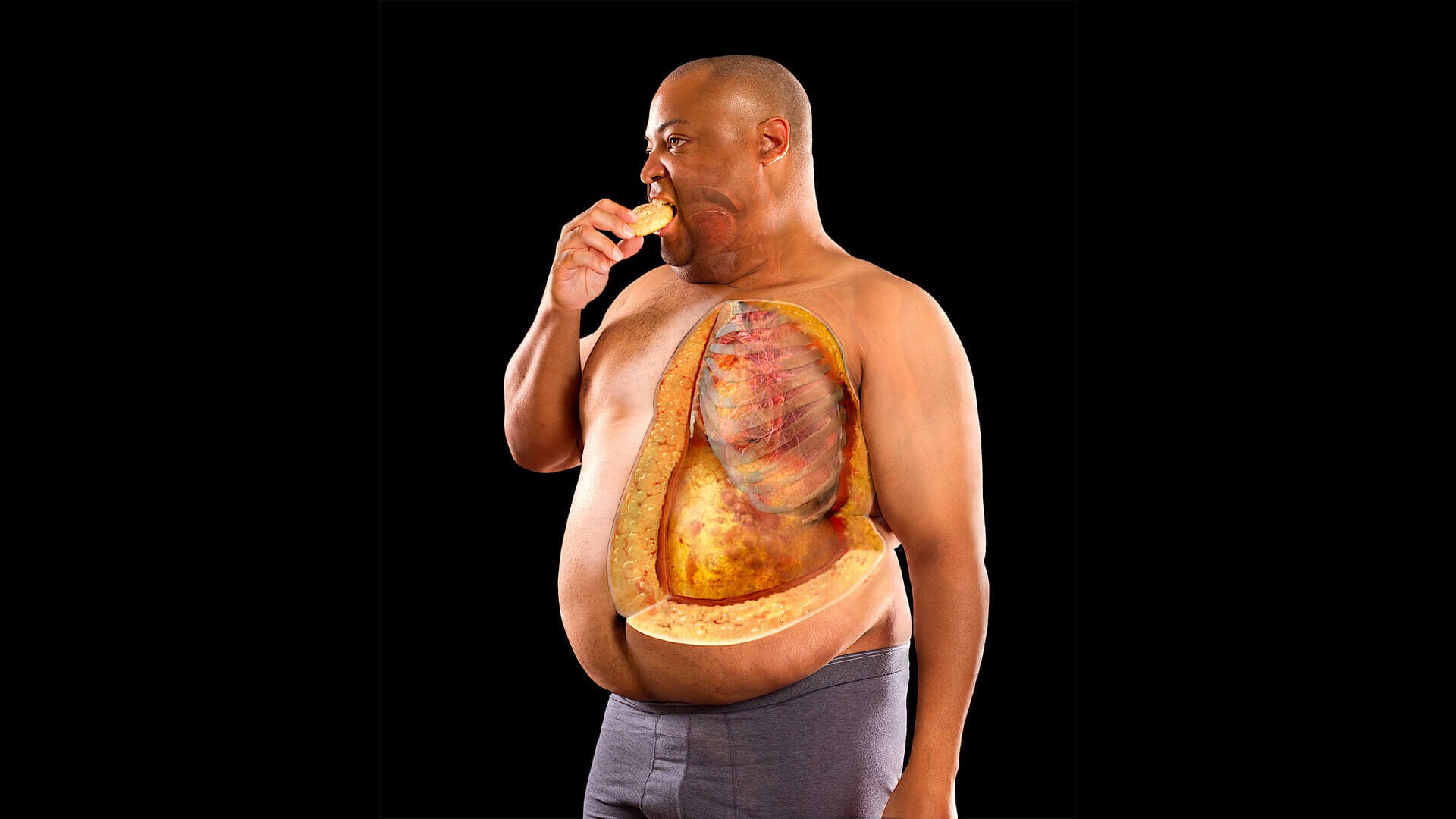
More than one billion people worldwide suffer from obesity
As the study authors emphasize, the mouth is an important and often underestimated part of the body’s metabolic system. The traditional focus on the gut microbiome in obesity research is well justified, but another study has shown that saliva and dental plaque provide even more data about obesity.
If microbial changes in the mouth turn out to be precursors rather than reflections of obesity, this will open fundamentally new prevention strategies — possibly through targeted modification of oral microflora.