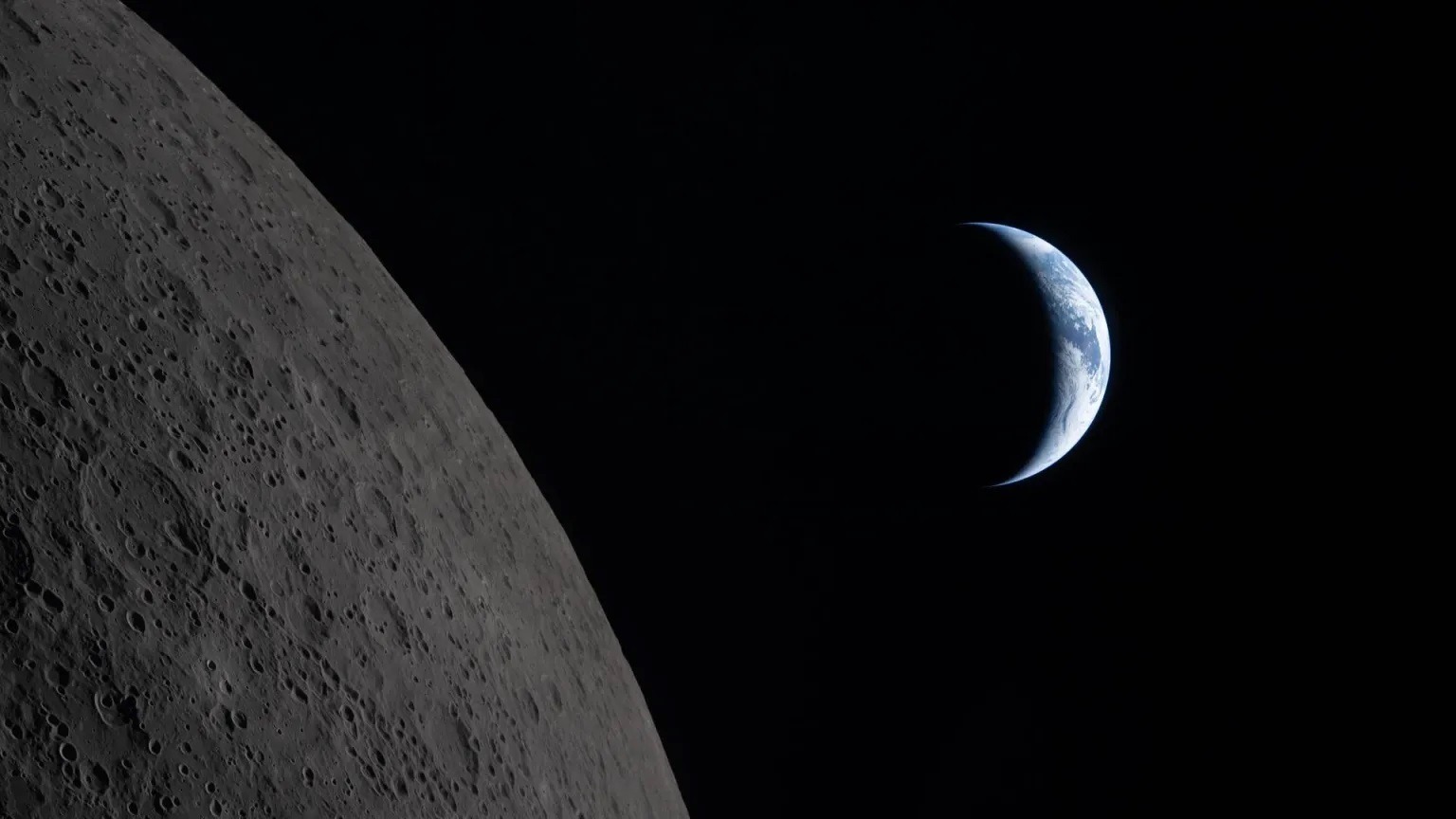
This photo was taken by the Artemis II crew during the lunar flyby, approximately six minutes before Earth set behind the Moon. The lines of small depressions on the rugged lunar surface are chains of secondary craters.
On April 6, 2026, during the first crewed flight to the Moon in 50 years, the four astronauts of the Artemis II mission flew around the Moon and did something no human had done in over half a century — they photographed our planet setting behind the lunar horizon, the solar corona during an eclipse lasting nearly an hour, and craters on the far side of the Moon with a level of detail previously unattainable. These images are not just beautiful pictures. They are scientific data collected at a record distance from Earth, and at the same time — a reminder of how small our planet looks from deep space.
Artemis 2 Mission: The First Crewed Flight to the Moon
Artemis II is the first crewed flight to the Moon in more than 50 years. The last time humans saw the far side of the Moon with their own eyes was in December 1972, during the Apollo 17 mission. Since then, no human had left low Earth orbit — until now.
The Orion spacecraft crew — Commander Reid Wiseman, Pilot Victor Glover, NASA Mission Specialist Christina Koch, and Canadian Space Agency (CSA) Mission Specialist Jeremy Hansen — spent about seven hours at the windows, photographing the Moon and Earth. During the flyby, the crew broke the distance-from-Earth record set by Apollo 13. The return to Earth is scheduled for April 10 — splashdown in the Pacific Ocean.
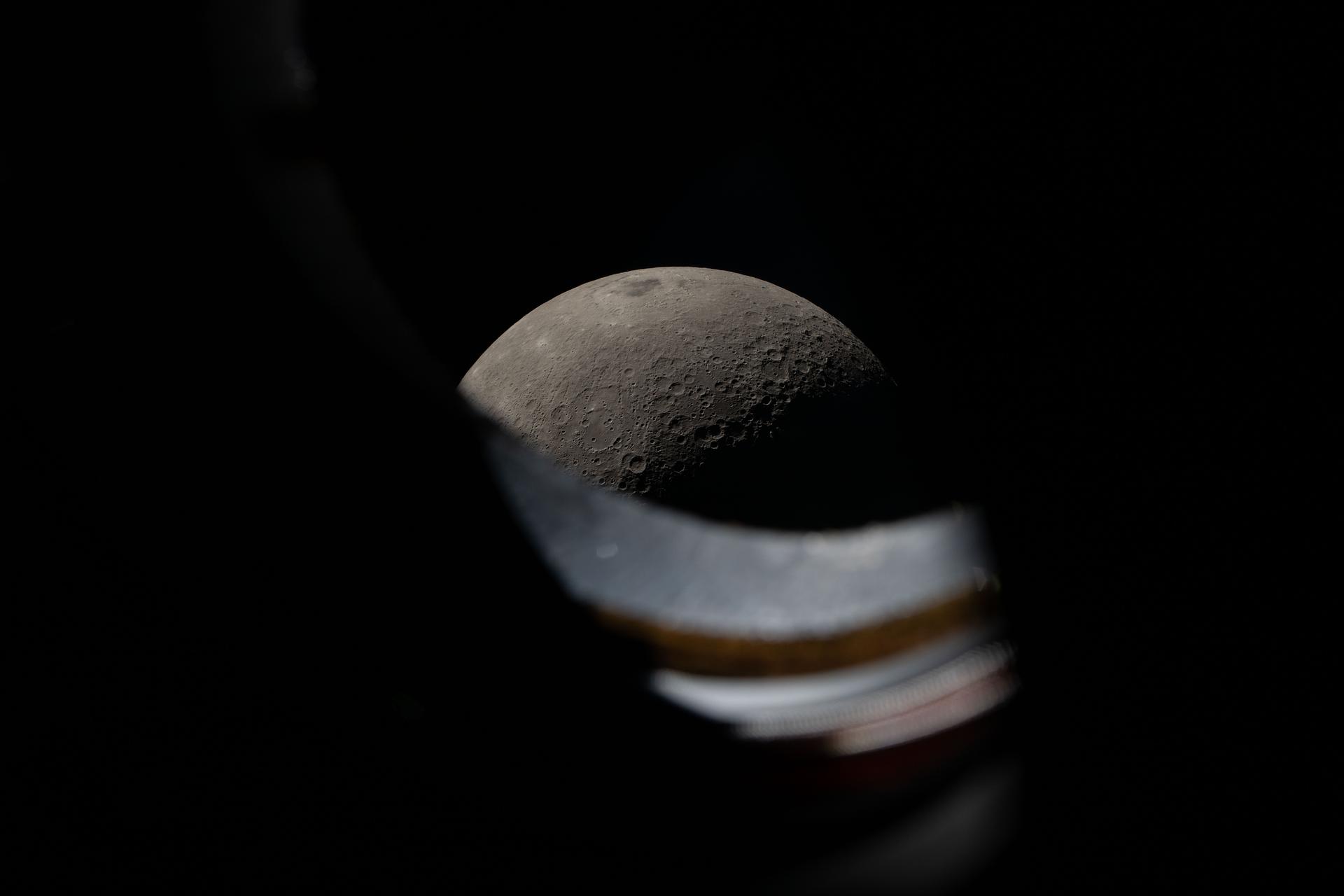
The Moon peeks out from behind the windowsill of the Orion spacecraft during the lunar flyby. The Artemis II crew spent about 7 hours at Orion’s windows, taking photographs and recording observations of the Moon to share with scientists on Earth.
The crew was announced back in April 2023, and the astronauts prepared for the flight for three years. Part of that preparation was dedicated not to piloting or navigation, but to photography — and this was no accident.
How Astronauts Were Trained for Two Years to Photograph Space and the Moon
The quality of the Artemis II photographs is no accident or stroke of luck. Behind them lie two years of targeted training. Rochester Institute of Technology graduates Katrina Willoughby and Paul Reichert from Johnson Space Center in Houston developed special training modules simulating photography conditions in space.
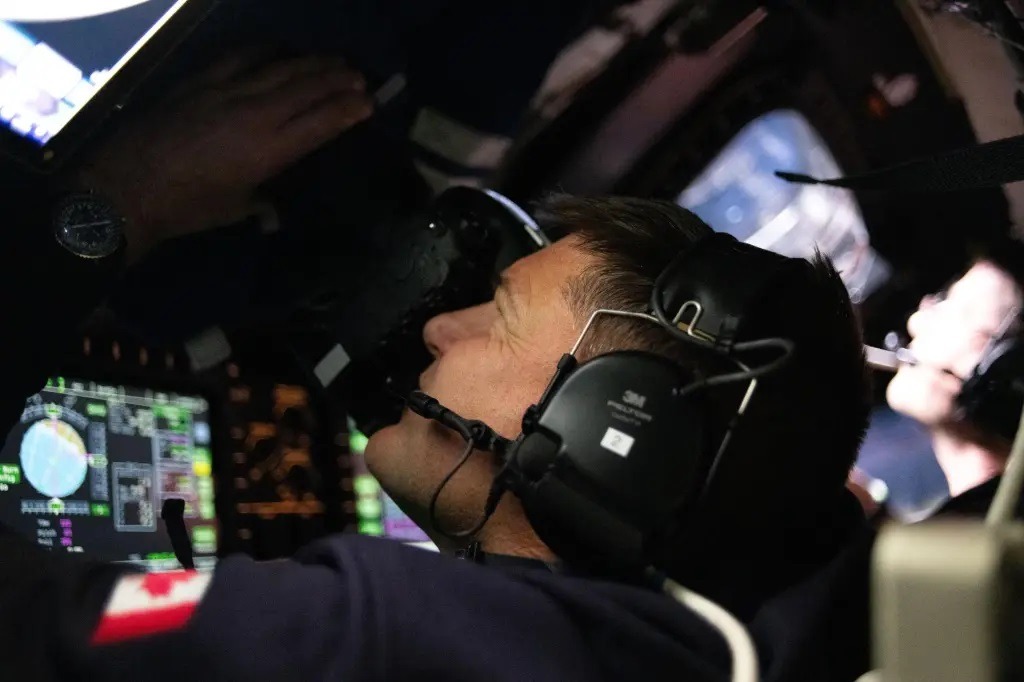
Astronaut Jeremy Hansen takes photos through the window of the Orion spacecraft at the start of the Artemis II lunar flyby mission. Hansen and his crewmates spent about seven hours taking turns capturing scientific data through Orion’s windows to share with their team on Earth.
“Most people can pick up a camera and take a shot that’s ‘good enough,’ but ‘good enough’ is not what we need from a scientific standpoint,” Willoughby explained. “We teach astronauts to go beyond basic skills. Understanding how the equipment works and what its capabilities are gives us much more.“
The astronauts worked with both professional equipment (including 400 mm focal length lenses) and regular commercial cameras — including an iPhone. One of the tools clearly visible in the photos is a special camera shroud, essentially a curtain with an opening for the lens. It prevents cabin light from reflecting off the window glass and ruining the shots.
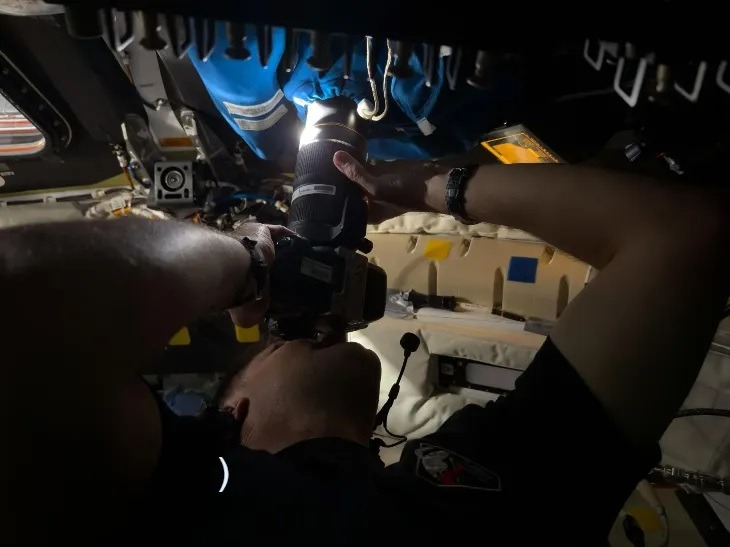
Astronaut Jeremy Hansen takes a photo through the camera shroud/curtain covering window No. 2 of the Orion spacecraft.
Earthset Behind the Moon: Unique Photos from Space
Some of the most impressive shots of the mission are a series showing Earth setting behind the lunar horizon. At 6:41 PM Eastern Time on April 6, the cameras captured the so-called Earthset — the moment when our planet disappears behind the Moon’s surface, much like the Sun sets below the horizon on Earth.
In the photos, Earth is visible as a thin crescent: sunlight falls from the right, the dark part of the planet is immersed in night, and on the dayside, swirling clouds over Australia and Oceania are distinguishable. Just three minutes after this shot, the Orion spacecraft went behind the Moon and lost contact with Earth for 40 minutes — before emerging on the other side.
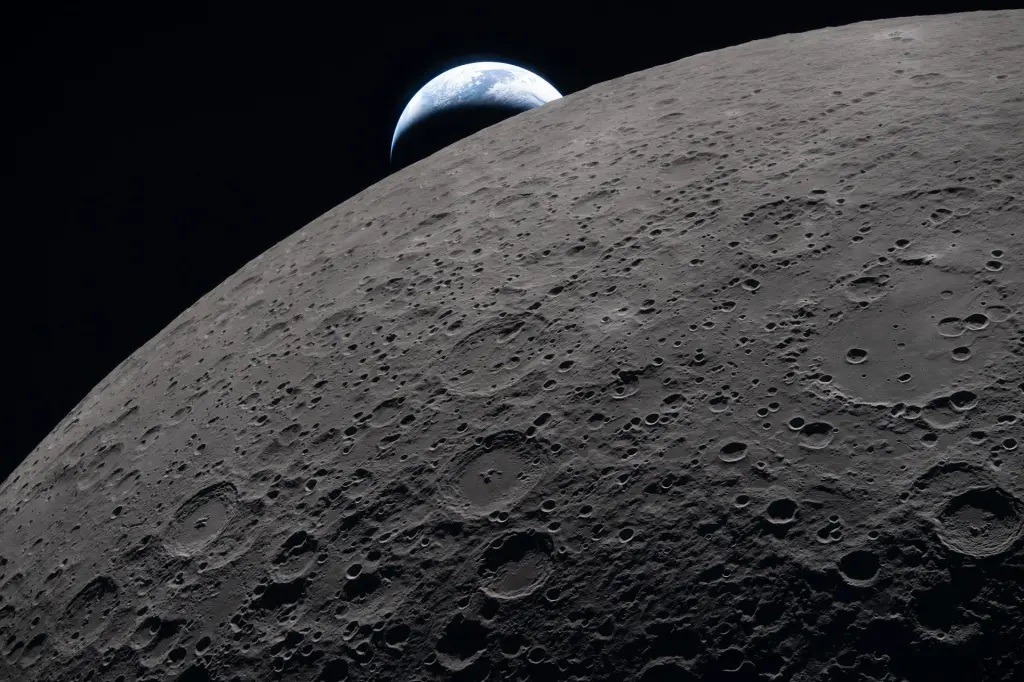
The lunar surface with distant Earth visible in the background. This photo was taken at 6:41 PM Eastern Time on April 6, 2026, just three minutes before the crewed Orion spacecraft disappeared behind the Moon and lost contact with Earth for 40 minutes before emerging on the other side. In the foreground is Ohm crater.
In the foreground, the Ohm crater is visible with its terraced edges and relatively flat floor, on which central peaks stand out. These peaks form when the surface, liquefied by a meteorite impact, “splashes” upward at the moment of crater formation — something like a droplet splash in slow motion, just on a completely different scale.
Solar Eclipse at the Moon: 54 Minutes of Totality
Perhaps the most unusual shot of the mission is a total solar eclipse captured from deep space. From the crew’s perspective, the Moon was large enough to completely block the Sun, and the total phase of the eclipse lasted nearly 54 minutes. For comparison: on Earth, the maximum duration of a total solar eclipse is about 7.5 minutes, and usually even less.
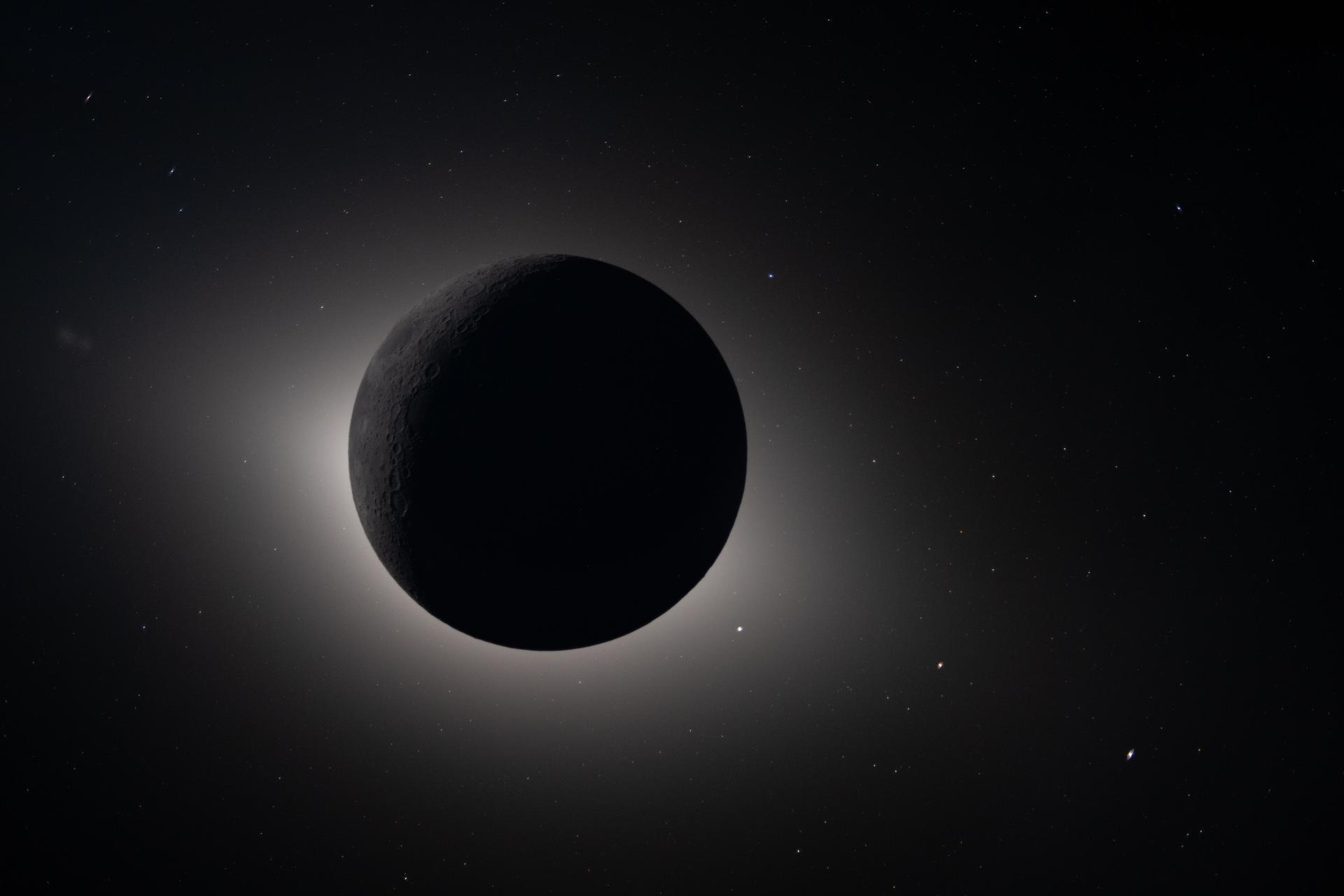
The Moon completely blocks the Sun, providing a nearly 54-minute total eclipse and revealing far more than can be seen from Earth. The corona forms a glowing halo around the dark lunar disk, exposing details of the Sun’s outer atmosphere that are normally hidden by its brightness.