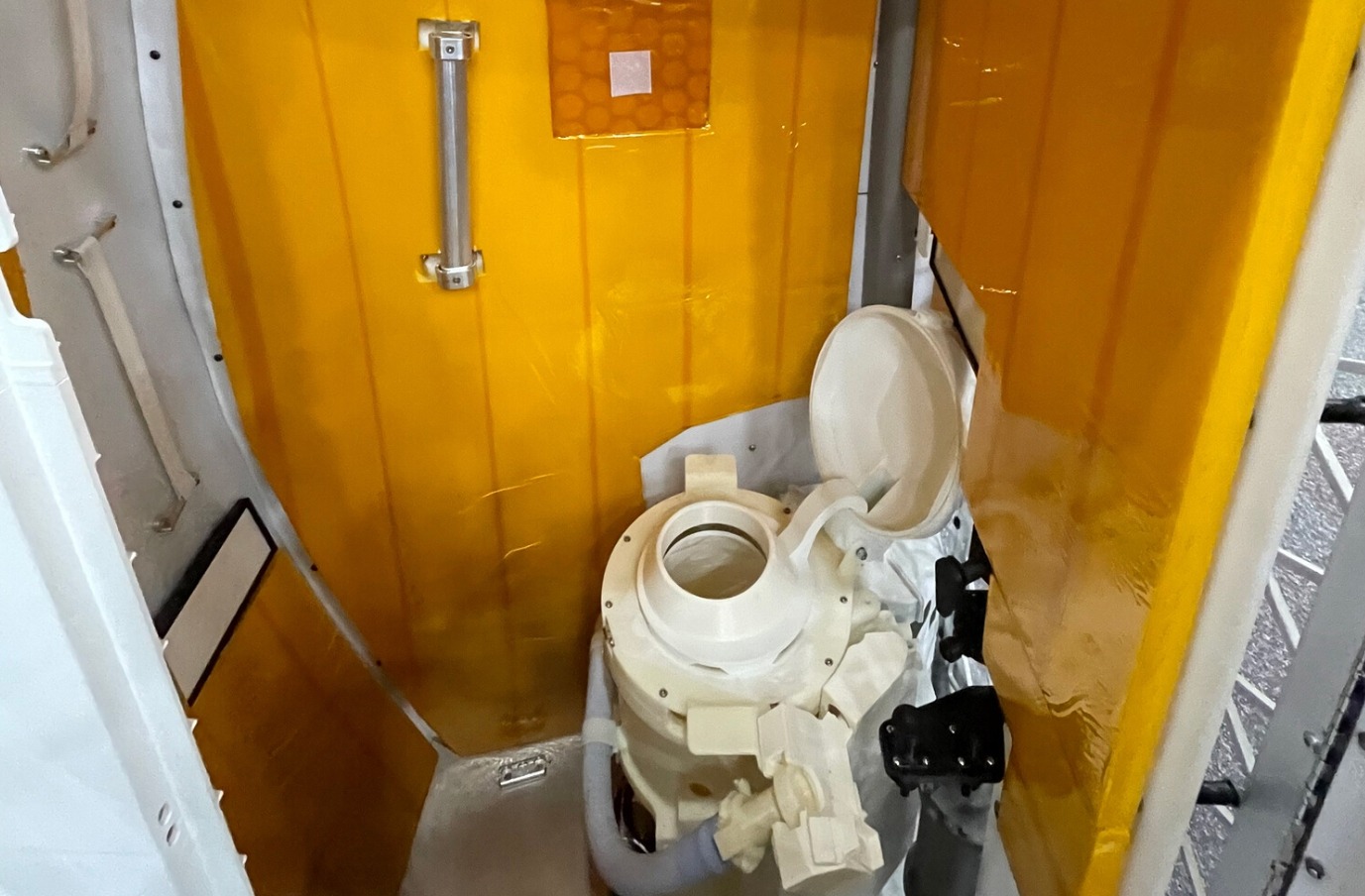
Toilet in the Orion spacecraft. Image source: gazeta.ru
In early April 2026, four NASA astronauts set off for the Moon aboard the Orion spacecraft and almost immediately encountered a problem with the toilet. The ship is equipped with the Universal Waste Management System (UWMS) — the most advanced space toilet and the first full-featured lavatory ever flown beyond low Earth orbit. During past space missions, astronauts literally had to go in bags, but modern technology has made flights considerably more comfortable. So what exactly did the Artemis 2 crew face, and how does their toilet work?
How Astronauts Use the Toilet in Space Without Gravity
On Earth we use the toilet without a second thought because gravity does all the work. In space there is no gravity, and none of the familiar methods work — neither a toilet bowl nor a bucket. Liquids don’t flow downward; instead they form droplets and float in the air. Solid waste doesn’t fall anywhere either. The only reliable way to collect waste in microgravity is vacuum: an airflow that sucks everything into the system like a small vacuum cleaner.
This is the principle behind all modern space toilets. Pumps create low pressure and fans generate airflow that carries waste along and pulls it into a sealed system. It sounds simple, but in practice it is one of the most finicky systems on any spacecraft.
How the Orion Spacecraft Toilet Is Designed
Artemis 2 is equipped with UWMS — the Universal Waste Management System. It is the product of decades of space-toilet evolution that began with the Space Shuttle and the ISS. The system was developed by Collins Aerospace under a NASA contract awarded back in 2015. The result is a compact device that is 65% smaller than the ISS toilet and 40% lighter.
The Orion toilet is installed in a separate cubicle with a closing door and numerous handrails — they are needed to keep the user on the seat in microgravity. The seat is very narrow: under normal gravity it would be extremely uncomfortable, but in weightlessness the body exerts no pressure on the surface, so there is no discomfort. The shape actually helps the user intuitively find the correct position without a camera and aiming, as was required in the past.
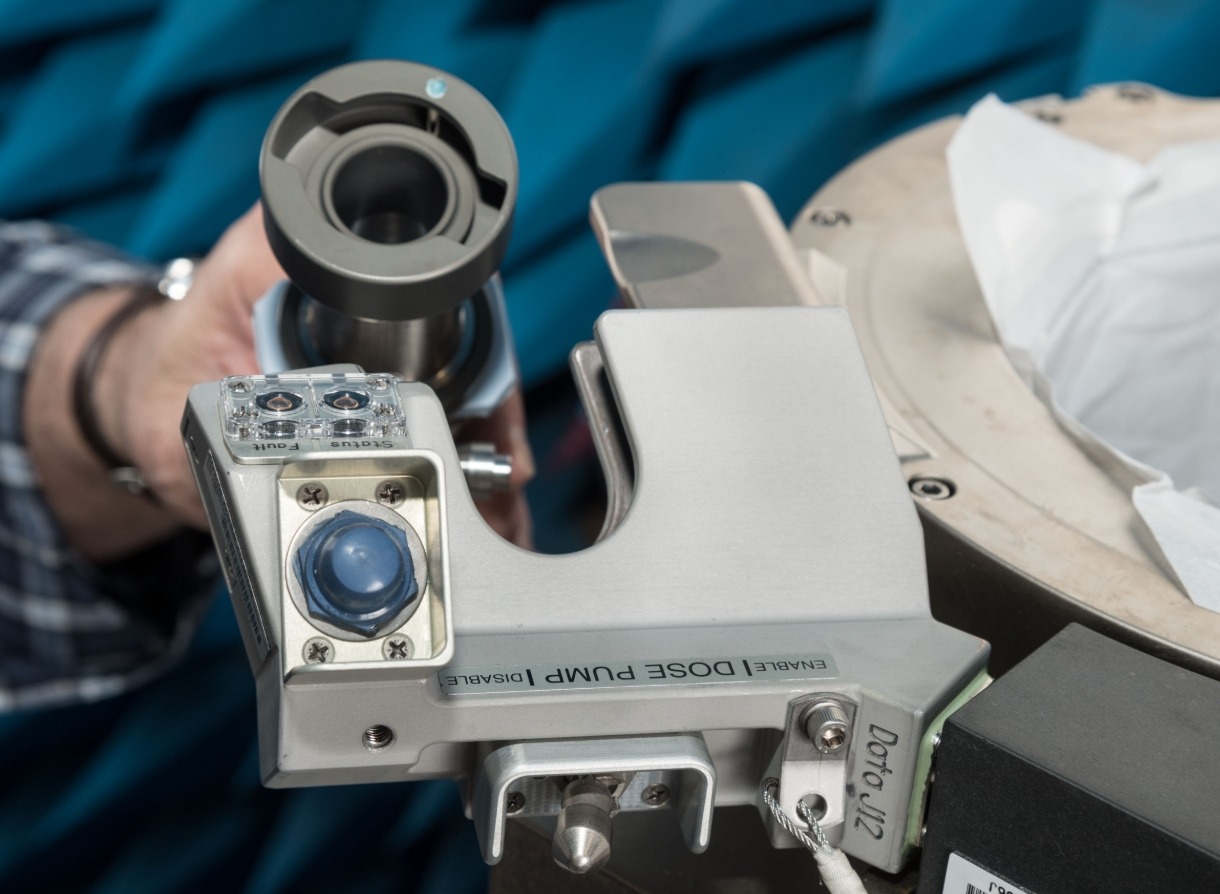
Universal Waste Management System. Image source: wikimedia.org
Inside the seat is a wide opening where pumps create a vacuum. Here is how the system works:
- Urine collection uses a vacuum system with two fans on a single shaft (older toilets had three motors and a bulky centrifuge). Air sucks the liquid inside, where a separator divides urine from air. Each astronaut has a personal funnel adapter.
- For solid waste, a waterproof bag is inserted into the opening. After the procedure, the astronaut places a lid on the bag, compresses it with a compactor, and stores it in a container.
- Finishing up: the seat is closed with a hermetic lid, and the fans shut off automatically after about thirty seconds.
An important UWMS innovation is the ability to use the urine and solid-waste collection systems simultaneously. It is the first space toilet designed from the start to equally accommodate women’s needs alongside men’s: hose lengths, funnel shapes, and component placement were all reworked with female astronauts’ input. And the cubicle has a door — in the cramped Orion capsule, that is small but precious privacy.
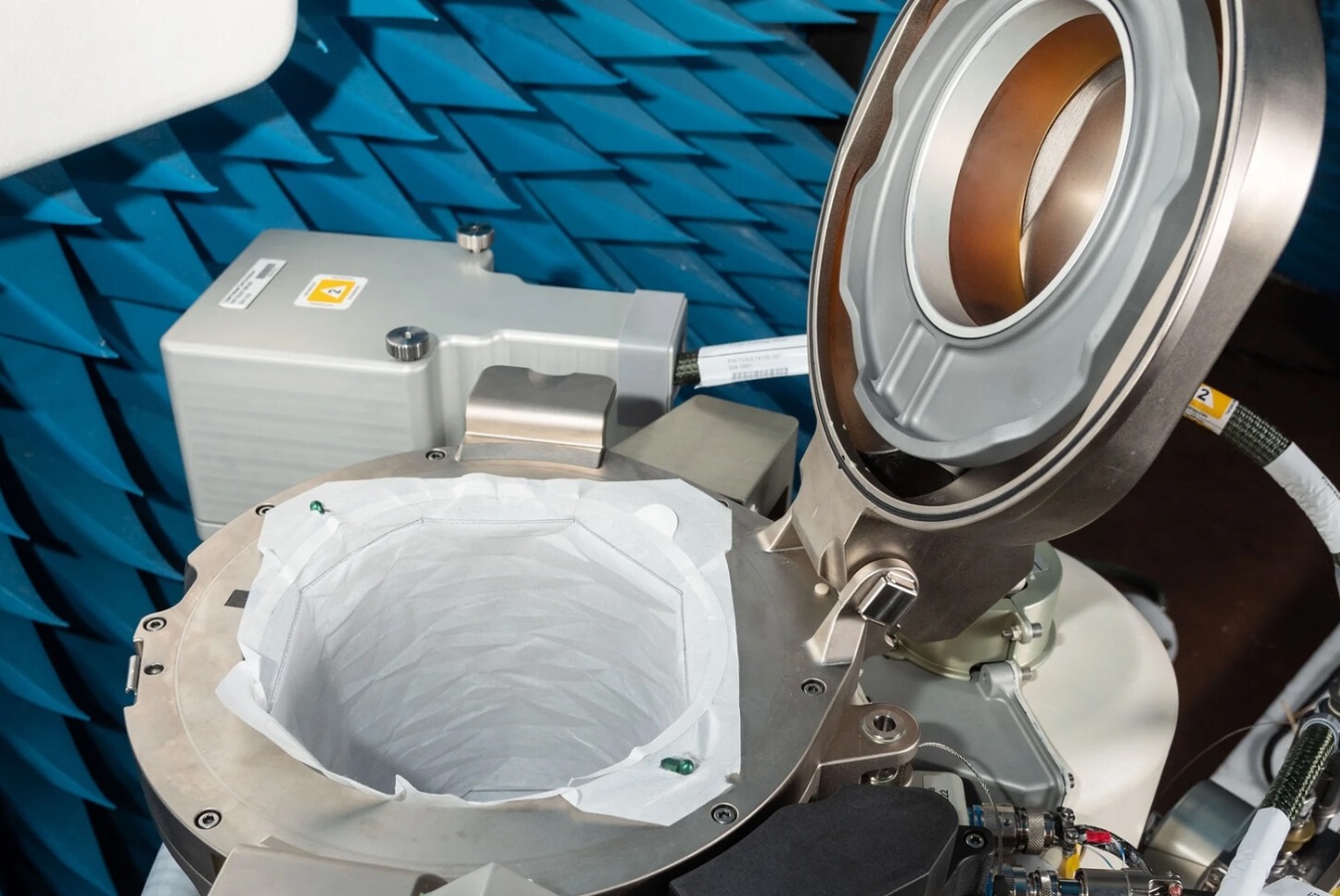
This is what the toilet looks like inside a spacecraft. Image source: gazeta.ru
Why the Spacecraft Toilet Is So Loud
The fans that generate airflow operate with noticeable noise. So noticeable, in fact, that astronaut Christina Koch, a member of the Artemis 2 mission, said it was uncomfortable to be inside the cubicle without headphones. This is not a bug but an unavoidable consequence of the design: reliably sucking away waste requires a powerful airflow, and that is never quiet.
For the same reason, engineers sought to simplify the system. The old Shuttle toilets had two fans, a centrifuge, and three separate motors — all of which took up a lot of space and weighed a great deal. In UWMS, two fans are mounted on a single shaft, which significantly reduced both weight and size. Without this solution the toilet simply would not have fit inside a small spacecraft like Orion.
What Broke on the Artemis 2 Toilet and How It Was Fixed
A few hours after the April 1, 2026 launch, the crew noticed a blinking malfunction indicator on the toilet. NASA spokesperson Gary Jordan said the fan had probably jammed and that specialists on the ground were drafting repair instructions. Later, NASA Deputy Administrator Amit Kshatriya clarified that the problem was related to the controller — that is, the electronics, not a mechanical jam.
The crew, coordinating with Mission Control, successfully fixed the issue. From the control center the astronauts were told: “We are glad to report that the toilet is ready for use.” They were then advised to let the system reach operating speed before introducing liquids.
In case the toilet could not have been repaired, NASA had a backup plan: waste-collection bags — essentially a return to Apollo-era technology. However, on Artemis 2 there is a separate compartment with a door for this purpose, so the crew would not have had to chase “flying” feces around the cabin.
How Apollo Astronauts Used the Toilet
To appreciate how far engineering has come, one only needs to recall how things were in the 1970s. The Apollo spacecraft had no vacuum system at all. Instead, astronauts used plastic bags with adhesive edges that were literally stuck to the body. Urine collection did not cause major problems, but defecation was, in the astronauts’ own words, a genuine nightmare.
After each use of the bag, the feces had to be mixed with antiseptic to prevent gas buildup and then hermetically sealed. In microgravity, achieving a seal was extremely difficult, and accidents happened. According to declassified NASA transcripts, during the Apollo 10 mission, Commander Tom Stafford uttered what became a legendary line, asking for a napkin because feces were floating through the air. None of the three crew members ever took responsibility for the incident.
On Apollo 8, the crew had to deal not only with floating feces but also with droplets of vomit after one of the astronauts became sick. Astronaut Ken Mattingly admitted after his Apollo 16 flight that the toilet conditions had killed any desire he had to fly to Mars in a similar spacecraft. According to a NASA review, the system performed satisfactorily from an engineering standpoint but received extremely low ratings from crews in terms of comfort.
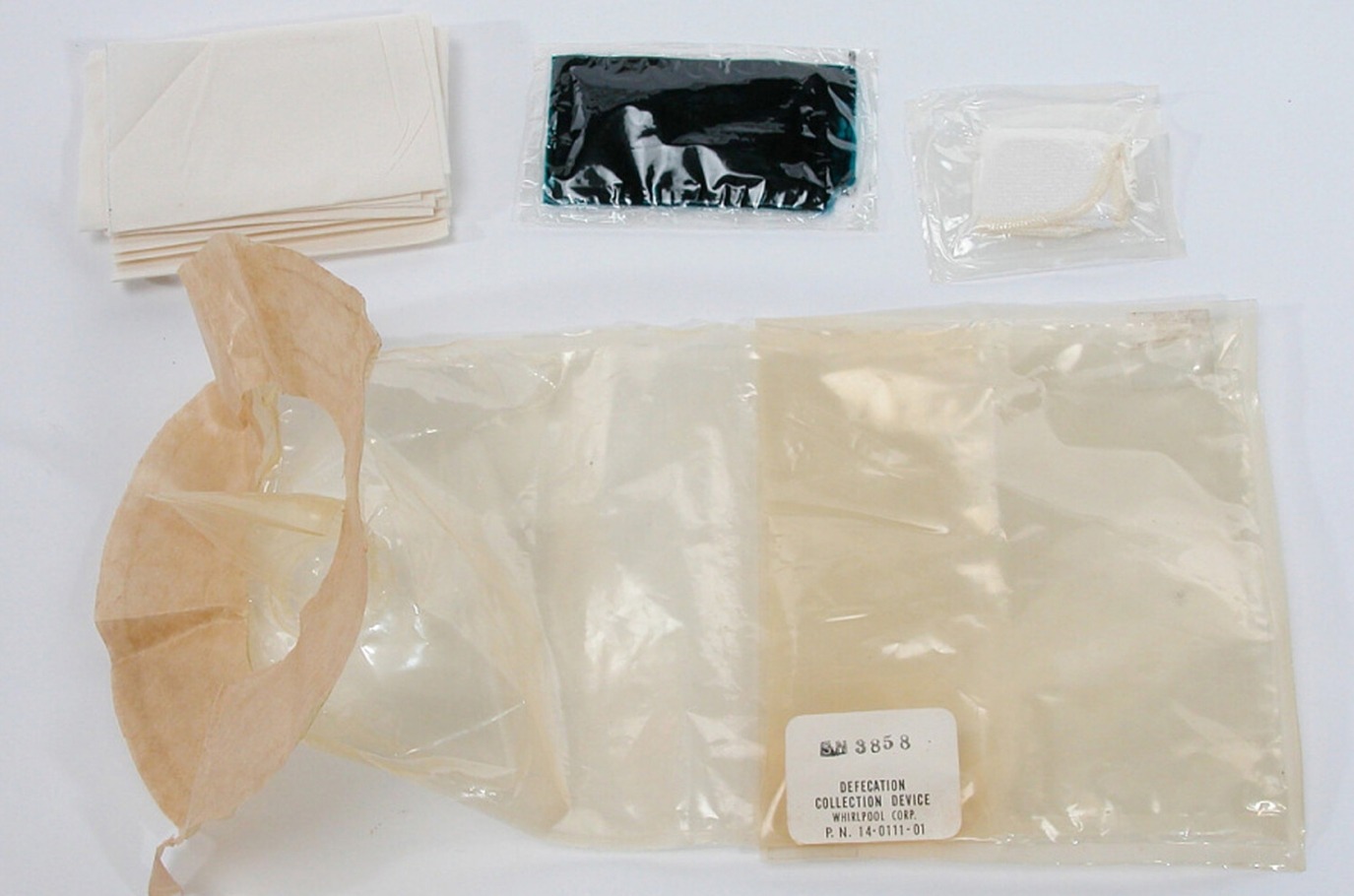
Fecal collection bags for astronauts. Image source: gazeta.ru
How Astronauts Trained to Use the Space Toilet
The preparation for using older space toilets is a story in itself. On the Space Shuttle, the opening for solid waste was only about 10 centimeters in diameter — roughly the size of an apple. Hitting such a target in microgravity without training was nearly impossible. That is why NASA installed a video camera in a toilet mockup on the ground: the image was displayed on a monitor in front of the astronaut, who then practiced positioning the body precisely.
Cutting corners during these training sessions was ill-advised: miss in an actual flight and you would be catching your own feces in the air and cleaning the cabin by hand. The UWMS toilet has spared astronauts this horror: a wide opening and ergonomic seat let the user intuitively find the correct position without special training.