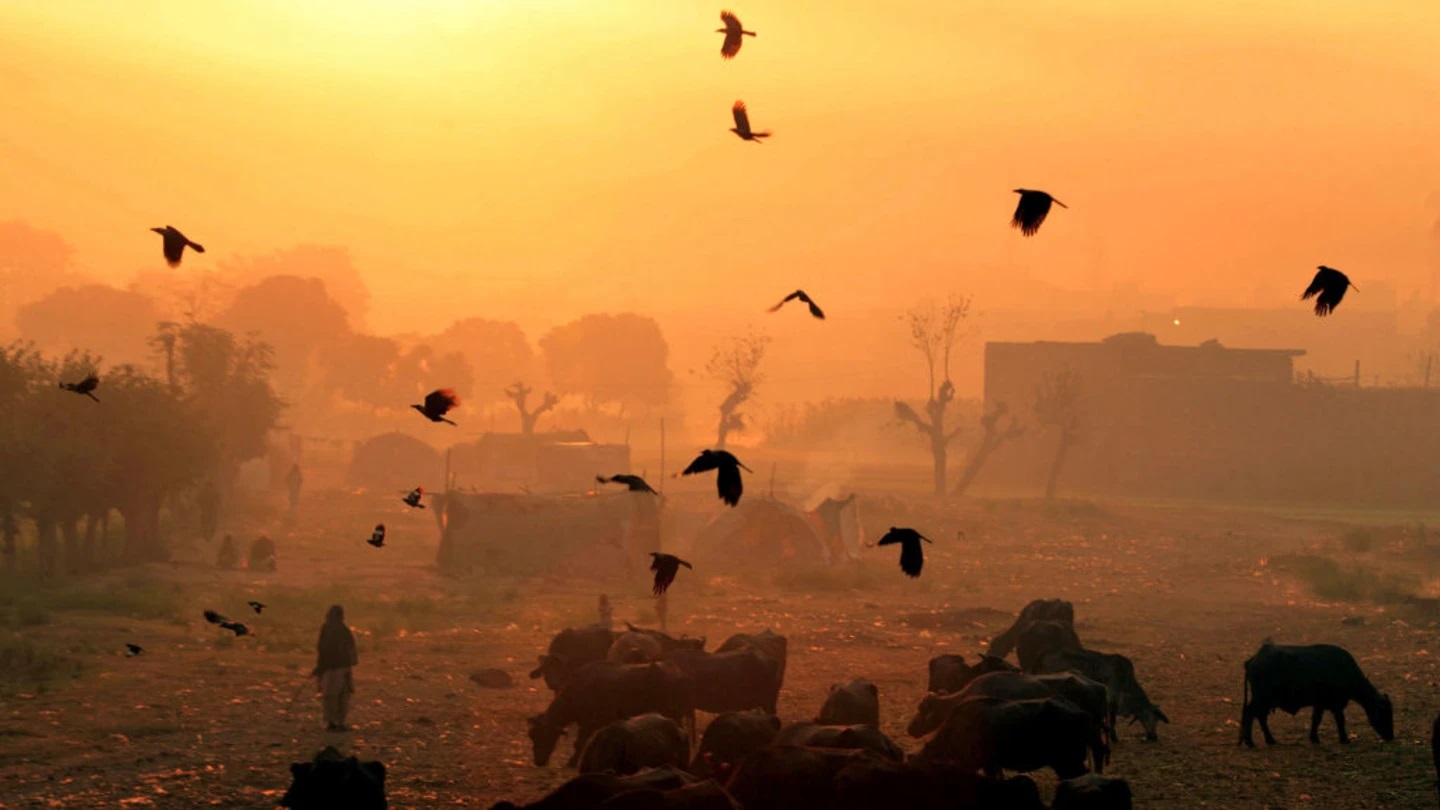
Thousands of crows over a city — a frightening sight, but perfectly explainable from a biological perspective
The end of the world has been predicted hundreds of times — and each time there were “signs” that supposedly confirmed the imminent destruction of civilization. Deep-sea fish wash ashore, glaciers melt at an alarming rate, and thousands of black birds circle in the sky. People continue to perceive these events as harbingers of the apocalypse, even though science almost always provides far more down-to-earth explanations. Here are four “omens” that still cause anxiety around the world (and what actually lies behind them).
What Is the Doomsday Glacier and Why Is It Dangerous for Earth
In the western part of Antarctica lies the Thwaites Glacier — a massive ice formation approximately 65 kilometers wide, roughly the size of Great Britain. Scientists gave it a grim nickname — the “Doomsday Glacier.” Not because it’s the largest in the region, but because it’s melting faster than others and the consequences of this process could be catastrophic.
According to estimates from researchers involved in the international Thwaites Glacier Research project, the complete loss of this glacier could raise global sea levels by approximately 65 centimeters. That’s enough to redraw coastlines across the planet and flood low-lying coastal cities. This is why Thwaites is at the center of attention for climatologists — and for those who see signs of the approaching end of the world in global warming.

The edge of the Thwaites Glacier in Antarctica — one of the fastest melting glaciers on the planet
It’s important to understand here: the melting of Thwaites is not a mystical prophecy but a real climate problem. However, “Doomsday” in this case is a metaphor for the scale of the threat, not a literal prediction of the apocalypse. The glacier won’t collapse overnight. The process is spread over decades, and scientists are monitoring it to give humanity time to prepare. Nevertheless, for people inclined toward eschatology — the study of the end times — the nickname alone was enough to turn the glacier into a symbol of inevitable catastrophe.
The Doomsday Fish: What It Is and Why It’s Considered a Harbinger of Disaster
The oarfish (also known as the king of herrings, or ribbonfish) lives at depths exceeding 900 meters and can grow up to 10 meters long. Seeing one near the surface is an extremely rare event, which is why every such appearance inevitably makes the news. In Japanese folklore, this fish is called “ryūgū no tsukai” — the messenger of the sea dragon’s palace. It is believed to warn of earthquakes and tsunamis.
The reputation of the “Doomsday fish” was reinforced by one fact: several specimens were spotted off the coast of Japan months before the devastating earthquake and tsunami of 2011. However, scientists emphasize that no scientific evidence exists linking the appearance of oarfish to seismic activity. Coincidences have indeed occurred, but statistically they do not go beyond chance.
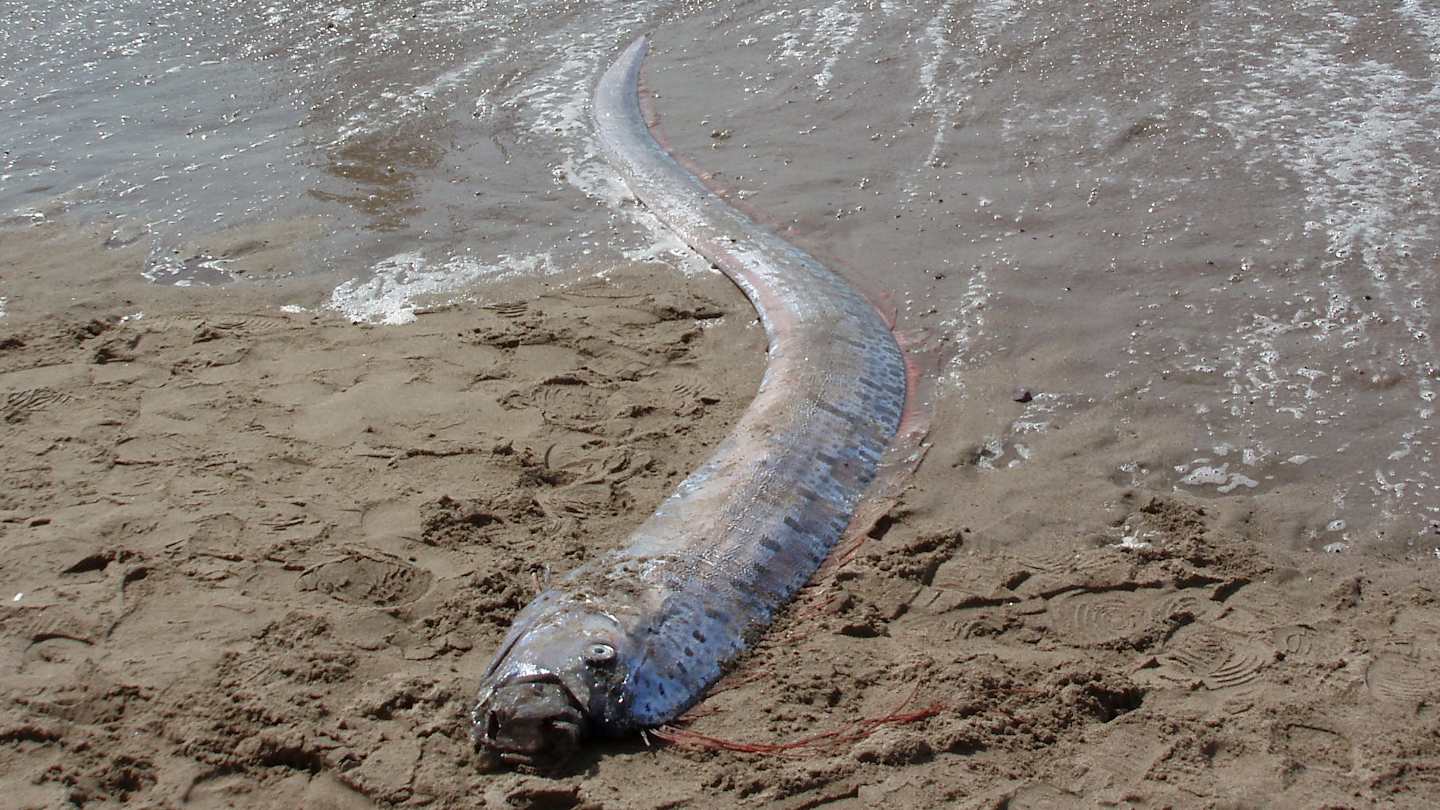
The Doomsday fish: a dead oarfish washed ashore
Nevertheless, in recent years such discoveries have become noticeably more frequent. In March 2026, two 9-meter-long oarfish were found on the coast of Cabo San Lucas, Mexico, and another one in Vietnam. In November 2025, a three-meter specimen washed up on a beach in Tasmania, and the year before that — in San Diego. Each case triggered a wave of publications about a “harbinger of disaster,” although the real causes are most likely related to currents, water temperature, or the health condition of individual fish.
The Doomsday Plane E-4B Nightwatch: What It Is and Why It Flies Over Cities
The E-4B Nightwatch is a modified Boeing 747-200, designed to survive a nuclear war. It serves as a mobile command center for the President of the United States and senior military leadership in case of emergencies: from nuclear conflict to large-scale natural disasters. The aircraft can remain airborne for more than 12 hours without refueling, and its communication systems allow coordination of military operations from anywhere in the world.
It’s no surprise that the E-4B earned the nickname “Doomsday Plane.” And when people spot it over their city, the reaction is predictable: panic and conspiracy theory discussions on social media.

The Doomsday Plane: E-4B Nightwatch is designed for survival in nuclear war conditions
In early 2026, two such aircraft were spotted in California two months apart: one landed at Los Angeles International Airport, and the other was observed during exercises in Fresno. The military stated that the flights were routine, but against the backdrop of heightened international tensions, this reassured few people. In addition to the E-4B, the U.S. Navy has a similar aircraft — the E-6B Mercury, used for strategic communications. Both aircraft are part of a system that ensures the country’s leadership can manage the situation even in the worst-case scenario. Their appearance in the sky is a sign of readiness, not the beginning of the apocalypse.
Why Flocks of Crows Are Considered a Sign of the End of the World
Crows and ravens are perhaps the most ancient “Doomsday birds.” Their black plumage, high intelligence, and habit of appearing on battlefields and in cemeteries made them symbols of death in the mythology of dozens of cultures. In Britain, a legend still lives on: if the ravens leave the Tower of London, the kingdom will fall. A flock of ravens in many traditions is considered a bad omen.
In recent years, viral videos from Israel showing thousands of crows circling over Tel Aviv have gained massive attention. Some social media users called it a “harbinger of doom,” while others saw a direct connection to biblical eschatology — the doctrine of the end times and the Last Judgment. Eschatology (from the Greek “eschatos” — last) is a branch of theology and philosophy that describes how and why the world will come to its end. It is precisely eschatological imagery that fuels most modern fears of the apocalypse.
However, ornithologists explain mass gatherings of crows in a far more prosaic manner. Birds gather in large flocks in the evenings for communal roosting — this helps them defend against predators and conserve warmth. The choice of location depends on food availability, lighting, and weather conditions. Science has found no connection between crow behavior and natural disasters.
Why People Believe in Signs of the End of the World
All four “omens” share one thing in common: the human need to find patterns and meaning in frightening events. When a giant fish from the ocean depths ends up on a beach, crows circle overhead, and a military aircraft flies over a city — the brain automatically searches for an explanation, and “the end of the world” seemingly appears to be the most fitting option. Psychologists call this apophenia — the tendency to see meaningful connections where none exist.
Social media amplifies this effect many times over.