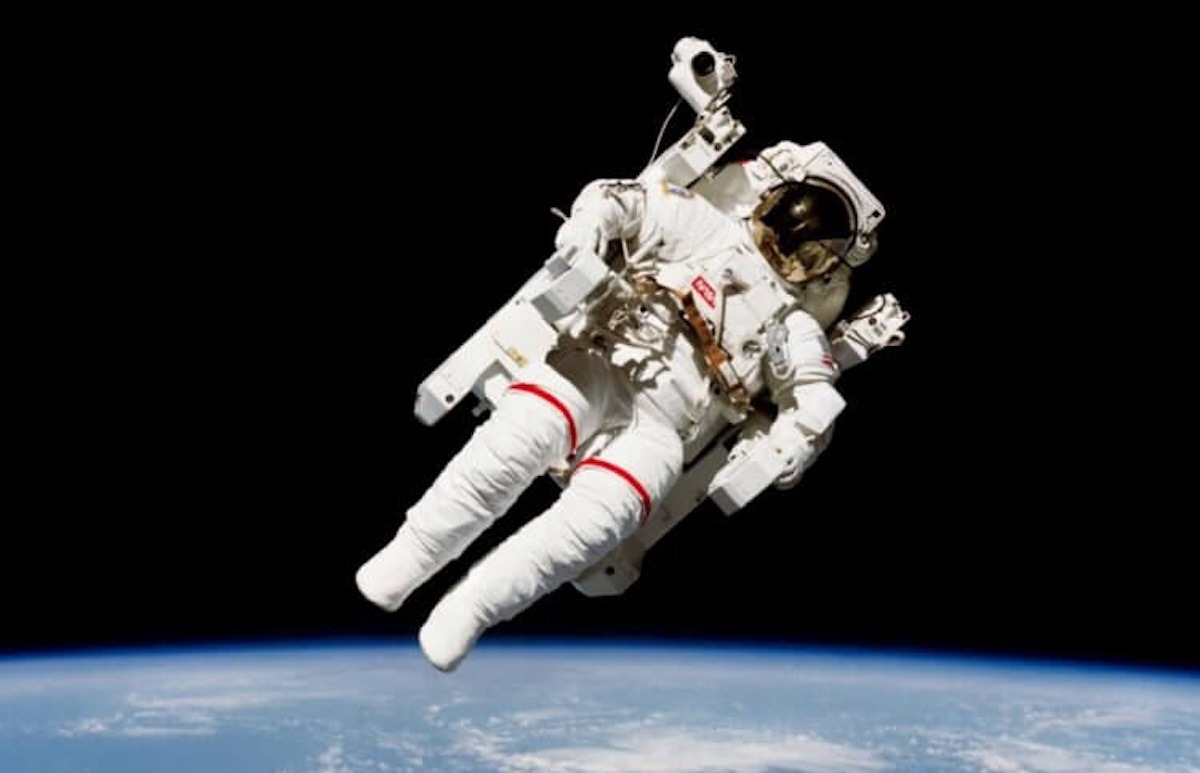
Maybe humans are no longer needed in space? Image: NASA
The question of whether humans are needed in space at all has long moved beyond philosophical debate. The Artemis program, which has already cost American taxpayers nearly $100 billion after just one uncrewed lunar flyby, has once again placed this question at the center of public discussion — especially after serious heat shield problems were discovered on the Orion spacecraft being prepared for a crewed flight. We have all grown accustomed to the idea that humans in space are gradually becoming something routine and ordinary, but are they really needed in this hostile environment?
The Artemis II Mission
Before answering these questions, it is worth recalling that after the Artemis I spacecraft returned in 2022, NASA engineers discovered that the heat shield had eroded unevenly: chunks of Avcoat material were breaking off instead of ablating uniformly. The investigation determined that gases forming inside the material during atmospheric re-entry at speeds of about 40,000 km/h could not escape quickly enough, causing cracks and delamination.
The alarming paradox is that the Artemis II heat shield is even less permeable than its predecessor — it was installed before NASA realized this property was necessary.
NASA postponed the crewed launch until April 2026 and addressed the problem not by replacing the shield but by adjusting the atmospheric entry trajectory. A number of former astronauts and agency employees insist that flying without a corrected shield and with an untested life-support system is an unjustified risk.

During the Artemis I mission, technical problems with the Orion spacecraft were discovered that need to be resolved. Source: amuedge.com
Why Space Flights Never Went Fully Uncrewed
When the first serious concepts for space exploration were being developed in the late 1940s, the answer seemed obvious: humans were indispensable. The electronics of that era were built on vacuum tubes — glass cylinders the size of a finger that consumed hundreds of watts, generated enormous heat, and constantly failed. To keep onboard systems operational, live technicians were needed to continuously replace burned-out tubes.
In addition, pilots were needed to control rockets, engineers to maintain engines, workers to transfer cargo and assemble structures directly in orbit. Human vision surpassed the cameras of the time, and the human brain was faster and lighter than the first bulky mainframe computers. The reason for sending humans into space was simple: there was no alternative.
Robot Cosmonauts
By the start of the space race in the 1960s, the situation was already changing. Electronics had transitioned to transistors, computers were rapidly shrinking and growing smarter, and spacecraft learned to pilot themselves. Robotic probes sequentially visited every planet in the solar system, comets, and asteroids — and did so at a fraction of the cost of crewed expeditions.
The numbers speak eloquently. The American share of ISS expenditures alone is 10 times the combined cost of the James Webb Space Telescope, the Cassini-Huygens probe, the Perseverance rover, and both Voyager spacecraft put together. Meanwhile, the scientific return from robotic missions is incomparably higher. The ISS gave the world valuable knowledge about how to build space stations and how humans withstand weightlessness — but that was precisely its main purpose, not discoveries about the universe.
Are Humans Needed in Space
Despite the obvious economic advantages of robots, humans in space have unique qualities. A person makes instant, intuitive decisions in unforeseen situations — that is exactly how the crew saved the first American station Skylab when a solar panel was torn off during launch. Robots operate according to pre-programmed instructions or with signal transmission delays: a signal from Earth to Mars takes up to 22 minutes, making remote control virtually impossible in critical situations.
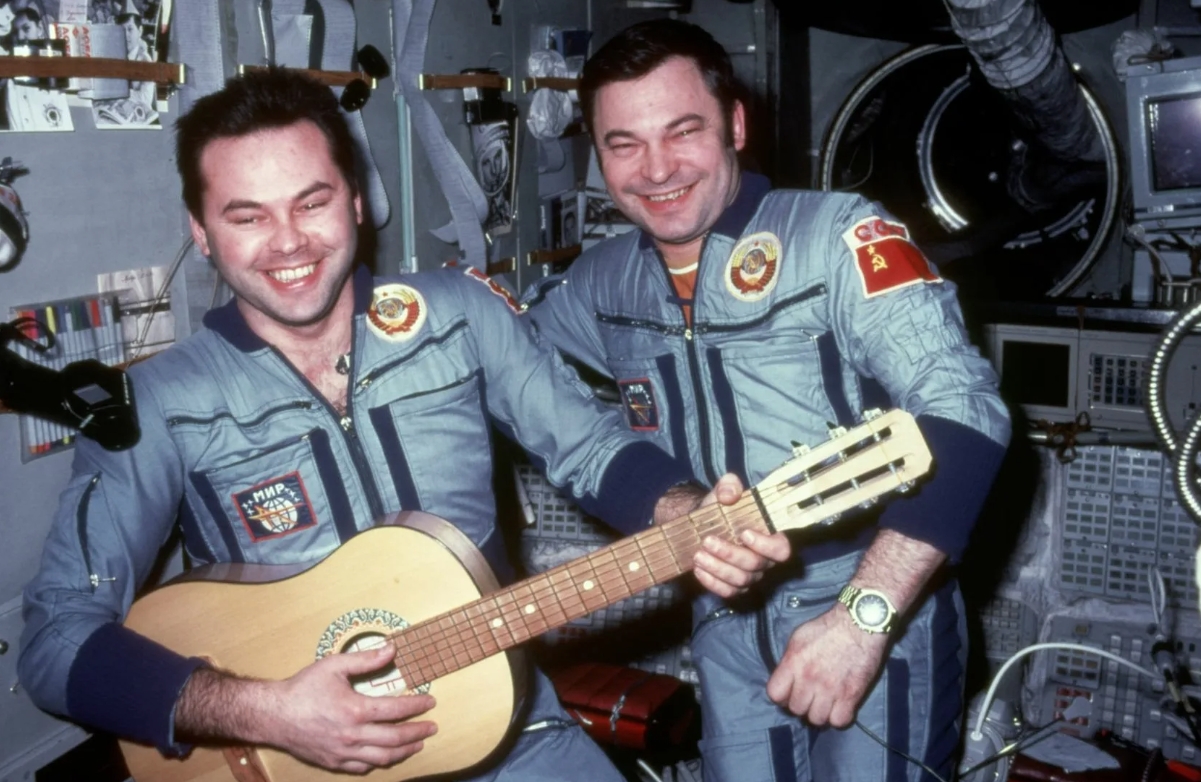
It is certainly fun in orbit, but transporting humans there is too expensive and dangerous. Image: culture.ru
A promising direction is teleoperation: an astronaut in orbit controls a robot on the surface with minimal delay, combining the endurance of a machine with the adaptability of the human mind. This model, according to a number of NASA experts, is the future of exploration — not competition between humans and robots, but their symbiosis.
The technical debate about humans and machines leads to a deeper question: what is the purpose of sending humans at all? Mars, which in the 1950s seemed like a potentially habitable world with possible traces of life, turned out to be a frozen, nearly airless ball of red dust. To colonize it means spending an entire life in a hermetically sealed capsule dug into a cave. Searching for life there is well within the capabilities of robots, which operate for decades and require neither food, nor air, nor psychological support.
Crewed spaceflight is not without meaning: it nourishes the human spirit, sets benchmarks for civilization, and creates technologies that change life on Earth. But without a clear answer to the question “why?”, it risks sharing the fate of the Apollo program, which was quietly shut down as soon as its goal — landing on the Moon — was achieved. History shows that projects without a clear purpose are easily canceled. Therefore, that purpose must emerge, and then we may become a truly spacefaring species.