
For decades, dietitians advised against eating egg yolks for heart health, but a large-scale scientific review has shown a different effect in most people.
For many years, eggs were considered a controversial food because of the cholesterol in yolks. Dietitians warned that they could increase the risk of cardiovascular disease, so many people tried to eat only the whites. However, modern research is gradually revising this view, and some studies have already shown that one egg per week may reduce the risk of death. But how exactly do eggs affect cholesterol and blood vessels — and is it true that the yolk is no longer considered an enemy of the heart?
How Eggs Actually Affect Cholesterol
The main fear surrounding eggs is linked to the cholesterol in the yolk. But studies increasingly show how eggs actually affect cholesterol levels.
For a long time, it was believed that the more cholesterol we eat, the more of it ends up in our blood. However, the body is far more complex than that.
What Clinical Studies Have Shown
A major scientific review in the Journal of Poultry Science revealed a surprising picture: moderate egg consumption does not increase the risk of heart disease for most people, and may sometimes even have a protective effect.
The meta-analysis combined 28 randomized studies: clinical, observational, and ecological, while a separate ecological analysis covered 142 countries. It turned out that eggs do slightly raise levels of “bad” LDL cholesterol. But at the same time, levels of “good” HDL cholesterol also increase.
The key finding of the research is as follows:
- LDL (“bad” cholesterol) rises slightly
- HDL (“good” cholesterol) rises simultaneously
- their ratio — the key indicator of heart risk — barely changes
Scientists explain this by the body’s self-regulation mechanisms. When more cholesterol comes from food, the liver produces less of it. In addition, egg protein partially reduces cholesterol absorption in the intestine, which also softens the effect.
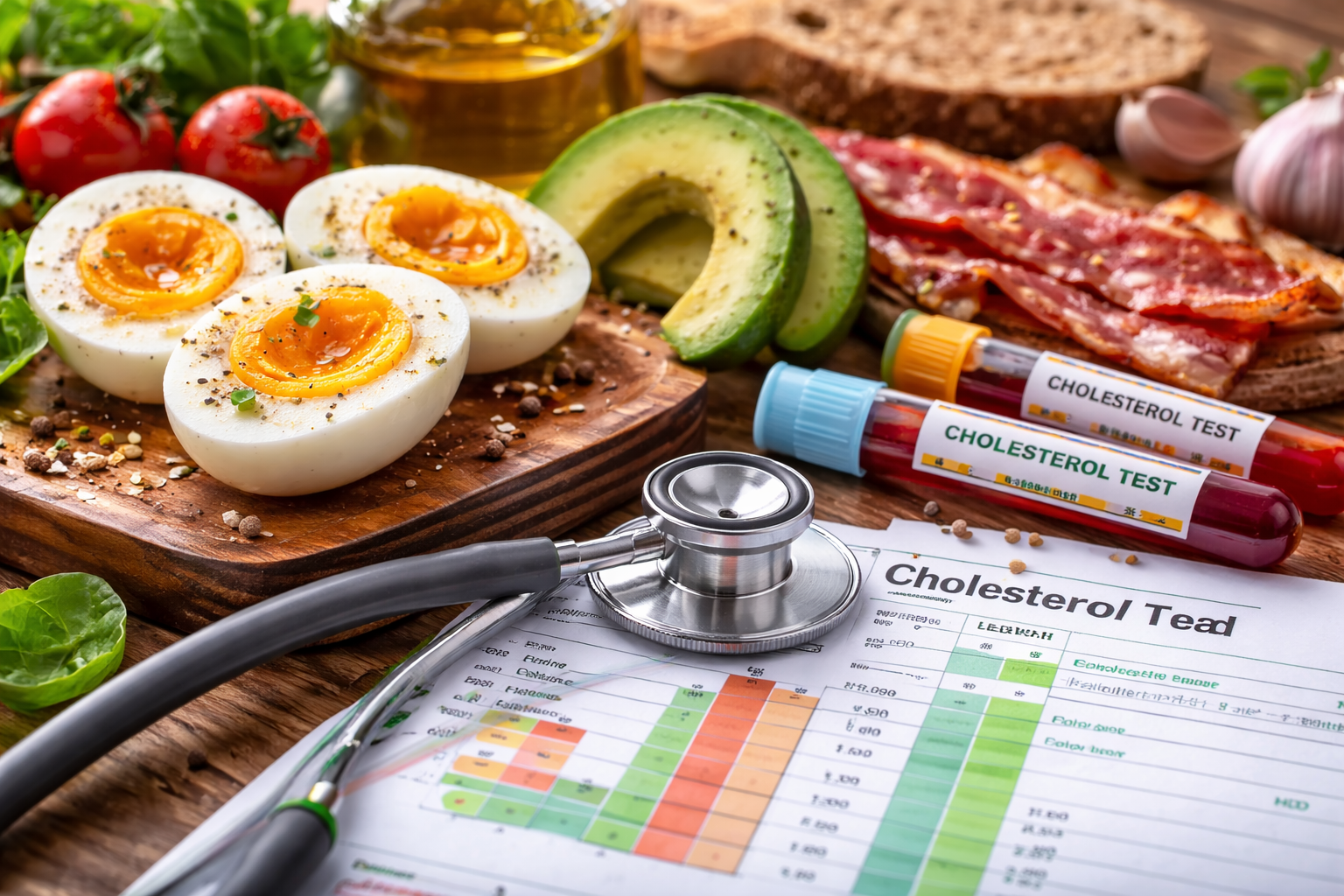
Data from 142 countries show that eating eggs may protect the heart rather than harm it.
Why Egg Yolks May Be Good for the Heart
The most interesting discovery is not about cholesterol, but about the substances inside the yolk. Egg yolks contain the antioxidants lutein and zeaxanthin, which protect lipoproteins from oxidation.
It is oxidized cholesterol that is considered one of the key factors in the formation of atherosclerotic plaques in the arteries.
In small clinical studies, participants added one egg per day for four weeks. In healthy people, levels of “good” cholesterol increased, and LDL oxidation markers improved.
Meanwhile, in people with moderately elevated cholesterol, the overall LDL level barely changed.
But the most curious result emerged from the analysis of data across different countries.
How Many Eggs Can You Eat Per Day Without Harm
Analysis of global data reveals an interesting pattern: in countries where people eat more eggs, the rate of cardiovascular disease is often lower.
For example, in Japan, eggs are consumed almost twice as often as the global average, yet the rate of coronary heart disease remains among the lowest.
At the same time, researchers emphasize an important detail: the overall diet matters. Eggs eaten alongside vegetables, fish, and healthy fats are not the same as eggs combined with bacon, processed meat, and refined carbohydrates.
For instance, a simple fried egg can be a fairly healthy dish if cooked with minimal oil and served with vegetables.
Interestingly, thanks to their choline content, eggs are also considered one of the foods that help the brain function better.
The main conclusion of modern research: for most people, one egg per day is considered a safe level of consumption, and the yolk, which was long considered harmful, may turn out to be an unexpected ally of heart health.