The Apple Watch Ultra 4 looks almost identical to the Ultra 3. It has the same titanium case, display and dimensions, and the same $799 starting price in the US. The meaningful changes are inside: a new S11 chip with twice the RAM, a redesigned heart-sensor system that adds a readiness score, first-time Audio Intelligence features, and battery life that rises to up to 50 hours. The source concludes that most Ultra 3 owners don’t need to upgrade. For first-time Ultra buyers, the Ultra 4 is the stronger pick at the same price. Below is a point-by-point breakdown of what changed and who benefits.
What you need to know
- Both models start at $799 in the US. The Ultra 4 adds the S11 chip (the same chip used in the Apple Watch Series 12) and doubles RAM from 2 GB to 4 GB.
- Apple rates battery life at up to 50 hours in normal use, versus 42 hours for the Ultra 3. According to the source, this is the first time an Apple Watch has passed two days on a charge.
- A new readiness score rates recovery from 0 to 10 using activity, training load, body metrics and sleep. The Ultra 3 does not offer it.
- Live Rewind and Siri Recap arrive in beta later in 2026. They will initially support English only, require an iPhone 16 or later with Apple Intelligence (excluding the 16e), and will not be available in the EU.
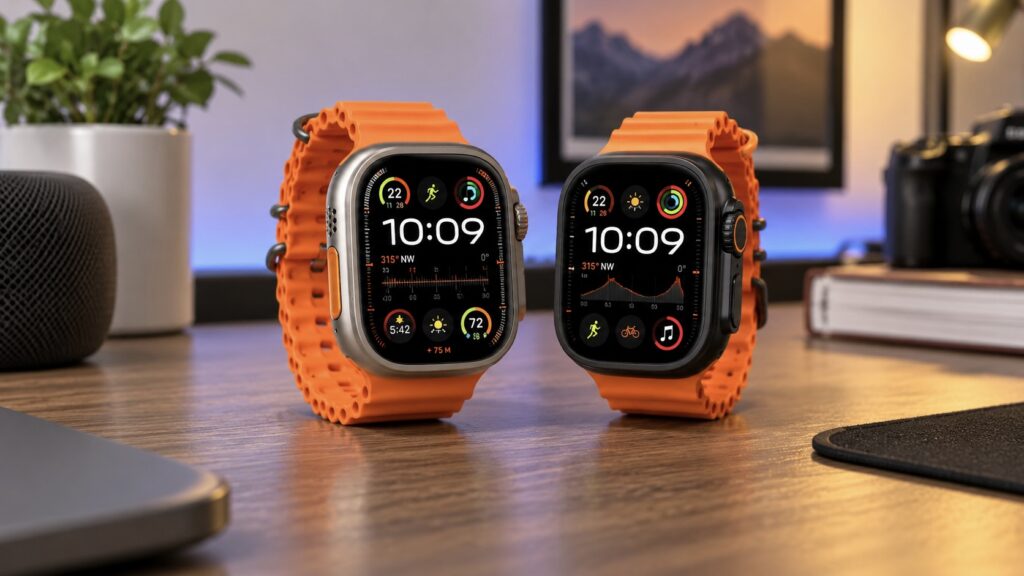
Apple Watch Ultra 3 and Apple Watch Ultra 4 on a table
Full specifications side by side
Individual numbers are hard to compare when they’re spread across paragraphs, so here are the key specifications of both models in one table.
| Specification | Apple Watch Ultra 4 | Apple Watch Ultra 3 |
|---|---|---|
| Case | Grade 5 titanium | Grade 5 titanium |
| Colors | Natural, black | Natural, black |
| Dimensions | 49 × 44 × 12 mm | 49 × 44 × 12 mm |
| Weight | 63 / 63.1 g | 61.6 / 61.8 g |
| Display | LTPO3 OLED, always-on | LTPO3 OLED, always-on |
| Resolution | 422 × 514 | 422 × 514 |
| Brightness | Up to 3,000 nits | Up to 3,000 nits |
| Chip | S11 | S10 |
| RAM | 4 GB | 2 GB |
| Storage | 64 GB | 64 GB |
| Heart sensors | Second-generation electrical + always-on optical | Electrical + third-generation optical |
| Readiness score | Yes | No |
| Audio Intelligence | Yes | No |
| Navigation | Dual-frequency GPS, no GLONASS | Dual-frequency GPS + GLONASS |
| Satellite connectivity | Yes | Yes |
| Battery (normal mode) | Up to 50 hours | Up to 42 hours |
| Low Power Mode | Up to 84 hours | Up to 72 hours |
| Fast charging | 15 min for up to 18 hours | 15 min for up to 12 hours |
| Water and dust resistance | 100 m, IP6X, diving to 40 m | 100 m, IP6X, diving to 40 m |
| Price (US) | From $799 | From $799 |
Most rows are identical. The real differences are internal: the chip, the sensors and battery life. The sections below explain what each change means in practice.
Design: same armor, slightly heavier
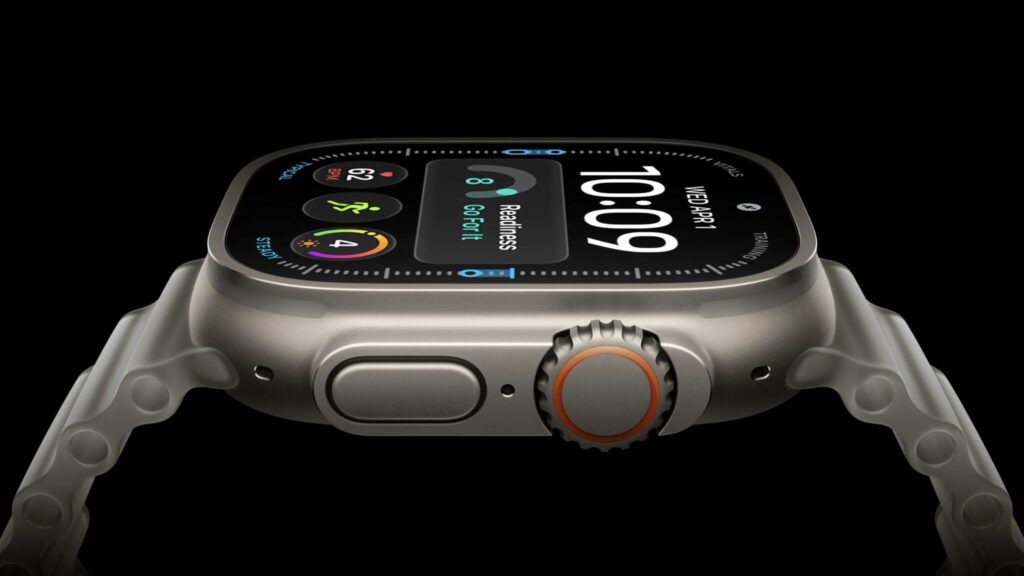
On the outside, nothing has changed. The Ultra 4 keeps the Grade 5 titanium case, the natural and black finishes, and the 49 × 44 × 12 mm dimensions. The customizable Action button, the protected Digital Crown and the flat sapphire crystal are all carried over. If the Ultra 3’s large, rugged look didn’t appeal to you, its successor offers no alternative.
Apple Watch Ultra 4 design
All the protection remains. The watch is water-resistant to 100 meters, rated IP6X for dust, and supports recreational diving to 40 meters. The depth gauge and water temperature sensor are unchanged. The only physical difference is weight: the Ultra 4 is about 1.5 grams heavier, at 63 g versus 61.6 g. The source author says you won’t notice the difference on the wrist. Apple says it “reworked the architecture” of the case to support continuous health monitoring, but this isn’t visible from the outside.
Display: large and bright, as before
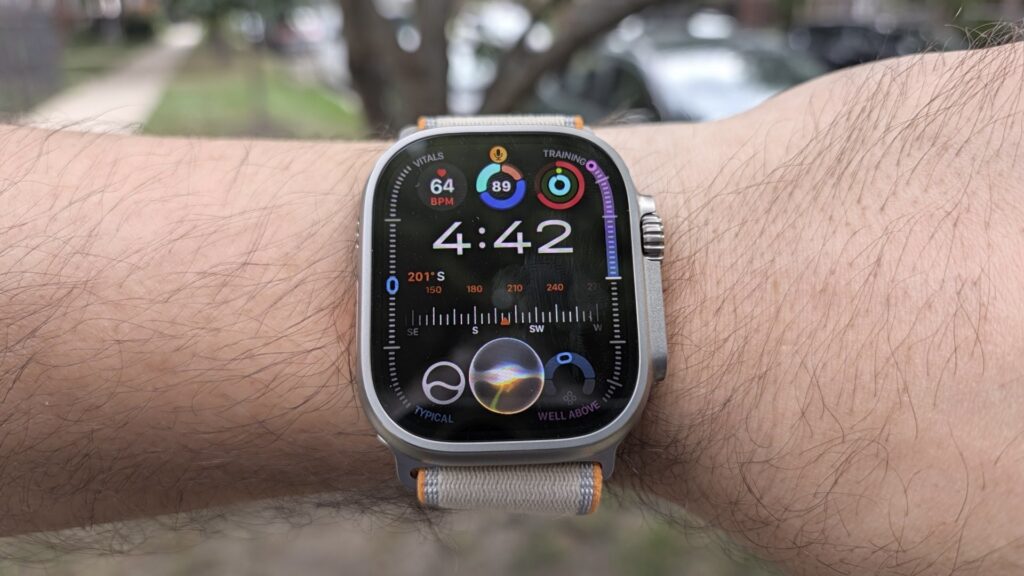
The display is untouched. It is the same LTPO3 OLED panel with a 422 × 514 resolution, peak brightness of up to 3,000 nits and a minimum of 1 nit. The always-on mode refreshes at 1 Hz, and the screen area is unchanged.
Apple Watch Ultra 4 display
It is still a large Ultra-class screen. According to the source, even people moving up from an older standard Apple Watch will find plenty of room for data and maps, and the display stays readable in sunlight.
S11 chip: the main upgrade
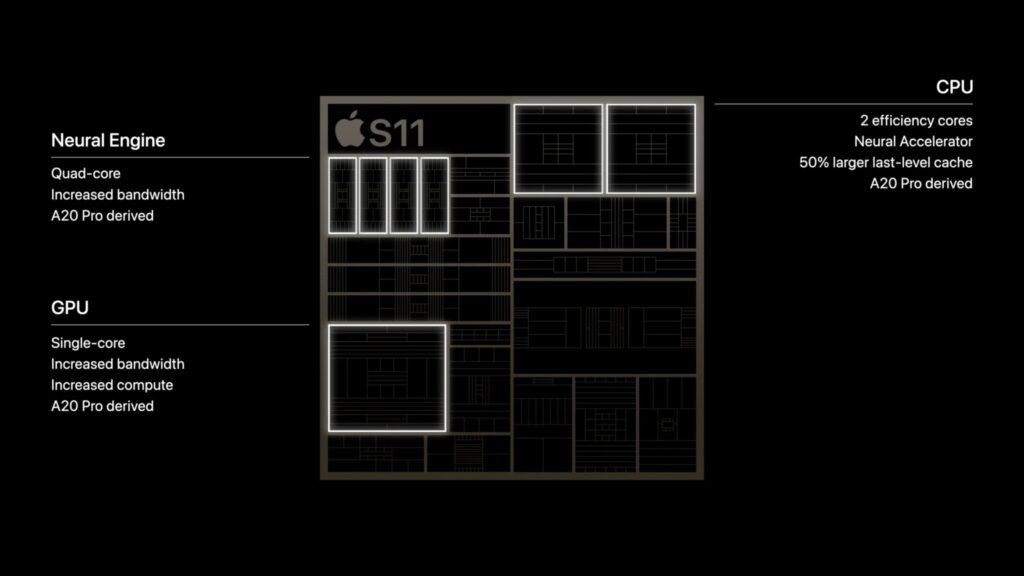
The Ultra 4 uses the same S11 chip as the Apple Watch Series 12. The source calls it the first significant processor update for the watch line in several years, and the change affects more than speed.
Apple S11 chip
Besides performance and efficiency gains, the S11 powers the entire new health-tracking system. Apple also rebuilt the step-counting algorithm with machine learning. The company claims the most accurate step counting of any smartwatch and has added a new Steps complication. RAM doubles from 2 GB to 4 GB, which the source describes as headroom for future features.
The chip also includes a Secure Exclave, an isolated block that processes audio separately from the rest of the system. This component enables the Audio Intelligence features described below. The source argues that this is a stronger reason for Ultra 3 owners to consider upgrading than raw speed.
Health: the watch now explains your recovery
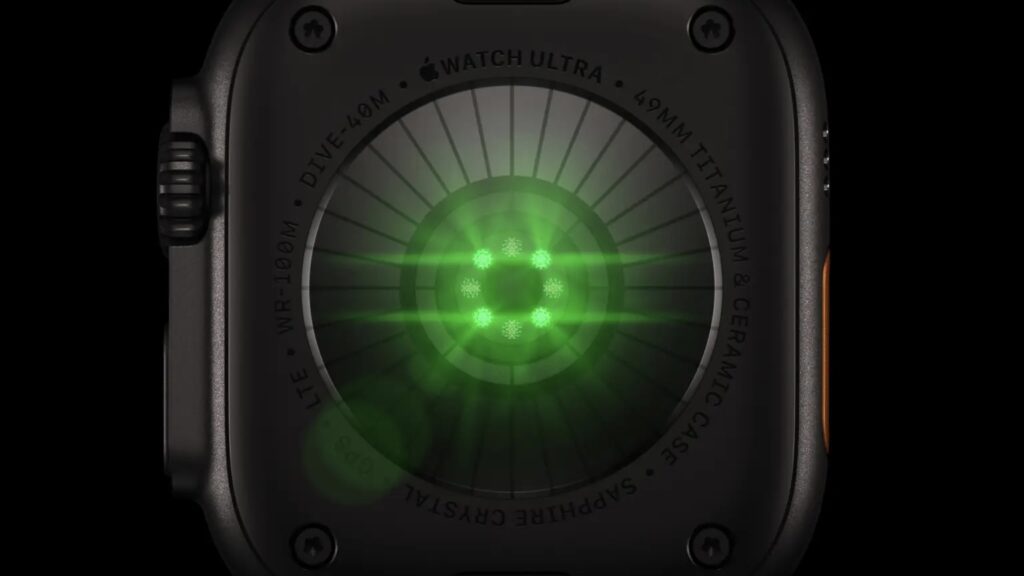
This is where the Ultra 4 pulls furthest ahead. The new sensor system pairs larger, more efficient green LEDs with the S11 chip and takes readings far more often. Background heart rate is measured every five seconds, and heart rate variability (HRV) is sampled up to 24 times more often than on the Ultra 3.
New heart rate sensor in Apple Watch Ultra 4
The frequent readings feed the watch’s recovery calculations. Overnight metrics now include an HRV-based recovery estimate, and a daytime view shows how your values compare with your usual range.
All of this is combined into a readiness score. The watch considers recent activity, training load, body metrics and sleep, then produces a score from 0 to 10 with guidance along the lines of “recover” or “push harder.” The score updates as new data arrives, including after a hard workout. The source says this can help people who follow a training plan decide whether to go all out or rest on a given day.
The Ultra 3 keeps its existing health features: ECG, hypertension notifications, sleep apnea detection, sleep score, blood oxygen and wrist temperature sensing. It simply does less with that data than the Ultra 4.
Audio Intelligence: catching what you missed
This is the feature set that is entirely new. The standout is Live Rewind. If you miss something in a conversation, you can double-press the Digital Crown and the watch shows the last 15 seconds of speech as text. Audio is not saved or played back, and Apple emphasizes privacy.
Siri Recap goes further. It generates a title and a short summary of key points, which you can review later in the Siri app. You control when it runs: it can be turned on manually or scheduled by time and location. Summaries that aren’t saved are deleted after seven days. Sound recognition for important sounds and a quick Shazam feature that automatically identifies playing music round out the set.
Important limitations
Live Rewind and Siri Recap will arrive in beta later in 2026. They require an iPhone 16 or later with Apple Intelligence (the iPhone 16e is excluded), will initially understand only English, and will not be available in the EU. For now, the source considers them more of a future promise than a ready advantage.
Connectivity and navigation: almost unchanged
Connectivity is nearly identical between the two generations. Both models have dual-frequency GPS, 5G RedCap and LTE, Wi-Fi 4, Bluetooth 5.3, a second-generation Ultra Wideband chip and satellite connectivity.
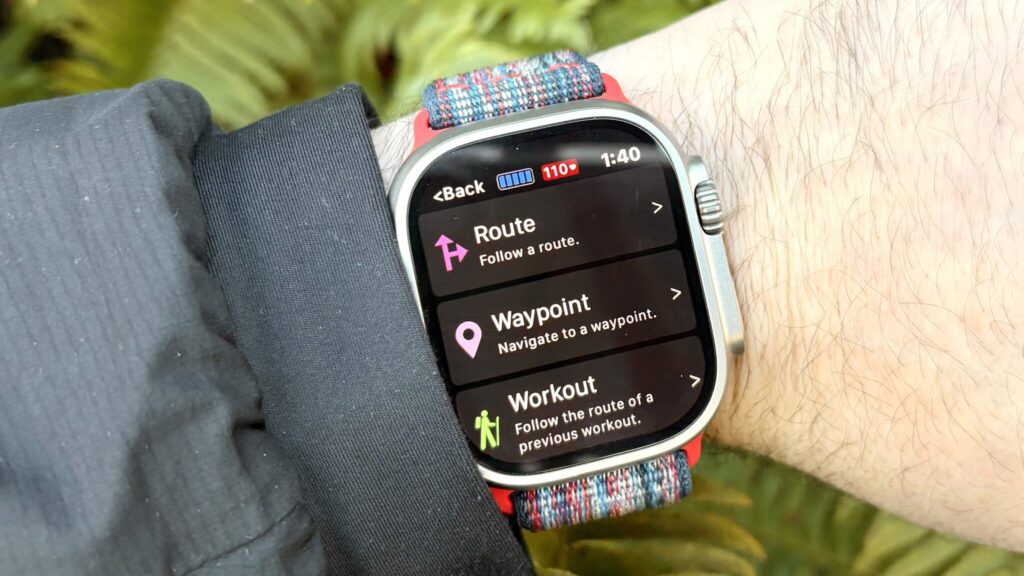
Navigation on Apple Watch Ultra 4
There are two differences. First, the Ultra 4 drops GLONASS support, although the source says this shouldn’t affect accuracy. Second, Apple claims the Ultra 4 has the most accurate GPS of any sports watch available today. If that claim holds up, it would benefit people who run in forests or mountains, where signal reception is difficult.
Battery life: past two days for the first time
Battery life is the second major improvement after the sensors. Apple rates the Ultra 4 at up to 50 hours of normal use. That is eight hours more than the Ultra 3, and according to the source, it is the first time an Apple Watch has lasted beyond two days on a charge.
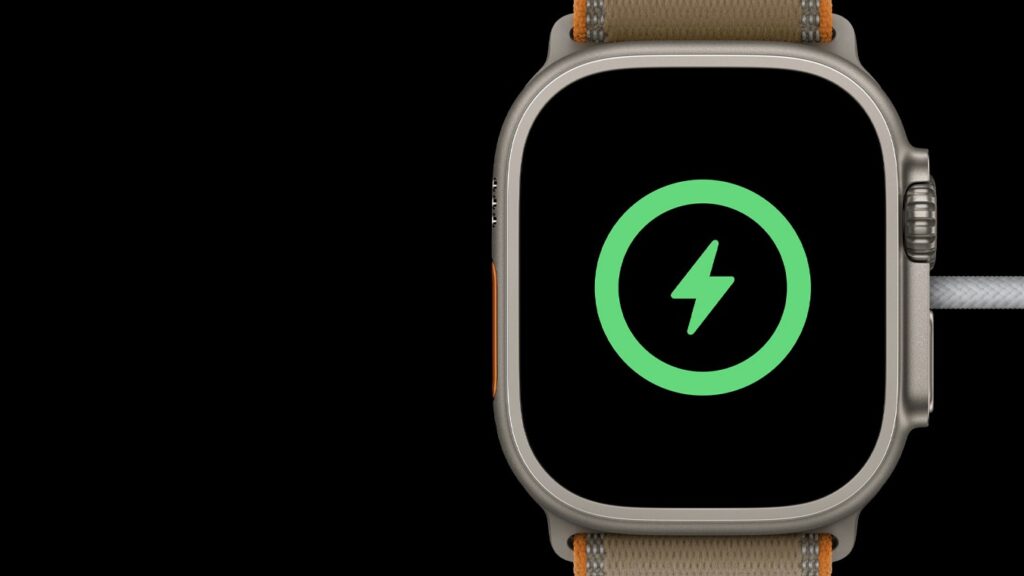
Faster charging on Apple Watch Ultra 4
The gap is wider in Low Power Mode: 84 hours versus 72. Workout endurance also improves, reaching up to 25 hours in extended mode with full GPS and heart rate tracking, five hours more than before. A new Max Extended Workout mode stretches this to up to 45 hours for tracking running, walking and hiking. In exchange, notifications and some metrics are turned off.
Charging is slightly faster too. In 15 minutes, the Ultra 4 gains enough charge for 18 hours of use, six hours more than its predecessor. Charging to 80 percent takes the same 45 minutes on both models. The source notes that if you regularly drain your Ultra 3 by evening, this extra capacity could make a real difference to your day.
Price: unchanged
The US starting price remains $799. For the same money, buyers get new sensors and a longer-lasting battery, which the source considers the better overall value.
According to the source, the Ultra 3 only makes sense at a noticeable discount. It can still be a good choice if your priorities are the large display, the rugged case and the established outdoor features, and you aren’t especially interested in the new health sensors. Straps and accessories are the same for both versions.
Should you upgrade from Ultra 3 to Ultra 4?
In short, upgrading isn’t necessary. The source says the Ultra 4 makes the strongest case for two groups: people who want detailed recovery guidance, and people who regularly run up against the Ultra 3’s battery limits. If you fall into either group, the upgrade is worth serious consideration.
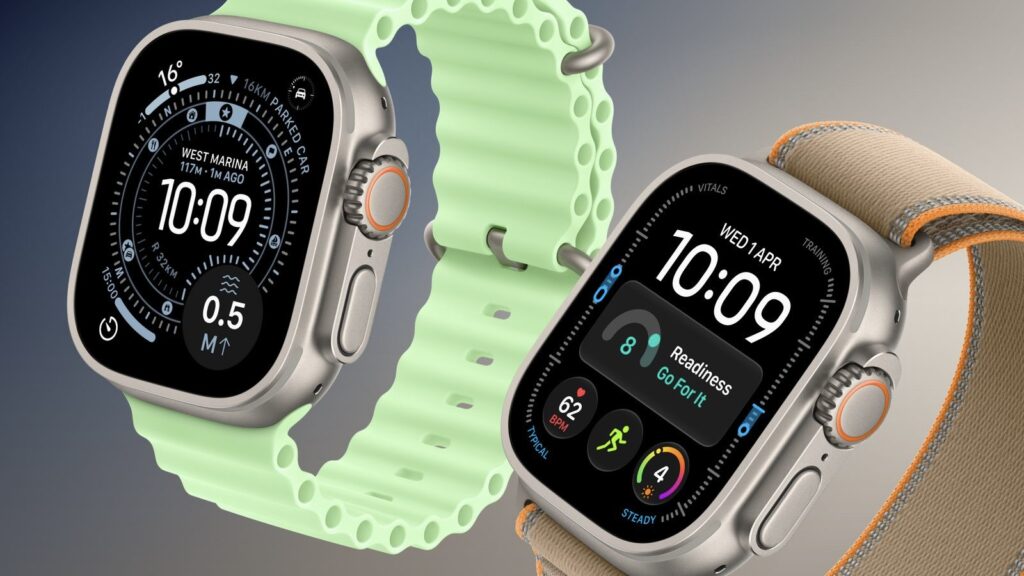
Apple Watch Ultra 3 and Ultra 4
Other Ultra 3 owners have no reason to rush. They already have the same large display, the same durable case and the same core connectivity. The source advises against upgrading for Audio Intelligence alone. It recommends waiting until Live Rewind and Siri Recap leave beta and the first proper tests are available.
For first-time Ultra buyers, the logic is reversed. Since both models cost about the same, the newer Ultra 4 comes out ahead: its new sensors and extra battery capacity deliver more for the money. Beyond that, the source says the decision comes down to one question: will better recovery tracking and longer battery life actually improve your day?