Apple has blocked updates for several apps with vibe coding features in the App Store, including Replit and Vibecode. The reasoning behind the complaints is now clearer: modern services can already create an app from a simple description and then almost immediately show the result on a phone. For Apple, this is a bad situation, and the company has started openly fighting against it.
Bad news: Apple blocks updates for some AI apps in the App Store
How to Make an App for iPhone
When people say you can make an iPhone app through Replit, many take it too literally. In reality, it’s not about a finished program living directly inside Replit as a standalone app for the end user. Replit uses a combination with the Expo Go app. You just scan a QR code or open a project from Replit in Expo Go, and you get a working program that you made yourself.
The process is very simple. You describe what you want, the AI builds the app’s foundation, and the launch on iPhone happens through a separate app called Expo Go. Moreover, this preview can be opened not just by you. If you give someone a QR code or a link, they can also launch this build on their device. For a regular user, it looks almost like “I made an app and immediately opened it on my phone,” although technically this is the testing and preview stage, not a full release through the App Store.
At the same time, Apple’s problem isn’t just with Replit alone. The entire approach has become too simple and widespread. Today, such services can build apps from descriptions, launch them either within their own environment or through external tools like Expo Go, and all of this without the classic long development cycle that the App Store is accustomed to.
Why the Apps Aren’t in the App Store
Apple explains the situation not as a new policy but through existing store rules. The company cites Section 2.5.2 of the App Store Review Guidelines. In plain language, the meaning is this: an app should not, after review, load and execute new code in a way that turns it into a different product with new features.
And this is exactly where the conflict arises. When one app allows you to literally build another on the fly and immediately launch it on an iPhone, for Apple this looks like bypassing App Store Review. Because one app went through review, but the user ends up with a tool inside it that creates what are essentially new programs. Yes, it might be a test preview through Expo Go, but from a platform control standpoint, the difference for Apple is no longer that significant.
Essentially, Apple is not just nitpicking over wording but trying to find a mechanism that would keep such scenarios under control. Because otherwise, the App Store gradually transforms from a store of vetted apps into a showcase for builders through which anything can be launched after approval.
How to Publish an App in the App Store
It’s important not to confuse two different things here. Apple itself doesn’t prohibit vibe coding as an approach. On the contrary, the idea of “describe what you need and AI will write the code” has already become part of modern development. The problem for Apple begins not at the moment of code generation but at the moment of launching and distributing the result.
If you make an app through Xcode, then build it, test it, and submit it to the App Store, everything follows a process that Apple understands. The company sees exactly what reaches the user and reviews it before publication. But when an app is created from a description inside another service and launched on a phone almost immediately through a preview or through a separate app like Expo Go, for Apple this is already a gray area.
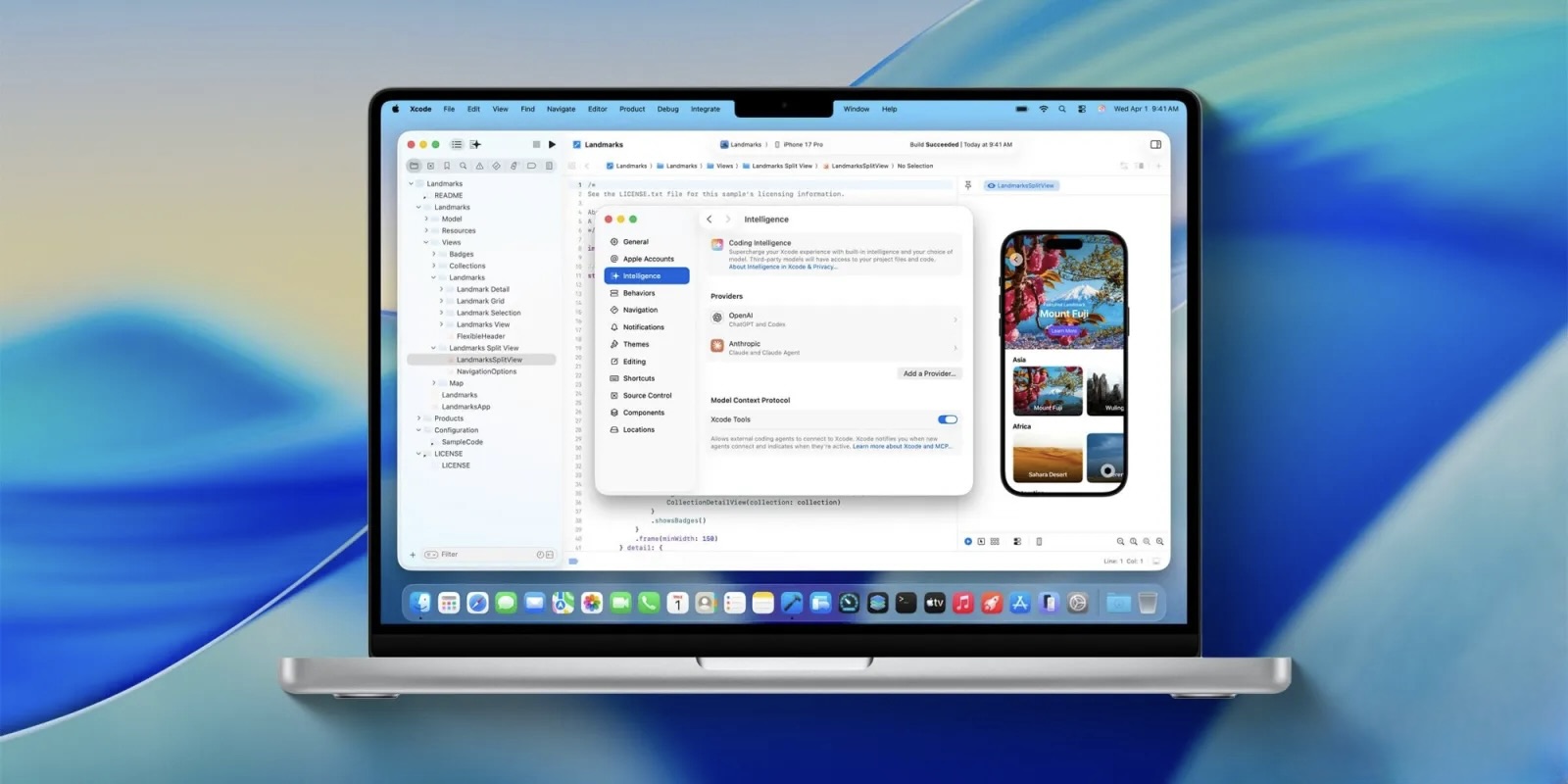
Xcode 26.3 with an integrated AI agent for writing code
That’s exactly why the question now isn’t “can AI write code?” but rather “who controls how that code gets onto an iPhone and in what form the user receives it.” For now, Apple’s answer is very simple: if it looks like a bypass of their review process, they will fight it.
What Will Happen to Coding Apps on iPhone
Most likely, Apple won’t ban the idea of creating apps from descriptions altogether. It’s already too big of a trend, and the company itself is also moving in this direction. But the ways of launching, testing, and distributing such apps will clearly be placed under stricter constraints.
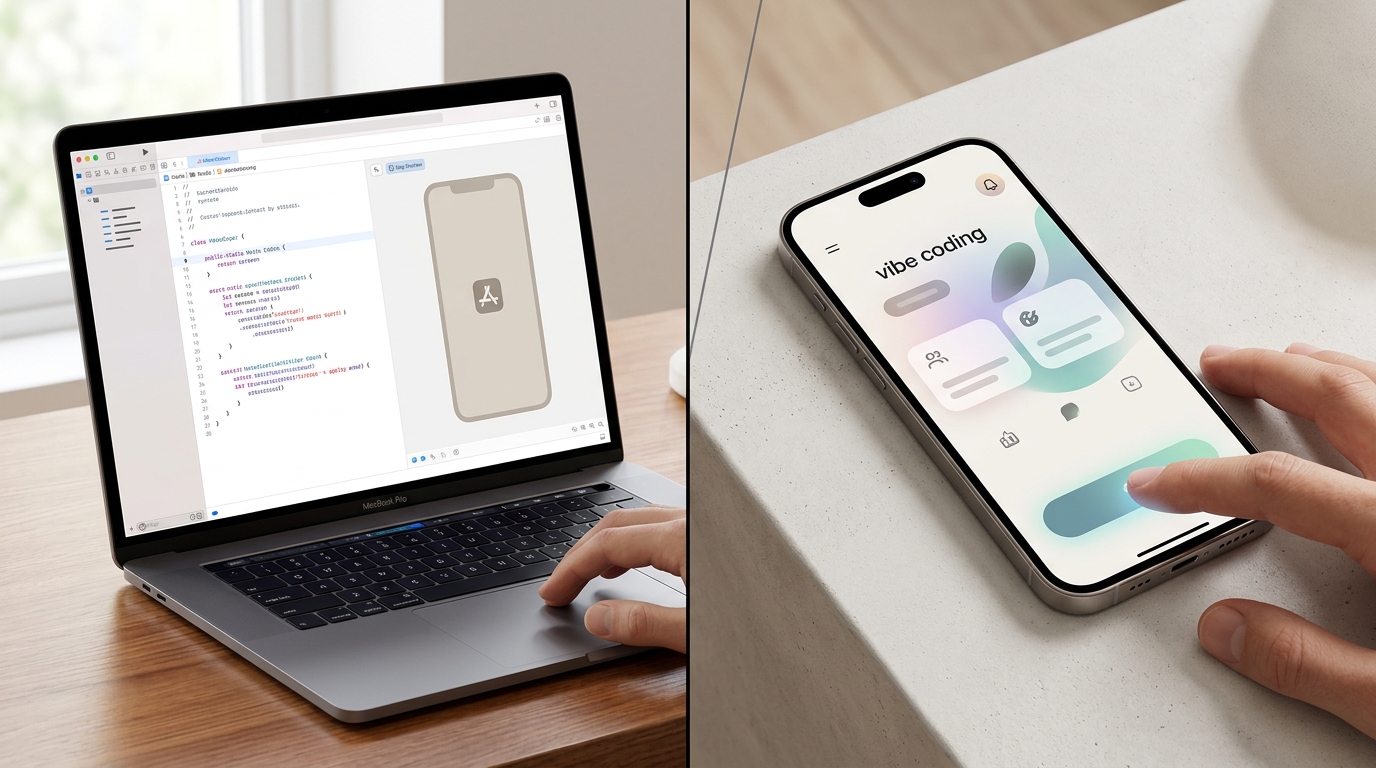
Two paths for creating apps: through Xcode on Mac and through vibe coding on iPhone
The reason isn’t just about security and reputational risks, although those matter too. There’s also money. Apple earns from paid apps and in-app digital purchases, where the standard commission is usually up to 30%, with a reduced rate for some developers. If users start massively creating, launching, and effectively distributing new products outside the familiar App Store model, the company loses both control and part of its business.
For regular iPhone users, the situation changes almost nothing for now. Replit and similar services aren’t going anywhere, and the idea of “making an app from a description” is only gaining momentum. But Apple has already shown that it doesn’t like the model where modern apps can create other apps almost on the fly and launch them bypassing normal review. This is exactly what the company will continue trying to regulate.