Apple has officially confirmed the discontinuation of the Mac Pro — the most expensive and once the most powerful desktop computer in its lineup. The Mac Pro page has disappeared from the company’s website, and Apple has stated that no new models are planned. After 20 years of history, the era of Apple’s big professional desktop has come to an end. Perhaps its place will be taken by an iMac Pro with M5 Max, or perhaps users will have to make do with other options.
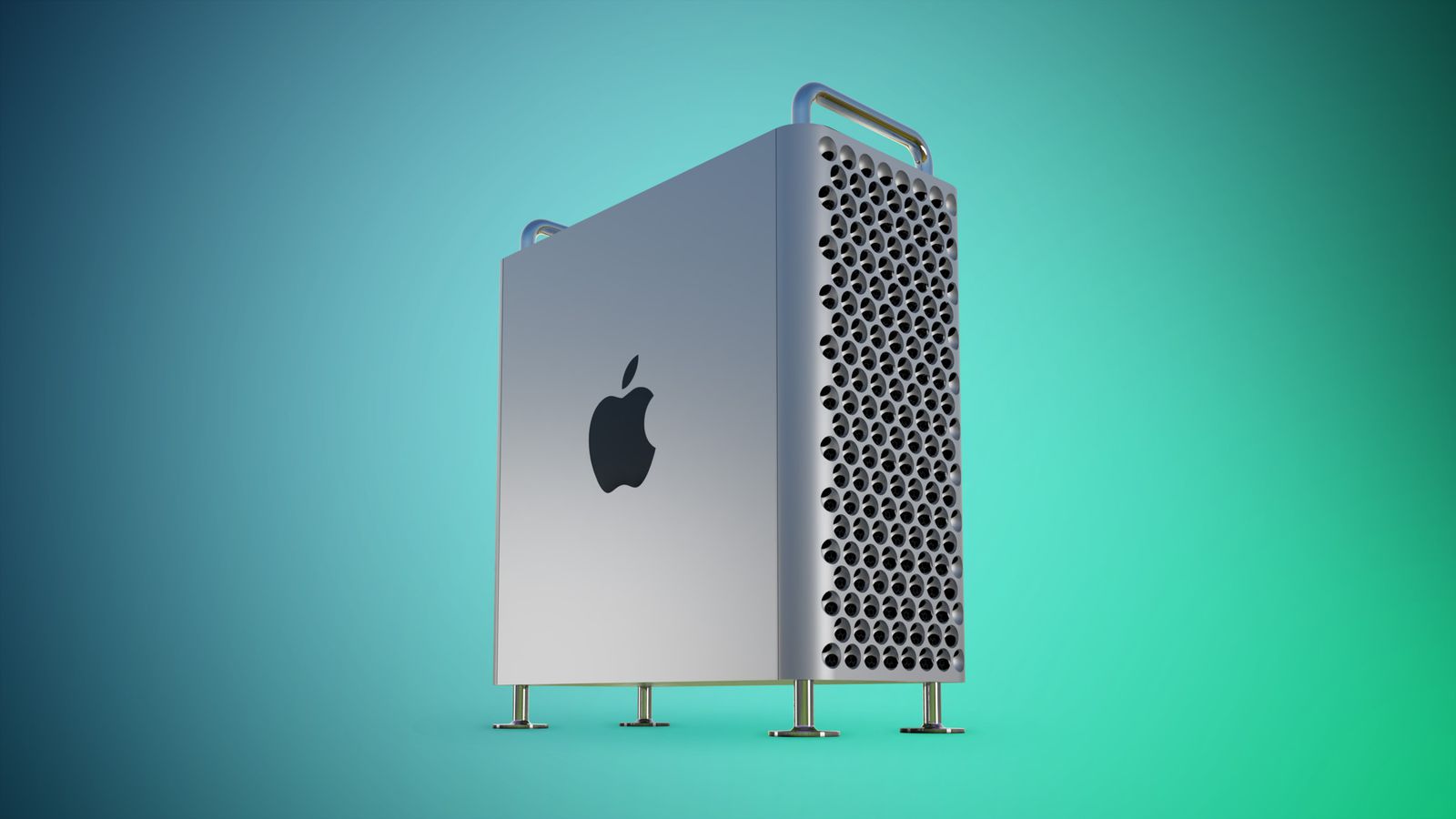
Mac Pro is no longer for sale. Apple has closed the lineup. Image: macrumors.com
What Happened to the Apple Mac Pro
On March 26, 2026, Apple confirmed to 9to5Mac that the Mac Pro lineup has been discontinued. The product page on Apple’s website now redirects to the main Mac page, and all mentions have been removed. Along with the Mac Pro, its signature accessories are also gone — the $699 wheel kit and the $300 feet kit.
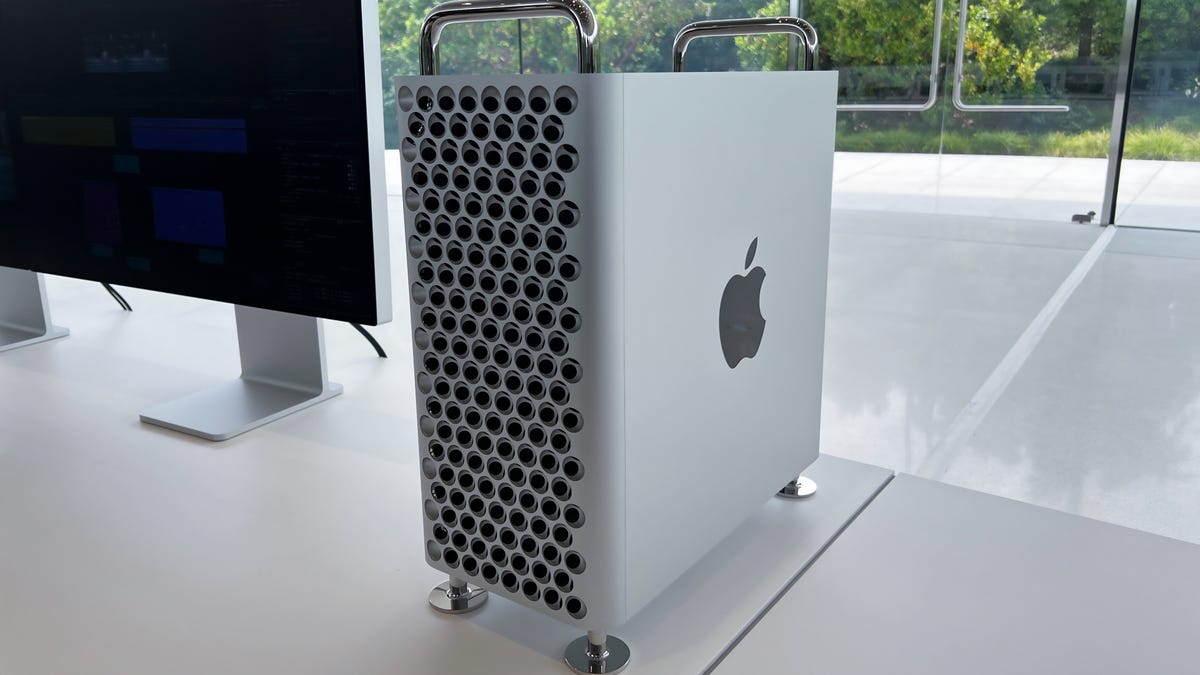
The last Mac Pro with M2 Ultra. Image: cnet.com
The last Mac Pro update was in June 2023, when the company installed the M2 Ultra chip. The case hadn’t changed since 2019, and the starting price of $6,999 remained the same — even as the Mac Studio with newer chips cost several times less.
Additionally, earlier in March Apple also discontinued the Pro Display XDR monitor, which was introduced alongside the Mac Pro in 2019. This definitively closes an entire era of the professional lineup.
Why Apple Abandoned the Mac Pro
The Mac Pro found itself in a difficult position after Apple’s transition to its own processors. When the company began installing M-series chips instead of Intel in 2020, the Mac Pro’s architecture lost its main advantage — the ability to install third-party graphics cards. The M2 Ultra does not support external GPU connections, meaning the only advantage the Mac Pro had over the Mac Studio was PCIe expansion slots for storage drives, audio cards, and network cards.

Remember this bucket-shaped Mac Pro? Image: theverge.com
The Mac Pro’s problems began even earlier. In 2013, Apple released a radical cylindrical design — the so-called “trash can.” The company later admitted that the design hit a thermal dead end: it was physically impossible to install more powerful graphics cards. Apple apologized to professionals and in 2019 returned to a classic tower case with holes — the “cheese grater.” But by the time of the transition to Apple Silicon, this design had also become irrelevant.
Over the past 13 years, the Mac Pro was updated only three times — in 2013, 2019, and 2023. Even when the Mac Studio received the M3 Ultra chip, the Mac Pro remained on the outdated M2 Ultra without any changes.
Mac Studio — The Apple Mac Pro Replacement for Professionals
With the Mac Pro gone, Apple’s desktop computer lineup now looks like this: iMac, Mac mini, and Mac Studio. The Mac Studio now occupies the position of the main professional desktop.
The current Mac Studio (2025 model) is available in two variants:
- M4 Max — from $1,999, up to 128 GB of RAM
- M3 Ultra — from $3,999, up to 512 GB of RAM
For comparison: the Mac Pro with M2 Ultra cost from $6,999, while the Mac Studio with M3 Ultra is noticeably faster and more powerful in all work tasks. The price difference is $3,000 in favor of the Mac Studio, and that’s with a newer chip.
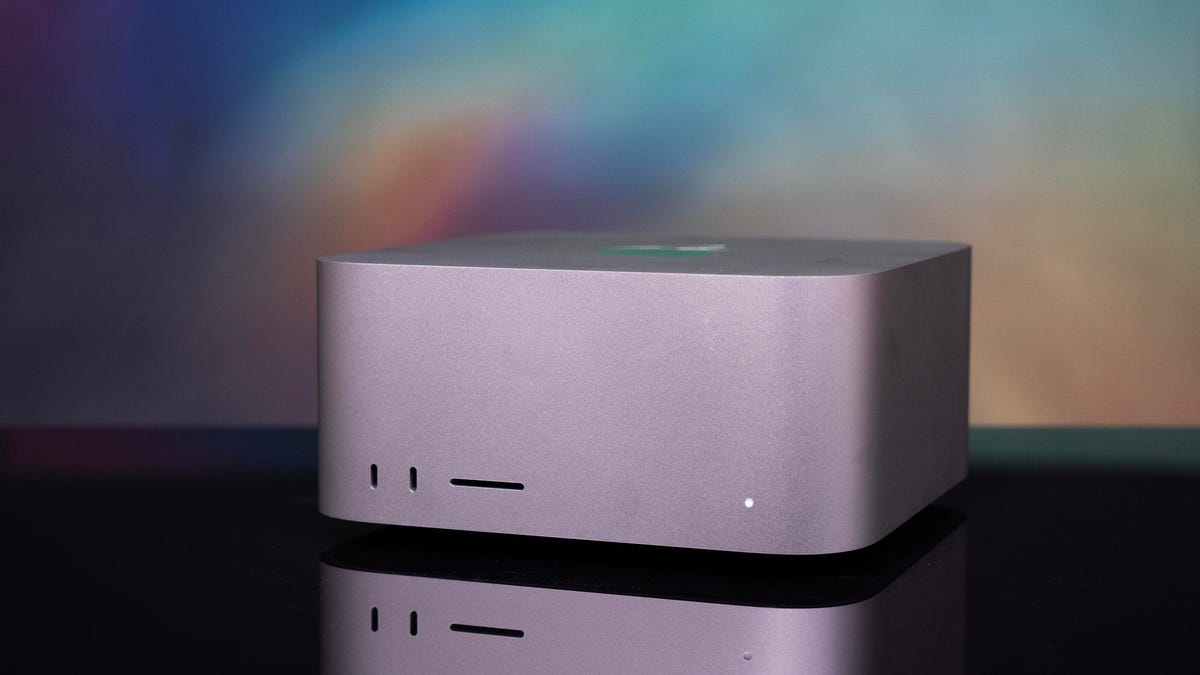
Mac Studio is more powerful in a smaller case. Image: cnet.com
The Mac Studio supports Thunderbolt 5 with bandwidth up to 120 Gbps and can connect up to eight monitors (with M3 Ultra). The only thing it lacks compared to the Mac Pro is PCIe slots for installing additional expansion cards inside the case. But for external expansion, Apple has provided the ability to connect external PCIe chassis via Thunderbolt 5.
How to Increase Mac Performance Without a Mac Pro
Besides the Mac Studio, Apple has added another way to scale performance. In the macOS Tahoe 26.2 update, a feature was introduced for linking multiple Mac computers via Thunderbolt 5 with minimal latency. Essentially, this allows combining multiple machines for collaborative computing — an alternative that Apple envisions for those who need more than a single computer can offer.
Additionally, Apple is expected to update the Mac Studio with M5 Max and M5 Ultra chips in mid-2026. The latter should become Apple’s most powerful processor to date — with significant improvements in both computational tasks and AI workloads.
Who Will Miss the Mac Pro
The Mac Pro was a niche product even in its best years. It was needed by videographers, audio engineers, and professionals who required internal expansion cards — specialized graphics cards, capture cards, NVMe drive arrays, and network adapters. PCIe slots provided flexibility that neither the Mac Studio nor the Mac mini can offer.
With the transition to Apple Silicon, this flexibility was significantly compromised. Installing a third-party Nvidia or AMD graphics card in the Mac Pro with M2 Ultra was impossible. As far back as 2018, the president of Red Digital Cinema publicly asked Apple to restore Nvidia GPU support — but it never happened.
For those still using Mac Pros with older Intel processors (such as models 4,1 and 5,1), the discontinuation won’t come as a surprise — these machines have long been living on borrowed time thanks to their upgrade potential. But owners of the 2023 Mac Pro now know for certain that there will be no update for their chassis.
Should Mac Pro Owners Worry About Support and Updates
If you have a Mac Pro with M2 Ultra and it handles your tasks well — there’s no need to rush to replace it. The computer will continue to receive macOS updates for several more years. But you should already plan your next purchase with the Mac Studio in mind.
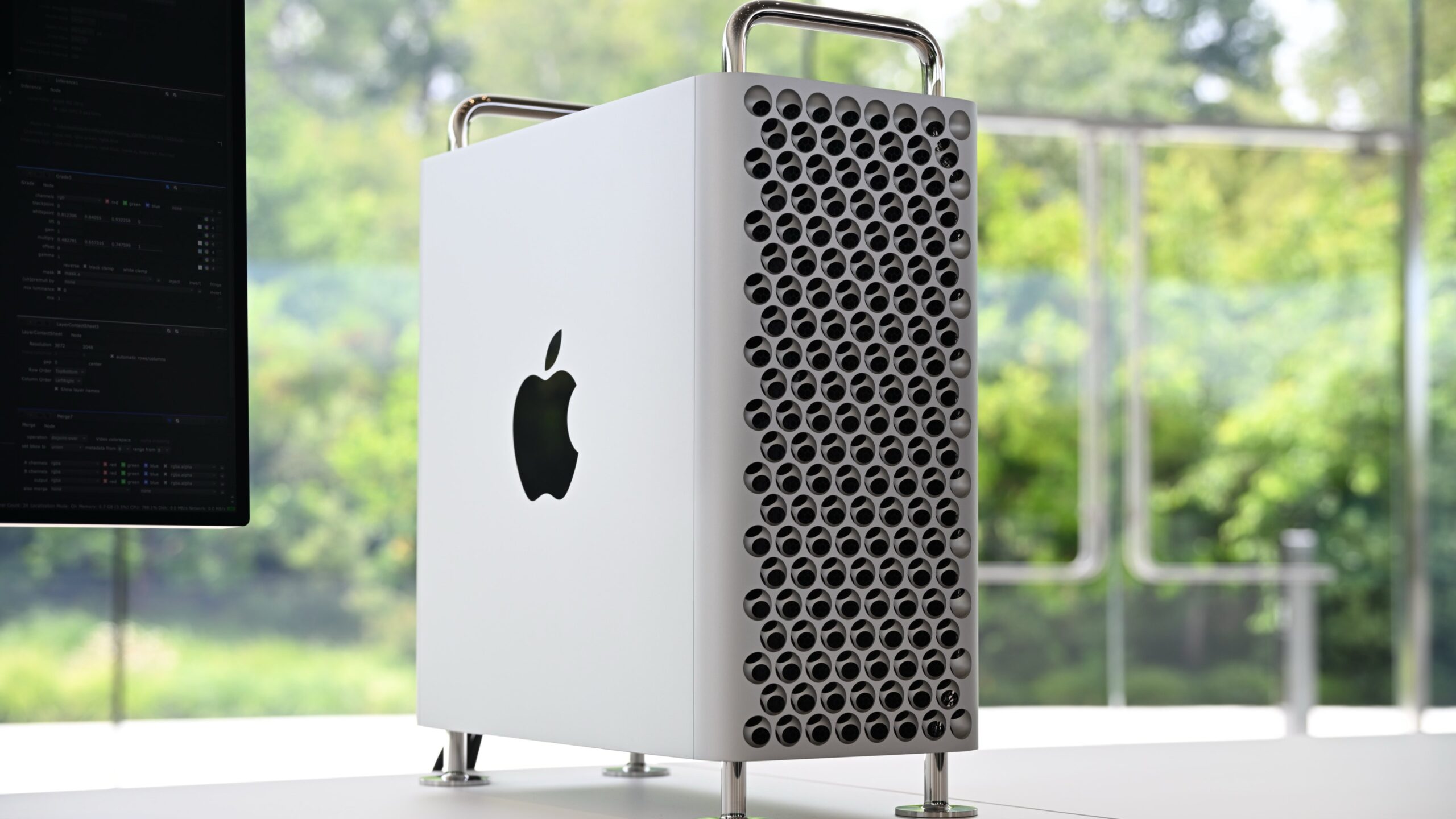
Current Mac Pros will still work fine for many years. Image: appleinsider.com
If you were considering buying a Mac Pro — that option no longer exists. The Mac Studio with M3 Ultra at $3,999 is more powerful, more modern, and cheaper. And by mid-year, a version with M5 Ultra will arrive, pushing performance even further.