The British financial regulator OFSI has fined Apple’s Irish subsidiary — Apple Distribution International (ADI) — £390,000 (approximately $516,000) for payments made to the Russian streaming service Okko after sanctions had already been imposed. The violation occurred in 2022, but the fine was only issued now — this is the first case completed under the new expedited settlement procedure. Let’s break down what’s behind this story and how it relates to ordinary Apple users.

Apple’s subsidiary fined in the UK for violating sanctions against Russia
What Was Apple’s Subsidiary Fined For
The essence of the case is simple. Apple Distribution International is an Irish Apple company responsible for product sales, App Store operations, and developer payments in Europe and the Middle East. It is through ADI that developers receive money for user purchases and subscriptions.
Apple got caught for a payment to Okko. Image: brecorder.com
In June and July 2022, ADI transferred a total of £635,618 to the Russian online cinema Okko — one of the largest streaming services in Russia. The payments were processed through a British bank. The problem is that at that time Okko was already under UK sanctions.
Okko is a Russian video streaming service that was owned by Sberbank until May 2022. After blocking sanctions were imposed on Sberbank, the cinema was sold to the company AO “Novye Vozmozhnosti” (New Opportunities). However, according to the British regulator, this company was separately added to the UK sanctions list in June 2022 — that is, before Apple made its payments.
Why Apple’s Irish Subsidiary Is Responsible for Payments to Russia
An important nuance of this case is the mechanism of liability. ADI itself did not conduct compliance checks on counterparties for sanctions. This was handled by other Apple divisions within the corporate structure. But the British regulator OFSI clearly stated: responsibility for compliance with sanctions legislation lies with the company that directly initiates the payment, even if the screening was done by someone else.
In other words, you cannot shift the blame to colleagues within the corporate group. If you signed the payment order — you are the one responsible. This is a precedent that could be important for any large corporation with a complex structure.
The regulator also emphasized: the fine was imposed specifically on ADI, not on Apple Inc. No charges have been brought against the parent company.
Why Apple’s Fine Was Reduced
The maximum fine could have been £1,000,000. But in the end, ADI will pay £390,000 — roughly 39% of the maximum. The reduction happened for two reasons.
- Apple self-reported the violation. In October 2022, ADI voluntarily notified OFSI about the payments after discovering that the recipient had recently been placed under sanctions.
- The case was closed under a new pre-trial settlement procedure, in which the company waived its right to appeal in exchange for a discount.
The fine became the first case completed under OFSI’s new expedited procedure
Lawyers who commented on the case noted that this was not an attempt to circumvent sanctions. Rather, the counterparty screening systems within Apple failed to keep up with the rapidly expanding sanctions lists in the first months after the conflict began.
Will the Fine Affect Apple Users in Russia
This story will have no direct impact on Russian iPhone or iPad owners. The fine concerns payments to an app developer through the App Store — this is Apple’s internal financial matter that does not affect device functionality or access to services.
The fine will have no effect on the App Store in Russia. Image: macobserver.com
But the context matters. Since 2022, Apple has removed dozens of apps from the Russian App Store — banking, mapping, and others. Apple Pay in Russia does not work. Sales of devices through Apple’s official online store have been halted. And just recently, it became known that the Ministry of Digital Development is discussing with mobile carriers the possibility of suspending payments for Apple services from mobile phone accounts — as a way to pressure the company.
Against this backdrop, the fine for payments to Okko looks like yet another episode in a long story of sanctions pressure, in which Apple has found itself caught between two fires: Western regulators’ demands to comply with sanctions — and pressure from Russian authorities who want services to continue operating as before.
What Is Apple Distribution International
For those who don’t follow corporate structures: Apple Inc. is an American public company headquartered in Cupertino, California. Its shares are traded on the stock exchange, meaning the company is formally owned by thousands of shareholders around the world.
But Apple has hundreds of subsidiaries worldwide. Apple Distribution International, featured in this case, is registered in Cork, Ireland, and serves the European and Middle Eastern markets. It is through ADI that App Store developer payments in the UK and EU are processed, along with AppleCare sales and other financial operations.
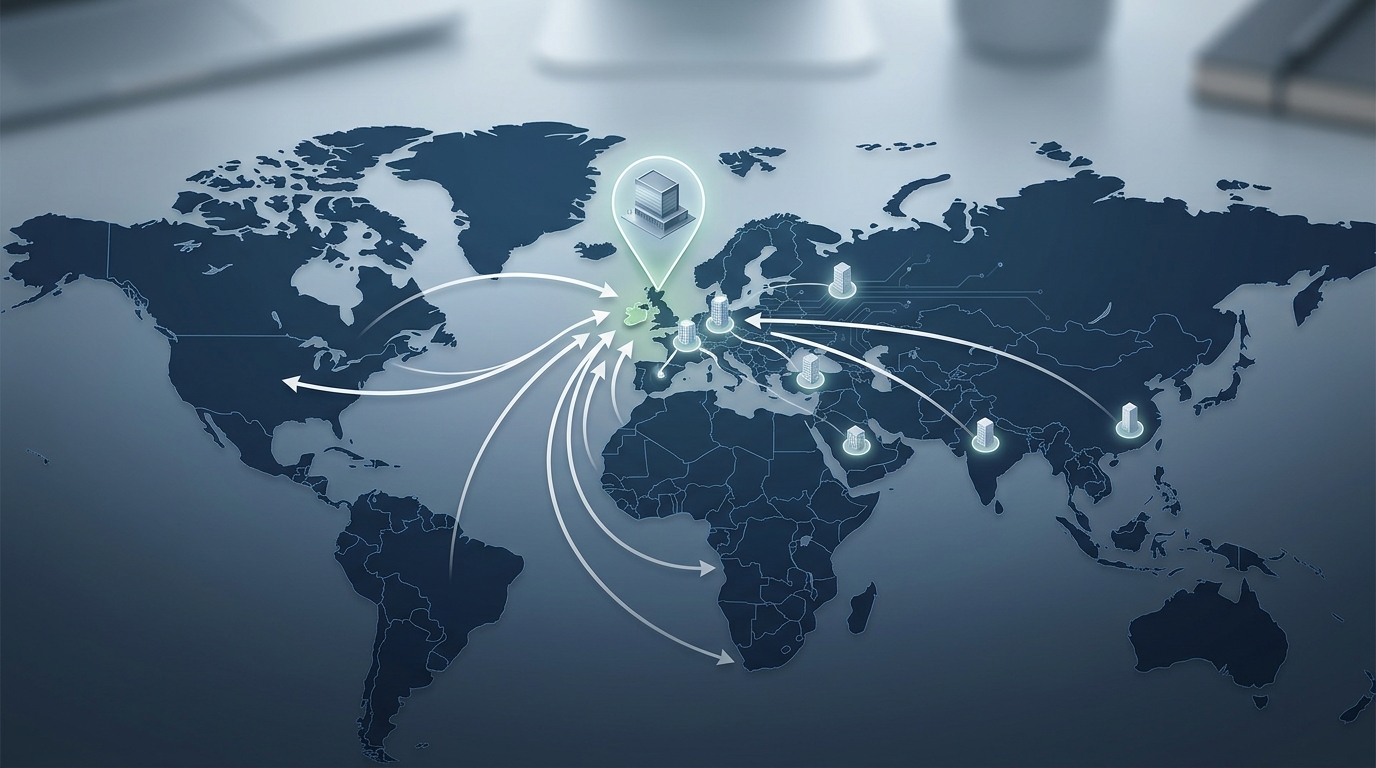
Apple Distribution International is a key part of Apple’s financial infrastructure in Europe
Ireland has long served as Apple’s European hub. This is due to the country’s tax legislation, which makes it attractive for headquarters of international corporations.
What This Fine Means for Apple
For Apple, the sum of $516,000 is pocket change. For comparison, the company’s quarterly revenue is measured in tens of billions of dollars. But the significance of this case is not about the money.
First, it’s a signal to all major technology companies: even an unintentional sanctions violation through a subsidiary leads to a fine. Second, this is the first case where OFSI’s new expedited procedure was applied — meaning the regulator will punish such violations faster in the future.
For the average Apple user in Russia, nothing changes. The iPhone will continue to work, and so will the App Store, albeit with restrictions. But the story clearly illustrates how deeply the sanctions issue is intertwined with the Apple ecosystem — from developer payments to app blocking. And as long as the geopolitical situation continues, such episodes will keep occurring.